Web3: Solving Trust Issues with Mathematics
TechFlow Selected TechFlow Selected
Web3: Solving Trust Issues with Mathematics
Blockchain technology has enabled a new kind of network: a peer-to-peer economic network where strangers can exchange money, assets, and valuable data.
 Navigating Web3 tides with focused insights
Written by: gillesdc
Translated by: TechFlow
Are crypto enthusiasts overlooking the next big thing? Are you missing out on this opportunity? Could they lose everything in the latest get-rich-quick scheme?
To outsiders, cryptocurrency resembles a casino. Yet its underlying mechanism reveals something far more exciting: blockchain.
So here's the question—what do you trust more?
1) Institutions like banks and governments.
2) Internet platforms like Facebook and Uber.
3) Mathematics
Here’s a story that actually happened.
When institutions enabled two strangers to conduct business through trusted third parties, human society first converged. Later, the internet replaced intermediaries with monopolistic digital platforms. Now, blockchain uses cryptography to eliminate intermediaries entirely. Through code, it unlocks self-governing economic networks, rendering outdated rulers obsolete and exposing fraudsters.
Blockchain networks have brought about a "new" internet: web3.
This article will help you understand web3 in one go, covering:
1) What web3 is and why it matters
2) The relationship between cryptocurrencies like Bitcoin and ETH and web3
3) What web3 means for you
4) How to get started with web3
5) Web3 use cases: DeFi, NFTs, DAOs, social tokens, play-to-earn, the Metaverse
This is a thoughtful attempt to uncover how blockchain can serve as a tool for building a better society.
A Brief History of the Web
The original internet was invented by the U.S. government in the 1970s to protect its nuclear weapons from hackers.
They realized that during the height of the Cold War, having one computer control all missiles was disastrous. So they built a decentralized network of multiple computers.
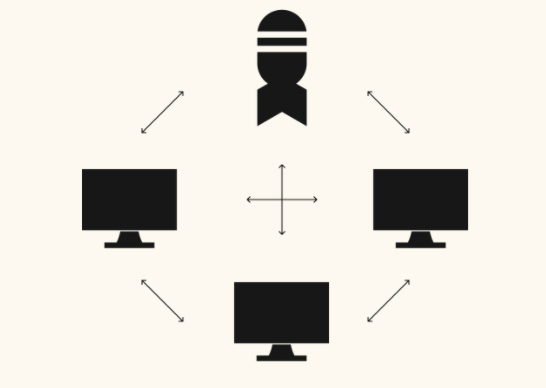
This meant that even if the Soviet Union launched a cyberattack, the U.S. could still retain part of its "mutually assured destruction" protocol.
Web1
In 1990, the internet was a collection of interconnected computers. The web was the first application created by Tim Berners-Lee.
Web1 was a massive database with a "hypertext information system", aggregating information from all computers across the network onto screens, allowing users to browse by clicking on linked text and images.
Sounds familiar?
Thirty years later, 3 billion users are connected to a larger, faster, more universal network powered by massive data centers. The way we click remains fundamentally unchanged.
Initially, the web was a niche tool used almost exclusively by academics. Five years later, browsers like Mosaic and Microsoft Internet Explorer led to widespread adoption.
It was a golden era of surfing the web. You'd click in. Downloading a photo took ages. Altavista was the default search engine. No one had yet thought about web design.

Web1 was:
Decentralized—powered by ordinary computers owned by regular users.
Open-source—anyone could build on the web.
Read-only—publishing content required technical skills, so most users were readers.
Web1’s decentralized infrastructure symbolized its original spirit. Anyone could publish any kind of information to anyone else worldwide without needing approval from central authorities.
Web2
Fast forward ten years, and the Wild West was claimed by winners like YouTube, Facebook, and Twitter, which attracted massive user bases and talent.
For the first time, anyone could publish information online. Barriers disappeared, and user numbers and usage skyrocketed. The internet benefited everyone.
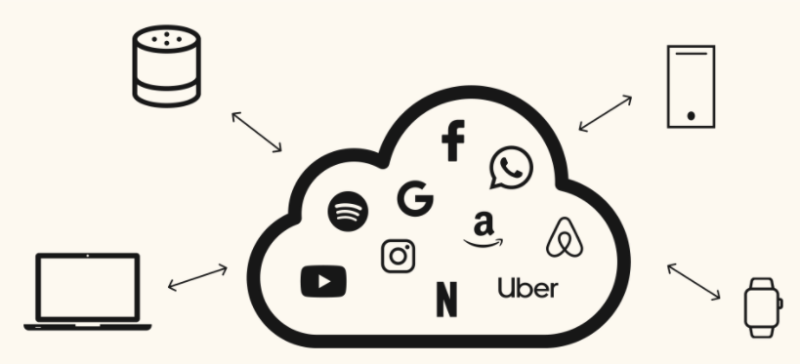
Later, three major shifts shaped the web2 we know today:
Mobile: Smartphones transformed us from working hours at desktops to being "always connected." Apps and notifications dominate our lives.
Social media: Friendster, MySpace, and Facebook let us show our faces, ending anonymity and making creation, sharing, interaction, and recommendations easy. We shared photos with friends and could even "ride" in strangers’ cars via these platforms.
Cloud computing: Amazon, Google, and Microsoft made building on the web cheap. Now you don’t need to buy and maintain expensive hardware—you can rent it at low cost from massive data centers worldwide.
The internet has become centralized. It’s essentially a set of interacting closed systems.
Big tech companies are exploiting you
When we suddenly encountered more people, ideas, and technologies than our brains could handle, central platforms exploded like mushroom clouds, consolidating network effects into monopolistic power.
As networks gain more users, their value multiplies. You join WhatsApp to talk to your friends. Mom joins to talk to you. Dad joins to talk to Mom. Before long, the whole world is on WhatsApp. You can't be left out.
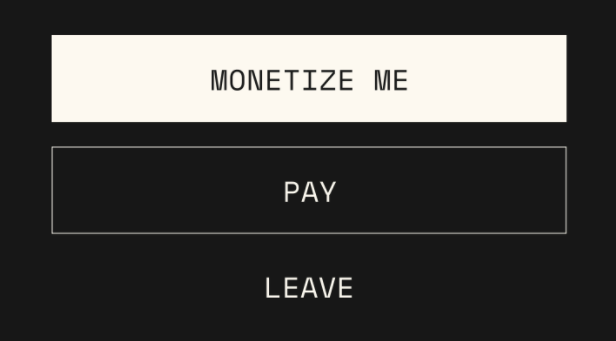
In February 2021, WhatsApp changed its privacy policy with an "accept or leave" statement: it would harvest more user data for profit. Millions swore they wouldn’t use it anymore, but few truly quit. Because you still want to talk to Mom, and Mom still wants to talk to Dad.
In the digital age, customer value directly correlates with network size. Without users, startups can’t compete. Media, developers, and creators have no choice but to accept reality. The network’s pull is too strong.
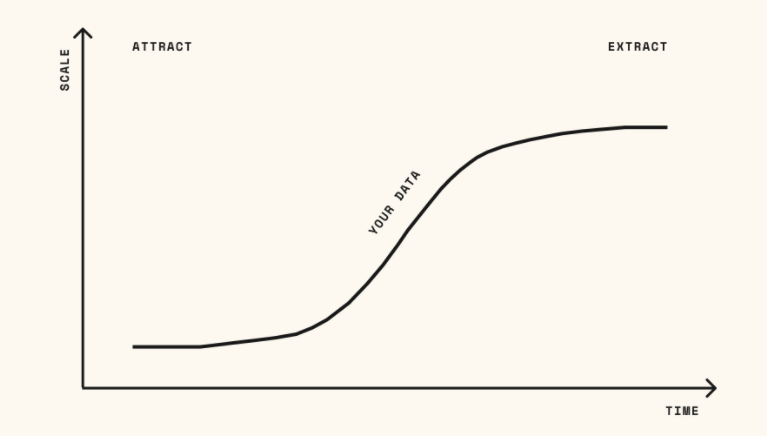
What we pay isn’t money, but personal data and content. It gets mined, sold, and fed back into secret algorithms that capture our attention and extract more from us—all under the guise of “free” services and “improved user experience.”
Your self-expression = Their market cap.
Google, Apple, Facebook, Amazon (GAFA) control our conversations, searches, content, media, and data. Open forums have become walled gardens. The internet today is an oligarchy.
Why is web2 so broken?
We need a new type of internet because the current one is fundamentally flawed—a problem involving multiple factors.
Attention Economy
Initially, the web couldn’t exchange value. People weren’t comfortable using credit cards online. So the default business model became attracting users with free offerings and monetizing their attention through ads.
Attention became the native currency of the internet. Websites compete for attention with algorithmically generated endless content loops and clickbait headlines—you can’t stop scrolling or clicking.
Capturing attention isn’t new. Media’s job is to keep you engaged. But traditionally, you knew when to turn off the TV and act in the real world. At least watching TV kept us synchronized within the same self-reinforcing loop of opinions.
On web2, each of us is fed content specifically tailored to trigger our individual personalities. Divergent opinions become divergent facts. When your virtual world clashes with mine, Facebook’s stock rises. The fiercer the conflict, the higher the profits. Social media connects the world, then tears it apart—because it’s good for business.
When clicks equal revenue, there’s little incentive to tell the truth. The result is an endless flood of clickbait, misinformation, fake news, ad blockers, and anti-ad-blocker countermeasures.
The internet isn’t truly yours
Platforms own everything you create online—your profile data, behavioral data, uploaded images, videos, songs, status updates, and comments. Anything you produce on the platform becomes the platform’s property.
Without exaggeration: every time you upload content to an internet platform, the file is copied to its servers, ownership transfers to the company, and it becomes raw material for algorithms to attract advertisers. You sow, but the platform reaps.
Of course, you get something in return. Otherwise, cooperation wouldn’t continue. Sharing content online builds reputation, attracts audiences, and creates connections. This social capital itself can be monetized. Artists and creators have never before reached such large potential fanbases so quickly.
Yet none of this is due to the platform’s merit—it’s manipulated by them. They own both your work and your fans. If you leave the platform to grow outside it, you lose everything. So you’re forced to keep turning their profit machine.
Deplatforming and censorship
When Twitter and Facebook banned Donald Trump’s accounts, he told his supporters to follow him to Parler. Then Apple and Google removed Parler from their app stores. Finally, Amazon kicked Parler’s website off its hosting servers, delivering the final blow. Trump became homeless in the digital world.
Here’s how it works.
Nearly 90% of the web is hosted on just four providers, the largest being Amazon Web Services (AWS). Their data centers run the websites and apps we use daily: Facebook, Twitter, Airbnb, Uber, Reddit, Netflix, etc. We access these apps through browsers (web) and download them from (mobile) app stores.
These companies control the gates to the global creative market. You either play by their rules or don’t play at all. They can ban your account, app, or even your entire website.
Even if you behave perfectly, you can still be punished for being in the wrong place. As governments well know, censorship is easy—just block a few central servers. Take China’s Great Firewall: it’s as effective at protecting state secrets as it is at blocking Facebook, Twitter, Google, and Wikipedia from its citizens. If (when) Russia and India build their own firewalls, the global creative market will lose ideas from 3 billion people.
Hacker’s paradise
Combining decentralized data creation with centralized storage creates a lucrative economy for hackers.
Hundreds of millions of devices upload their data to a few large data centers—like a central bank with countless doors to break into. This means I could hack my neighbor’s smart fridge to steal your bank account. This means Russian cyber terrorists could freeze Ukraine’s ATMs, shut down railways, or even paralyze hospitals by controlling outdated Windows machines.
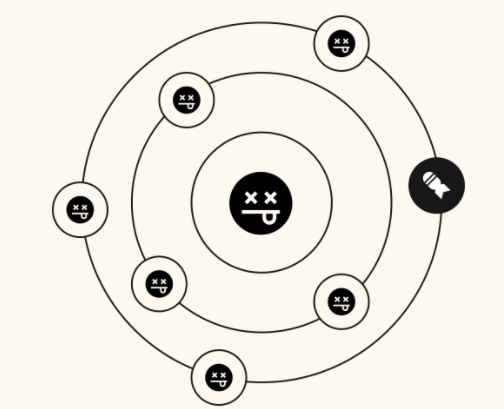
Today’s web is a chilling example: a system’s security depends only on its weakest link. The critical flaw is that the weakest link can’t be fixed because new links are added daily. By design, solutions can never scale to match the problem. As commerce grows increasingly peer-to-peer and device-to-device, this issue will snowball into systemic collapse.
Current cybersecurity resembles the myth of Sisyphus: we constantly push a boulder uphill, only for it to roll back down because it’s too heavy. Here are some figures. Cybersecurity generates about $123 billion annually. By 2025, cybercrime—the boulder—is expected to cause $10.5 trillion in annual losses. This is the largest wealth transfer in history.
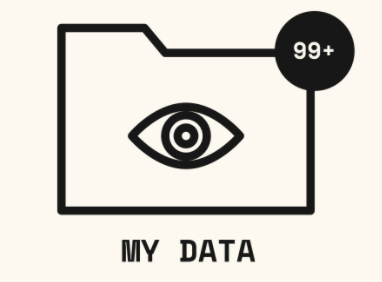
Data breaches are the new standard for privacy protection. Cyberterrorism is the new geopolitical norm. Centralized internet brings permanent risk.
The Trust Problem
How did we get here?
Internet pioneers never intended to centralize the web. But they overlooked a core challenge of human organization: trust.
Trust is certainty of not being deceived. When you trust someone, you’re confident they’ll act as you expect.
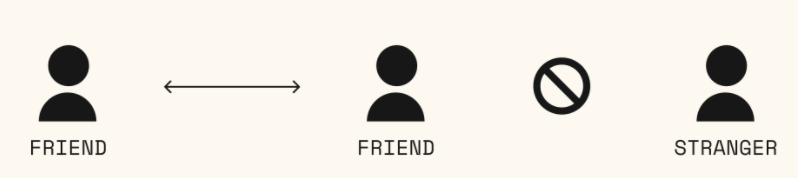
In primitive times, this meant for safety, you only interacted directly with family and friends, avoiding exchanging information and value with strangers. If I don’t know you, I won’t do business with you. This capped early hunter-gatherer societies at around 150 people—the supposed maximum number of stable social relationships the human brain can manage (known as Dunbar’s number).
Civilizational Units
The last ice age ended around 11,000 BC. Nomadic tribes settled during the Agricultural Revolution. Permanent settlement led to private property and stored wealth (agricultural surplus). This revealed the other side of trust. Motivation to steal had never been stronger. To mitigate escalating violence between unfamiliar tribes, we conceived a third party both sides could trust: institutions.

Institutions expanded trust among strangers by recording events. They documented who owned what wealth, debts, taxes, payments, property, exchanges, etc. Records affirmed truth, and truth built trust. Governments, banks, courts, religious organizations (like churches), and private companies scaled human cooperation into vast, complex societies by asserting a standardized narrative—one story we all believe.
In this sense, institutions are the basic units of civilization. Without them, offline economies couldn’t exist. It turns out the first online economy couldn’t avoid institutional reliance either. After decentralization began, the early web quickly reverted to centralized trust management.
Gatekeepers v2
Today’s internet institutions transcend space and time, reducing communication lag and drastically lowering economic costs—enabling instant global business. They achieve this by using software to handle trust. We interact with strangers worldwide, ride in cars, and transact because our phones assure us it’s safe. Through records like reviews and ratings, users build a culture around specific interactions. This culture sets boundaries for how each of us behaves. At minimum, we won’t get scammed. At best, cooperation is endless.
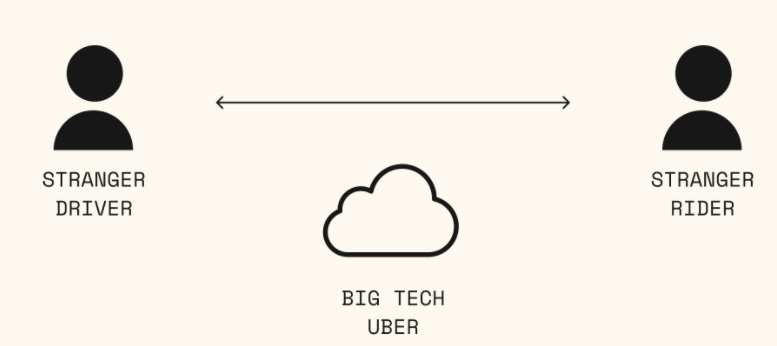
Web software disrupted cumbersome fee-charging middlemen, rewarding supply and demand directly. Strangers could transact at scale in peer-to-peer economies. More importantly, while everyone owns the network, platforms still take most of the profits.
All systems continually disappoint us because ultimately, they’re run by humans
Every system involving power, money, and status eventually develops bias and corruption. Centralized internet platforms are no exception. Fundamentally, it’s human selfishness, ubiquitous—it’s a feature, not just a bug. We can’t entrust banks, Facebook, and Uber with trust because we can’t trust everyone within the system. They’re especially untrustworthy when they can exploit laws and network effects to evade competition.
This isn’t a fancy way of saying “fuck the system,” nor is it blaming all the world’s problems on bankers and Mark Zuckerberg. The problem is in the design.
Blockchain: Mathematics > Humans
Can be analyzed at two levels:
1) Society measures itself through records that represent a centralized version of truth accepted by everyone in a group. Crucially, records aren’t truth itself but approximations of truth. Subjective factors inevitably creep into the “recording” process.
2) Society can’t trust record-keepers because they’re human, and humans are inherently self-interested. Bias is innate, manipulation lurks like a ghost. Incentives abound.
The word “trust” itself implies the possibility of fraud. “Trust” and “fraud” are two sides of the same coin.
How can we maintain objective records unaffected by human bias? As blockchain technology demonstrates, the answer is to completely remove humans from the equation.
Minimal Viable Explanation
1) Blockchain is a decentralized digital ledger recording what people own on a network. This can be money, property rights, medical records—anything humans wish to own.
2) Decentralized means every user on the network has a real-time updated copy of the ledger.
3) This makes records immutable. If someone tampers with the ledger, they’re rejected by the rest of the network.
4) Through cryptography, new records (blocks) become tamper-proof.
5) Cryptography is extremely complex mathematics requiring massive computational power.
6) Users providing this computing power are “miners.” They’re rewarded for securing the ledger, paid in cryptocurrency (like Bitcoin).
7) Mining makes cryptocurrency scarce, giving it economic value.

Blockchain comes with built-in trust. Users don’t need to trust the records—they’re verified by the network. Trust exists within the system itself, distributed among all participants. In blockchain, there are no flawed fee-charging intermediaries. Blockchain is a self-governing community of strangers. Just as society pays you to meet its needs, blockchain pays you to meet network demands.
Different blockchains require different values. These can be security, storage, computation, bandwidth, attention, etc.—beyond this article’s scope. There’s virtually nothing blockchain can’t include.
Bitcoin—The Elder of Blockchains
The earliest cryptocurrency—Bitcoin—intuitively shows how blockchain works. Its ledger records how much currency each user holds and rewards to miners.
1) I send you 1 Bitcoin (BTC)
2) Everyone on the network updates their ledger copy with a new block recording our transaction.
3) The new block is verified and cryptographically secured by miners, paid in Bitcoin for their computing power.
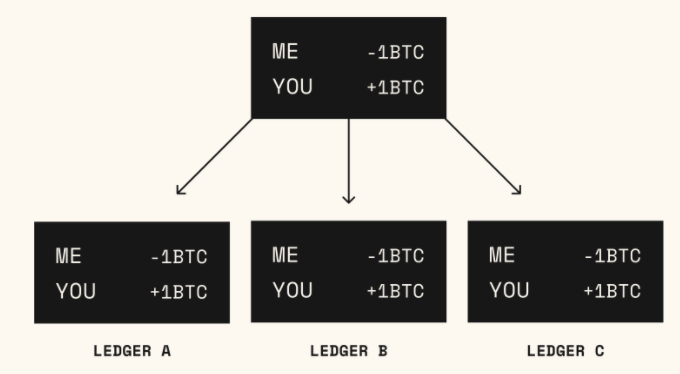
Bitcoin is like a giant spreadsheet recording every transaction.
ETH—The Decentralized Global Supercomputer
If Bitcoin is a spreadsheet, then ETH is a spreadsheet with macros.
A macro is a small program that automates tasks in Microsoft Excel. In other words, ETH is a blockchain with its own programming language. Developers can build decentralized applications (“dapps”) on it. Just as Bitcoin’s blockchain pays miners in Bitcoin (BTC) for securing the ledger, ETH pays in Ether (ETH) for executing and validating dapp code. It’s like a giant supercomputer composed of all computers in the ETH network.
The idea of a network running applications should sound familiar. ETH is the decentralized alternative to the centralized internet. It’s a new internet owned by all users, not controlled by a single corporate giant like Amazon.
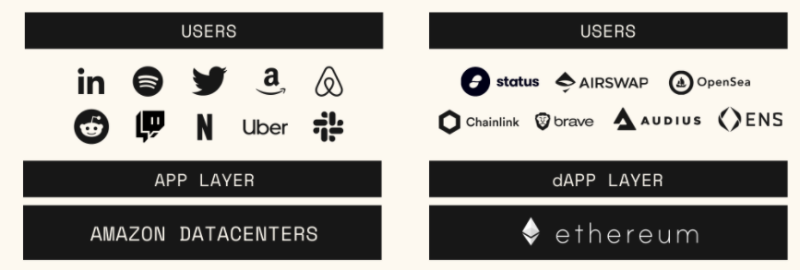
It’s the internet as it was meant to be—uncrackable, uncensorable. User-managed, rewarding network work with native currency. The holy trinity of internet, free market, and democracy.
Web3: The Internet of Value
Don’t limit your imagination to decentralized versions of Twitter, Facebook, and YouTube. Blockchain technology enables a new kind of web: an economic network where strangers can trade money, assets, and valuable data. No institution charges fees, sets terms, or interferes in transactions.
Value exchange follows typical contract patterns—performance and reward. If I do X, you give me Y. How does blockchain automatically verify performance and reward? How can contracts be fulfilled with 100% assurance that neither party is cheated? Bitcoin is a perfect example. “Smart contracts” are like robotic vending machines—transactions execute automatically based on unbreakable logic.
Think of art, insurance, real estate, intellectual property, credit cards, lawyers. Instead of transacting through intermediaries, you use dapps built on blockchain smart contracts like ETH or Solana. Trustless, permissionless. Cheaper, faster.
Superior economic efficiency will unlock previously impossible business models and potentially reshape the very concept of corporations. Fundamentally, a corporation is just a network of contracts between employees, shareholders, banks, customers, and the state—all programmable on a smart contract blockchain.
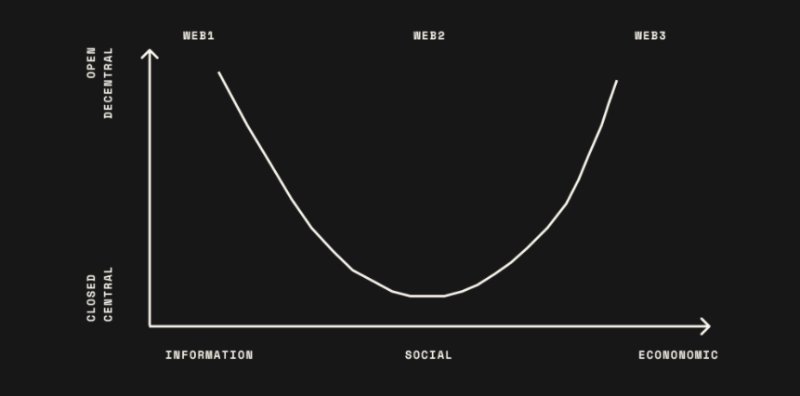
Blockchain allows anyone with a phone and internet connection to directly, instantly, and permissionlessly participate in the global economy.
Web3 and You
On the internet of value:
1) Every user is a wallet.
2) Every file is an asset owned by a wallet.
3) Every transaction is an exchange from one wallet to another.
How is this achieved? Let’s cover some basics.
Web2: Read + Write
When you register @jack on Twitter, a directory named @jack is created in Twitter’s database, hosted on a central server like Amazon Web Services (AWS).
Each time @jack tweets, a new page is added to the @jack directory in Twitter’s database. When I like @jack’s tweet, the underlying database page is updated with +1. When @jack mentions me in a tweet, the page links to my profile page. Adding and modifying pages is called “writing.”
Each page links to others (home, profile, comments, mentions, retweets), so you can click from one page to another. Viewing and browsing tweets this way is called “reading.”
On your screen, Twitter’s web and mobile app interfaces make reading and writing intuitive and seamless.
Twitter is called web2 because users have write permissions. On web1, only site owners could change data—it was read-only for users.
Web3: Read + Write + Own
Beyond read and write, web3 adds “own.”
Despite having your name on tweets, they remain in Twitter’s database. On a blockchain Twitter—let’s call it “dTwitter”—you own your tweets, meaning they’re assets in your wallet.
The mechanism works roughly like this:
1) @jack joins dTwitter by connecting his crypto wallet.
2) When @jack tweets, a new file is created and stored in a decentralized file system like IPFS.
3) Simultaneously, a token representing the tweet file is “minted” on the dTwitter blockchain and assigned to @jack’s wallet address. It’s in @jack’s wallet, so @jack literally “owns” it.
4) @jack can transfer ownership of his tweet to another wallet.
All Twitter tweets belong to Twitter; all dTwitter tweets belong to their users.
You can view tweets as assets whose value increases with attention and engagement.
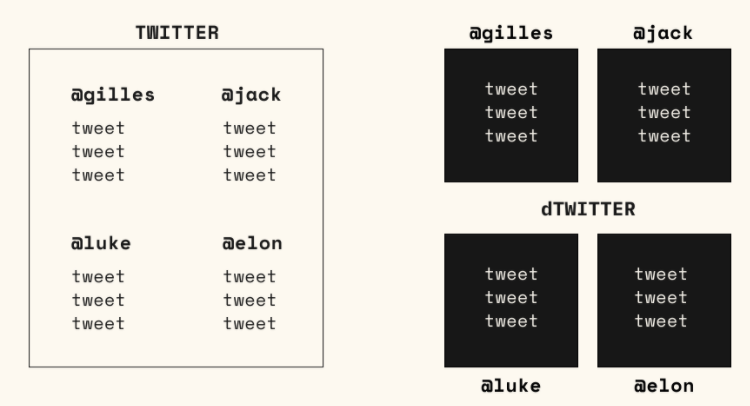
Decentralized Twitter vs. web3 decentralized dTwitter
On web2, Twitter Inc. owns all tweets, which generate value when exchanged with advertisers. When you write a viral tweet, Twitter’s stock rises. On web3, tweets and replies belong to you. You’ll be able to directly trade attention from your tweet with advertisers via smart contracts, or sell your best tweets as non-fungible tokens.
NFTs
The token representing tweet ownership is non-fungible, known as a Non-Fungible Token (NFT). This means the token is unique and cannot be swapped 1:1 with any other: @jack’s first tweet differs from his second, just as Leonardo da Vinci’s Mona Lisa differs from The Last Supper.
@jack can sell his tweet by exchanging the NFT for cryptocurrency like ETH (and he actually did). Like dollar bills and grain commodities, ETH tokens are fungible: you don’t care which specific ETH token or dollar bill you receive, because they’re all identical. Fungibility qualifies something as currency. We use fungible things to value and exchange non-fungible things.
@jack can trade his tweet in good faith, trusting the other party will send ETH to his wallet upon receiving the NFT. Or, he can use a smart contract that automatically transfers X Ether from wallet X to wallet Y once wallet Y receives the NFT from wallet X—this is automated trust. This is mainly how JPEG artwork NFTs trade on OpenSea, the largest NFT marketplace at the time of writing.
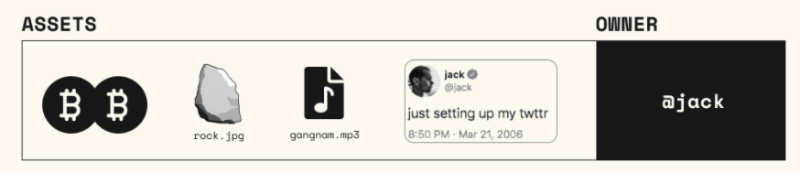
Crypto wallets hold both fungible and non-fungible tokens
As this example shows, the concept of NFTs extends far beyond the current craze of people buying JPEG images of rocks, apes, and 8-bit pixel avatars for millions. Essentially, anything you want to own—diamonds, Teslas, Pokémon cards, houses, land, paintings, songs—can be tokenized as NFTs, making ownership verifiable, non-stealable, programmable, divisible, easily transferable, and securely encrypted.
NFTs deserve a dedicated deep dive. Please subscribe to receive it in your inbox when published, or check my visual brain dump.
Join TechFlow official community to stay tuned Telegram:https://t.me/TechFlowDaily X (Twitter):https://x.com/TechFlowPost X (Twitter) EN:https://x.com/BlockFlow_News