








The Future of SocialFi: Data Ownership, Fairer Value Distribution, and the Monetization of Behavioral Data
TechFlow Selected TechFlow Selected
The Future of SocialFi: Data Ownership, Fairer Value Distribution, and the Monetization of Behavioral Data
SocialFi is essentially a deconstruction of value in Web2 centralized social platforms.
 Navigating Web3 tides with focused insights
Written by: Morty, TechFlow
SocialFi is one of the hottest Web3 narratives today.
However, it's important to note that most current SocialFi users are primarily motivated by airdrop expectations. Rather than being genuine participants in SocialFi, they are more accurately described as speculators chasing crypto airdrops.
A key reason for this phenomenon lies in how deeply ingrained the user experience and habits shaped by Web2 have become. When engaging with Web3 social applications, users must not only create a crypto wallet but also repeatedly sign transactions on-chain. Compared to the convenient account systems offered by Web2 unicorns—based on "phone number + email + password"—Web3 social apps remain high-barrier and low-experience.
Take Binance’s recently announced IEO project, Hooked Protocol, for example. It aims to lower the entry barrier into Web3 through gamified learning and an X-to-Earn model, thereby attracting broader participation. This indirectly highlights the scarcity of authentic Web3 users. As mentioned earlier, early adopters of SocialFi are largely airdrop hunters, resulting in thin real social graphs and connections, making it impossible to form a large, valuable social network.
Therefore, we can foresee that traffic will reign supreme in the future Web3 landscape. Applications capable of channeling Web2 traffic into the Web3 world—and those able to manage such massive traffic—will stand out in the future.
Thus, we have good reason to expect that future Web3 social applications will help incoming users build extensive connections—much like how Facebook initially built social graphs among college students—eventually achieving network effects at scale.
Deficiencies of Web2 Social Networks
Currently, we must also acknowledge the issues inherent in Web2 social networks, such as data manipulation and unfair value distribution.
These very problems give us strong reasons to anticipate the arrival of Web3 social networks.
In traditional Web2 internet ecosystems, top-tier companies like Meta (formerly Facebook) and Google control vast amounts of user profiles and behavioral data. While this data accumulates immense value for these corporations, it also creates a centralized black box for Web2 users. Once compromised, whether through data leaks or unauthorized data sales, users ultimately bear the brunt of the damage.
There are already precedents for this.
Moreover, based on user profiling and behavioral data, Web2 companies use algorithms to trap users in attention loops. In line with the "tittytainment" theory, low-cost, sensational, and instantly gratifying content is algorithmically fed to users continuously, aiming to maximize time spent within their apps and ensure user retention.
During the rapid expansion of the internet, tech companies gained massive traffic by offering convenient services. By collecting user profiles and behavioral data, they extracted disproportionate value from users’ attention economies, quickly growing into today’s digital giants.
Yet throughout this process, the most crucial contributors to the internet ecosystem—its users—have received little in return besides intrusive ads and algorithmically constructed attention traps.
In traditional internet models, the revenue distribution resembles a giant pyramid: platforms at the top capture most profits, distributing them downward in diminishing layers. Top influencers earn the most, while high-output, high-quality creators receive disproportionately low returns due to limited reach. The average user often gains no value at all, while being forced to view commercial ads or participate in exploitative activities against their will.
At its core, in traditional Web2 internet ecosystems, the majority of value is controlled by centralized entities. Web3, however, seeks to return value to the user base, enabling fair circulation of value across all participant groups.
How Web3 Empowers Social Applications?
To address these issues, Web3 social applications now have both the opportunity and capability to offer solutions.
The prevailing view in the Web3 space is that SocialFi should transform the platform-centric Web2 social model into a user-centric Web3 social system.
From the perspective of data privacy and ownership, user data will be stored on the blockchain, stripping platforms of control over user data. As illustrated below, users in the future will access all Web3 applications via wallets, with data belonging to the wallet—not the platform.
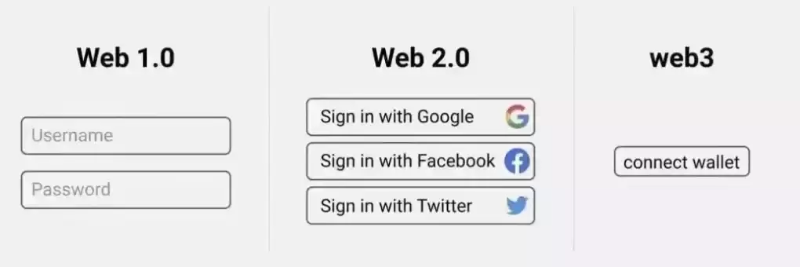
From the user’s standpoint, the dominant theme of Web2 social networks has been ‘centralized entities providing services while simultaneously extracting value from user behavior and data,’ whereas Web3 uses new technologies to return that value to users.
The most immediate impact Web3 delivers to social users is that all actions, data, and influence generated within the network can be easily monetized, with proceeds directly distributed to the respective users.
This means social users can effortlessly monetize their attention.
For instance, Web3 social network users could earn rewards by viewing ads, choose which types of ads to see—or opt out entirely.
Control rests with the user, not the platform.
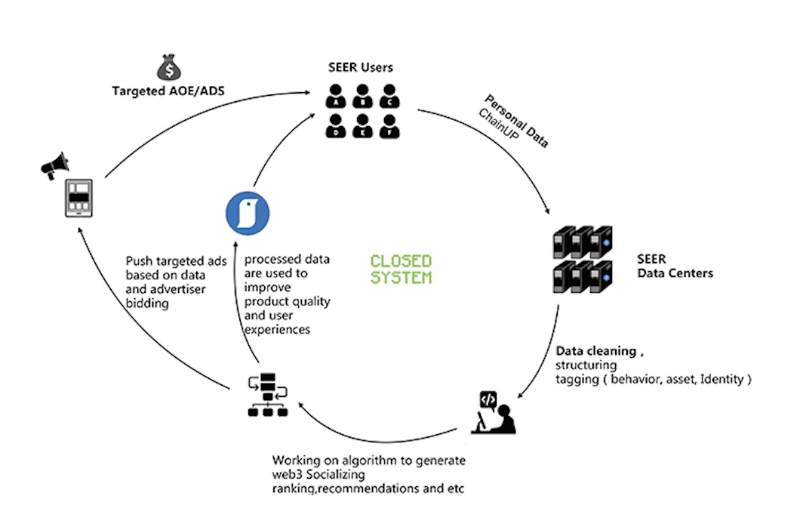
Web3 platforms can analyze users’ on-chain behaviors to infer ad preferences and send targeted advertising offers. If users accept, they can monetize their attention and receive token rewards. If they decline, no ads will be shown.
Viewed from a broader perspective, Web2 emerged to solve the limitations of Web1. But Web2 is far from perfect—it introduced new challenges, such as platform centralization and monopolies. From a developmental standpoint, the emergence of Web3 is inevitable. It addresses the new problems created during Web2’s rapid growth and ushers in an internet experience centered around user-driven value distribution rather than platform-driven value extraction.
Analysis of SocialFi Protocols
Mirror, a first-generation SocialFi crowdfunding writing platform, was founded precisely to tackle these issues.
Content creators can publish works on Mirror and allow fans to pay ETH to mint their content as NFTs for collection. Most of the value goes directly to the creators. All content produced is minted as NFTs in a decentralized manner, clearly establishing digital copyright for creators at the blockchain level.
However, Mirror has frequently been criticized for its subpar text editor user experience.
Second-generation SocialFi projects, by contrast, exhibit even greater ambition.
For example, Seer is a Web3 social platform dedicated to redefining the attention economy.
Upon initial use, Seer feels somewhat like a Web3 version of Discord.
Currently, Discord has attracted most Web3 protocols, projects, and DAOs to host their communities on its platform thanks to features like high customizability and strong extensibility.
Discord is a successful Web2 application, having implemented numerous Web2 extensions such as bot integration, web display, and webhooks.
From a usability standpoint, Discord is highly functional—for both community members and organizers—providing robust foundational tools. We can also view Discord as middleware: a bridge connecting communities with other internet services, allowing seamless integration of external applications.
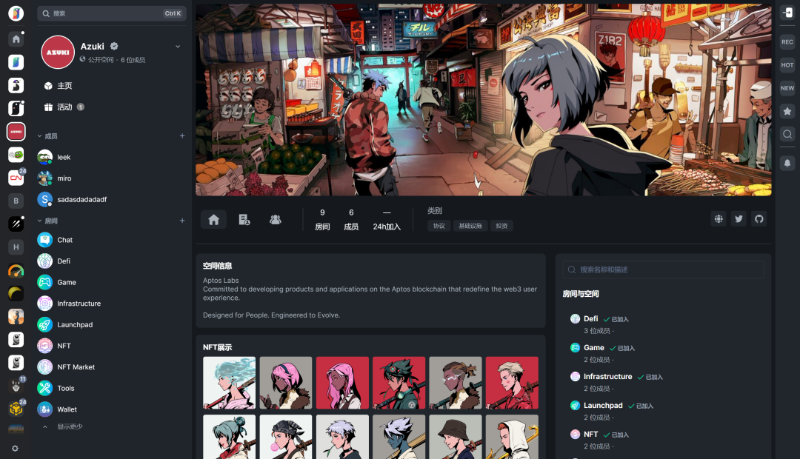
However, Discord—built for Web2—is unfamiliar with the needs of Web3.
Therefore, Seer aims to create a decentralized social app tailored specifically for Web3 users—replacing Discord’s dominance among Web3 protocols, projects, and DAOs—by emphasizing customization, extensibility, and composability aligned with Web3 user habits.
This means users can engage in community building and interaction in natively “Web3” ways—such as through DAOs, token swaps, and NFT minting—via Seer.
On this foundation, Seer is rearchitecting the attention economy using Web3 technologies to resolve legacy issues from Web2’s development—the very problems discussed earlier.
Next, let’s examine Seer’s product architecture:
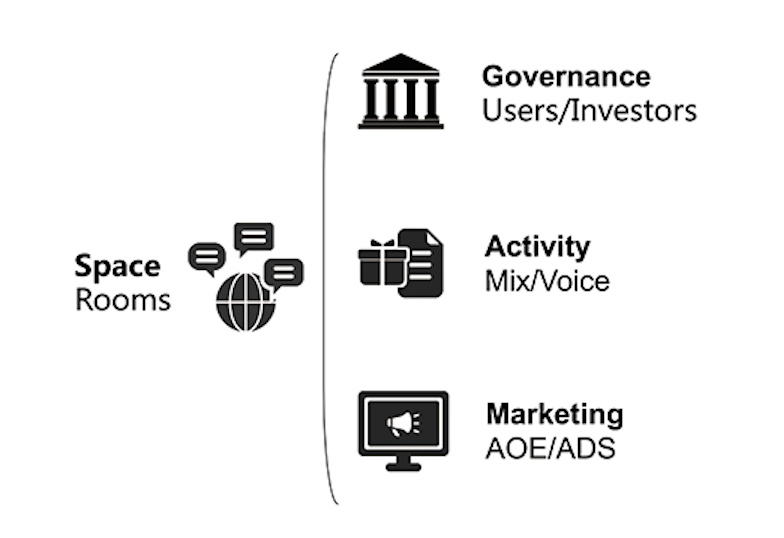
SEER-Space (Web, APP): Built on E2E encrypted distributed social technology, Space provides diverse Web3 application scenarios such as DAOs, community roles, treasuries, gated access, and third-party plugins. The team will continue evolving alongside Web3 developments, introducing more ecosystem-aligned features.
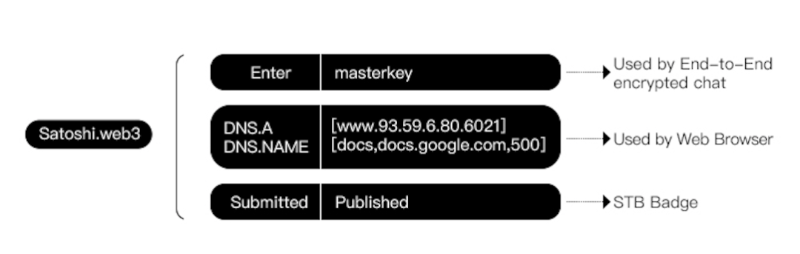
SEER-DID: Seer’s decentralized identity layer. Users can flexibly build their own decentralized identities across various Seer communities—like brands.
SEER-AOE (Area of Effect), ADS (Advertising Services): AOE helps project teams run community events and attract traffic. ADS targets commercial advertising use cases in Web3, enabling precise audience targeting based on on-chain segmentation and tagging. Ultimately, AOE/ADS aim to help projects and advertisers curate and deliver targeted traffic, while users earn token rewards based on their engagement.
SEER-DSN (Distributed Server Node): DSN represents Seer’s distributed data storage nodes, granting holders multiple rights and traffic-based earnings within the Seer ecosystem. In early December, Seer will launch DSN NFT sales. There will be 1,000 DSN NFTs in total, with 300 available in the first sale. DSN NFTs serve as containers for rights to decentralized social data storage. Using dynamic NFT technology, off-chain server data is transmitted in real-time via oracles to smart contract frontends (i.e., the DSN frontend). DSN holders will benefit significantly from the growth of the Seer ecosystem.
SEER-Notify: Notify is an automated alert system. Users can set instant notifications—for example, automatically receiving alerts during critical events like DeFi hacks—to support timely decision-making.
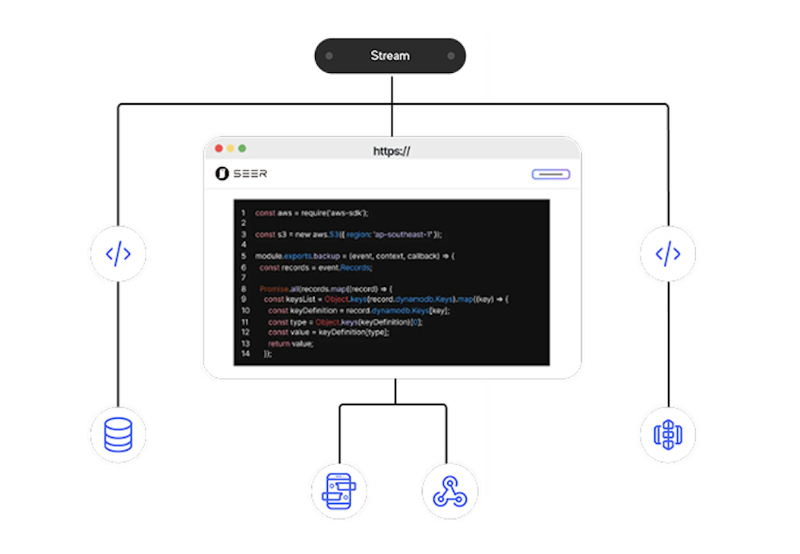
SEER-Plug-In: As the name suggests, Plug-In allows other Web3 projects to integrate into Seer communities via Seer’s plugin SDK. Users can manage various Web3 dApps directly within Seer.
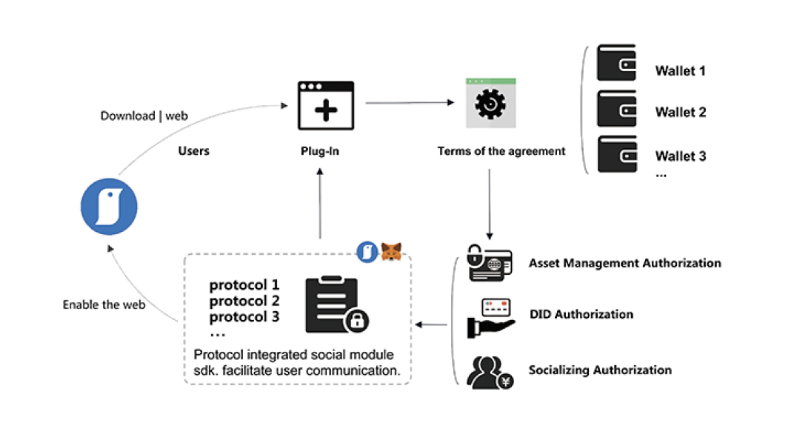
In summary, Seer is a protocol suite that defies simple categorization. It cannot be reduced merely to a decentralized Discord; rather, it serves as foundational infrastructure for the Web3 social ecosystem—a container where Web3 communities and users interact in countless dynamic ways.
Given its rich product architecture, we can clearly trace the underlying vision behind Seer: beyond basic Discord-like community functions, Seer leverages advanced technology to enable users to monetize their influence and attention.
By defining each user’s decentralized identity and assigning behavioral tags, Seer helps both users and projects find their ideal counterparts—creating win-win outcomes.
This represents a fundamental reengineering of the attention economy—and a liberation of user attention within social networks. Ownership of attention returns to users. Even more excitingly, users can rapidly monetize it.
To illustrate simply: a power DeFi user who frequently uses revenue-generating protocols like GMX and GNS, upon visiting Seer, would be tagged accordingly—e.g., “user of real-yield DeFi protocols.” Later, if a similar real-yield DeFi protocol seeks to build a community, Seer can push its ads precisely to this user, enabling targeted ad delivery. In return, the user earns rewards proportional to their attention expenditure.
Beyond Seer, Lens Protocol—launched by AAVE—is another ambitious Web3 social application.
Lens is a composable, decentralized social graph built on the Polygon chain. Similar to existing platforms like Weibo or Twitter, it supports following, profile editing, posting, commenting, and reposting. All content published on Lens Protocol is stored on-chain as NFTs. From day one, Lens emphasized composability and modularity, allowing developers to add new features and fix bugs.
At their core, both Seer and Lens Protocol orient their architectures toward monetizing user/content creator behavioral data, ensuring product composability and modularity, and fostering connections between users.
Put simply, Web3 social platforms like Seer and Lens Protocol relinquish control, shifting value distribution toward users. Users gain full sovereignty over their data and attention. Web3 social platforms allow users to use or sell their data for corresponding rewards.
Within the framework of Web3 social applications, value flows fairly among projects, creators, platforms, and users.
SocialFi, at its essence, is a deconstruction of value within Web2’s centralized social platforms. As previously noted, at the data layer, users own their data—the choice of privacy lies with them. At the value capture layer, Web3 social networks enable users to quickly monetize their attention without exploitation.
In Web3 social networks, all participants enjoy fairer value distribution—each person receives value commensurate with their contribution. These advantages will ignite enthusiasm among all participants, equating user attention with on-chain value, allocating rewards around the user, creating novel use cases, and ultimately driving long-term growth of the Web3 social ecosystem.
Join TechFlow official community to stay tuned
Telegram:https://t.me/TechFlowDaily
X (Twitter):https://x.com/TechFlowPost
X (Twitter) EN:https://x.com/BlockFlow_News






