








One article to understand the "Blockchain Pokémon": Multi-chain NFT game Blockchain Monster Hunt
TechFlow Selected TechFlow Selected
One article to understand the "Blockchain Pokémon": Multi-chain NFT game Blockchain Monster Hunt
Blockchain Monster Hunt (BCMH) is a game inspired by Pokémon Go, where players can capture monsters and battle them to earn tokens.
 Navigating Web3 tides with focused insights
Author: Frederick Irwin
Translation: Alexander
Blockchain Monster Hunt (BCMH) is one of my favorite new games—an NFT game fully running on blockchain across multiple chains, which is extremely rare.
The game is natively available on Ethereum, BSC, and Polygon, and they are also developing their own EVM chain. They recently completed a highly successful Genesis NFT sale.
They truly know what they're doing—especially working alongside the Chainguardians team. In this article, we’ll explore what Blockchain Monster Hunt is, the different types of monsters, its tokenomics, and what lies ahead. As always, this article is not investment advice—you must make your own investment decisions based on your personal circumstances. This piece is purely informational; please do your own research, as nothing here constitutes financial advice.
What Is Blockchain Monster Hunt?
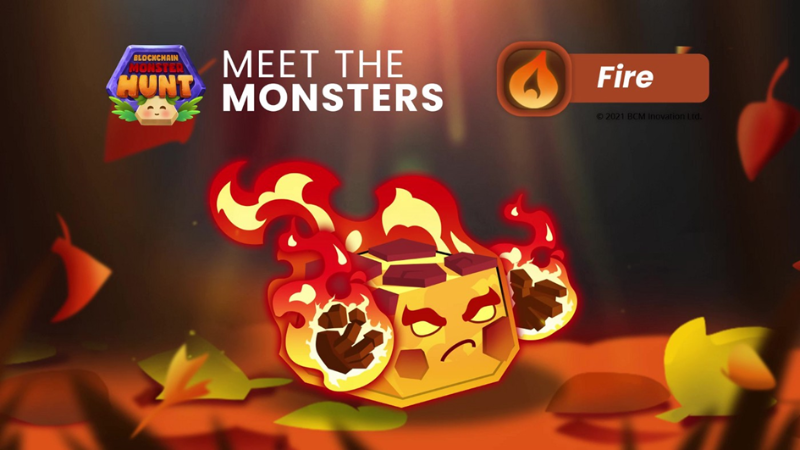
Blockchain Monster Hunt (BCMH) is a game inspired by Pokémon Go, where players capture monsters and battle them to earn tokens. It's still quite basic, but they’ve already built a lot—including a full-fledged metaverse where you'll explore with up to six monsters and items.
They have a blockchain timeline where new events occur with every new block. Additionally, based on the hash value of actual blocks in the blockchain, there are random catch blocks and battle blocks.
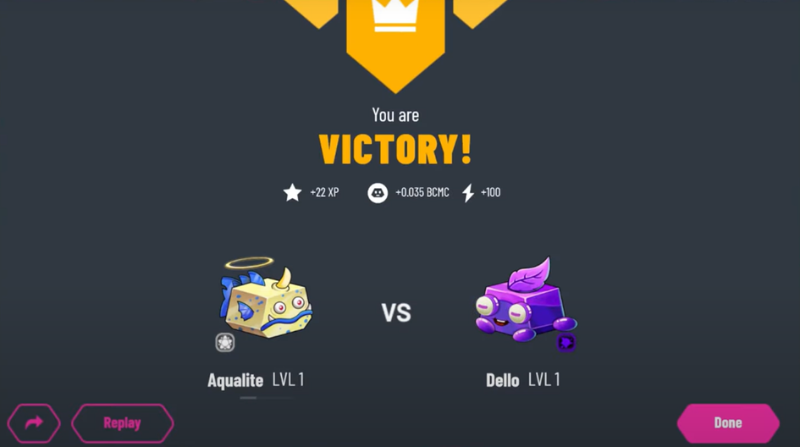
During a catch block, you can attempt to capture the monster, paying more BCMC tokens to increase your chances.
In a battle block, you select one of your monsters to fight against the one that appears. So when initiating a battle, you choose one of your monsters to face off against the one in the block and sign a transaction.
The battle then proceeds in the background, although you can later view a replay, sped up for time. However, in the future, these battles will become more interactive.
There are ten different elemental types for monsters in the game: Earth, Electric, Water, Fire, Ice, Wind, Dark, Light, Spirit, and Neutral.
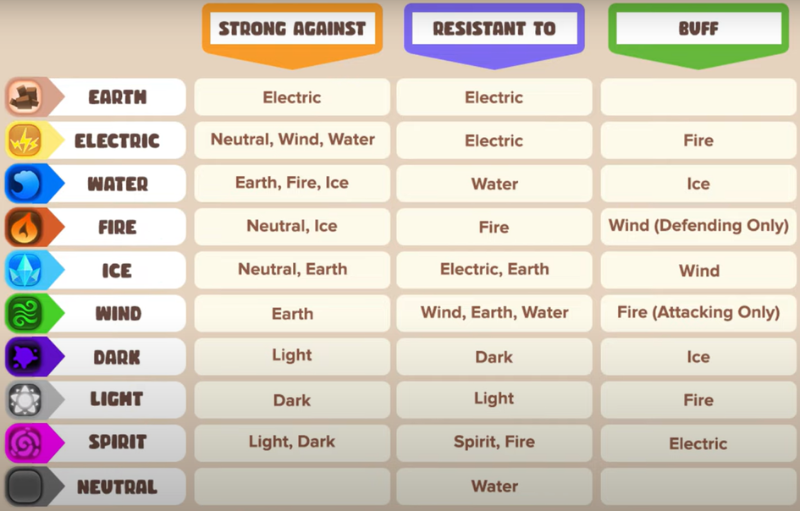
When preparing for battle, you need to understand the various strengths and weaknesses between elements.
Currently, during the public test phase, only catch blocks and battle blocks exist. But once launched on the mainnet, commercial blocks will reward players, while cooldown blocks will serve as inactive periods.
Cooldown blocks aim to balance minting rates across different chains. Since BSC is faster than Ethereum, BSC will have more cooldowns—otherwise, BSC would generate monsters at a much faster rate.
The frequency of catch block creation depends on the number of existing monsters in circulation and the growth of the game. If many monsters are captured, the frequency of catch blocks decreases. Difficulty is calculated similarly to Bitcoin’s mining difficulty.
So when a new monster is minted during a catch block, it increases the overall population. When you lose a battle, your monster may be killed—meaning the NFT is burned.
Thus, capturing and winning early on will be easier, but as the monster population grows, it becomes increasingly difficult—this prevents overpopulation.
Population control also benefits secondary sales by increasing scarcity. During battles, the kill rate is displayed as a percentage, so you can see the risk, and if desired, you can purchase insurance or extra lives to prevent loss.
About the Monsters
To understand monsters in BCMH, we first need to understand how generations work. There are Genesis monsters—the ancestors of all other monsters. These are bred either in the wild or in labs to produce offspring.
When breeding them in the lab, the goal is to evolve stronger monsters with increasingly better combat stats.
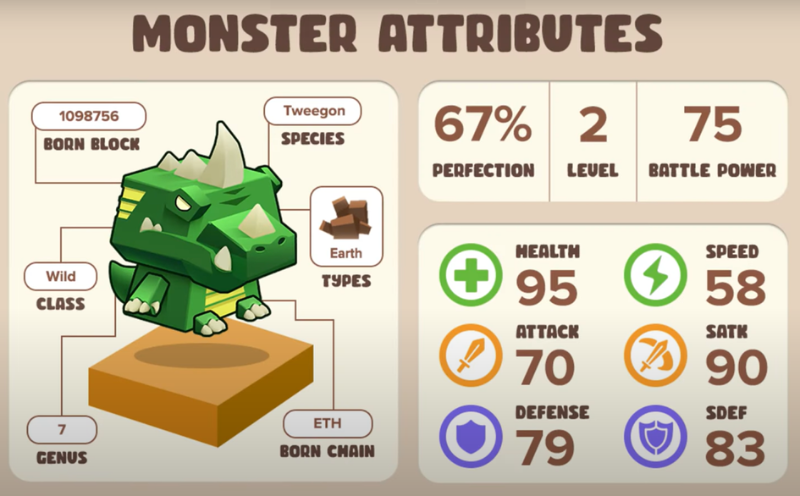
There are nearly 500 different monster types, each ranked from level 1 to 100, plus a perfection rate that slightly influences their stats. Each monster carries DNA from the block in which it was born, making it unique.
Tokenomics
Blockchain Monster Coin (BMCC) is the game’s utility and governance token, widely used throughout gameplay. You need a small amount to capture or battle, and you also earn some as rewards from battles.
The BMCC token has only been live for about a month, yet they already have a native bridge connecting Ethereum, BSC, and Polygon.
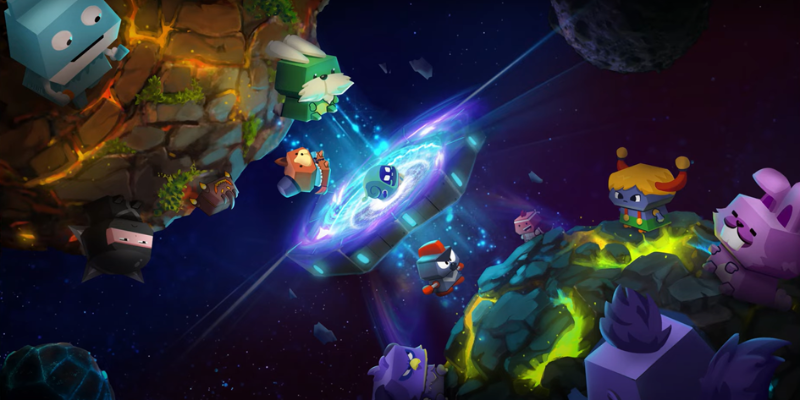
Importantly, this bridge differs from others—it doesn’t hold native tokens on one chain and mint wrapped tokens on another. Instead, BMCC is natively present on all three chains. When transferred, the token is burned on the source chain and natively minted on the destination chain.
From a security standpoint, this is incredibly advantageous because your tokens remain in your wallet rather than being held in a smart contract. They’ve implemented the same functionality for NFTs too. So that’s pretty cool.
I must also mention their flash loan feature—it's a brilliant idea. You can deposit your monster into a flash lending pool, allowing other players to borrow and use it in battles.
So if a great battle block appears and you don’t have a suitable monster, simply borrow one from the pool, use it in battle, and return it—all within a single transaction—then share the earnings with the monster’s owner. An awesome concept. I can't wait to see it implemented.
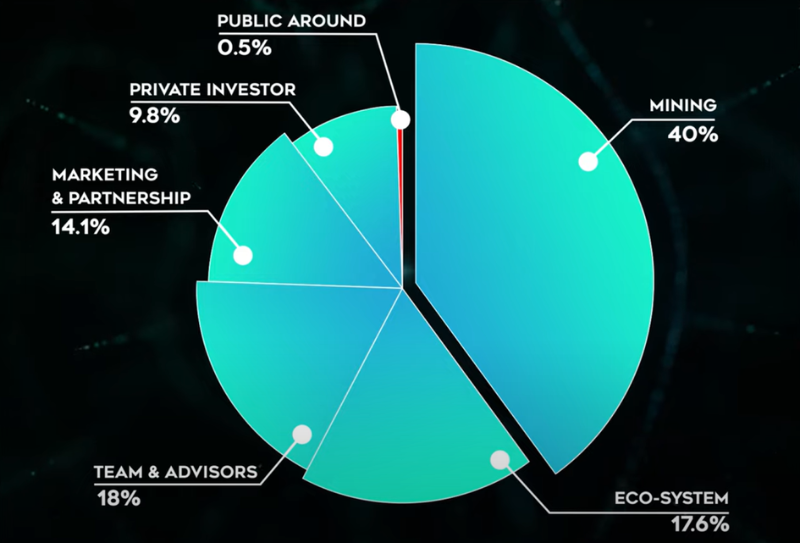
Here is the distribution of the BMCC token. The total supply across all chains is 1 billion, meaning tokens must be burned on one chain and minted on another during transfers.
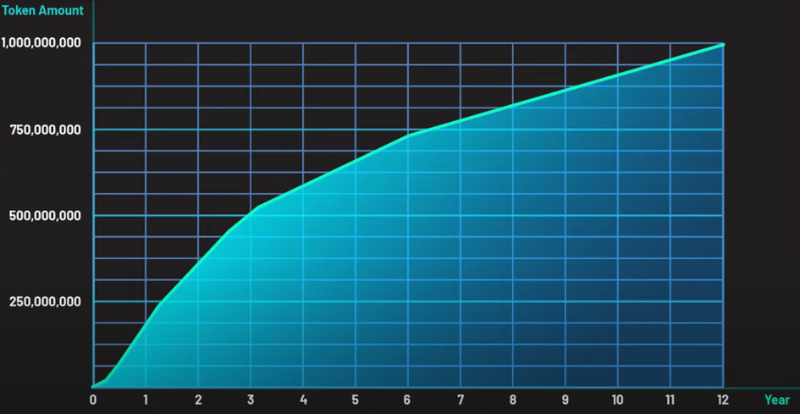
This is the unlock schedule—the full 1 billion tokens will take 12 years to fully enter circulation.
Team and Final Thoughts
Regarding the team, one of their co-founders was a tech lead at Facebook, and another a senior engineer at Google.
Combine that with the experience of the Chainguardians team, and incubation through Chain Boost, and you have a powerful recipe for success.
The team and community give me strong confidence in the project’s long-term success.
I've played extensively on the testnet—even without real monetary rewards, collecting monsters and battling them is addictive. I'm excited to see how it evolves once live on mainnet, especially when the metaverse opens.
Note: I personally hold some BMCC tokens, so I certainly have a "bias" in this article. Regardless of your interpretation, do not treat this as investment advice.
Join TechFlow official community to stay tuned
Telegram:https://t.me/TechFlowDaily
X (Twitter):https://x.com/TechFlowPost
X (Twitter) EN:https://x.com/BlockFlow_News






