
OKLink's Xu Mingxing Releases New Book "A Fun Take on the History of Finance": Focusing on Financial Transformation and Exploring New Directions for Human Economic and Social Development
TechFlow Selected TechFlow Selected
OKLink's Xu Mingxing Releases New Book "A Fun Take on the History of Finance": Focusing on Financial Transformation and Exploring New Directions for Human Economic and Social Development
History serves as a mirror. As we stand at a pivotal moment of innovation and transformation in the financial system, how will the "Internet of Value"—built on blockchain technology and establishing a strong connection between the physical and digital worlds—reshape the landscape of future digital finance? And what kind of financial era are we about to enter?
 Navigating Web3 tides with focused insights
As an indispensable component of human social development throughout five thousand years of civilization, finance has played a crucial role in the birth of civilizations, the rise and fall of empires, and the expansion of global territories—making it essentially the engine of human civilization. Learning from history to guide the present, as we enter a critical period of innovation and transformation in financial systems, how will the "Internet of Value," built on blockchain technology and creating strong connections between the physical and digital worlds, reshape the future landscape of digital finance? And what kind of financial era are we about to enter?
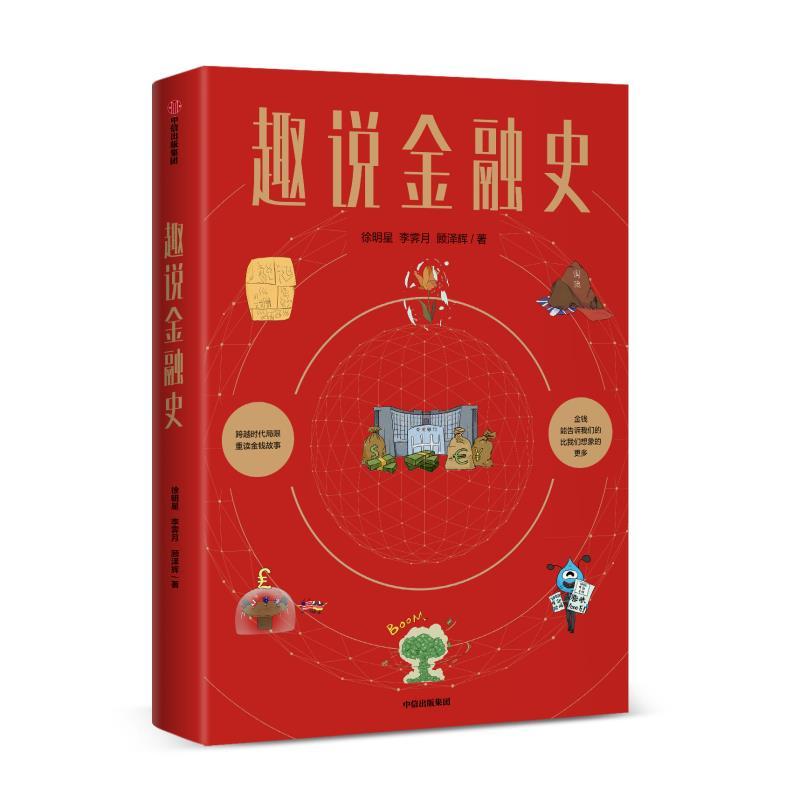
On September 23, OKLink hosted the launch event for the new book Fun Tales of Financial History in Beijing. To better illustrate the origins and evolution of finance and help readers understand money, finance, and the future economy, Xu Mingxing, founder of OKLink, joined renowned financial writer Li Jiyue and industry observer Gu Zehui to co-author Fun Tales of Financial History, a journey through 5,000 years of financial history that revisits stories of money and forecasts the next financial era. Published by CITIC Press, the book will be officially released soon.
High-Quality, Engaging Interpretation of Financial Stories
The launch event featured Huang Zhen, professor at the School of Law, Central University of Finance and Economics and director of the Institute of Financial Law; renowned financial writer Li Jiyue; and Zhang Chao, vice president of OKLink, who discussed the fun side of financial history. At the event, Li Jiyue shared insights into the writing process and content of Fun Tales of Financial History, helping the audience gain a deeper understanding of the book.

According to the introduction, the book includes 109 illustrations, tracing financial evolution from Sumerian clay tablets used for accounting to the Medici family’s financial empire, revealing how imperial-era financial systems cycled between prosperity and decline; from the East India Company to the birth of central banks, depicting the coexistence of light and shadow in modern finance; from the collapse of the Bretton Woods system to Venezuela’s hyperinflation, interpreting how modern finance repeatedly falls into cycles of illusion and bubbles; and from Bitcoin to the vision of blockchain, imagining the many possibilities for the future of finance. Through an accessible, illustrated, and engaging narrative, the book recounts 14 pivotal events in financial history.
Rather than being merely a finance book, Fun Tales of Financial History is more accurately described as a rigorously researched yet highly entertaining “anthology of financial stories.” This is not the first time Xu Mingxing has published a book rooted in reflections on human economic and social development.
As the founder of OKLink, a leading blockchain company, Xu Mingxing deeply understands the vital role technological exploration plays in driving socioeconomic progress. For years, he has led OKLink in focusing on research and development of core and foundational blockchain technologies, advancing both the technology itself and its large-scale real-world applications. Drawing on his extensive industry experience and forward-looking insights, Xu has previously authored authoritative books such as Blockchain Illustrated, Blockchain: Reshaping Economy and World, Token Economy, and Chain and Future, explaining how emerging technologies like blockchain can upgrade finance and society, making significant contributions to socioeconomic development. Notably, Blockchain: Reshaping Economy and World was recommended by bookstores as one of the key titles celebrating the 70th anniversary of the founding of the People's Republic of China.
Deeply Illustrating the Evolution and Legacy of Human Financial Achievements
Wen Wu, professor and doctoral supervisor at Zhejiang University International Business School and former chair of the ITU Focus Group on Legal Digital Currency, who wrote the preface to Fun Tales of Financial History, offered high praise for Xu Mingxing’s new work. He stated that this well-crafted and accessible popular science book analyzes specific historical events to explain the development and inherent challenges of finance, offering profound inspiration for today’s global pursuit of inclusive finance and technology-driven financial innovation. For ambitious individuals aiming to achieve great things in the coming financial era, this book could rightly be seen as a key that unlocks the door to a new frontier.
Notably, the financial transformations discussed in Fun Tales of Financial History align closely with the current digital economy era, where emerging technologies like blockchain are being used to build more mature trust and security systems. These efforts aim to overcome traditional physical financial silos within the global financial system and establish infrastructure platforms serving decentralized financial ecosystems. Expanding on this theme, Zhang Chao, vice president of OKLink, shared insightful perspectives at the launch event on the topic of “The Opportunities and Ambitions of Blockchain Big Data,” particularly sparking strong resonance among attendees with his discussion on data security.
In Zhang Chao’s view, whether viewed from national policy or practical implementation angles, the importance of blockchain technology in the development of digital societies and digital economies is becoming increasingly evident amid today’s global financial transformation. However, significant challenges remain: the broad sources of on-chain data, full 360-degree visibility, widespread cross-use of data, and resulting trust deficiencies are triggering a series of big data–era security issues.
He emphasized that solving these challenges requires more than blockchain alone. Integrating blockchain with advanced technologies such as 5G, big data, IoT, and edge computing is a better path forward for empowering on-chain data governance. For example, OKLink leverages “blockchain + big data + AI,” combining computer vision, semantic recognition, and massive data processing techniques with blockchain’s advantages—such as traceability, tamper resistance, and consensus-building—to facilitate the transition from an “information network” to a “trust network.” Based on this, OKLink has developed On-Chain Eye and On-Chain Eye Pro, tools for monitoring on-chain data and visualizing transaction behaviors. By structuring this data and opening it up as infrastructure for public use—particularly by law enforcement agencies—the company has supported police-enterprise collaboration and helped nearly 30 provincial and municipal public security organs recover over one hundred billion yuan in funds.

Additionally, Huang Zhen, professor at the School of Law, Central University of Finance and Economics and director of the Institute of Financial Law, discussed blockchain’s application in finance from a legal perspective. He believes blockchain technology can help establish a trust-based financial infrastructure for the future. By leveraging digitization and data-driven methods to control latent financial risks, this represents a key direction for the secure development of future finance. Indeed, finance is not static—every individual in the future may inherently possess financial attributes, and achieving inclusive finance will require collective effort to create a better society.

Indeed, blockchain technology has been elevated to a strategic level as part of the next generation of information technology and has become a key breakthrough point for China’s independent innovation in core technologies—complementing the development of the new financial era and the world’s digital economy. In their book, Xu Mingxing and his co-authors jointly explore concepts and theories related to the new financial era, incorporating contemporary technological debates and offering dialectical reflections from multiple perspectives, attempting to chart new directions for future economic and technological development in human society.
In summary, how can we use financial thinking to solve real-world problems? What will become of humanity’s financial achievements amid constant evolution and inheritance? Readers will find answers in the upcoming release of Fun Tales of Financial History. The publication of Mr. Xu Mingxing’s new book is certain to inspire deeper reflection among those interested in the financial industry, especially in the context of the digital wave shaping our economic era.
Join TechFlow official community to stay tuned
Telegram:https://t.me/TechFlowDaily
X (Twitter):https://x.com/TechFlowPost
X (Twitter) EN:https://x.com/BlockFlow_News
 @OKGResearch