








SBF: The Conscience of a Cryptocurrency Billionaire
TechFlow Selected TechFlow Selected
SBF: The Conscience of a Cryptocurrency Billionaire
He denied pursuing money for personal gain, viewing his net worth as a tool to fulfill a "greater mission"—doing the most good in the world.
 Navigating Web3 tides with focused insights
Author: Claire Zillman
Translation: TechFlow
This article is part of Fortune magazine’s special report on a pivotal moment for cryptocurrency.
Few billionaires openly admit to pursuing money—but Sam Bankman-Fried (SBF) is an exception.
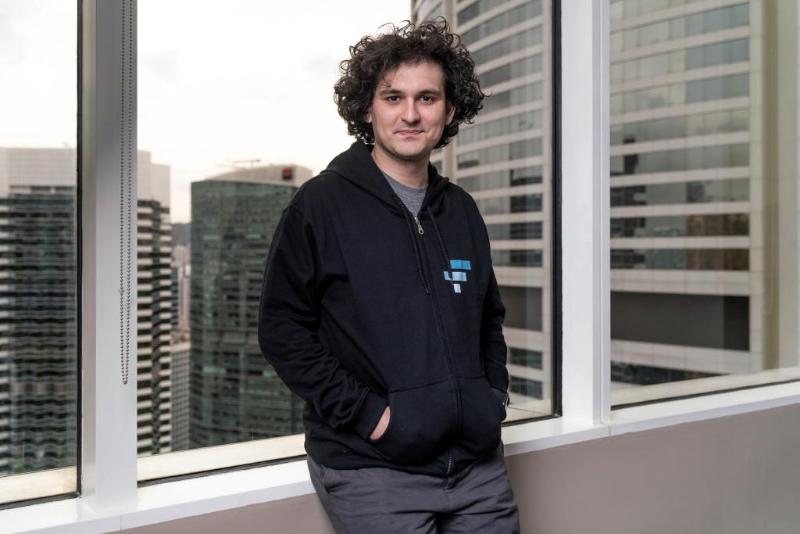
But SBF insists he isn’t chasing wealth for personal gain. At 29, he’s the founder and CEO of FTX, a Hong Kong-based cryptocurrency derivatives exchange, known for his disheveled appearance. During an interview on a Tuesday in July, he fidgeted with pens and cellophane tape while speaking. His long, curly hair covered the small knot of his topknot, and he wore the same gray FTX T-shirt seen in online photos. His drink of choice is plain La Croix, which he drinks at least once every workday after 1 p.m. He shares an apartment with friends but often sleeps in a beanbag chair beside his desk. He admits his back isn’t in great shape.
He denies seeking money for personal enrichment, viewing his net worth as a tool for achieving a “greater mission”—a mission he defines as doing the most good possible for the world.
A Californian, SBF is a disciple of effective altruism, a philosophical movement that encourages people to maximize their positive social impact. He embraced effective altruism early in college, partly due to his aversion to factory farming—he had already been a vegetarian for ten years.
In practice, some effective altruists make fundraising for nonprofits or critical research their life’s work. But SBF, then studying physics at MIT, believed his potential to earn money could help humanity more than any charitable job.
His technical background qualified him for high-paying roles. He told us, “I know my flyer-distributing skills—I’m pretty average at that.” So after graduation, he went to Wall Street, with the goal of donating the money he earned there.
So how much has he actually made? By his own estimate, a reasonable figure is $15 billion—up sevenfold in the past year alone.
Most of SBF’s wealth comes from FTX, based in Antigua. FTX is known for offering complex derivatives—futures, options, and leveraged tokens—that allow users to gain massive profits or losses from cryptocurrency price swings, including short-term derivatives enabling traders to profit even during market crashes. FTX also offers tokenized stocks tracking real-world equities like Tesla and German biotech firm BioNTech, digital currencies, and even more unusual products—such as pre-IPO contracts allowing bets on the valuations of companies before they go public, and prediction markets where users can wager on event outcomes like U.S. presidential elections.
Products like crypto derivatives and tokenized stocks offered by FTX occupy a gray area under U.S. law. To navigate this uncertainty, FTX operates overseas and blocks U.S. investors from trading these products. It does, however, operate a U.S.-based platform specifically for buying and selling actual cryptocurrencies.
SBF has donated $35 million so far. While this represents only a fraction of his net worth, it’s still a substantial sum. The donations have supported various causes, including OpenAI, a research organization focused on ensuring artificial intelligence benefits humanity, as well as several animal welfare groups. The sum also includes a contribution to Joe Biden’s presidential campaign—SBF donated $5 million to a pro-Biden super PAC, making him the second-largest CEO donor to the president (after Michael Bloomberg).
It’s been about a decade since SBF embraced the “earn to give” form of effective altruism, and his earnings have far exceeded expectations. But the cryptocurrency industry that generated his wealth now faces new challenges, revealing its darker side. The volatile nature of digital assets, the potentially catastrophic consequences of leveraged bets, and the heavily scrutinized carbon footprint are attracting increasing regulatory attention—and raising a question: Do the flaws of the crypto industry outweigh the good SBF extracts from it?
SBF admits he’s now starting to reflect on this: “If your good deeds benefit one area but are perceived as causing a lot of harm in another, it really becomes difficult to keep going.”
From MIT to Hong Kong
SBF’s first job after graduating from MIT was as a trader at Jane Street Capital, a quantitative trading firm. Colleagues reacted to his effective altruism with “a mix of confusion and support,” he says. He enjoyed working there but left in 2017, soon spotting a bigger opportunity to make money—cryptocurrency.
He founded Alameda Research, a crypto trading firm he still runs today. Early on, he spotted arbitrage opportunities in South Korea and Japan. Bitcoin traded at multiples of its U.S. price in those countries, meaning traders could buy low in the U.S. and sell high in other markets for profit.
These arbitrage opportunities were what SBF used four years ago to convince Nishad Singh (now FTX’s engineering lead) to leave Facebook and join Alameda Research. SBF and Singh attended the same high school in the Bay Area and were part of the same effective altruism circle. According to Singh, exploiting Korean and Japanese market inefficiencies was “quite difficult” in practice, but these markets signaled broader crypto inefficiencies—hinting at “many low-hanging fruits” still available.
Alameda Research’s early experience also exposed the clunkiness and inconvenience of existing crypto exchanges at the time. This prompted SBF to build his own exchange. (Operating both FTX and Alameda Research—which trades through FTX—is not permitted under U.S. law; he gained operational freedom only after moving to Hong Kong in 2018.)
Despite entering the market later, FTX is now among the world’s top cryptocurrency derivatives exchanges. According to CoinGecko data as of Wednesday, FTX ranks in the top 15 for spot trading—behind Binance, Huobi Global, and Coinbase—with $1 billion in 24-hour trading volume. In derivatives, it ranks sixth with $870 million in daily volume.
FTX’s ability to rapidly respond to user demand is one of its defining traits—and what convinced Matt Huang, co-founder and managing partner at Paradigm venture capital, to invest. “Sam sees someone complaining on Twitter or requesting a feature, and he’ll usually just add it right away,” Huang said.
SBF believes FTX “shows a vision of an integrated financial experience”—where users don’t need “separate platforms to trade your crypto and your stocks.” He sees products like tokenized stocks as innovative because they enable 24/7 trading, unlike traditional stock markets that operate on outdated weekday hours from 9:30 a.m. to 4 p.m. But critics quickly point out the risks.
“Casinos are open 24 hours a day,” says Lee Reiners, executive director of Duke University’s Center for the Study of the Public Domain in Financial Markets. “The inconvenience traditional stock investors face ensures they’re part of an infrastructure designed to keep the system functioning properly and avoid any kind of catastrophic event.”
“U.S. broker-dealers are covered by the Securities Investor Protection Corporation, which provides public guarantees,” Reiners adds. “But there’s no equivalent safeguard in the world of tokenized stocks.”
The world’s largest crypto exchange, Binance, began issuing stock tokens in April but announced in July that it would “end support for these products.” On the same day, Hong Kong’s Securities and Futures Commission stated it believed Binance and others had offered securities tokens without registering or obtaining licenses for regulated activities in Hong Kong.
SBF says this development has no direct impact on FTX’s products. “We’re excited about this product,” he says. “Clearly, we want to work with regulators.” He also notes that his company’s branded stock tokens are licensed.
SBF recently responded—albeit partially—to another criticism of FTX: that its extremely high leverage, up to 101x, contributes to wild crypto price swings. On Sunday, he tweeted that FTX would cap leverage at 20x, drastically reducing the size of investor bets. “While we believe many arguments against high leverage miss the mark, we also don’t think it’s a necessary component of the crypto ecosystem,” he wrote. “And in certain cases, it’s not healthy for the crypto ecosystem.”
Yet skepticism hasn’t deterred customers or financial backers. In fact, FTX claims over 1 million users and an average daily trading volume exceeding $10 billion. Its latest funding round—a $900 million Series B—closed on July 20, drawing more than 60 investors and valuing the company at $18 billion. FTX says its 2021 revenue grew more than tenfold, and has increased 75 times since mid-2020.
Cryptocurrency Under Scrutiny
Crypto’s move into the mainstream has brought greater scrutiny of digital assets. Price volatility this year has underscored their speculative nature. Regulatory crackdowns on crypto mining, especially within China, have highlighted the industry’s massive carbon footprint. High-profile ransomware attacks on corporate giants have shown how criminals rely on cryptocurrency to execute their schemes.
SBF acknowledges these issues only recently began troubling him. They didn’t affect his two-step plan: Step one, make money. Step two, donate it. “From that perspective, improving crypto’s reputation was never something anyone thought about,” he says. “But I’m increasingly realizing that’s not quite the right way to think about it.”
He attributes his awakening to FTX’s growth. “Eight months ago, I’d never spoken on behalf of the crypto industry. But we’ve done well enough over the past year that my words and actions now influence how people see the industry and change its trajectory.”
To address crypto’s environmental cost, he says FTX will purchase carbon offsets and fund R&D into green crypto mining. “Acknowledging a problem exists is the right thing to do—but solving it isn’t hard, and we should solve it.”
He told reporters that regulation is an “important factor” in improving the industry’s reputation. He says FTX can “try to get licenses where possible, maintain compliance, and respond as best we can to what regulators say or imply.”
Yet another reality remains: any effort to improve or better regulate the crypto trading space may limit the profits SBF draws from it. Still, he says he’s willing to make trade-offs: “Making huge money by being a bad actor isn’t actually a good plan—even if you try to use that money to do good.” “I’m increasingly convinced that strategy ultimately fails. When earning money, you should follow rules and be a decent person.”
Join TechFlow official community to stay tuned
Telegram:https://t.me/TechFlowDaily
X (Twitter):https://x.com/TechFlowPost
X (Twitter) EN:https://x.com/BlockFlow_News
 @FortuneMagazine






