Did Musk reignite the crypto market? OKLink reminds to recognize the dual nature of technology
TechFlow Selected TechFlow Selected
Did Musk reignite the crypto market? OKLink reminds to recognize the dual nature of technology
Bitcoin and blockchain seem to be a microcosm of humanity's current stance toward technological advancement. Is technology neutral, or inherently good? How should we respond to rapidly evolving technologies?
 Navigating Web3 tides with focused insights
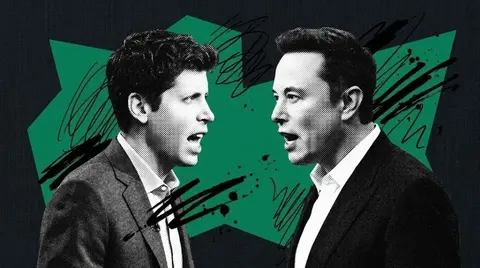
Elon Musk, billionaire and CEO of Tesla, has once again ignited Bitcoin.
After changing his personal Twitter bio to "Bitcoin," he reiterated: "Bitcoin is a good thing. I'm a supporter."
For speculators, this is a feast of coin trading.
Musk’s change of Twitter profile caused Bitcoin’s price to surge 18% within an hour.
Is this speculative "virtual currency" frenzy detached from the real economy, or is it grounded in serving the real economy?
Faced with the Bitcoin craze, different groups have given completely opposite answers.
Bitcoin and blockchain seem to be a microcosm of how humanity confronts technological advancement today.
Is technology neutral, or inherently good? How should we respond to rapidly advancing technologies? For a long time, we have not found an appropriate way to handle these questions.
The Retreat of "Technological Neutrality"
"We believe technology is not shameful," declared Wang Xin, founder of KuaiBo, during his court defense.
The argument that "platforms are innocent, and developing platform technology is not a crime" sparked intense controversy.
The peak of "technological neutrality" came from the 1984 case "Universal City Studios v. Sony Corp.", which for over two decades became a fundamental consensus and principle.
If we set aside human factors and focus solely on technology, we might absolve technological products of responsibility.
But human factors cannot—and should not—be ignored. The complexity of human nature ensures that so-called "neutral technology" will inevitably lead to vastly different outcomes.
P2P video technology became entirely distorted in practice, turning into fertile ground for piracy.
Encryption technology has spawned speculation and worthless cryptocurrencies, leading people into irreversible ruin amid frenzy.
According to China's裁判文书网 (Judgment Documents Network), prior to 2018, annual growth of virtual currency-related pyramid schemes exceeded 100%. In 2018 alone, there were 166 such cases, accounting for nearly 5% of all pyramid scheme cases.
With the same blockchain technology, most attention focuses on speculation and how cryptocurrencies protect illicit activities. Yet a group represented by OKLink dives deep into technological R&D, aiming to better integrate blockchain with the real economy.
Since its founding in 2013, OKLink has been committed to blockchain technology research and application, actively exploring how emerging technologies can drive financial innovation, enhance efficiency, and strengthen finance’s ability to serve the real economy. Globally, OKLink is among the few solution and service providers capable of supporting large-scale commercial applications.
Regarding blockchain technology, OKLink’s approach is: “To carry out further innovative exploration in fintech under the premise of compliance and controllable risk, striving to deliver satisfactory results in this new wave of digital transformation.”
In the internet era, technological neutrality has preconditions. When facing technology, some see arbitrage opportunities; others seek truth and promote positive development. Technology is never absolutely neutral.
The Boundaries of "Tech for Good"
Beyond technological neutrality, "tech for good" has emerged as a new prevailing ideology.
OKLink remains deeply focused on core technological R&D and industry infrastructure development. Through self-developed blockchain infrastructure products, it has achieved many advanced blockchain features while significantly enhancing scalability, greatly reducing data transmission costs, and dramatically improving efficiency for blockchain application development.
Meanwhile, to address the challenge of cryptocurrency’s strong anonymity, OKLink launched the "On-Chain Eye" feature. Based on deep analysis and continuous updating of massive on-chain data, "On-Chain Eye" reconstructs transaction behaviors and presents them in a "visualized" format, offering users services such as transaction graphs and address analysis. This greatly aids in tracking cryptocurrency flows, identifying key investigation leads, and improving investigative efficiency.
However, it must be recognized that the "good" in "tech for good" also faces boundary issues.
On December 26, 2019, He Jiankui, associate professor at Southern University of Science and Technology, announced the birth of a pair of gene-edited babies immune to HIV. By modifying the CCR5 gene, the infants were born with natural resistance to the HIV virus. From a public perspective, using technology to efficiently grant humans immunity against AIDS seems, in intention, to align with the idea of "tech for good."
Yet under current conditions where the technology is far from mature, creating gene-edited babies is certainly not "good." With gene-editing technology still immature and potential risks unclear, invoking "goodness" as justification sacrifices two innocent infants. Even if the technology matures, the ethical dilemmas and societal implications of gene-edited babies resemble a Pandora’s box. The wealthy could freely edit genes to give their offspring intellectual and physical advantages far beyond ordinary people, exacerbating social inequality.
This means that even well-intentioned "good" technologies require clear boundaries—ones that neither stifle technological progress nor allow the blossoming of "evil flowers" and broader social problems.
Acknowledging Technology’s Dual Nature
The relationship between technology and humanity should not be monolithic. We must acknowledge technology’s dual nature—promoting positive effects while strictly controlling negative ones.
Just like Bitcoin and blockchain, this is a coin with two sides. On one side, there is speculation and illegal transactions; on the other, decentralization and traceability. Rather than saying Musk supports Bitcoin, it may be more accurate to say he supports the blockchain architecture behind Bitcoin.
On Twitter, the comment he liked best says it all: “Money is already money. Bitcoin doesn’t need to replace them. Instead, Bitcoin is a patch to fix the banks’ crazy inflation.”
The development of blockchain technology should stay true to its original vision—genuinely achieving decentralization and traceability. Some capable fintech enterprises are "practicing what they preach," actively exploring how to use emerging technologies to drive financial innovation, improve efficiency, and strengthen finance’s capacity to serve the real economy—and have already achieved notable success. OKLink is one such representative company.
OKLink’s "On-Chain Eye" is currently the only blockchain browser product on the market integrating blockchain, big data, and artificial intelligence. This technology is the first chain data monitoring and transaction behavior visualization tool to be freely accessible to all users. Individuals can use it to track stolen digital assets and protect account security. Meanwhile, "On-Chain Eye" also assists law enforcement agencies in on-chain investigations, combating darknet economies, and intelligent policing—effectively countering illegal activities involving cryptocurrencies. As a result, OKLink has participated in drafting the first anti-money laundering standard for blockchain industry applications.
Currently, OKLink continues to work on building and improving the blockchain industry ecosystem. It has committed $100 million to establish an industrial capital fund providing financing and investment services for high-quality global blockchain innovation projects; partnered with CEYuan Capital to launch a 10-billion-RMB co-growth mother fund dedicated to investing in foundational blockchain R&D projects; joined hands with industry partners to initiate the Beijing Blockchain Ecosystem Investment Fund (first phase: 1 billion RMB), guiding traditional enterprises toward business transformation and application innovation; and collaborated with Tsinghua Yangtze River Delta Research Institute to invest tens of millions of dollars in Hangzhou to build China’s first physical blockchain incubator, offering startups technical support, solutions, industrial capital, and ecosystem acceleration services—boosting innovation and entrepreneurship ("double creation") in the blockchain field.
As Yuval Noah Harari said in *Sapiens*: "Today’s technological explosion means we’re just one step away from godhood, yet we remain irresponsible, insatiable, and unclear about what we truly want. This moment may be the most critical juncture in history."
We must clearly reflect on the relationship between humanity and technology to secure long-term welfare for humankind.
Regulation of blockchain technology and OKLink’s strategic direction offer a viable path forward—not clinging to technological neutrality, nor overly emphasizing "tech for good," but acknowledging technology’s dual nature, proceeding cautiously, and guiding technology toward progress that benefits humanity.
Join TechFlow official community to stay tuned
Telegram:https://t.me/TechFlowDaily
X (Twitter):https://x.com/TechFlowPost
X (Twitter) EN:https://x.com/BlockFlow_News