Crypto Morning Brief: SpaceX’s market cap exceeds $2 trillion on its first day of listing; U.S. SEC proposes measures to clear obstacles for tokenized stock trading
TechFlow Selected TechFlow Selected
Crypto Morning Brief: SpaceX’s market cap exceeds $2 trillion on its first day of listing; U.S. SEC proposes measures to clear obstacles for tokenized stock trading
Blockworks, a crypto data provider, acquires competitor Messari.
 Navigating Web3 tides with focused insights
Author: TechFlow
Yesterday’s Market Highlights
U.S. SEC Proposes Repeal of Reg NMS Rule 611, Potentially Removing a Key Barrier to Tokenized Stock Trading
The U.S. Securities and Exchange Commission (SEC) has proposed repealing Rule 611 (the “Order Protection Rule”) and Rule 610(e) (the “Lock-up/Cross-Market Restriction”) of Regulation NMS, initiating a 60-day public comment period. Alex Thorn noted this move could eliminate a core market-structure obstacle for trading tokenized U.S. equities on DeFi platforms.
According to the SEC’s explanation, Rule 611 requires trading centers not to execute orders at prices inferior to protected quotations displayed by other exchanges. Automated Market Makers (AMMs), however, struggle to comply due to their pool-based pricing mechanisms, slippage, and block-time execution constraints. The SEC suggests that replacing per-trade constraints with a broker-level “best execution” obligation would significantly expand the applicability of on-chain liquidity pools to tokenized stock trading.
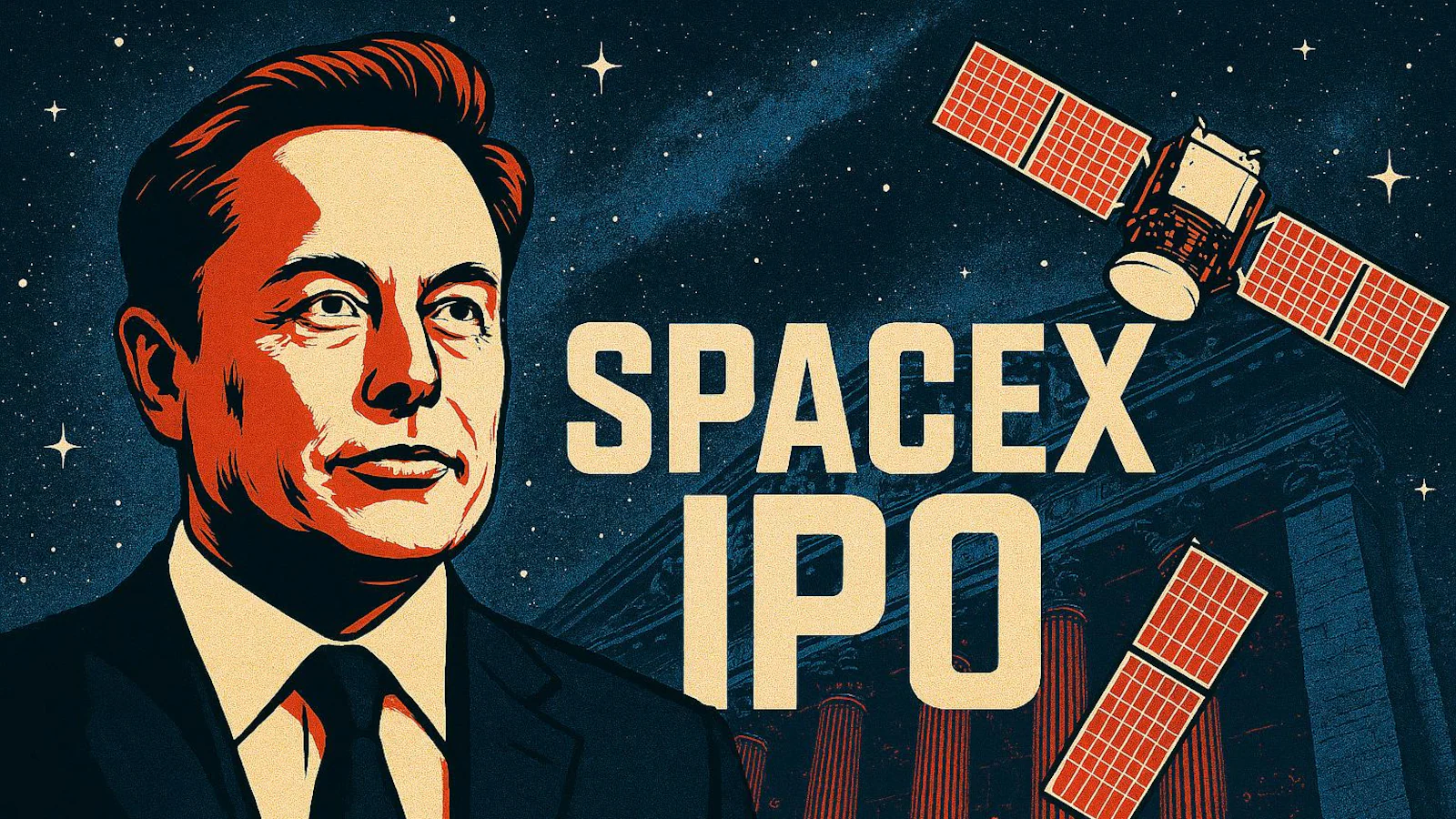
SpaceX (SPCX.O) Opens First Day of U.S. IPO at $150, Valuation Hits $2 Trillion
SpaceX (SPCX.O) opened its first day of U.S. IPO trading at $150 per share, above its $135 IPO price, achieving a $2 trillion market capitalization—making Elon Musk the world’s first trillionaire.
Kraken Partially Fills SpaceX Pre-IPO Orders Due to Limited Allocation; Unfilled Portions Fully Refunded
Kraken employee Nata explained that, due to lower-than-expected allocation for the SpaceX Pre-IPO offering, only partial fulfillment of user orders occurred today; unfilled portions will be fully refunded to users’ accounts at no charge. Demand for SpaceX Pre-IPO access on the xStocks platform has been exceptionally high, but final allocation is determined solely by the IPO’s underwriters—not by Kraken or xStocks. Meanwhile, Kraken has launched trading for SpaceX equity and tokenized SpaceX (SPCXx) for eligible customers and stated it will notify clients in the coming weeks about opportunities to participate in future IPO Access offerings.
Separately, community users report that multiple individuals who successfully subscribed to the SpaceX IPO via Kraken’s xStocks platform have received identical allocations: 4.2786 SPCX tokenized shares, valued at approximately $600.
Metaplanet Acquires Japanese Licensed Broker Siiibo Securities to Advance Bitcoin-Centric Financial Ecosystem
Metaplanet CEO Simon Gerovich announced that Metaplanet has entered into an agreement to acquire Siiibo Securities—a pioneer Japanese online corporate bond market broker holding a Type I license—in a 100% equity deal. The transaction is expected to close in July 2026 and will result in the firm being rebranded as Metaplanet Securities. This marks Metaplanet’s first major acquisition and the inaugural implementation of its “Project Nova” strategy—aimed at building a Bitcoin-centric financial ecosystem in Japan.
Crypto Data Provider Blockworks Acquires Competitor Messari
According to Bloomberg, crypto data provider Blockworks has acquired competitor Messari.
F2Pool Co-Founder Wang Chun’s Associated Wallet Withdraws Another 15,740 ETH from Binance Within Two Hours
On-chain analytics platform Lookonchain (@lookonchain) reported that a wallet linked to F2Pool co-founder Wang Chun withdrew another 15,740 ETH from Binance within two hours, valued at approximately $26.4 million.
FTX/Alameda Unstakes and Transfers Another 200,000 SOL; Total Transferred Now Exceeds 10.75 Million SOL
On-chain analyst Ember (@EmberCN) observed that FTX/Alameda unstaked and transferred 200,000 SOL (valued at ~$13.01 million) to multiple addresses five hours ago; most of these addresses are expected to subsequently deposit the SOL into Coinbase or Binance.
Since November 2023, FTX/Alameda’s staking addresses have collectively unstaked and transferred 10.75 million SOL via similar methods. At the average transfer price, this amounts to ~$1.407 billion, or roughly $130.90 per SOL. Currently, 2.985 million SOL (~$200 million) remain staked across these addresses.
SBF’s Appeal to Overturn Fraud Conviction and 25-Year Sentence Rejected
According to Reuters, former FTX CEO Sam Bankman-Fried’s appeal seeking to overturn his fraud conviction and 25-year prison sentence has been denied. This ruling leaves both his conviction and sentence unchanged.
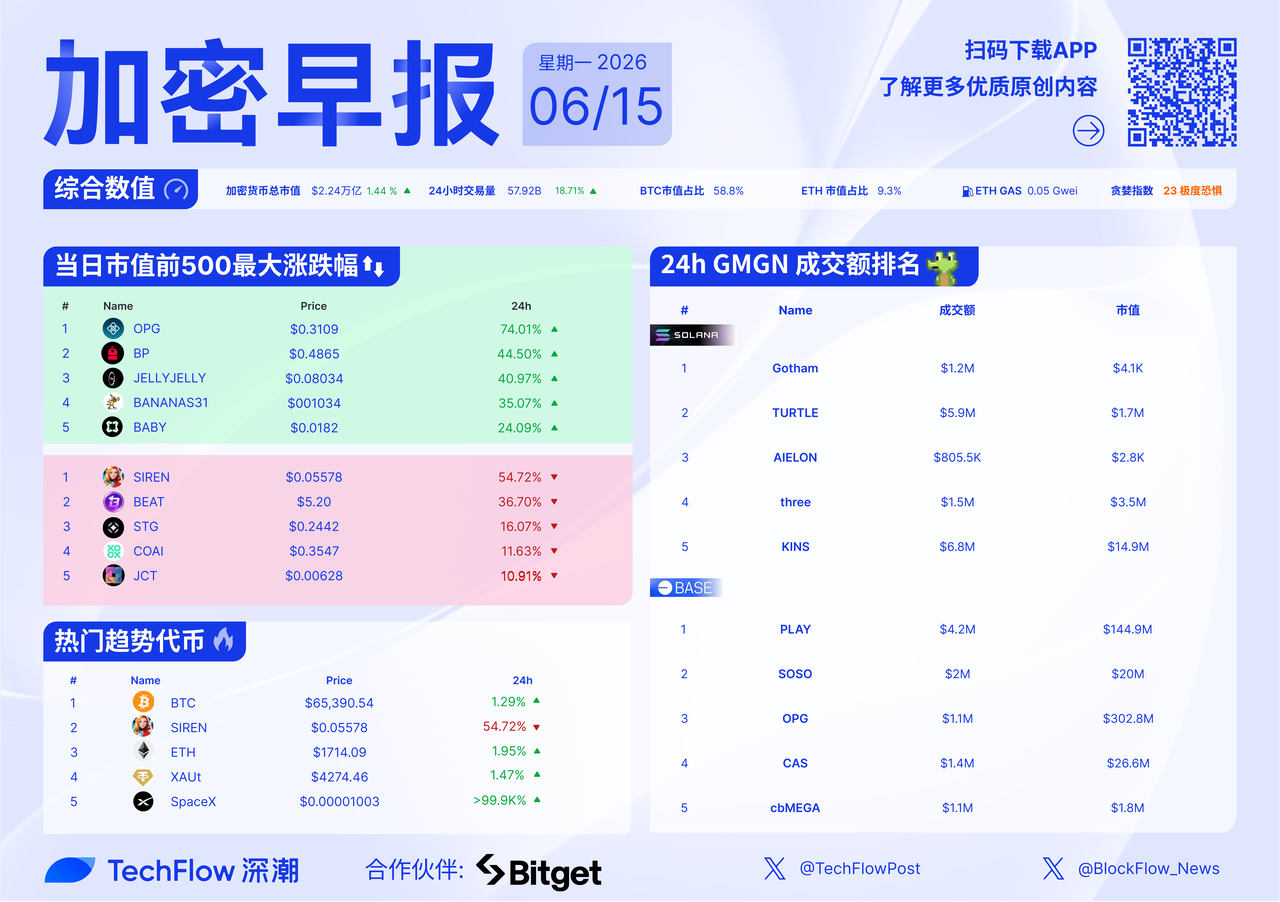
Market Data
Recommended Reading
“I Don’t Need a Better Model Anymore”: AI User Sentiment Revealed in Reddit’s Viral Thread
https://www.techflowpost.com/article/32018
Following Anthropic’s release of its latest flagship model, Claude Fable 5—which significantly outperforms GPT-5.5 and its own Opus 4.8 on benchmarks—Reddit users reacted with surprising indifference. A top-voted post bluntly declared: “Fable made me realize I don’t need a better model.”
The most common sentiment in the discussion was that most users’ needs are already met by prior-generation models. Rather than raw capability gains, users prioritize cost, speed, and stability. Fable’s price approaches double that of Opus, yet many users report no corresponding productivity improvement. Moreover, newly added safety restrictions have drawn widespread complaints: numerous requests related to code auditing and security research are outright rejected or downgraded, leading users to feel they’re “paying more for less freedom.”
That said, for users in demanding use cases—including high-energy physics simulation, ultra-long-context programming, and multi-agent collaboration—Fable demonstrates clear advantages. These users describe its improved understanding of complex systems and long-chain reasoning as a generational leap—comparable to “a college athlete upgrading to an NBA starter.”
This debate reflects a broader inflection point in the AI industry: while model capabilities continue advancing rapidly, users’ perceived marginal returns are diminishing. Where the focus used to be “Can the model do it?”, the new question is “Is this incremental improvement worth paying for?” Once baseline capabilities approach the ceiling of typical user needs, factors like pricing, user experience, safety constraints, and domain-specific fit may matter more than a few percentage points on benchmark leaderboards. For AI companies, the next competitive frontier may no longer be building the strongest model—but helping users truly experience the value of those improvements.
A Gold Bottom-Fishing Guide: Watch Interest Rates, Not Just Wars
https://www.techflowpost.com/article/32014
This round of gold’s sharp decline appears, on the surface, driven by war-related sentiment—but in reality, interest rates—not missiles—have always dictated gold prices.
Over the past four months, gold has plunged from its all-time high into technical bear territory—even as Middle Eastern tensions escalate, failing to reverse the downtrend. Why? Because war pushes up oil prices, which in turn elevate inflation expectations, prompting markets to reprice the Federal Reserve’s rate-hike path. For gold—an asset yielding no interest—higher rates mean higher opportunity costs. When market sentiment shifts from “waiting for rate cuts” to “fearing further hikes,” gold’s primary supporting thesis evaporates.
More importantly, this downturn extends beyond gold alone. Bitcoin, silver, and even the Nasdaq are increasingly moving in tandem—reflecting a global deleveraging phase. When liquidity dries up, investors tend to sell not the weakest assets, but the most liquid ones—and gold fits precisely that description.
Historical precedent also shows gold’s true bottom rarely coincides with war’s end—but rather emerges alongside monetary policy pivots. This held true in both 2008 and 2022. For gold bottom-fishers, monitoring Middle East developments daily matters less than tracking three key signals: whether rate-hike expectations have peaked, whether energy prices sustainably decline, and whether gold ETF inflows turn positive again. Gold’s opportunity likely won’t return until markets begin believing the rate cycle is turning. In short: chaos doesn’t necessarily rescue gold—but rate cuts often do.
Korean Youth Go “All-In” Amid an Epic Bull Run
https://www.techflowpost.com/article/32021
This epic bull run—driven by Samsung Electronics and SK Hynix—is far more than a capital-market celebration; it’s functioning as a collective stress test on social mobility. With soaring housing prices, stagnant wages, and narrowing traditional upward mobility pathways, increasing numbers of young Koreans view the stock market as their last chance to change their fate. The fact that the average Korean holds two brokerage accounts—and that margin trading volumes have hit record highs—reflects not mere greed, but deep-seated fear of being left behind by history. While the bull market briefly fosters the illusion that “everyone has a shot,” it simultaneously magnifies wealth and resource inequality—true risk tolerance remains the privilege of a minority, while most chase not stocks themselves, but a ticket to a better life.
Citi Releases “Asset Tokenization Outlook 2030”: Six Trends Could Drive an $8.2 Trillion Market
https://www.techflowpost.com/article/32020
Citi’s latest report, “Asset Tokenization Outlook 2030,” states that financial asset tokenization is transitioning from proof-of-concept to large-scale deployment. The report forecasts the global tokenized asset market could reach $5.5 trillion by 2030, with an optimistic scenario projecting $8.2 trillion. Citi identifies U.S. equities and Treasuries as primary growth engines, while stablecoins, tokenized deposits, regulatory clarity, and full participation by traditional financial institutions will jointly serve as critical catalysts. Rather than a disruptive revolution, tokenization is more likely to reshape global capital markets incrementally—via coexistence of on-chain and off-chain systems—ultimately propelling finance toward a 24/7, real-time settlement, on-chain era.
The $1 Trillion Valuation Test: Are Three Mega IPOs a Tech-Stock Celebration—or a Crypto Nightmare?
https://www.techflowpost.com/article/32019
With SpaceX, OpenAI, and Anthropic all poised at the IPO threshold, capital markets face not just three mega-unicorns—but a concentrated pricing of the next decade’s technological narrative. This wave of IPOs—with combined valuations exceeding $3.5 trillion—may trigger short-term capital reallocation among AI, tech stocks, and crypto assets. Yet historical experience shows market direction hinges less on IPOs themselves, and more on whether these trillion-dollar stories deliver on growth promises. Beyond concerns over “liquidity drain,” what truly warrants attention is: once investors can directly buy stakes in AI and next-gen infrastructure leaders, which assets get repriced—and which narratives lose their premium?
Join TechFlow official community to stay tuned
Telegram:https://t.me/TechFlowDaily
X (Twitter):https://x.com/TechFlowPost
X (Twitter) EN:https://x.com/BlockFlow_News
 深潮TechFlow