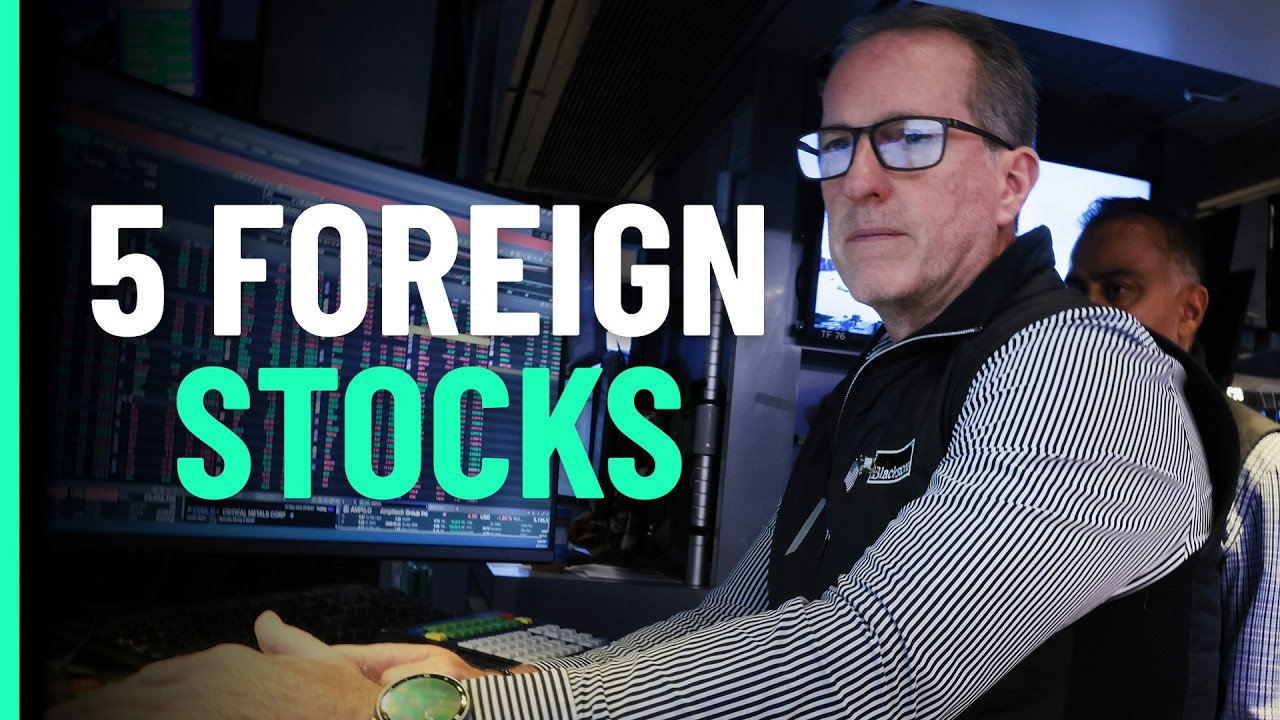
Overseas Analysts’ Recommendation: Look Toward International Markets—These 5 Stocks Will Outperform the S&P
TechFlow Selected TechFlow Selected
Overseas Analysts’ Recommendation: Look Toward International Markets—These 5 Stocks Will Outperform the S&P
If I could hold only one stock for the next five years, I would choose $ASML.
 Navigating Web3 tides with focused insights
Compiled & Translated by TechFlow
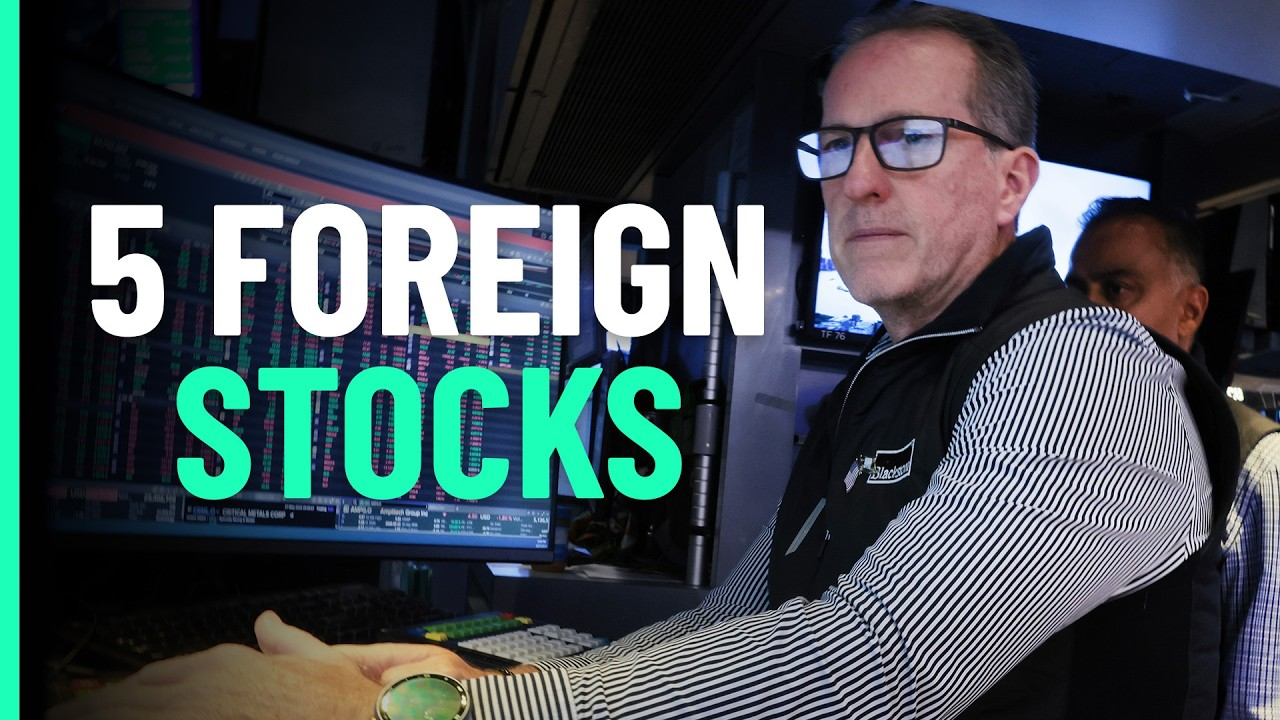
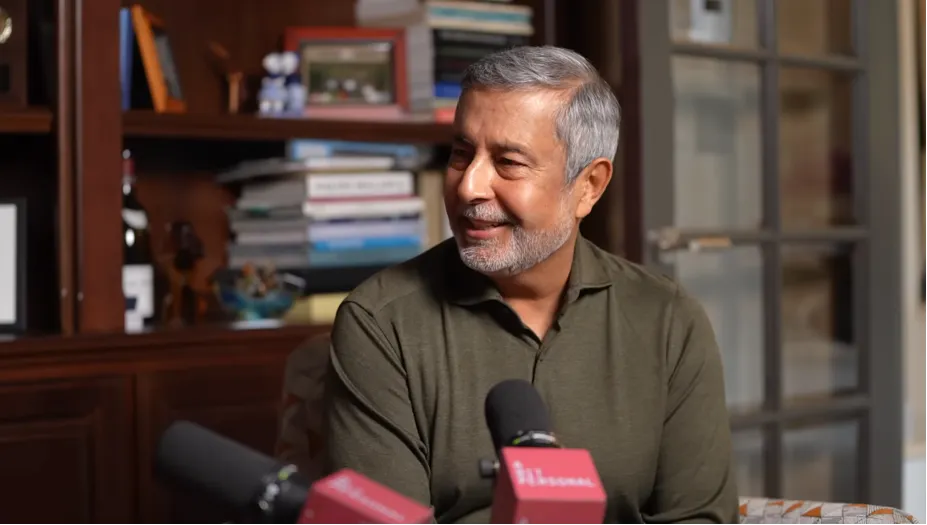
Guest: James E. Demmert, CIO of Main Street Research
Host: Caroline
Podcast Source: TheStreet & James E. Demmert
Original Title: 5 Foreign Stocks That Could Beat The S&P 500
Air Date: June 2, 2026
Key Takeaways
While Main Street Research CIO James Demmert forecasts the S&P 500 to reach 8,100 this year, he asserts that international equities will outperform U.S. stocks—citing five international names trading at significantly lower valuations than their U.S. peers yet directly benefiting from the AI revolution: HSBC at a 9x P/E ratio, BHP at 16x, and ASML—the stock he calls “the one to own for five years if you could only hold one.”
Demmert argues that Europe and Japan are stepping up as global growth engines with unprecedented fiscal stimulus—and that this trend of international markets outperforming the U.S. will “last for several years.” He recommends allocating 45% of portfolios to international assets.
Highlights of Key Insights
- “If investors hold only U.S. stocks today, they’re missing out on two things first and foremost: diversification, and truly compelling opportunities outside the U.S.—where valuations are more reasonable and growth prospects equally, if not more, attractive.”
- “International markets have already outperformed the U.S., and we believe this trend will continue.”
The Ultimate Global Chip Play: $ASML
- “We own NVIDIA and Micron; ASML plays a distinct role in the AI trade—it provides chip design and manufacturing technology, while also giving us diversification outside the U.S.”
- “The U.S. dollar is weakening persistently; allocating to foreign companies’ equities helps mitigate concentration risk tied to dollar-denominated assets.”
A High-Value Global Bank: $HSBC
- “HSBC trades at just 9x P/E—cheaper than JPMorgan, with stronger forward growth prospects. As a global investment bank, its influence across Asia is unmatched by JPMorgan.”
- “I don’t consider Chinese equities investable at this juncture—but companies operating in or capable of operating in China are highly meaningful.”
Energy Infrastructure Play: Siemens Energy
- “The world is facing an electricity shortage—AI consumes power, crypto consumes power, EVs consume power. Siemens Energy’s core business is building grids worldwide.”
- “The AI revolution is still in the third or fourth inning of a nine-inning game—very much in its early stages. The performance pattern of this type of stock—remember the 1990s tech boom—mirrors the early years closely, and such trends can last a very long time.”
The Hidden AI Mining Stock: $BHP
- “Most people see this purely as a commodity trade—but when you factor in demand from all data centers, it’s unequivocally an AI investment—I call it the ‘second derivative of AI.’”
- “The world needs more copper. The more data centers we build, the more critical copper becomes. BHP trades at just 16x P/E—valuations overseas are far superior to those in the U.S.”
An Undervalued Healthcare Rebound: $AZN (AstraZeneca)
- “Healthcare has been overlooked by the market for too long. AstraZeneca boasts a robust pipeline of pharmaceuticals and biomedicines, trades at 18x P/E, and grows over 20% annually.”
- “Investors will begin rotating into healthcare later this year, once they start feeling AI’s tangible value-add and real-world impact in medicine.”
Why International Markets Are Outperforming the U.S.
- “This is a valuation story—but also a story about shifting global policy. The U.S. is tightening fiscal spending, while Europe is taking a page straight from our playbook—they’re launching unprecedented government fiscal stimulus to sustain low interest rates.”
- “For the first time in years, international markets have outperformed the U.S.—and we believe this is a multi-year trend.”
Quick Q&A: Top Pick & Biggest Risk
- “If I could hold only one stock for the next five years, it would be ASML. The first to double? ASML. The first to buy on a pullback? Siemens Energy.”
- “The most undervalued international market is Europe. The biggest mistake U.S. investors make is under-allocating internationally—being overly conservative. We recommend 45% international, the rest domestic.”
Introduction
Host Caroline: “S&P 500 at 8,100—that’s the bold forecast from my next guest. While he remains bullish on U.S. equities, he argues some of the biggest opportunities may actually lie overseas. Joining me now is James Demmert, Founder and Chief Investment Officer of Main Street Research. James, great to have you on.”
James:
Great to be here, Caroline.
Host Caroline: “You still expect the S&P 500 to hit 8,100 this year—but none of your top five stock picks are in the index. What does that tell us?”
James:
It tells us that yes—we do expect the S&P to reach 8,100. That target used to seem lofty, but it’s now closer than many imagined. It also signals that our tilt toward international markets reflects our conviction that they’ll outperform the S&P 500.
Host Caroline: “If investors hold only U.S. stocks today, what are they missing?”
James:
I think they’re missing first, diversification—and second, truly compelling opportunities outside the U.S.—where valuations are more reasonable and growth prospects equally, if not more, attractive. You’ve likely noticed that international markets have already outperformed the U.S. this year—and we believe this trend will continue.
Top Pick #1: The Ultimate Global Chip Play
Host Caroline: “Alright, let’s dive into your top five picks—starting with ASML. This stock has already surged significantly this year. Why add more now?”
James:
I know everyone in tech is chasing Micron and memory-chip trades. But remember—ASML designs and manufactures semiconductor equipment and is indispensable across the entire chip fabrication process. Headquartered in the Netherlands, it currently trades at a 38x P/E—but its annual growth rate far exceeds that multiple. It’s an excellent entry point into international equities.
Host Caroline: “You mentioned Micron—so why hold ASML instead of buying Micron—or even NVIDIA or other chip stocks directly?”
James:
We own NVIDIA and Micron. ASML occupies a unique role in our portfolio because it plays a fundamentally different part in the AI trade—it delivers chip design and manufacturing technology, and simultaneously gives us diversification beyond the U.S. And as you know, the U.S. dollar is weakening persistently; allocating to foreign companies’ equities helps mitigate concentration risk tied to dollar-denominated assets.
Top Pick #2: A High-Value Global Bank
Host Caroline: “Next up is HSBC Holdings. There are plenty of high-quality U.S. banks—why look overseas for banking exposure?”
James:
That’s an excellent question—and the answer lies in valuation. Caroline, HSBC trades at just 9x P/E. JPMorgan is a fantastic company—we own it too—but HSBC offers better valuation and stronger forward growth prospects, reflecting a reawakening of international investing. That’s precisely why international indices are outperforming domestic ones. HSBC is a key component of those indices—and as a global investment bank, its footprint spans not just the U.S. and Europe, but Asia, where its presence dwarfs JPMorgan’s.
Host Caroline: “Still, how should investors assess China risk?”
James:
I’m uncertain whether the Chinese equity market itself is investable right now—but I do believe in investing in companies that operate safely in China. That’s partly why NVIDIA is so eager to open the Chinese market and sell products there. So, I don’t consider Chinese equities investable at this juncture—but companies operating in—or capable of operating in—China are highly meaningful.
Top Pick #3: Energy Infrastructure Play
Host Caroline: “Your next pick is Siemens Energy—ticker SMERY in the U.S. It’s up roughly 40% year-to-date. Why are you bullish?”
James:
Yes, it’s performed strongly this year—and we believe that strength will continue. Let’s be clear: the world is running short on electricity. AI consumes massive power, crypto consumes power, EVs consume power. And as we all grapple with how to scale up power supply, that’s exactly Siemens Energy’s domain. They’re helping build grids globally—not just in Germany, their home base, but across the world. Its P/E is around 37x—but earnings growth far outpaces that multiple.
Host Caroline: “I noted its strong YTD gain—but its one-year chart is even more impressive—up over 90%. How should investors approach stocks that have already surged sharply? Is it too late to enter?”
James:
If you haven’t entered yet, my consistent advice is to wait for a pullback—to buy on weakness—or start with a one-third position and scale in gradually. If you’re already holding, remember these stocks are volatile—the entire AI trade is volatile. But in our view, the AI revolution is still in the third or fourth inning of a nine-inning game—very much in its early stages. The performance pattern of this type of stock—if you recall the 1990s tech boom—closely mirrors the early years, and such trends can last a very long time.
Top Pick #4: The Hidden AI Mining Stock
Host Caroline: “Next is BHP Group, up over 40% YTD. Why remain bullish on mining?”
James:
The world needs more copper. The more data centers we build, the more critical copper becomes. We also believe we’re entering a phase of broad-based global economic expansion—which means demand for raw materials will only grow, and BHP is an ideal vehicle to participate. Headquartered in Australia, it trades at just 16x P/E. Again—valuations overseas are far superior to those in the U.S.
Host Caroline: “So is this really a commodity trade—or an AI infrastructure play?”
James:
That’s precisely its essence. Most people see it as just a commodity trade—but once you account for demand from all data centers, it’s absolutely an AI investment—I call it the ‘second derivative of AI.’
Top Pick #5: An Undervalued Healthcare Rebound
Host Caroline: “Last up is a healthcare stock—AstraZeneca (AZN). It’s actually underperformed the broader market this year, essentially flat. Why buy a laggard in healthcare?”
James:
This is the ‘little engine that could.’ We genuinely believe healthcare has been overlooked by the market for too long—and AstraZeneca has an exceptionally strong pipeline of pharmaceuticals and biomedicines. It trades at 18x P/E and grows over 20% annually. We think the market will rediscover the value of these stocks.
We also believe investors will begin rotating into healthcare later this year, once they start feeling AI’s tangible value-add and real-world impact in medicine. So ultimately, I think this becomes an AI investment too—and from both a valuation and international diversification standpoint, it’s an outstanding way to diversify your portfolio.
Why International Markets Are Outperforming the U.S.
Host Caroline: “Alright—stepping back, from both a valuation lens and looking across your five picks—is the outperformance of international stocks over the U.S. purely a valuation story?”
James:
It’s a valuation story—but also a story about shifting global policy. As you know, the U.S. is tightening fiscal spending—or at least trying to. What we’re effectively doing is handing the baton of growth momentum to Europe—now it’s Europe’s turn to follow our playbook. Across Europe, overseas, and Japan, you’re seeing these economies genuinely heat up, as they launch unprecedented government fiscal stimulus while striving to maintain low interest rates. That’s why international markets have outperformed the U.S. for the first time in years—and we believe this is a multi-year trend.
Quick Q&A: Top Pick & Biggest Risk
Host Caroline: “Let’s move to our rapid-fire Q&A. If you could hold only one stock for the next five years, which would it be?”
James: ASML.
Host Caroline: “If you had to cut one from this list first, which would it be?”
James:
AstraZeneca.
Host Caroline: “Which would you buy first on a pullback?”
James:
Siemens Energy.
Host Caroline: “Which of these five will double first?”
James:
ASML.
Host Caroline: “Which has the most resilience if the economy slows?”
James:
AstraZeneca.
Host Caroline: “Which holds the strongest competitive advantage versus its peers?”
James:
Siemens Energy.
Host Caroline: “What’s the biggest shared risk across all five?”
James:
A bear market.
Host Caroline: “If you added a sixth stock to the list, what would it be?”
James:
NVIDIA.
Host Caroline: “Where is the most undervalued international market right now?”
James:
Europe.
Host Caroline: “What’s the biggest mistake U.S. investors make when allocating internationally?”
James:
Under-allocating internationally—being overly conservative.
Host Caroline: “What’s the recommended U.S./international allocation for a standard portfolio?”
James:
We recommend 45% international, the remainder domestic.
Host Caroline: “Which non-NVIDIA U.S. stock would you hold for five years?”
James:
Costco.
Host Caroline: “What segment of U.S. equities are you avoiding right now?”
James:
Anything in real estate or consumer discretionary.
Host Caroline: “Is that driven by interest rates?”
James:
Yes—interest rates, and also the K-shaped economy.
Host Caroline: “One word to describe your sentiment on the current U.S. market.”
James:
Bullish—but perpetually cautious.
Host Caroline: “One word for your sentiment on international markets.”
James:
Extremely optimistic—that’s two words.
Join TechFlow official community to stay tuned
Telegram:https://t.me/TechFlowDaily
X (Twitter):https://x.com/TechFlowPost
X (Twitter) EN:https://x.com/BlockFlow_News
 深潮TechFlow