Interview with VanEck CEO: Memory Chip Stocks Are a Bubble; Bitcoin Will Endure, but the Token Ecosystem Will Disappear
TechFlow Selected TechFlow Selected
Interview with VanEck CEO: Memory Chip Stocks Are a Bubble; Bitcoin Will Endure, but the Token Ecosystem Will Disappear
“The surge in memory chip stocks is more like a bubble driven by temporary supply-demand imbalances.”
 Navigating Web3 tides with focused insights
Compiled & Translated by TechFlow
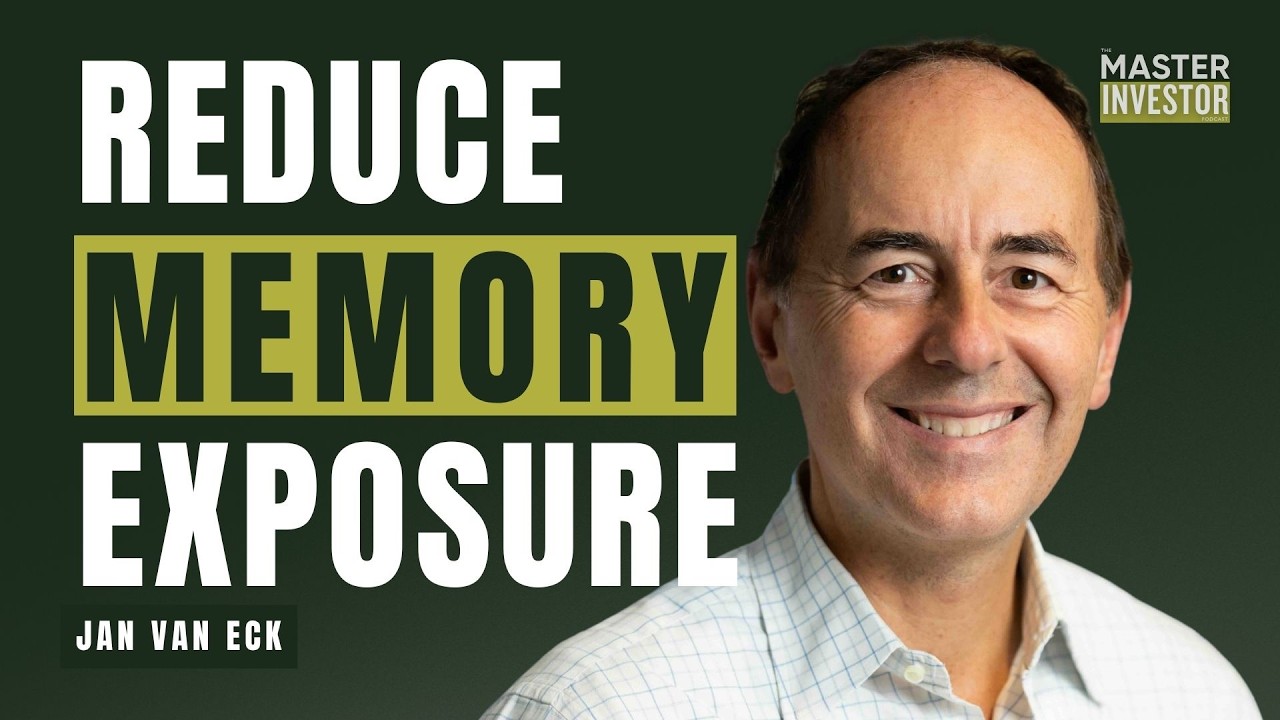
Guest: Jan van Eck (CEO of VanEck)
Host: Wilfred Frost
Original Title: Memory Is A Bubble, But Nvidia Protected – Jan Van Eck On Semis Surge
Podcast Source: The Master Investor Podcast with Wilfred Frost
Air Date: May 27, 2026
Editor’s Introduction
This episode features Jan van Eck, CEO of VanEck. His core thesis is that Nvidia has evolved from a pure GPU vendor into the “host” of AI infrastructure—backed by software ecosystems, scale, and power efficiency—while memory chip stocks’ surge resembles a bubble driven more by short-term supply-demand mismatches.
The leader of VanEck—who manages approximately $225 billion in assets and was among the earliest proponents of Bitcoin ETFs—distills the next decade’s dominant themes into three: AI compute buildout, India’s rise, and excessive fiscal borrowing by advanced economies including the U.S., U.K., and Japan.
Even more striking is his designation of 2026 as the “Year of the Corporate Control Chain,” arguing that Wall Street will absorb blockchain’s, stablecoins’, and programmable money’s best attributes—yet most crypto projects and software will lose relevance within five to ten years; Bitcoin, stablecoins, and blockchain itself will endure, while many token ecosystems will vanish.
Key Quotes
AI, Semiconductors, and Memory Stocks
- “From an AI perspective, the issue is simple: demand for compute is here, but supply is below. Semiconductors sit squarely at the heart of this structure.”
- “Nvidia is no longer just a GPU manufacturer—it’s more like the host of AI. The cyclical, hyper-competitive nature of traditional single-chip vendors no longer fully defines it today.”
- “Nvidia’s advantage stems not only from scale but also from superior power efficiency—more compute per dollar of electricity. With forward P/E multiples just above twenty, I still consider it a solid holding in any portfolio.”
- “The profit explosion in memory stocks isn’t primarily due to higher unit sales—but rather price increases. That means companies using memory chips will begin actively seeking ways to reduce usage.”
- “I’m reluctant to call tops outright—but I’m cautious on memory stocks because, over the medium to long term, they lack the deep competitive moat that Nvidia possesses.”
ETFs, Active Management, and Asset Allocation
- “VanEck’s investment philosophy is to look back from ten years ahead: by 2036, which major themes will have truly reshaped the world—and financial markets?”
- “ETFs are a scale game: larger AUM enables broader client service. Many active strategies—especially private equity and hedge funds—may actually suffer from diseconomies of scale.”
- “Even though ETFs themselves are passive tools, deciding *which* ETFs to own, how to allocate across them, and when to add or trim positions remains fundamentally an active decision.”
Macroeconomic Debt, Gold, and Hard Assets
- “If markets truly lose confidence in the U.S. government’s ability to honor its obligations, I don’t know where one could hide—even gold, though a long-term hedge, could be sold off alongside everything else in the short term.”
- “I believe gold is re-emerging as the world’s first currency—because if not the dollar, neither China nor India strikes me as likely candidates for global reserve currency status.”
- “The government bond market is one of the strangest and most inefficient markets in the world—it locks into certain mental models and detaches from reality.”
- “The Nuclear Energy ETF grew from under $20 million to $4.7 billion, reflecting an extraordinary policy reversal: bipartisan support for nuclear energy in the U.S., and renewed nuclear programs in Japan and elsewhere.”
Crypto, Stablecoins, and the Corporate Control Chain
- “I call 2026 the ‘Year of the Corporate Control Chain’: banks, trading firms, and financial institutions want to absorb the best parts of blockchain—while retaining control over their own ecosystems.”
- “We’re experiencing a crypto winter—and it won’t reverse. Many projects and software platforms won’t be interesting—or even alive—in five to ten years.”
- “The concept of blockchain will endure; stablecoins will endure; Bitcoin will endure—but many other elements of the ecosystem, in my view, will disappear.”
- “The stablecoin bill marks the first time technology companies can compete directly with the banking system. Yet banks previously survived competition from money market funds—and they’ll adapt again.”
India and the SpaceX IPO
- “Demographic trends are unstoppable. India, under Modi, continues pushing pro-business reforms—there’s simply no reason such a country shouldn’t grow faster.”
- “SpaceX is enormous in scale. As an ETF issuer, we’re thrilled to see it enter public markets—the liquidity flowing into the economy will reach hundreds of billions of dollars.”
The Frenzy in Memory Stocks
Wilfred Frost: Today’s guest is Jan van Eck, President and CEO of VanEck and its affiliated companies. VanEck is an asset management firm founded by his father and has become a major player in the ETF industry, managing roughly $225 billion in assets. Jan frequently appears on podcasts, offering refreshingly direct and clear views—a key reason we’re delighted to welcome him. Jan, welcome to the show.
Jan van Eck: Wilfred, great to join you for our first episode together.
Wilfred Frost: Let’s start with one ETF—fairly speaking, it’s driven much of your performance over the past few years and sits squarely at the center of current market attention: SMH, the VanEck Semiconductor ETF, which tracks leading global semiconductor companies. Its recent performance has been astonishing. I understand it now holds about $65 billion in AUM—is that right?
Jan van Eck: Yes, roughly that amount.
Wilfred Frost: It’s become investors’ primary gateway to semiconductor exposure. Year-to-date, it’s up 58%; over the past 12 months, up 135%. Even more remarkable: since inception, its annualized return is approximately 29%.
Jan van Eck: It’s insane, right?
Wilfred Frost: Truly unbelievable. Compounding at that rate is extraordinarily difficult—you could retire now.
Jan van Eck: Yes, I should probably quit right now.
Wilfred Frost: But I suspect you won’t—which is why you’re here on this podcast. Over the past year or so, SMH’s AUM has grown to $65 billion. How much of that growth comes from price appreciation versus net inflows?
Jan van Eck: A large portion stems from price appreciation. I’d find it hard to imagine inflows accounted for more than 10–20% over the past 12 months.
Wilfred Frost: That’s interesting—I’d assumed inflows played a larger role. What do you think has driven its rally? Perhaps it’s a simple answer: pure AI exposure?
Jan van Eck: Yes. VanEck’s investment philosophy emphasizes macro-level, big-picture thinking. I call it “10-year macro”—looking ahead to 2036 and asking: which themes will have most profoundly shaped the world—and therefore financial markets? This lens helps filter out noise.
I see at least three enduring themes: AI, India’s rise, and excessive fiscal borrowing led by the U.S., U.K., and Japan. From an AI standpoint, the logic is straightforward: compute demand is high, supply lags. Semiconductors sit at the core.
Zooming in further brings us to Nvidia—the global leader in AI GPUs and accelerated computing. One reason our ETF outperforms other semiconductor ETFs is its focus on the top 25 names and allowance for up to 20% weighting in a single stock. So it’s effectively ridden the Nvidia wave.
Nvidia itself merits a full episode. Are we still comfortable with semiconductors—and Nvidia—today? My answer is yes. No company can guarantee its moat forever—but I believe Nvidia will remain a leader a decade from now. Partly because it’s become the “host” of AI—not just a cyclical, highly competitive chip or GPU vendor of the past.
Today’s Nvidia commands software ecosystems, cost advantages, manufacturing scale, and superior power efficiency—i.e., more compute per dollar or pound of electricity. Its forward P/E is just above twenty. So although Nvidia hasn’t been SMH’s hottest stock over the past nine months, I still regard it as a very solid component of the portfolio.
Wilfred Frost: According to your latest disclosure, Nvidia accounts for roughly 17% of SMH, while TSMC (Taiwan Semiconductor Manufacturing Company, the world’s largest foundry) makes up about 9%. I’ll dig deeper into both later. You noted your ability to gain significant Nvidia exposure matters—but it’s also noteworthy that, at least this year—or as you said, over the past nine months—the rally hasn’t been driven solely by mega-cap names like Nvidia. For years, many semiconductor firms were left behind by the AI theme—only catching up recently.
Jan van Eck: Absolutely. SMH’s methodology combines deliberate strategy with some luck. By selecting only the top 25 names, and given that large caps have dominated markets over the past 15–20 years, filtering out smaller, more competitively pressured firms—many of which would drag down returns—has proven effective.
Of course, this doesn’t apply universally across all market regimes. But during this period, it has amplified the impact of these big winners.
Wilfred Frost: Short-term, with a 58% YTD gain, the rally has clearly broadened. Memory stocks have surged dramatically. Can this continue?
Jan van Eck: I doubt it. We just saw historic performance in May, so I don’t expect it to sustain that pace. Nor do I think market pricing is necessarily irrational. Returning to the super-macro view: if demand is high and supply low, capital markets are telling entrepreneurs and businesses: “Come here—we need your capital to build AI compute centers, and we’re willing to pay for it.” That’s unsurprising.
I find this 10-year lens effective because humans naturally look backward. When a major trend emerges—whether a nation’s rise or a transformative technology—we can’t rely solely on quarterly earnings or historical use cases to grasp the scale of required infrastructure.
Of course, not every tech trend materializes. There are many false booms and fake technologies. But AI is clearly grabbing global markets by the throat—and shaking them awake.
Wilfred Frost: One more short-term question: the KOSPI (Korea Composite Stock Price Index) hit another all-time high today. Over the past 18 months, it’s tripled—an astonishing move for a national index, largely driven by Samsung and SK Hynix (a major global memory chip maker). Last week, the index jumped 12% in a single day. Does that trigger any red flags—like the meme-stock frenzy at the end of 2021, followed by a sharp correction in 2022? I know memory stocks—especially those two firms—carry stunning EPS expectations, distinguishing them from meme-stock mania. But are there similarities that raise concerns?
Jan van Eck: Within the AI ecosystem, I’d say yes—some bubbles exist. At year-end, the question was OpenAI’s ecosystem’s financial sustainability. OpenAI—one of the leading model companies behind ChatGPT—faced uncertainty around whether Claude (Anthropic’s AI assistant) might overtake it. In what I call the OpenAI ecosystem, Oracle (an enterprise software and cloud company) leveraged itself to build compute for OpenAI, and CoreWeave (an AI cloud provider) was also involved. Both dropped roughly 50%.
So even within the broader AI trend, localized or company-specific bubbles emerge. To your point: I do view the memory segment as a transient moment. No one likes calling tops—but I personally remain cautious on memory stocks because, over the medium to long term, they lack Nvidia’s deep competitive moat.
New entrants will emerge. Shortages currently grant pricing power. Their profit explosion stems less from volume growth—constrained by capacity—than from price hikes. That implies customers will seek ways to conserve memory usage.
So I agree—it feels bubbly. In our actively managed funds, we’re reducing exposure to memory.
Wilfred Frost: Nvidia makes up ~17% of SMH; TSMC is second-largest, followed by Intel, Broadcom, AMD, Micron, Texas Instruments, Qualcomm, and other major U.S. firms—each around 6–7%. Does TSMC possess a similarly defensible moat? Different in kind, perhaps—but comparable in durability?
Jan van Eck: Yes, I believe so. TSMC controls not just manufacturing capability but also capital capacity—building extremely expensive chip fabrication facilities. One shared strength between Nvidia and TSMC is deep collaboration across the ecosystem—giving them visibility into virtually all customers and insight into where technology and demand are headed. Most would agree TSMC will still be standing—and thriving—a decade from now.
Wilfred Frost: You mentioned Oracle and CoreWeave plunged sharply—from late October highs to March’s “Iran War lows”—with Oracle nearly halving, a notable decline for its size. I heard you say on another podcast that we needn’t fear the overall AI bubble too much, as it’s already popped once. So how do you regain confidence to buy back the right companies at these junctures—especially when many of the firms we discuss aren’t yet public, forcing investors to rely on proxy exposures?
Jan van Eck: This may sound like a textbook ETF issuer response—but diversification at the company level is certainly more rational. Timing-wise, if you’re in such a trend, buying on pullbacks beats chasing rallies. Earlier, we discussed SMH’s flows—I believe much of its AUM stems from investors who bought years ago and let appreciation compound naturally. That’s healthy—no “hot money” chasing it.
Certainly, money is chasing memory stocks—and the hottest niches in the ecosystem. But overall, we remain overweight semiconductors in our broad portfolio models—though we’re now moderately taking profits here.
ETFs and Asset Management
Wilfred Frost: Let’s broaden the lens to VanEck itself. Earlier, we touched on SMH. Preparing for this episode, I realized VanEck was founded in the 1950s—but didn’t enter the ETF space until the early 2000s.
Jan van Eck: It was 2006. We’ve been in the ETF business for 20 years.
Wilfred Frost: I hadn’t realized that. ETFs are clearly now your largest business segment.
Jan van Eck: Yes—by far. ETF assets comprise over 95% of our total. Though we retain active strategies focused on gold mining, resources, and emerging markets—also important to us. I regularly meet with our active fund managers.
Wilfred Frost: We recently hosted Jeremy Grantham—listeners can revisit that episode. He was among the earliest ETF advocates and deeply admires Vanguard founder Jack Bogle’s influence. Bogle’s mission was to reward employees when costs were lowered for clients—a novel idea Vanguard pioneered about 50 years ago. Was cost efficiency a core theme as you built your ETF business? That is, does delivering value and lowering costs ultimately benefit the firm long-term?
Jan van Eck: It’s absolutely a scale game. In private equity and hedge funds, active management may even suffer from diseconomies of scale—if too much capital flows in, you can’t manage early-stage venture funds or small-cap strategies effectively. These approaches have capacity constraints—you simply can’t manage unlimited capital.
ETFs, conversely, thrive on scale. Larger AUM allows serving broader client bases. We don’t compete head-on with Vanguard in core client portfolios—but in our specialized domains, we keep fees highly competitive.
I do these podcasts to align with clients through research sharing. In private or active strategies, fund managers can co-invest with clients—but with dozens of specialized ETFs, we can’t hold them all. So alignment comes via transparent research—clearly stating what we like or dislike at any given time. That’s why we publish quarterly outlooks—sometimes bullish, sometimes not.
Wilfred Frost: You’ve used the word “active” already. Many view ETFs as passive tools—either investing passively via ETFs or handing money to traditional active managers to pick individual stocks. How quickly can you launch a new ETF—say, on a fresh theme? How do you adjust existing ones? Do you explicitly define yourselves as “active ETFs”?
Jan van Eck: There are two types of active decisions in ETFs. First: *which* ETFs you own. VanEck offers many specialized ETFs—and some broader ones. Deciding whether to hold semiconductors is itself an active choice. Even if the ETF vehicle is passive, decisions on weighting, timing, and allocation remain highly active.
At VanEck, this is arguably the most critical decision. Our worldview is that asset allocation and asset class selection matter immensely to investors. Our history began with America’s first gold fund—we view gold as a powerful diversifier in certain environments. While I’m not as perpetually bullish on gold as my father, that’s still an active decision.
The second question: Is there a need for active-management ETFs? It’s bigger in the U.S. than Europe—and we do offer some. Two examples: First, an actively managed digital assets ETF targeting crypto. After launching our Ethereum ETF, I spoke with clients and discovered many didn’t understand Ethereum—or its risks and drivers. As asset managers, our job is to articulate opportunity *and* risk. So we pivoted to an active fund tracking the entire sector—adjusting allocations dynamically instead of forcing investors to ride Ethereum’s volatility, Bitcoin miner swings, or fintech shifts like Revolut. This is an actively managed, stock-picking ETF.
The second example is an actively managed real assets/commodities allocation ETF. If you’re unsure whether to choose gold vs. oil—or oil vs. oil stocks—this ETF handles allocation actively.
Wilfred Frost: What are the tickers for these two ETFs?
Jan van Eck: The digital assets stock-picking ETF is NODE. My colleague Matthew Sigel is highly active on X/Twitter—if you want daily commentary on its holdings, check him out. The real assets allocation ETF is RAX.
Wilfred Frost: For listeners: Jan clearly has a financial interest in these ETFs, and this podcast does not constitute direct financial advice. Finally, on the ETF industry: How do you assess rising concentration in large S&P 500 ETFs—and the systemic risks it poses? This concern applies more to broad-market ETFs than the active or specialized ones you just described. When bears cite this as a major risk, do you find it credible?
Jan van Eck: We likely lack time to cover all structural implications. Let me highlight two areas of particular concern—both more relevant to fixed income. First: illiquidity in fixed income markets. In a bond ETF, only 5–10% of bonds may trade daily. That means market makers—like brokers—must stand ready behind the scenes.
During market stress, risk aversion rises—so bond ETFs may trade less efficiently. Some argue they reflect prices more accurately—I’d say perhaps—but spreads widen, transaction costs rise, and prices may fall. Second: a concern unrelated to ETFs, but my biggest worry for financial markets—government spending in advanced economies. Regarding ETFs specifically, fixed income is my top concern.
Macro Debt Implications
Wilfred Frost: Over the past week—except for today—we’ve seen bond yields rise notably. The U.S. 10-year yield climbed above 4.6%, after hovering near 4.3%. Does this shift evoke your biggest macro fear?
Jan van Eck: You can guess—I love multi-decade charts. I always say any chart under ten years is “chart crime.” Of course, assuming data exists—if not, find the longest available historical analogy.
Jan van Eck: UK and Japanese 30-year yields hit multi-year highs last year—and this trend continues. Causes vary slightly by country. The UK may face political turbulence—or at least greater leadership uncertainty than the U.S.
Governments’ bond markets strike me as among the world’s strangest and most inefficient—locked into mental models detached from reality. Before Europe’s crisis, Spanish and Greek yields traded below German yields—a nonsensical dynamic—until prices suddenly repriced violently.
What’s truly meaningful—and telling—is that bond investors now demand higher long-term yields from the UK and Japan. I’m deeply concerned about the U.S. too—but timing is crucial. I watch the U.S. 10-year closely—I’m usually among the most worried—but I know we’re still in a phase others haven’t yet fretted over.
The U.S. 10-year hasn’t broken decisively into multi-year highs—it remains range-bound. But it’s something I monitor intensely. Context: U.S. budget deficits peaked at ~6.5% two years ago. Due to Trump-era tariff revenues and other factors, deficits declined—I’d forecasted this year’s deficit falling into the low-5% range, still high (theoretical ceiling: 3%), but directionally correct.
If the U.S. spends $500 billion on this Iran war, deficits jump back to ~6.5–6.9%. I see no way markets ignore that.
Wilfred Frost: Intriguingly, over the past two weeks, strong correlations emerged—even if triggers originated in the UK or Japan, everyone moved in sync amid worsening debt dynamics. Even if the U.S. isn’t as precarious as the UK or Japan, rising 10- or 30-year yields seem poised to drag it along. Would this directly negatively correlate with assets like SMH—even though it bets on themes you believe in long-term? Could growth stocks’ P/E multiples compress?
Jan van Eck: Absolutely. I haven’t spoken with enough clients about what happens if markets truly lose confidence in U.S. government solvency—but I don’t think anywhere is safe. Wilfred, I often call gold a long-term hedge—but if everyone flees financial markets, gold could get sold too.
So I see no reason semiconductors would be immune. You could argue tech isn’t debt-dependent—so the link isn’t direct. But if everyone rushes for the exits, I doubt anyone runs in the opposite direction.
Wilfred Frost: Let’s discuss opportunities. If we enter a more inflationary decade—partly driving higher yields—do you see gold selling off short-term but remaining attractive long-term? Also, comment on GDX (VanEck Gold Miners ETF). At current gold prices, even if gold flatlines, are miners generating strong profits?
Jan van Eck: Yes—they have robust cash flow. For 15 years, gold miners endured purgatory. First, gold prices weren’t high. Authorities like the Bank of England sold gold in the late 1990s at ~$250/oz.
Wilfred Frost: Thanks, Gordon Brown.
Jan van Eck: Yes, thanks to him. Back then, gold wasn’t a core portfolio component. Later, gold re-entered portfolios—but miners carried heavy debt and couldn’t control costs. Investors grew disillusioned year after year—valuations, or P/Es, kept falling. I believe the bottom came around 2016. Indeed, gold stocks fell 90% from 2011 to 2016.
In 2011, people assumed post-financial-crisis monetary stimulus would lift gold—but it didn’t. So miners faced headwinds—and share prices collapsed.
Now, they’ve rebuilt balance sheets—borrowing less, repaying debt—and cash flow is strong. To me, gold is a multi-decade trend. Even if you’re less alarmed by U.S. spending, you’ll likely marginally reduce Treasury holdings. Thus, gold is re-emerging as the world’s top currency.
If not the dollar, I don’t see China—or India—as viable alternatives. Both have capital controls and don’t aspire to be reserve currencies. Culturally, they’re massive gold buyers. So gold’s re-emergence as top currency is a multi-year process—though it may consolidate here, having surged heavily last year.
Wilfred Frost: Do you see gold correlating with the S&P 500 short-term but decoupling long-term?
Jan van Eck: Gold exhibits different personalities across cycles—trading against the dollar or inflation fears. But accepting my thesis—that gold is a global currency—recent moves make sense. Last year, global demand for gold as an alternative currency remained strong—even as U.S. inflation stayed low. So U.S. developments mattered less.
Similarly, if Gulf states lose income and need cash, they’ll sell liquid assets—and gold is deep and liquid. So gold’s selloff after the Iran conflict began aligns with my global-driver view.
Wilfred Frost: I reviewed your ETF lineup—you offer several tied to hard assets and inflation exposure. For instance: Nuclear and Uranium ETF (NLR), now nearing $5 billion; rare earths and strategic metals (~$3 billion); OIH (oil services ETF, ~$2.5 billion)—Larry McDonald has discussed it multiple times. Did you intentionally build these ETFs recently—or did they exist all along and only recently gain traction?
Jan van Eck: They’ve existed for years. When entering ETFs, we leveraged our strengths in global resources, gold, and emerging markets—that was our first batch. Fewer ETFs existed then, so these were often first-to-market.
We figured investors would want to trade oil services—and nuclear energy. Nuclear waited a long time. NLR launched in our second or third year—around 2007 or 2008—but was so unpopular that five years ago, its AUM was under $20 million.
Wilfred Frost: From under $20 million to $4.7 billion in five years.
Jan van Eck: Because the policy shift was dramatic. I rarely see such reversals. Politicians didn’t trumpet it loudly—but the Biden administration broadly supports nuclear, and key Democratic governors do too. So nuclear became bipartisan consensus in the U.S. Globally, Japan and many nations that previously shunned nuclear now have active programs—and China has consistently advanced. That’s the funding source. Lately, inflows drove growth.
Emerging Markets and Crypto Assets
Wilfred Frost: I hadn’t realized the scale growth was so large. Let’s discuss EM (emerging markets). Is this a broad EM call—or particularly India-focused?
Jan van Eck: Sometimes “10-year macro” sounds futuristic or uncertain. But certain trends become *more* certain the further out you look—like demographics. You can’t fight population trends. Whatever happens now, you’ll largely know the outcome a decade later—whether shrinking populations or other dynamics.
India, under Modi, has enacted sweeping pro-business reforms—and continues doing so. Even if these don’t make headlines in the U.S.—like last year’s bankruptcy law, labor reforms, and deregulation efforts—they’re substantial. No country undertakes so many pro-business reforms without accelerating growth. Forecasts suggest India’s economy could match continental Europe’s size in a decade.
For investors, the bigger question is: Can you profit? GDP growth doesn’t guarantee corporate profits or equity returns. Coincidentally, India decades ago shifted toward a pro-equity culture. When Infosys and early tech firms went public, they created immense wealth. Indian society seems to have reached consensus: becoming wealthy—even very wealthy—is acceptable. Combining these points explains my strong long-term macro bullishness on India.
Wilfred Frost: As you noted, India’s demographics are highly attractive—its working-age population is still growing, unlike China’s. I’m also intrigued by another ETF you offer. You emphasized wide moats for Nvidia and others—clearly a key concept for you. You also have a Wide Moat ETF.
Jan van Eck: If I asked you which financial services firm has the most equity analysts covering it, you probably wouldn’t name Morningstar. But that’s the case. They don’t promote this well—but they’ve built exactly that research capability.
Their stock research method is precisely the “moat” framework. Premise: Competition is fierce—unless a company possesses a durable competitive moat, sustaining excess profits long-term is unlikely. Moats stem from technology, economies of scale, or other factors. Morningstar screens all companies to identify the few they deem moat-worthy—perhaps only ~5% qualify (exact number needs recalculating).
Then, they apply valuation models—forecasting future earnings and selecting the cheapest stocks among those with moats for the ETF.
Wilfred Frost: This ETF has grown to $11 billion AUM. Has growth been steady—or recent and explosive?
Jan van Eck: Strictly comparing it to the S&P 500 isn’t fair—but investors do. For years, it outperformed the S&P both annually and cumulatively—so most AUM growth occurred then. Doing so in 2023 was remarkable—after 2022’s tech selloff, 2023 was a rebound year.
This approach had stellar years. Recently, it lagged—missing semiconductor’s explosive gains. So it’s lost some AUM over the past few years.
Wilfred Frost: Share your current crypto views. When did you feel the pull—or when did launching crypto ETFs become justified? Also, how’s adoption going? Are there still marginal buyers entering crypto for the first time?
Jan van Eck: In 2017, we were the first ETF issuer to file for a Bitcoin ETF. Simple reason: I view Bitcoin as gold’s competitor. Back then, Bitcoin rose faster than today. Some clients agreed. So we saw Bitcoin as platinum or silver is to gold—a complement, not necessarily a replacement.
Fast-forward to today: Wall Street has essentially absorbed crypto’s best elements over the past year—blockchain’s decentralization and transparency, 24/7 operability, and money programmability. It’s technical.
Wilfred Frost: We love technical.
Jan van Eck: In 2026, I call it the “Year of the Corporate Control Chain.” Institutions like BNY Mellon, JPMorgan, and Cumberland Trading are building what I term “corporate control chains”—absorbing blockchain’s best features while retaining ecosystem control.
They’ll insist it remain “Wilfred’s chain”—or another self-controlled chain—to keep clients within their network. That’s where we are. Nearly every U.S. financial firm uses stablecoins or parts of crypto—and tries to capture an ecosystem. I don’t think many will succeed. But this is how tech adoption evolves in 2026.
For crypto’s rest, winners will be few. We’re in a crypto winter—and it won’t reverse. Many projects and software won’t be interesting—or alive—in five to ten years.
Blockchain’s concept will persist; stablecoins will persist; Bitcoin will persist—but many other ecosystem components will vanish.
Wilfred Frost: So are Bitcoin and Ethereum—the two largest assets—still early innings, or mid-to-late lifecycle? And by the way, I love your Bitcoin ETF ticker: HODL—it made me smile.
Jan van Eck: Who knows? My view: Bitcoin will eventually reach ~half gold’s market cap. Since gold has risen, Bitcoin’s target remains multiples above current price. I also remind many U.S. investors they seem to forget Bitcoin hit an all-time high last year—and this is year four of the halving cycle. Every four years, Bitcoin drops sharply. So its drop this year isn’t surprising—we largely predicted it.
Wilfred Frost: You’re refreshingly candid. As a financial firm CEO, how critical do you see related legislation? The U.S. has taken two major legislative steps in this domain. Is it highly disruptive to traditional banks, a massive opportunity for firms like yours—or merely marginal?
Jan van Eck: Marginal. Each year, we design a tie theme—this year, commemorating the Declaration of Independence, we highlighted three pivotal moments in U.S. financial history: Alexander Hamilton, FDR’s New Deal and bank-system overhaul, and last year’s stablecoin bill.
The stablecoin bill matters because it’s the first time tech companies can compete directly with banks. Otherwise, financial life always starts with a bank account—if you lack one, you lack finance; everything flows through it. Now, tech giants can compete.
But banks have weathered competition before. In the late 1970s, money market funds offered rates banks couldn’t match—causing banks to lose deposits. Yet banks survived. Their customer base is sticky—I don’t foresee that changing.
Views on the SpaceX IPO
Wilfred Frost: Before wrapping up, a couple more questions. One is short-term: upcoming large IPOs—including SpaceX, the most anticipated near-term. Some nuances may escape notice: how quickly insider selling will be allowed, and how rapidly it enters indices—especially the S&P 500. That triggers automatic buying—not typical. Are these red flags—or at least amber warnings—for you? Or does it seem reasonable?
Jan van Eck: I’m not dogmatic. SpaceX is enormous—so as an ETF issuer, we’re thrilled it’s going public. Its steps make sense: initial float is tiny—~3–4%. Usually, such low floats disqualify firms from index inclusion—so gradual release is necessary.
As you note, the capital scale is staggering—cumulatively hundreds of billions of dollars. Compare that to last year’s tariff revenue: ~$300 billion. So it’s like waves of liquidity surging through the economy. Short-term, I see positive economic impact—and market absorption.
One argument for why fewer firms go public is that active managers can buy IPOs in active funds—but ETFs can’t. I don’t fully accept this, but it’s a reasonable point: firms may avoid IPOs to stay outside indices.
I think all assumptions deserve re-examination. Facing a large, mature firm—not a revenueless startup trading at trillion-dollar valuations—this is a mature company entering indices.
Wilfred Frost: It’ll be fascinating. Roadshows, CNBC interviews with Elon and others—all worth watching. I suspect more large AI firms will follow. The next months will be exciting—I look forward to seeing how it unfolds. Jan, finally, our standard closing question: What’s your single most important investment advice for listeners?
Jan van Eck: Adopt a macro, big-picture perspective. Since my father founded VanEck in 1955, we’ve brought in perspectives Dutch and British investors formed centuries ago: assessing political risk, gauging whether a country is pro-business, and whether it rewards equity and financial market participation—then building asset-class discussions around that.
How much should you allocate to rising China? To rising India today? Should you stick to historical weights—or hold more? Have you participated in the AI trade? What about gold? Should you—and why? These are the big, long-term questions.
We always say we’re not the sole source of knowledge. Discussions like this are valuable—and require engaging others in markets to test your assumptions.
Wilfred Frost: I love that answer—and your praise for Britain’s early financial wisdom suits me perfectly. Jan van Eck, thank you for joining The Master Investor Podcast.
Jan van Eck: Thank you, Wilfred.
Join TechFlow official community to stay tuned
Telegram:https://t.me/TechFlowDaily
X (Twitter):https://x.com/TechFlowPost
X (Twitter) EN:https://x.com/BlockFlow_News
 深潮TechFlow