A Technology Evolution Story Powered by Electricity: Aluminum, Bitcoin, and AI
TechFlow Selected TechFlow Selected
A Technology Evolution Story Powered by Electricity: Aluminum, Bitcoin, and AI
Electricity is the true core asset.
 Navigating Web3 tides with focused insights
By: Thejaswini M A
Translated by: Luffy, Foresight News
Drive about an hour northeast from Austin, Texas—past barbecue joints and barren shrublands—and you’ll arrive in Rockdale, Texas. Roll down your window before the town’s silhouette appears, and you’ll hear a deep, continuous roar, like jet engines idling on the tarmac.
Rockdale hosts North America’s largest Bitcoin mining cluster, built atop a decommissioned aluminum smelter. Industry giants including Riot Platforms and Bitdeer have established operations here. Investigations by The New York Times and Al Jazeera have already documented this sound: tens of thousands of miners operating at full capacity alongside industrial fans, struggling to prevent overheating and system failure during Texas’ sweltering summers.
Following the roar into the former Alcoa smelting facility, you’ll find no trace of 20th-century heavy industry—no aluminum production remains. Inside the vast metal warehouse, thick copper cables snake across industrial racks, while computing equipment sits fully submerged in circulating synthetic coolant.
Originally built for Bitcoin mining, the site is now gradually replacing its hardware with AMD chips to pivot toward AI model training.
Forget debating whether AI is a bubble or Bitcoin is in decline—this industrial transition is merely surface-level. The companies leasing these facilities see clearly: the real core asset is the power line. This is now an industry-wide consensus.
If you still wonder why, the logic lies in revenue per kilowatt-hour (kWh), calculated using real-time London Metal Exchange prices:
- Aluminum smelting: $0.17–$0.27 gross revenue per kWh
- Bitcoin mining: $0.05–$0.11 per kWh under current market conditions
- AI inference workloads running on H100 GPUs: $1.27–$3.67 per kWh
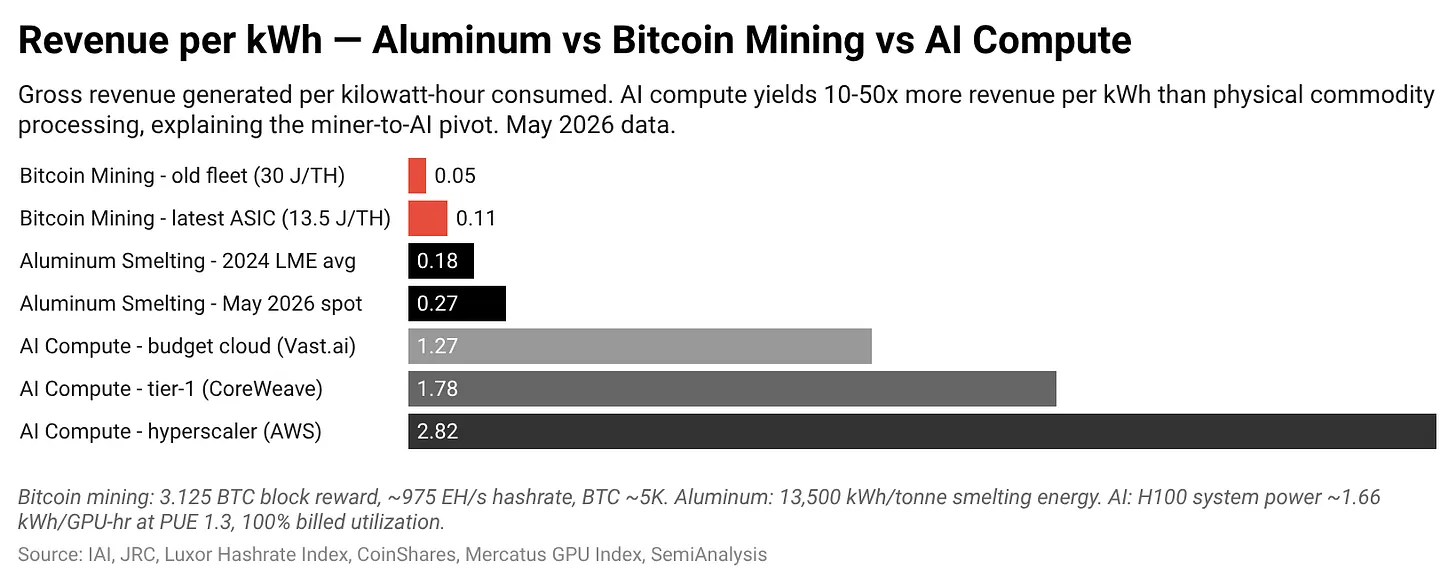
When electricity is cheap, aluminum production makes sense. Once aluminum margins eroded, Bitcoin mining inherited that low-cost power use case. By 2026, with Bitcoin prices depressed, AI workloads are simply the better option.
Three recent deals vividly illustrate the industry-wide scramble for power resources—whether for crypto mining or AI compute.
Riot owns large-scale facilities in Rockdale—not limited to Bitcoin mining—but has leased part of its space to chip giant AMD to build an AI data center. Just from subleasing power and infrastructure, the company stands to earn hundreds of millions of dollars.
TeraWulf launched a major expansion, acquiring a century-old aluminum plant in Horse Cave, Kentucky, for $200 million. The decisive factor? The site’s pre-existing, high-capacity power infrastructure. The company plans to demolish outdated production equipment and repurpose the existing grid to build a large-scale data center campus.
NYDIG secured the long-idle East Massena plant in upstate New York—a site directly connected to the St. Lawrence River, granting access to 435 MW of inexpensive hydroelectric power. Amid peers pivoting en masse to AI, NYDIG acquired this location solely to lock in low-cost hydropower for continued Bitcoin mining. Today, the industry no longer builds sites from scratch—it races to seize ready-made power hubs.
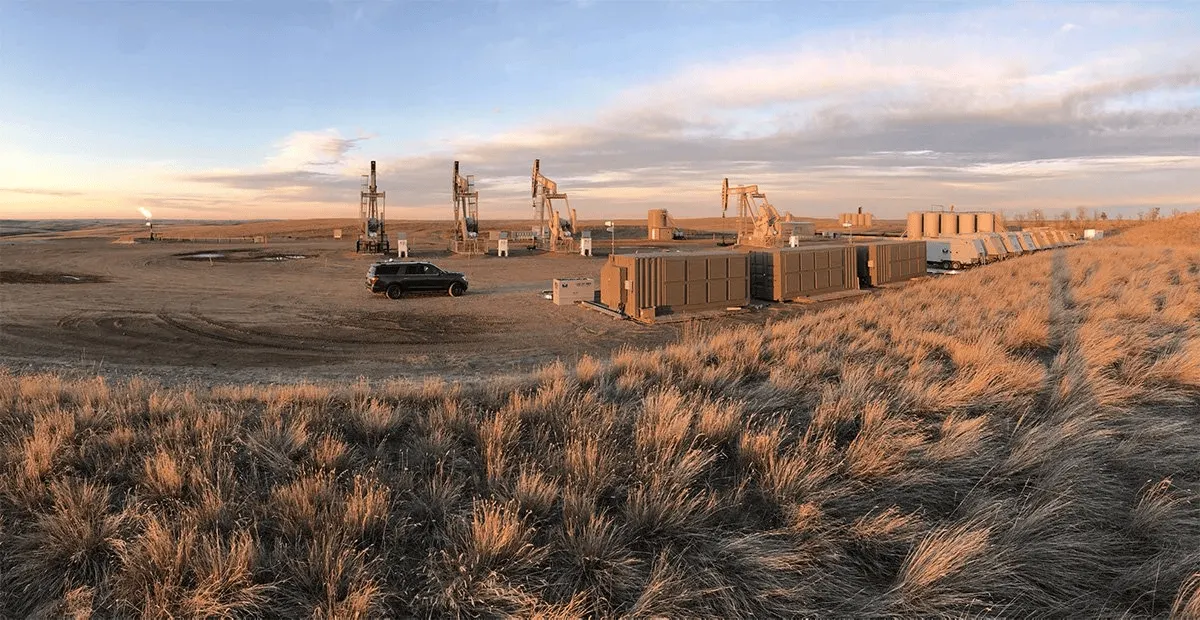
For nearly two decades, Bitcoin miners have roamed the globe searching for cheap power: remote hydropower stations in Washington State, flared natural gas sites in North Dakota oilfields, aging industrial grids in upstate New York. Along the way, they’ve honed mature supporting capabilities—24/7 high-load power consumption operations, industrial-grade thermal management, and long-term low-cost power contracts.
Now emerging AI firms need precisely those ready-made resources—and bring deeper pockets.
Anthropic is aggressively securing power supply. Microsoft, Google, and Amazon are racing to expand their data centers—even outpacing the construction speed of supporting electrical infrastructure. These three tech giants now compete directly with Bitcoin miners for the same pool of industrial-grade power. Where miners once competed only against each other for electricity, they now face far more formidable competitors—and are increasingly at a disadvantage.
Data from early 2026 confirms the industry’s distress: Bitcoin’s global hash rate declined for the first time in six years. Current per-coin mining costs stand at $88,000, yet Bitcoin traded around $77,000 for most of May—meaning miners operating at standard electricity rates lose money on every coin they mine.
The industry is collectively pivoting. Hive, Hut 8, TeraWulf, and Iren are dismantling mining rigs to retrofit facilities as AI server farms; CoreWeave has fully exited crypto mining to become an AI cloud services provider; MARA acquired a French tech firm to complete its business transformation. Companies that hold power assets—and define themselves as “power operators”—survive. Pure-play crypto miners are in crisis.
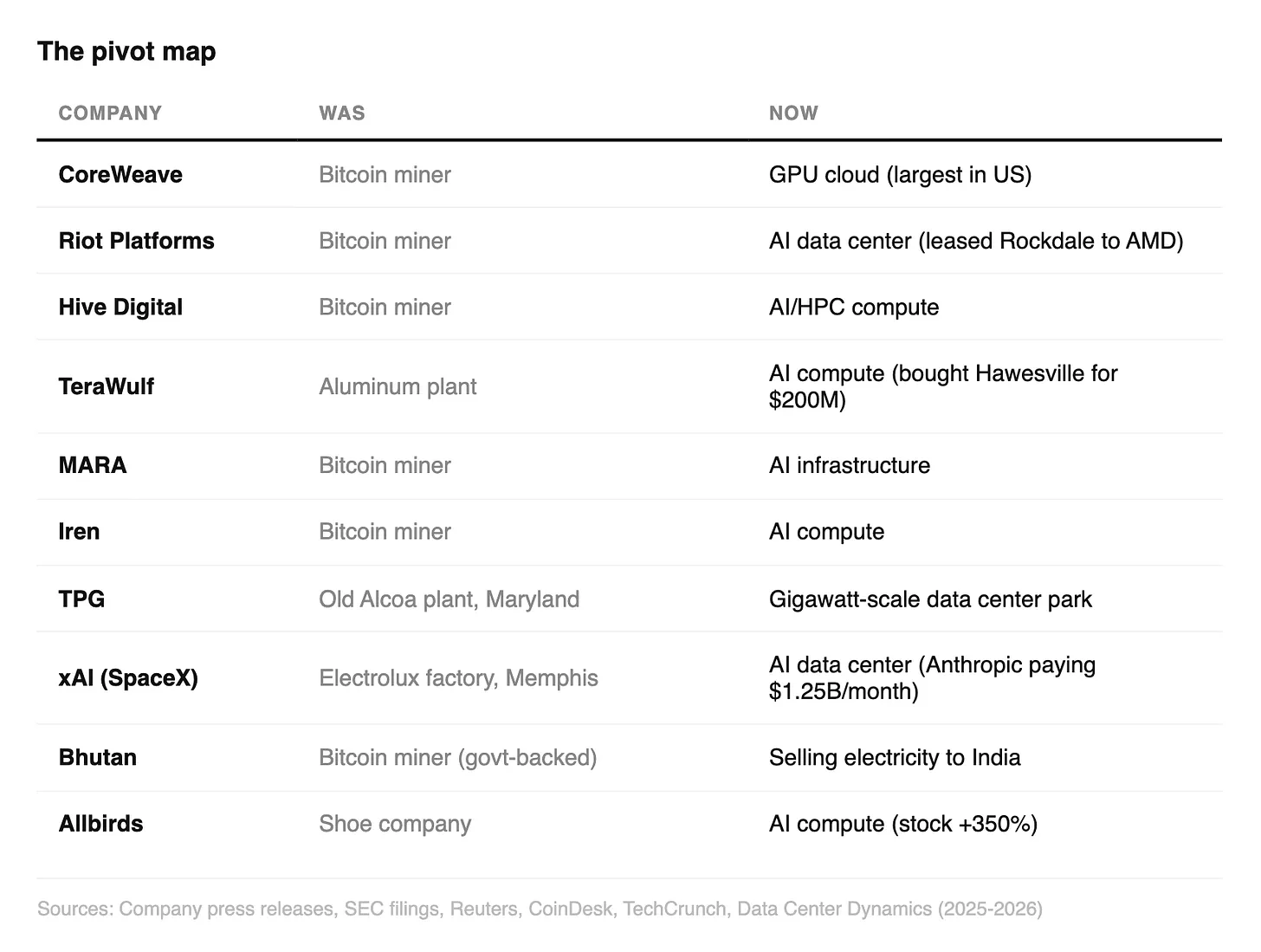
Energy analysts call this phenomenon the “digital resource curse”: nations and corporations are realizing that controlling cheap power alone yields higher returns than investing in R&D for new technologies.
Gulf states grasped this logic early. For six decades, they’ve maintained artificially low electricity tariffs: Kuwait has fixed residential electricity prices at $0.007/kWh since 1966; Abu Dhabi’s integrated cost of power generation and delivery is ~$0.087/kWh, yet it sells electricity to residents for just $0.014/kWh. Cheap power was originally an incentive to attract energy-intensive industries—aluminum, chemicals, steel—to desert regions.
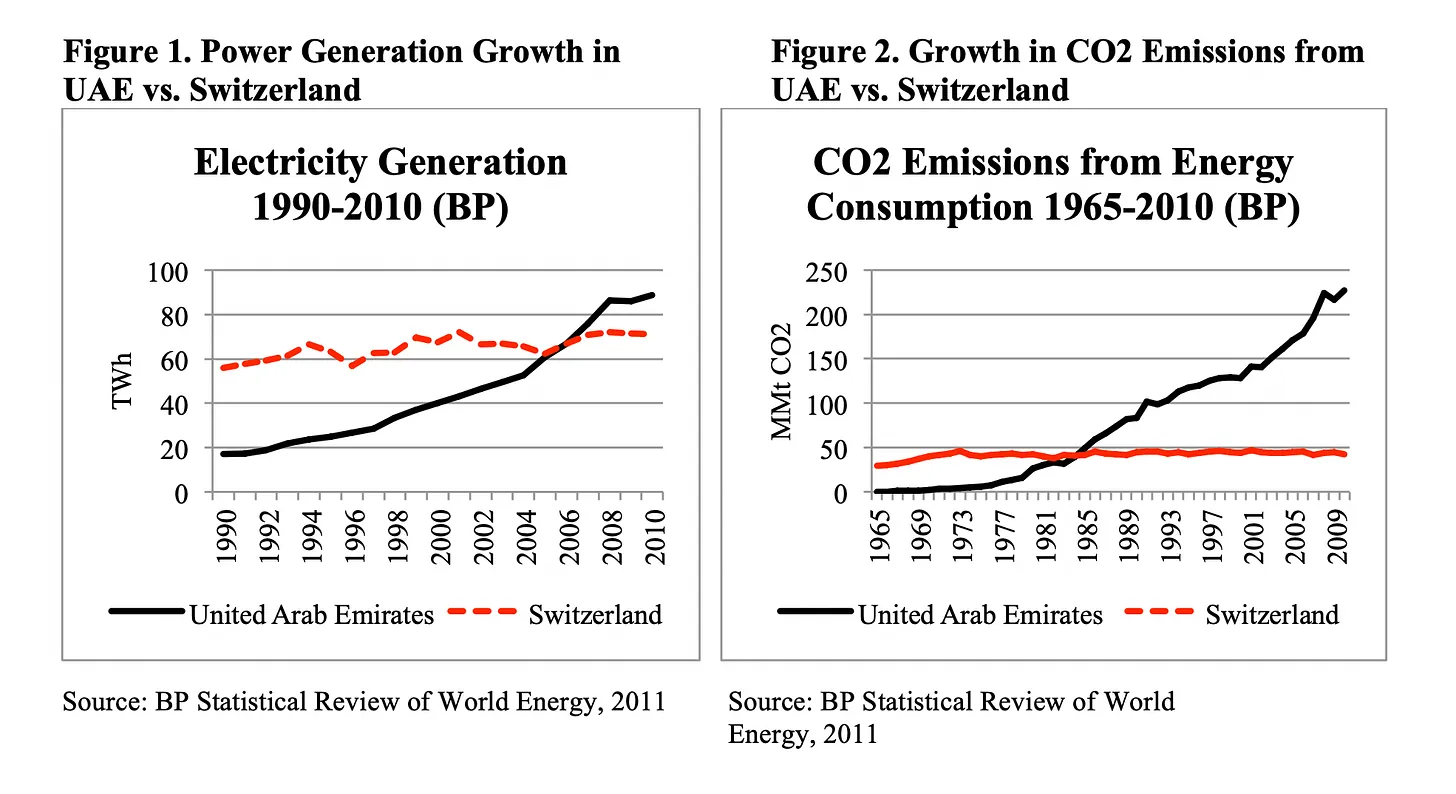
Today, that same low-cost power—once used for heavy industry—is finding new users: data centers. Saudi Arabia launched state-backed AI investment vehicle HUMAIN, committing billions to tech infrastructure. The UAE broke ground on a 5-gigawatt AI campus hosting OpenAI, Oracle, and NVIDIA. The grid once used to smelt aluminum now powers AI compute at full throttle. NEOM Oxagon—a project initially conceived as a floating industrial city—has been repositioned as a $5 billion AI data center cluster powered by wind and solar.
The Carnegie Endowment for International Peace observed: “Cloud computing has become the Gulf’s new aluminum industry.” Instead of exporting physical commodities, Gulf states now convert fossil fuels and solar energy into computing power—and export it via the internet.
It’s not just the Middle East. Bhutan offers another telling example.
Bhutan once possessed the world’s cheapest hydropower. Its government-led Bitcoin mining initiative was hailed as a sovereign mining benchmark—holding a peak of 13,000 BTC on-chain. That holding has now plummeted to just 3,100 BTC, and mining operations ceased entirely over a year ago. Its hydropower now flows directly into India’s national grid.
The calculus mirrors that of U.S. aluminum plants: Is Bitcoin mining still the optimal use of electricity? When the answer was yes, Bhutan mined. When selling power to India proved more stable—and freed Bhutan from Bitcoin price volatility—the electrons flowed across the border.
Similarly, Starcloud raised $200 million to build an orbital solar-powered data center. It recently trained the first AI model in space using H100 GPUs and is applying for licenses to launch 88,000 satellites. Though Bitcoin mining remains part of its plan, it’s now relegated to a secondary role: orbital solar panels generate continuous power; surplus energy—when AI compute queues are idle—is directed to mining.
Low Earth orbit offers exceptional power-generation advantages: uninterrupted sunlight, zero land use, and the vacuum of space eliminating the need for costly cooling systems. Over the past two decades, launch costs have dropped by 95%.
SpaceX has also entered the power-and-compute arena deeply. According to its latest IPO filing, its Colossus 1 data center in Memphis, Tennessee, is exclusively leased to Anthropic through May 2029, valued at over $40 billion—generating $1.25 billion monthly for SpaceX. Like Rockdale’s aluminum plant, this facility was also converted from an obsolete appliance factory.
Among all transformations, Allbirds’ pivot may be the most unexpected. The sustainability-focused footwear brand peaked at a $4 billion valuation—then saw its stock crash 98% amid the consumer-brand bubble burst. With cash on hand and a public listing intact, the company decisively pivoted to AI compute infrastructure operations—and its stock surged 350%. The market voted: running servers and arbitraging power and compute is vastly more profitable than traditional consumer businesses.
Meanwhile, crypto-native projects like Bittensor, Render, and Akash have taken a differentiated path: avoiding massive centralized data centers in favor of aggregating globally distributed idle compute.
Bittensor built a compute marketplace anchored by a fixed-supply token economy, enabling AI models to compete and solve tasks on-platform. In December 2025, it halved its daily token issuance. Render incentivizes users to share idle GPU resources for AI workloads; Akash rents out cloud compute, claiming prices 85% lower than Amazon Web Services.
This decentralized compute model is gaining traction. At the 2026 NVIDIA GTC, CEO Jensen Huang likened Bittensor to the classic internet project Folding@home—which mobilized idle home PCs worldwide to perform scientific computations. Bittensor does the same, but with crypto tokens as incentives, harnessing idle gaming consoles and legacy mining rigs.
Across the board—from the roaring industrial fans of Rockdale to satellites chasing the sun in orbit—a massive physical-asset restructuring is underway. For companies navigating this shift, one principle governs all: pursue profit margin. I predict that in ten years, today’s AI data centers will clear out and pivot again—toward the next wave of emerging industries—while the underground power backbone remains unchanged.
Who controls the cheapest electricity determines how compute is used. This logic holds true in Texas, Bhutan, and Abu Dhabi—and will hold equally true 250 miles above Earth’s surface.
Join TechFlow official community to stay tuned
Telegram:https://t.me/TechFlowDaily
X (Twitter):https://x.com/TechFlowPost
X (Twitter) EN:https://x.com/BlockFlow_News