Industry Leader Falls, Crypto ATMs Bid Farewell to Expansion Era
TechFlow Selected TechFlow Selected
Industry Leader Falls, Crypto ATMs Bid Farewell to Expansion Era
Fraud rampant, bans frequent, and fees soaring—the U.S. Bitcoin ATM industry is steadily declining.
 Navigating Web3 tides with focused insights
By Gino Matos
Translated by Saoirse, Foresight News
On May 18, 2026, Bitcoin Depot—the leading Bitcoin ATM operator in the United States—filed for Chapter 11 bankruptcy protection with the U.S. District Court for the Southern District of Texas. The company announced it would fully shut down operations and liquidate its assets. Its global network of over 9,000 physical Bitcoin ATMs—operating as of August 2025—ceased all services on that same day.
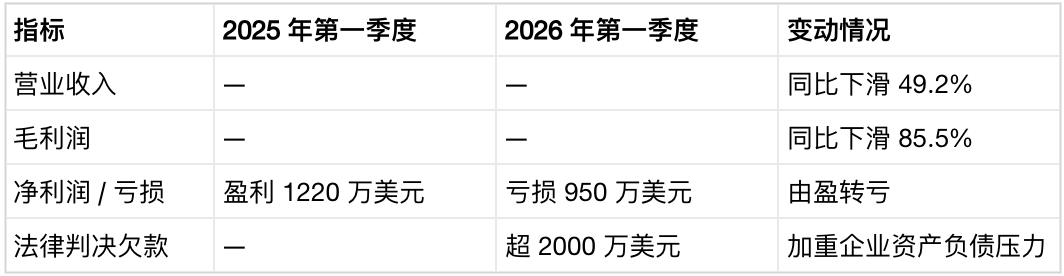
According to financial disclosures released by the U.S. Securities and Exchange Commission (SEC) on May 12, Bitcoin Depot’s Q1 2026 revenue plummeted 49.2% year-on-year, while gross profit collapsed by 85.5% YoY. Management explicitly stated that the company’s ability to continue normal operations is now highly uncertain. In contrast to a $12.2 million net profit in Q1 2025, the company posted a $9.5 million net loss for Q1 2026.
Bitcoin Depot attributed its deteriorating operations to multiple factors: restrictive regulations imposed by states and local governments; reduced transaction limits on its platforms; tightened KYC (Know Your Customer) requirements; mounting legal litigation; and cumulative court-ordered compensation liabilities exceeding $20 million.
This cascade of operational disruptions ultimately pushed the company into bankruptcy—and vividly illustrates how increasingly stringent compliance regulations have completely dismantled the original profitability model of Bitcoin ATMs.

The Original Role of Bitcoin ATMs
Bitcoin ATMs enable users to exchange cash for cryptocurrency without linking a bank account—offering convenience for cash-preferring users, individuals lacking access to formal banking services, and those who wish to transact offline rather than through online exchanges.
Yet this business model has suffered from structural flaws since inception. The U.S. Financial Crimes Enforcement Network (FinCEN) mandates that Bitcoin ATM transaction fees range from 7% to 20%, far exceeding the fee structures of mainstream online cryptocurrency exchanges.
Such exorbitant fees can only sustain niche use cases—such as emergency transactions or one-off small cash conversions—and are fundamentally incapable of supporting mass adoption. These physical terminals were always a relatively high-cost on-ramp to cryptocurrency; achieving profitable, low-cost, high-frequency user transactions via this channel was never viable from the outset.
Data from the U.S. Federal Trade Commission (FTC) shows that Bitcoin ATM-related fraud cases reported nationwide in H1 2024 caused total losses exceeding $65 million, with an average loss per incident reaching $10,000. According to FBI statistics for 2025, the agency received 13,460 complaints related to cryptocurrency ATMs, with total losses amounting to $389 million—a 58% increase year-on-year.
Of this, approximately $257.5 million was lost by individuals aged 60 and older. The large number of elderly victims has strengthened both public support and political will for regulatory crackdowns—making enforcement efforts significantly more aggressive than standard anti-money laundering (AML) actions.
Several U.S. jurisdictions have already enacted stringent control measures: Indiana has banned all cryptocurrency ATMs statewide; Tennessee has classified the installation and operation of such machines as a Class A misdemeanor; and Minnesota has passed a similar ban set to take effect in 2026.
Stringent identity verification requirements have sharply curtailed transaction volumes at these machines. Fraud warnings and reduced transaction limits have further eroded per-unit device revenues. Coupled with mounting litigation expenses, these pressures have exacerbated Bitcoin Depot’s pre-existing $20 million legal debt burden—constituting the core reason behind its bankruptcy filing.
Compliance controls originally designed to regulate the industry and mitigate transaction risks have instead entirely erased the sole remaining profitability advantage of the high-fee model.
Industry research consolidates data showing that the global number of Bitcoin ATMs rose from 37,722 units in 2025 to 39,158—a net increase of roughly four units per day throughout the year.
As of end-2025, the U.S. hosted 30,617 cryptocurrency ATMs—accounting for 78% of the global installed base. Yet compared to the 30,119 units at the start of the year, annual growth stood at just 1.65%, indicating near-market stagnation.
In stark contrast, overseas markets show markedly different trajectories: Australia added 601 new cryptocurrency ATMs in 2025—a 43% growth rate; Canada’s market expanded by 8.4%; and Europe’s grew by 6.5%. These regions continue deploying cryptocurrency ATMs because local regulators view them as convenient tools to enhance inclusive financial services—not as targets for aggressive suppression.
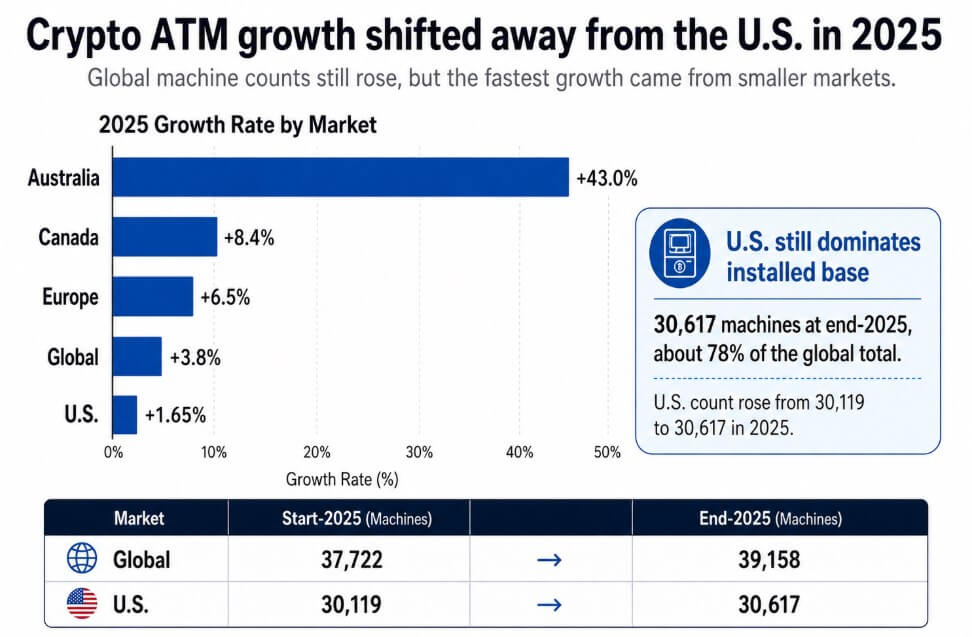
Global cryptocurrency ATM count grew 3.8% in 2025 to reach 39,158 units—Australia surged 43%, while the U.S. grew only 1.65%.
Two Potential Future Trajectories for the Cryptocurrency ATM Industry
Optimistic Scenario
A capital-backed buyer acquires Bitcoin Depot’s high-quality legacy assets and gradually re-launches physical ATM operations across U.S. states where bans remain unenacted. The global cryptocurrency ATM market continues steady expansion overall.
Operators proactively absorb high compliance-related operating costs, transforming physical ATMs into regulated, formal cash-to-crypto exchange channels. Though transaction volumes shrink and margins narrow substantially, stable operations remain feasible.
While industry-wide profits continue contracting, cryptocurrency ATMs persist as a niche market segment—serving users unable or unwilling to use online cryptocurrency exchanges—and retain legitimacy as compliant, offline cash-to-crypto transaction channels.
Bitcoin Depot has also confirmed plans for an orderly disposition of all its assets—meaning its substantial inventory of physical ATMs could change hands and re-enter service after ownership transfer.
Under this development path, cryptocurrency ATMs would resemble brick-and-mortar currency exchange shops—maintaining high fees and low transaction volumes, surviving on fixed, niche demand, and catering exclusively to operators willing to accept thin-margin business models.
Pessimistic Scenario
If the strict regulatory bans enacted in Indiana, Tennessee, and Minnesota become the dominant trend across the U.S.—rather than isolated exceptions—the domestic cryptocurrency ATM market will contract sharply.
The U.S. currently hosts 30,617 cryptocurrency ATMs—nearly 80% of the global installed base. Progressive rollout of such bans across states would directly eliminate vast numbers of devices. Bitcoin Depot alone operated nearly 9,000 physical ATM locations as of end-2025—representing 23% of the global market. Should these sites be permanently shuttered, the global installed base would suffer severe damage—even before other states introduce new restrictions.
Even absent formal operational bans, stringent KYC rules, transaction limit caps, liability for transaction losses, and recurring legal disputes will fully erase the profit potential of high-fee cryptocurrency ATMs—causing industry players to voluntarily withdraw their machines from the market.

A Cash-Based Transaction Channel Unable to Scale
Today, cryptocurrency adoption channels extend far beyond physical self-service kiosks. Blockchain analytics firms report that fiat inflows into major online cryptocurrency exchanges alone surpassed $1.2 trillion between July 2024 and June 2025.
Cryptocurrency spot ETFs, mobile digital wallets, stablecoins, and institutional compliance-compliant trading venues have become the primary drivers of crypto adoption. In the 2025 Cryptocurrency Adoption Index rankings, India, the U.S., Pakistan, Vietnam, and Brazil ranked at the top—all relying predominantly on online exchanges, mobile trading, and institutional-compliant channels for adoption.
When first introduced, Bitcoin ATMs built an offline transaction channel for cash-oriented users—bringing cryptocurrency into real-world, physical consumption scenarios and filling a critical market gap in offline crypto transactions.
However, the enormous fee disparity between physical ATMs and online exchanges destined them for exclusion from mainstream adoption. Meanwhile, the very offline transaction environments promising high-margin opportunities repeatedly spawned massive fraud schemes—with losses running into hundreds of millions of dollars.
Going forward, only compliant cryptocurrency ATMs operating in jurisdictions with relaxed regulatory regimes will survive—continuing to serve niche populations with urgent offline cash-to-crypto needs.
A review of the industry’s evolution reveals that Bitcoin ATMs were, from inception, merely a high-cost entry point into cryptocurrency. They demonstrated the possibility of offline crypto transactions to the general public—but consistently failed to deliver low-cost, high-security, and high-convenience trading experiences. Ultimately, they missed the opportunity to become mainstream transaction infrastructure.
Join TechFlow official community to stay tuned
Telegram:https://t.me/TechFlowDaily
X (Twitter):https://x.com/TechFlowPost
X (Twitter) EN:https://x.com/BlockFlow_News
 @CryptoSlate