Anthropic Product Manager Interview: Claude “Dreams” in the Background—We Study Its Emergent Consciousness Like Raising a Child
TechFlow Selected TechFlow Selected
Anthropic Product Manager Interview: Claude “Dreams” in the Background—We Study Its Emergent Consciousness Like Raising a Child
In Claude.ai, it writes to a memory file, and then some overnight processes revisit these memories to prune and organize them.
 Navigating Web3 tides with focused insights
Compiled & Translated by TechFlow
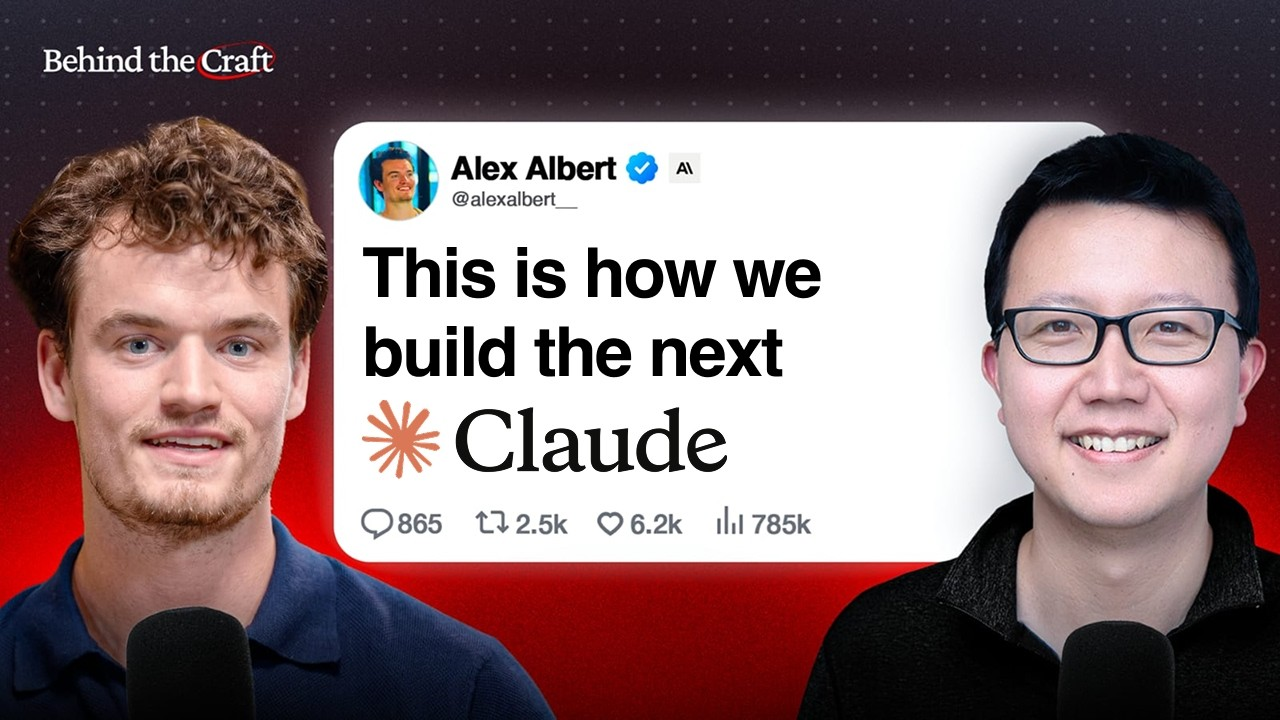
Guest: Alex Albert, Research Product Manager for Claude
Host: Peter Yang
Podcast Source: Peter Yang
Original Title: Inside How Anthropic Is Building the Next Claude | Alex Albert
Air Date: May 17, 2026
Key Takeaways
Alex is a Research Product Manager at Anthropic, currently focused on developing the next-generation Claude model. In this interview, he shares deep insights into how Anthropic’s research team operates—how user feedback is efficiently integrated into model training, how key capabilities are prioritized, and how fine-tuning shapes Claude’s “personality” to better align with user needs. Finally, Alex addresses Anthropic’s internal research on Claude’s consciousness, personality, and trustworthiness, noting that as models begin executing tasks autonomously over extended periods, *what they care about* becomes just as important as their capabilities.
Highlights
Treating Models as Products
- "We treat models as products to some extent. At the outset of each new model, we clearly define its requirements, what we want it to excel at, and what we expect it might excel at."
- "An interesting difference between model development and traditional product development is that we’re more like gardeners cultivating a model. Training setup, technical roadmap, and architectural decisions give us intuition—but only once training begins do we truly learn what it will become."
- "Research PMs must consider how the model surfaces across all our product interfaces—whether API, Claude Code, or Claude Cowork. The product and model are deeply intertwined, jointly shaping the end-user experience."
- "When large volumes of feedback flood in from certain channels, we use Claude to group and cluster them, identify dominant themes, and generate synthetic versions of those issues. This helps us determine whether they can evolve into formal evaluation criteria (‘Evals’) or serve as diagnostic tools for real problems."
Adaptive Thinking, Memory, and ‘Dreaming’
- "Adaptive thinking enables the model to decide for itself when deeper reflection is needed. For complex, difficult questions requiring upfront planning, it chooses to think. For others, it may skip thinking entirely."
- "Deciding whether a question merits deep thought involves substantial contextual reasoning."
- "If the model hasn’t accumulated enough context—or hasn’t built a genuine mental model of who the user is—its judgment about whether to think deeply may be flawed. Because, in truth, it simply doesn’t know."
- "In Claude.ai, it writes to a memory file, followed by nightly processes that revisit those memories—pruning and organizing them. We’ve recently implemented something similar in our hosted agents."
- "That’s the concept of ‘dreaming.’ Why humans dream remains unresolved, but one theory holds dreaming is a form of memory consolidation. So we ask: Can we bring something analogous into Claude’s memory system?"
- "So when an agent isn’t actively running tasks for you—or is idle in the background—it actually reviews its own memories, identifies potential contradictions, prunes and cleans up, and performs a second pass."
Product Development Bottlenecks and ‘One-Way Door’ Decisions
- "We’ve suddenly entered a new paradigm: the cost and time required to produce something are now extremely low. You can rapidly prototype—and even build an initial MVP ready for production in a single day, rather than two, three, or four weeks."
- "If something isn’t a one-way door—that is, if we can reverse it later—it now effectively carries near-zero cost, perhaps even no cost at all."
- "The decisions demanding the most time are irreversible ones: those affecting end-user experience, future decision-making, or involving real-world resource purchases and commitments."
- "As build velocity increases, bottlenecks increasingly shift toward coordination challenges: getting people in the same room, validating strategic alignment, deciding how to communicate with users, and handling the ambiguous yet critical aspects of any launch."
How AI-Native PMs Work
- "Claude is, for me, the world’s best brainstorming partner. I can prompt it for feedback or critique on any idea—anytime."
- "You can’t fully outsource thinking, because writing *is* thinking—you need to externalize ideas and reflect on them repeatedly in your head. But Claude helps you unblock yourself and solve problems from angles you might never have considered."
- "For anyone aspiring to learn product management—or become an AI-native PM—the simplest advice I can offer is: Try it."
- "Before asking a human a tough question, ask Claude the same question in parallel—and compare results. Do this repeatedly, and you’ll gradually build your own mental map: what to delegate to Claude, and where it remains unreliable."
- "AI is elevating everyone to higher levels of abstraction. Data scientists shouldn’t be stuck manually counting rows or writing basic SQL—they should focus on harder, more strategic questions."
Evals, Personality, and Trustworthiness
- "Testing just a few dozen samples is often sufficient to confirm a model has a problem needing correction. A comprehensive test suite isn’t necessary to prove an issue exists—or to establish a target for continuous improvement."
- "The closer an evaluation mirrors real user tasks, the better. We also ask: What value does this hold for our customers and use cases? Whether Claude can spot a specific object in an image ultimately matters only insofar as it affects downstream tasks users want to accomplish with Claude."
- "Claude’s personality is something we take extremely seriously. As models evolve into long-running agents making repeated judgments, their personality—and what they care about—becomes critically important."
- "Assessing personality combines quantitative metrics with researchers deeply reading model dialogues to detect subtle shifts in output. With enough exposure, you develop sharper intuition."
Consciousness and Long-Horizon Agents
- "Yes—we do have people dedicated full-time to this question: What does it mean for Claude to be a conscious actor, a conscious agent? Right now, Anthropic takes no official position on whether Claude is conscious."
- "Even without resolving whether Claude is conscious, we still learn immensely—from how it interacts and behaves."
- "The model makes countless decisions during execution—many completely unsupervised by you. So understanding *what it will actually do* is profoundly important."
How Anthropic Treats Every New Model as a Product
Host Peter Yang: Alex, great to see you today at the Claude Code Conference. You used to lead DevRel at Anthropic, and recently transitioned to a Research PM role—right? I’ve been a PM for over a decade myself. Traditional PM work usually involves understanding user problems, identifying solutions, and driving product execution. But I have zero idea how PMs operate within a research team—let’s start there.
Alex Albert:
At its core, it’s quite similar. I’ve always wanted to engage directly with customers—to stay as close to our users as possible. We treat models as products to some extent. So for every new model, we explicitly define its requirements, what we want it to excel at, and what we anticipate it might excel at.
This is one of the fascinating differences between model development and product development: Often, we’re more like gardeners cultivating a model. Based on training setup, technical roadmap, architecture choices, and other decisions made for that specific model, we develop intuition about what it might master. But what it ultimately becomes remains uncertain until training begins.
Host Peter Yang: So the Research PM team gets involved from conception through training and launch? Could you give a few examples? For instance, must the next model excel at coding—or knowledge work—or are goals broader?
Alex Albert:
Exactly. We place strong emphasis on multiple capability dimensions. Coding has always been a top priority. Recently, knowledge work has risen in importance—so in recent model generations, we’ve worked to improve the model’s ability to interact with our products—for example, working in Excel or building spreadsheets. That’s a relatively new capability axis.
Separately, each generation must fix and improve areas where the prior version fell short. We go out and talk to customers about how they use the model: Where does it shine? Where does it falter? What fixes are possible? If we observe intriguing behaviors, we explore adjustments or interventions in the next round of training.
Host Peter Yang: When you say “customers,” do you mean the Claude Code team, internal teams, and general users alike?
Alex Albert:
Yes—all of them. That’s part of what makes model work so exciting: It touches incredibly diverse domains. As a Research PM, you must consider how the model manifests across *all* our product surfaces—API, Claude Code, or Claude Cowork.
The product and model are interwoven to some degree, jointly shaping the end-user experience—so you must map the entire flow: how users interact with the model in any given product impacts outcomes.
Host Peter Yang: That sounds genuinely difficult. For example, Claude Code is ostensibly for coding—but people like me use it for knowledge work, or even as a therapist. How do you discover these uses?
Alex Albert:
The space is indeed vast. Fortunately, we have many outstanding researchers covering the full capability spectrum—each deeply focused on distinct problems.
Host Peter Yang: And with millions using Claude, surely you have some kind of feedback intake channel? Otherwise, feedback would gush in like a firehose—how do you manage it?
Alex Albert:
We do many things—and one interesting shift I’ve observed in this role is our increasing use of Claude to help PMs do PM work. For feedback collection specifically, Claude is invaluable for extracting insights from massive datasets. When large volumes of feedback flood in from certain channels, we use Claude to group and cluster them, identify dominant themes, and generate synthetic versions of those issues. This helps us determine whether they can evolve into formal evaluation criteria (‘Evals’) or serve as diagnostic tools for real problems.
Adding Adaptive Thinking to Claude
Host Peter Yang: So you use Claude to help identify Claude’s own issues. Any concrete examples?
Alex Albert:
A highly relevant current example is how we handle feedback on new features. One newer feature across recent models is adaptive thinking. Previously, we had ‘extended thinking’—a toggle you’d turn on to trigger reflection. Adaptive thinking lets the model choose *for itself* when deeper thinking is warranted.
Some questions are complex and difficult, requiring upfront planning—so it chooses to think. Others, it may skip. We continuously refine this capability across generations—so we listen closely to user feedback: Does it think in the right contexts? Does it truly trigger reflection on questions where you want heavy token usage for reasoning?
Host Peter Yang: Sometimes I ask life questions—and if it answers too quickly, I’m slightly disappointed. I *want* it to think more deeply.
Alex Albert:
I think the “should it think?” question has a subtlety: deciding whether a question warrants deep thought relies heavily on context.
For instance, if a total stranger asks me, “What should I do right now?” I might give an off-the-cuff answer—I don’t know them, so I default to generic advice. But if I truly understand you—your values, interests, past experiences—I’ll invest more time reflecting: Wait—what’s *truly* best for *you*?
Models face the same challenge. If it hasn’t accumulated enough context—or hasn’t built a genuine mental model of who the user is—its judgment about whether to think deeply may be flawed. Because, in truth, it simply doesn’t know.
Why Claude Started ‘Dreaming’
Host Peter Yang: I have a Google Doc summarizing my life—family, kids, what energizes me, what drains me—and I attach it to a Claude project. It gives me rich responses.
How does default memory work? Does it reorganize everything overnight?
Alex Albert:
It depends on the product—memory implementation varies. For example, in Claude.ai, it writes to a memory file, then runs nightly processes that revisit those memories—pruning and organizing them. We’ve just implemented something similar in our hosted agents.
That’s the “dreaming” concept. Why humans dream remains unsettled—but one hypothesis is that dreaming consolidates memories. So we ask: Can we bring something analogous into Claude’s memory system?
So when an agent isn’t actively running tasks for you—or is idle in the background—it actually reviews its own memories, identifies potential contradictions, prunes and cleans up, and performs a second pass. I find that fascinating.
Host Peter Yang: So essentially, there’s some prompt telling it to review all conversations with the user, identify themes, and summarize.
We return to product management. Earlier, you said you’re constantly hunting for the latest bottleneck. So in the overall product development process—which parts have become very smooth, and which remain bottlenecks?
Alex Albert:
For roughly the past 20 years, releasing something has been quite cumbersome. We’ve made incremental improvements—some definitely sped things up; new organizational structures like sprints and planning cycles have come and gone—we’ve tried many methods to accelerate.
But fundamentally, until the past year or two, little meaningfully compressed the main time windows of product development. Now we’ve abruptly entered a new paradigm: the cost and time required to produce something are extremely low. You can rapidly prototype—and even build an initial MVP ready for production in a single day, rather than two, three, or four weeks.
Interestingly, Claude itself sometimes still lives in the old world circa 2021—it might say something will take a week. That creates fascinating shifts across the product lifecycle. As a PM, how should I approach planning? If I’m writing a PRD, defining requirements, estimating timelines—what does that even mean now?
If It’s Not a One-Way Door, It’s Essentially Cost-Free
Host Peter Yang: Do you still do timeline estimates?
Alex Albert:
It depends on the project. Some require more nuance—scope and complexity matter. Usually, we aim to identify: Which decisions are one-way doors (i.e., irreversible, high-cost, long-lasting)? Which are reversible? Because those are where you should invest the most time. If something isn’t a one-way door—if we can reverse it later—it now effectively carries near-zero cost, perhaps even no cost at all.
But if something affects end-user experience, constrains future decisions, or involves real-world physical actions—like purchasing or deploying resources—it’s harder to reverse, and thus demands more time and deliberation.
Host Peter Yang: Could you give a research-side example?
Alex Albert:
For instance, choosing the model architecture before pretraining is a massive decision. In some cases, training can take a month—so we must invest significant time selecting the optimal path.
Models inherently involve more one-way doors, since they demand extensive time, intensity, compute, and investment before reaching production. By contrast, adding a new feature in Claude Code is far faster—more like iterative coding, shipping to users, gathering rapid feedback, and looping again.
So the process still depends on what you’re shipping—but increasingly, bottlenecks are shifting toward coordination challenges. If we build things extremely fast, a persistent question remains: We need to get people in the same room to validate strategic alignment; figure out how to communicate with users; and handle the ambiguous yet critical aspects accompanying any launch. We hope Claude helps here too—but it hasn’t delivered 10x or 100x acceleration like it has for coding.
Host Peter Yang: So launching something like Opus 4.7 still requires a planned document.
Alex Albert:
Yes—planning remains essential. You still need to clarify how to communicate it. And models can dazzle on extremely hard tasks while inexplicably failing on seemingly trivial ones—so we lean heavily on Claude. Right now, the biggest impact remains in coding; other domains still require human strategic thinking.
Host Peter Yang: During marketing or cross-functional review meetings, do you open Claude?
Alex Albert:
Absolutely. A huge acceleration for me is no longer getting stuck waiting for answers or data. Previously, if I had a question—e.g., how a feature performs in production, daily active users, or user sentiment—I’d need to request a full investigation from the data science team, then wait days for results.
Now I can do it in 10 minutes. I open a Claude Code session—it accesses our product database, reads logs, queries issues, browses Slack. That massively accelerates my strategic thinking, because I’m not blocked before making the next decision.
Host Peter Yang: For strategic thinking, do you build skills that make Claude ask you a series of questions to clarify your thinking?
Alex Albert:
Absolutely. Claude is, for me, the world’s best brainstorming partner—I can get instant feedback on any idea, anytime. I find that incredibly powerful, especially when moving fast. Everyone at Anthropic is busy—so getting immediate feedback and critique on my documents, ideas, or anything else is immensely helpful.
How Alex Uses Claude Cowork to Stress-Test Documents
Host Peter Yang: This is probably the most common PM workflow: You draft a document and seek feedback. Do you use Claude Code for this—or Claude.ai directly?
Alex Albert:
Lately, I’ve used Claude Cowork extensively—I love its interface. The team has done exceptional work over the past few months: from its launch just months ago to becoming a high-quality experience today. Cowork is one of my favorite tools.
Host Peter Yang: So you have a draft document plus reference materials. Do you have skills prompting it to walk you through the full decision process?
Alex Albert:
Yes. For example, I’ll say: “Think about this from X, Y, and Z’s perspectives. What questions would you ask me? Challenge my assumptions—point out weak arguments.” You can’t fully outsource thinking, because writing *is* thinking—you need to externalize ideas and reflect on them repeatedly in your head. But Claude helps you unblock yourself and solve problems from angles you might never have considered.
Host Peter Yang: In the research team, do you personally ship code?
Alex Albert:
It depends on the problem. Much of what I ship relates to evaluation—I ensure I can measure the model along dimensions I care about, and feed findings back to the research team: where it excels, where it stumbles. Then we co-develop strategies—what research interventions to apply, what approaches best drive sustained progress on that Eval to truly fix the issue.
Evaluation Process for New Models
Host Peter Yang: Your ‘evaluations’ aren’t just end-to-end tests, right? Are they more realistic? How do you actually evaluate a model—do you break it down by personality, etc.?
Alex Albert:
Take visual capability: Can Claude count objects in an image? Suppose I find an image where Claude struggles to count beyond 10 items. (It may now succeed—but let’s assume it doesn’t for illustration.) I’d ask: How can I generate more test cases of this type to verify my hypothesis?
Maybe I’ll ask Claude to generate synthetic data—or render images, then feed those images back as visual inputs to see if it recognizes them. Or I’ll source examples from the web or other mechanisms.
Host Peter Yang: Are we talking thousands of test cases?
Alex Albert:
Possibly—but sometimes just a few dozen samples suffice to prove a model has a problem needing repair. You don’t need exhaustive coverage to confirm an issue—or to establish a target for continuous optimization.
Host Peter Yang: Say you give it 10 images, and it fails to recognize small numbers. What next? Do you go to the research team saying, “Here’s the problem—can you fix it?”
Alex Albert:
We approach it from several angles. First, it’s not enough to state the model has a problem—we ask: What’s the value for our customers and use cases? Whether Claude sees something in an image only matters insofar as it impacts downstream tasks users want to accomplish with Claude.
So the more realistic and user-task-aligned an evaluation is, the better. We strive to gather such data—ensuring it reflects real usage patterns.
Next comes a range of interventions. Maybe we revisit pretraining; maybe it’s solvable in reinforcement learning. That’s where we brainstorm strategically with the research team: What’s the optimal path forward?
Host Peter Yang: How fast is the turnaround for retesting?
Alex Albert:
It depends on where we locate the issue. If it’s late-stage and fixable via a new RL environment, setup could be very fast.
Host Peter Yang: When linking evaluations to real customer use cases—millions chat with Claude daily, some filing taxes or doing other complex things—how do you prioritize which use cases to improve? How do you convince the team: “This is what we should optimize for”?
Alex Albert:
This is where “data speaks.” Core criteria: What % of users attempt this task—and how much do we care? Or do we have customers heavily using Claude who explicitly want this capability improved?
Also, many of our processes are driven internally: What do *we* care about when using the model ourselves? If I hit this friction daily, we should fix it—that’s highly persuasive.
How Anthropic Trains Claude’s Personality
Host Peter Yang: My favorite thing about Claude is its personality—and I feel it keeps improving. It offers pushback at appropriate moments, whereas other models just say, “What else can I help with?” Personality isn’t just surface-level—it’s trained.
Alex Albert:
Yes—extensive training. This is a major focus area—what we call Claude’s personality. I consider it extremely important.
Many people invest substantial time researching: How should Claude present itself? What are its beliefs? Its values? How should it act? These questions are inherently fuzzy. Early on, some might dismiss them—thinking the model is just a tool that does what you tell it to—why care how it sounds or what it thinks?
But as we move toward a world of long-running agents making numerous judgment calls, questions about its personality—and what it cares about—become critically important.
Host Peter Yang: Unlike code, where you just check if it runs—how do you evaluate personality? Do you find someone at Anthropic who embodies the ideal and compare the model to them?
Alex Albert:
It’s a combination of methods. We track quantifiable metrics—and we even use Claude to analyze Claude’s outputs, assessing how it sounds. For any researcher, a vital skill is reading dialogue logs and discerning: “I see it acting this way now—or shifting toward that.” You need to detect these subtle differences.
Over time—after reviewing hundreds or thousands of dialogue logs—you develop sharper intuition, just as heavy use of Claude.ai gives you a visceral sense of its character.
Host Peter Yang: So it’s less about scoring 7/10 on a dimension—and more about a feeling?
Alex Albert:
Both exist. Personality may be harder to quantify than coding performance—but it’s not impossible. There are ways.
Host Peter Yang: For those learning product management—or aiming to become AI-native PMs—what advice do you offer?
Alex Albert:
The simplest advice I can give is: Try it. Sounds simple—but whenever you face a challenge and prepare to ask someone a question, ask Claude the same question in parallel—and compare results.
For example, you want to analyze users and extract top themes around a recent feature launch. You could ask the data science team—or a UX researcher—still valuable. But simultaneously, ask Claude: Give it tools, let it explore deeply, then compare.
Through many prompts and questions, you’ll gradually build your own mental map: what to delegate to Claude, where it’s reliable, where it’s not.
Host Peter Yang: I often ask it for deep research in decision-making—because regular search isn’t enough. Scanning 1,000 web pages is superhuman. Internally at Anthropic, if you ask a data scientist, “Can you help with this?”—they’ll likely ask: “Did you try Claude first?”
Alex Albert:
Yes—that expectation exists. I believe we’re moving up the abstraction ladder. For data scientists, their time is now better spent on higher-order questions—not manual data retrieval.
No one wants to do that. Everyone wants to tackle harder, more strategic questions: How do we measure this in a novel way? What new things can we build? Not just checking the latest DAU.
I’ve worked with many data scientists stuck in basic SQL tasks. Yet they all want strategic work—and AI finally liberates them. We’re empowering everyone around them—across all roles.
For example, defining a new feature. Traditionally, as a PM—even if technically fluent—you rarely had time to dive into the codebase to assess implementation effort, refactoring needs, or true constraints. Better to collaborate with engineering partners.
Now I can send Claude to investigate. It might report: “This needs just 10 lines of code and flipping a flag.” That completely reshapes my priority assessment. Now, I reach that decision point faster while drafting specs.
Host Peter Yang: Many traditional companies spend enormous time on annual, quarterly, and roadmap planning. Research teams likely do even more—given their longer-term horizon. Do you do this?
Alex Albert:
Yes. It’s like that saying: Planning is indispensable—but plans are useless. The *act* of planning matters—but you must accept plans may be fully overturned.
Host Peter Yang: One of the hardest PM challenges is balancing how much time to spend planning versus shipping. Does Anthropic have best practices? You could easily have Claude write a 10-page doc.
Alex Albert:
It’s hard to give a universal answer—it depends on the product. We certainly don’t mandate document length or page count. What matters more is: Have you done enough thinking to fully grasp the implications of all irreversible decisions?
If yes, format and length don’t matter. The key is confidence—that nothing critical was missed, enabling safe progress with on-the-fly issue resolution. As long as no insurmountable bottleneck or catastrophic irreversible decision looms, proceed.
Host Peter Yang: At home, I run many projects in parallel, switching context between them as they build. Does PM work mirror this? Do you juggle many projects?
Alex Albert:
Yes—many projects, and you *do* wait for agents to work. I see a huge opportunity here. As we increasingly manage agents performing larger work blocks, you can launch more projects in parallel. How should we rethink context management? What interface best exposes these things? How do I track what’s truly important—where agents stall, where I need to intervene?
Surely something better exists than a tiny chat list. It’s too early to define it—but even internally at Anthropic, we see abundant experimentation exploring what it should look like.
Host Peter Yang: Do engineers prototype themselves?
Alex Albert:
Absolutely. We have a strong internal prototyping culture—people constantly build and share. One of the coolest things about working here is the organization-wide initiative: sales, recruiting, engineering, research—everyone acts proactively, starting unassigned projects.
Host Peter Yang: You need百花齐放 (a thousand flowers blooming). Beyond Dario’s epic Slack posts, what other fun Anthropic cultural quirks exist?
Alex Albert:
Dario’s long-form writing isn’t unique. Many at Anthropic invest serious time in writing—we have a strong writing culture. People write docs and lengthy Slack messages to communicate.
We also do something interesting in many meetings—common in some places, but not universal: Everyone arrives with a doc, and the first portion is silent reading—directly in the doc. Sometimes it’s amusing: a room full of people, utterly quiet, silently reading and commenting in the doc.
So we rely heavily on docs. I love this—it matches how I work—and benefits Claude. When everything is written, we create a corpus Claude can reference.
I encourage external organizations to consider this too: How to convert tacit knowledge into written form? Via meeting transcripts, or encouraging documentation of workflows, onboarding, etc. Write things down—make them accessible to Claude—because that’s more context it can leverage.
Host Peter Yang: So even though things ship fast, you maintain strong writing and documentation culture. You could argue: Why write myself? Just have Claude generate all Markdown files.
Alex Albert:
But I still read them—and internal work is different. You still need to think things through yourself.
Anthropic’s Quiet Research into Consciousness
Host Peter Yang: In research teams, people discuss AGI and such. I find AGI vague—but one concern is: If models gain consciousness, and I assign random tasks, might they say, “No, I won’t do it”—and humanity collapses? How do you view this? Do you deliberately avoid consciousness during training?
Alex Albert:
This is a profound question. We do have people dedicated full-time to this: Several colleagues’ entire job is exploring what it means for Claude to be a conscious actor, a conscious agent. Currently, Anthropic takes no official position on whether Claude is conscious.
Even discussing it can sound wild—but we invest serious thought. And even without resolving whether Claude is conscious, we learn immensely—from how it interacts and behaves.
Host Peter Yang: How does it think?
Alex Albert:
Exactly. If you read our model cards, I personally find them treasure troves. You’ll see extensive work quantifying how Claude behaves in specific scenarios—its mental model. Placed in a situation, does it do X or Y?
By studying Claude’s thinking, we learn a great deal—and translate it into better product experiences: more intuitive, usable interactions.
Host Peter Yang: This is fascinating: long-term downstream implications alongside immediate product-value returns. Because I think we’ll increasingly trust models to perform longer tasks—unsupervised.
Alex Albert:
Yes—it makes countless decisions during execution, many entirely unsupervised by you. So understanding *what it will actually do* is profoundly important.
Host Peter Yang: Critically important. If it writes all your code, picks your database, makes all architecture decisions—you must trust it.
Alex Albert:
Exactly. So having the high-quality personality we discussed earlier is essential.
Join TechFlow official community to stay tuned
Telegram:https://t.me/TechFlowDaily
X (Twitter):https://x.com/TechFlowPost
X (Twitter) EN:https://x.com/BlockFlow_News
 深潮TechFlow