








133 deals, $8.6 billion: Who bought the crypto industry in 2025?
TechFlow Selected TechFlow Selected
133 deals, $8.6 billion: Who bought the crypto industry in 2025?
While retail investors are still guessing tops and bottoms, institutions are already buying entire sectors.
 Navigating Web3 tides with focused insights
By: Lin Wanwan
The 2025 crypto market is deeply divided.
BTC has pulled back over 30% year-to-date, altcoins are bleeding heavily, and cries of "crypto is dead" echo across the landscape. The wave of new retail investors who piled in at the start of the year now see their portfolios slashed by more than half; some have already uninstalled exchange apps, while others stubbornly hold on, waiting for a rebound. Sentiment in the crypto community has sunk to its lowest point since the FTX collapse in 2022.
Yet amid this wreckage, another group is aggressively buying.
According to PitchBook data, total M&A volume in the crypto sector reached $8.6 billion in 2025 across 267 deals—an 18% year-on-year increase. This figure is nearly four times that of 2024 and exceeds the sum of the previous four years combined. Using Architect Partners’ broader definition, the total jumps to $12.9 billion.
The scale of headline deals is staggering: Coinbase paid $2.9 billion to acquire options giant Deribit, setting a record for the largest acquisition in crypto history; Kraken spent $1.5 billion to buy traditional futures platform NinjaTrader, dubbed "the biggest TradFi-Crypto convergence deal ever"; Ripple acquired Wall Street prime broker Hidden Road for $1.25 billion, officially entering the heart of institutional finance.
Retail investors sell in fear, institutions build positions on the ruins.
Interestingly, these institutions aren’t buying coins. If they were bullish on prices, why not just buy BTC? Why spend billions acquiring companies?
They’re buying exchanges, licenses, custodians, payment rails, clearing systems.
They’re acquiring the industry’s infrastructure at rock-bottom prices.
This echoes Wall Street after the 2008 financial crisis. Lehman collapsed, Bear Stearns vanished, but JPMorgan Chase and Goldman Sachs survived—and seized the opportunity to absorb assets. After the crisis,强者愈强 (the strong got stronger), and industry concentration surged.
The crypto industry in 2025 is running a similar playbook.
Why Traditional Finance Is “Buying the Dip”
Why 2025? Because three keys turned simultaneously.
The first key is the SEC leadership change.
Under Gary Gensler, the crypto industry lived in a state of “Schrödinger’s compliance”: you never knew whether your token was a security, whether your exchange operations would be deemed illegal overnight, or whether your company would still exist tomorrow morning.
Coinbase, Binance, Kraken, Ripple, Uniswap, OpenSea—nearly every major player received subpoenas or Wells Notices from the SEC.
This uncertainty is the enemy of M&A. No serious financial institution wants to spend $1 billion buying a company that could be shut down by regulators at any moment. How do you conduct due diligence? Build valuation models? Price legal risk? All unanswered questions.
In January 2025, with the Trump administration taking office, the SEC made a 180-degree shift. New acting chair Mark Uyeda launched the Crypto Task Force on his first day, declaring a move from “enforcement” to “dialogue.”
In the following months, the SEC dropped around 60% of its crypto-related lawsuits at an almost fire-sale pace: the Coinbase case dismissed, Binance case withdrawn, Kraken case dropped, even Ripple’s four-year-long landmark lawsuit settled.
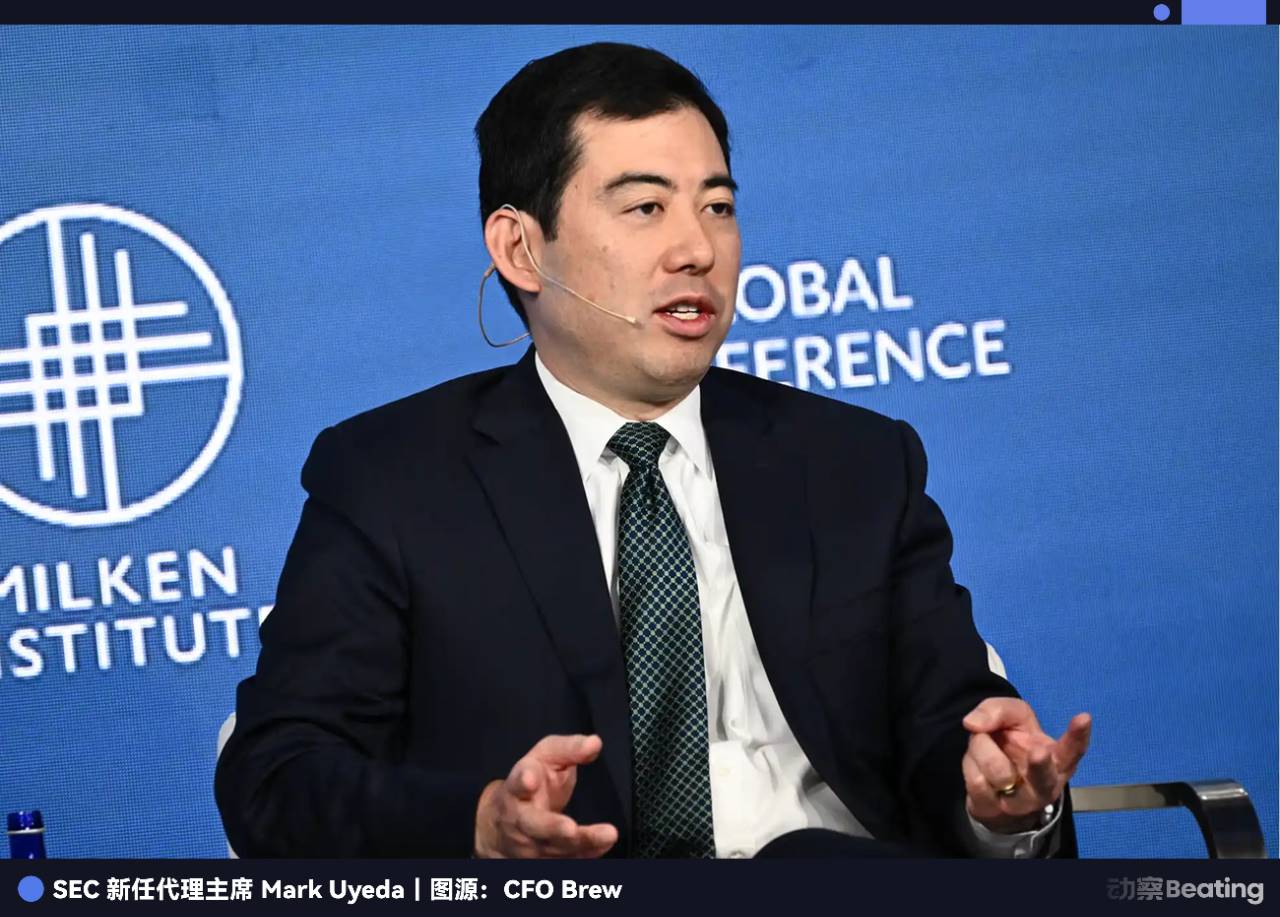
The crucial part was how they were dismissed: “with prejudice”—a legal term meaning the cases cannot be refiled. This gave the market confidence: it’s truly a fresh start.
The second key is license approval.
On December 12, the Office of the Comptroller of the Currency (OCC) approved national trust bank charters for five crypto firms: BitGo, Circle, Fidelity Digital Assets, Paxos, and Ripple. This allows them direct access to the Federal Reserve system, offering custody, payments, and clearing services with privileges equal to traditional banks.
A simple comparison tells the story: OCC received 18 bank charter applications in all of 2025—compared to just one in 2024. Once the gate opened, everyone rushed in.
The third key is the GENIUS Act.
On July 18, the U.S.’s first federal crypto legislation was signed into law. The bill set rules for stablecoins: 1:1 reserves, monthly disclosures, priority repayment in bankruptcy. More importantly, it clarified that compliant stablecoins are neither securities nor commodities, and thus fall outside the jurisdiction of both the SEC and CFTC.
This effectively grants stablecoins a “certificate of good standing”: banks can now safely offer stablecoin services, payment companies can integrate them boldly—no fear of retroactive punishment.
SEC dismissals cleared legal risks, OCC approvals granted banking capabilities, and the GENIUS Act legitimized stablecoins as compliant financial products. With all three keys turning, a door tightly shut for ten years finally swung open.
Outside stood a crowd, checks in hand.
The Three Buyers’ Arms Race
If there’s an MVP for ambition and vision in 2025’s M&A spree, it’s Ripple.
When people think of Ripple, many veterans still picture “that XRP company”—the firm sued by the SEC in 2020 and embroiled in a four-year regulatory battle. But post-2024 Ripple is a different beast altogether.
The legal battle is largely over (final judgment in August 2024 reduced fines from $2 billion to $125 million), and the company now holds massive cash reserves, fueling aggressive expansion. Its core business has transformed: custody, stablecoins, compliance pipelines—whatever is profitable.
In 2025 alone, Ripple spent $2.7 billion on acquisitions, becoming the third U.S. financial firm—after Morgan Stanley and New York Community Bank—to complete two separate billion-dollar-plus deals in a single year. The last time Morgan Stanley did this was in 2020: $13 billion for E-Trade and $7 billion for Eaton Vance.
Ripple now operates at the same scale as Morgan Stanley, and its two flagship deals deserve close attention.
The first: a $1.25 billion acquisition of Hidden Road, a top-tier non-bank prime broker serving hedge funds, asset managers, and proprietary trading firms across FX, derivatives, fixed income, and digital assets.
What’s a prime broker? Simply put, it’s a firm offering “one-stop back-office services” to institutional investors: clearing trades, providing leverage, safeguarding assets. Prime brokerage is a cash cow for giants like Goldman Sachs and Morgan Stanley.
After the acquisition, Hidden Road was rebranded Ripple Prime. Ripple instantly gained entry into Wall Street’s inner circle.
The second: a $1 billion purchase of GTreasury, a 40-year-old enterprise treasury management provider. It may sound unglamorous, but its client list is impressive: American Airlines, Goodyear, Volvo—all Fortune 500 companies. GTreasury processes over $12.5 trillion in payments annually.
Together, these two deals reveal Ripple’s strategic blueprint.
It no longer aims to be just a cross-border payments firm. It’s building an “end-to-end institutional financial stack”: corporate treasury via GTreasury, institutional prime brokerage via Ripple Prime, cross-border payments through Ripple’s own network, with XRP as the bridge. From CFO desktops to hedge fund trading desks—the entire chain is integrated.
CEO Brad Garlinghouse said plainly at Ripple Swell: “Most of our acquisitions focus on traditional finance, with the goal of bringing crypto solutions inside.”
In other words: crypto companies are consuming traditional finance.
Coinbase plays a different game. It wants to become crypto’s “super app,” a platform where everything can be traded.
The $2.9 billion acquisition of Deribit was the year’s boldest move. Deribit is the world’s largest crypto options exchange, with annual trading volume exceeding $1 trillion and open interest consistently above $30 billion.
Options markets are where institutional investors play: hedge funds use them to hedge risk, market makers manage exposure, asset managers build structured products. Acquiring Deribit is equivalent to gaining a ticket into the institutional arena.
Beyond Deribit, Coinbase also bought on-chain ad platform Spindl, token management firm Liquifi, DeFi options protocol Opyn, meme coin exchange Vector.fun, and prediction market company The Clearing Company.
Ten acquisitions in total, spanning derivatives, DeFi, prediction markets, and meme coin trading. CEO Brian Armstrong’s ambition is clear: “Everything Exchange”—every tradable asset will trade on Coinbase.
Kraken takes a more direct approach: buy licenses, then add services.
The $1.5 billion purchase of NinjaTrader secured a CFTC futures license. With 20 years in operation, NinjaTrader is a veteran in U.S. retail futures trading. In the U.S., offering futures and derivatives to retail requires a CFTC license.
Apply yourself? Expect a minimum three-year wait, with no guarantee of approval. Buy a licensed firm? You go live immediately. Trading time for space—even a 50% premium is worth it.
After securing the license, Kraken filed for IPO in November, targeting a Q1 2026 listing with a $20 billion valuation. It’s no longer just a crypto exchange—it’s a licensed multi-asset trading platform.
The Calculations of Stripe and Others
While crypto firms consume traditional finance, traditional players are also moving into crypto.
The clearest example is Stripe’s acquisition of Bridge.
In February 2025, the payments giant acquired Bridge—a 58-person stablecoin infrastructure startup—for $1.1 billion, despite its Series A valuation being only $200 million. Stripe paid a 5.5x premium, setting its largest acquisition ever.
Why pay $1.1 billion for a 58-person startup?
Because Bridge owns something money and time struggle to buy: it’s the most mature API platform in the stablecoin space, used by Coinbase and SpaceX, enabling companies to integrate stablecoin functionality as easily as standard payment APIs. The founding team comes from Coinbase and Square, with deep expertise in both payments and crypto.

Build in-house? At least two years. Buy Bridge? Launch next month.
Stripe CEO Patrick Collison calls stablecoins “room-temperature superconductors for financial services.” The metaphor perfectly captures their essence: they allow money to flow like information—24/7, across borders, at near-zero cost. Traditional cross-border payments take 3–5 days with 3%–5% fees; stablecoin transfers settle in seconds for less than a cent.
Within six months of the acquisition, Stripe launched three products: “Stablecoin Financial Accounts” covering 101 countries, a stablecoin spending card in partnership with Visa, and Open Issuance, a platform allowing any company to launch its own stablecoin.
Stripe’s ambition is clear: redefine cross-border payments with stablecoins.
Wall Street’s old money is also moving.
In October, JPMorgan announced it would accept BTC and ETH as collateral, starting with ETF shares and later expanding to spot holdings. This marks the first time the largest Wall Street bank formally includes crypto assets in its collateral framework. Bloomberg reports a consortium of ten major banks is exploring co-issuing a G7-currency stablecoin.
Paxos acquired institutional MPC wallet platform Fordefi for over $100 million. Fordefi serves over 300 institutions and handles $120 billion in monthly transaction volume.
Post-acquisition, Paxos can now offer a full suite: “stablecoin issuance + asset tokenization + DeFi custody.”
Five years ago, Wall Street and crypto circles looked down on each other—Wall Street saw crypto as scams and bubbles, crypto saw Wall Street as outdated incumbents. Now, they sit at the same negotiating table, pricing each other’s assets with real capital.
The boundary is blurring. The definitions of “crypto company” and “financial company” are being rewritten.
Epilogue
But everyone is racing against time.
On June 5, 2025, Circle listed on the NYSE, surging 168% on its first day and 247% over two days. It became the best-performing IPO with over $500 million raised since 1980. The market valued USDC’s issuer at $16.7 billion, raising $1.1 billion.
An investment bank analyst calculated that at the offering price, Circle left $1.76 billion on the table—the seventh-largest IPO underpricing in history. In other words, market appetite for the stablecoin sector far exceeded underwriters’ expectations.
After Circle, Bullish and eToro went public. In 2025, 11 crypto firms completed IPOs, collectively raising $14.6 billion. By contrast, 2024 saw only 4 IPOs totaling $310 million.
The 2026 IPO pipeline is even more crowded. Kraken, valued at $20 billion, targets a Q1 listing; BitGo, with revenue quadrupled, has filed confidentially; Gemini and Grayscale are also queuing up. Bitwise CEO Hunter Horsley predicts this IPO wave could generate nearly $100 billion in market cap.
But 2026 is also a U.S. midterm election year.
Historical patterns are clear: the president’s party typically loses congressional seats during midterms. If Republicans lose control of either the House or Senate, the pro-crypto policy window could narrow—or close entirely. The SEC chair might change, legislative progress stall, and regulatory tone shift again.
This explains the rush. M&A must close before the window shuts, IPOs must price before sentiment turns, licenses must be secured before regulations tighten.
The window may last only 18 months.
To return to the opening question: what is Wall Street betting on?
It’s betting on the arrival of a “two-way acquisition” era. Crypto firms buy TradFi licenses, clients, and compliance muscle; traditional finance acquires crypto tech, rails, and innovation. Each side infiltrates the other, and boundaries fade. In three to five years, there may be no distinction between “crypto firms” and “traditional financial firms”—only “financial firms.”
The $8.6 billion M&A wave in 2025 is fundamentally an arms race over “compliant infrastructure.” The winners won’t be those chasing price charts, but long-term builders who secure licenses, stake early claims, and build full-stack capabilities.
Retail is still guessing tops and bottoms. Institutions are buying entire赛道 (tracks).
Join TechFlow official community to stay tuned
Telegram:https://t.me/TechFlowDaily
X (Twitter):https://x.com/TechFlowPost
X (Twitter) EN:https://x.com/BlockFlow_News
 BlockBeats











