








Even Satoshi Nakamoto would have to kowtow to the God of Wealth
TechFlow Selected TechFlow Selected
Even Satoshi Nakamoto would have to kowtow to the God of Wealth
Feng shui has become the last psychological defense.
 Navigating Web3 tides with focused insights
Author: Xiaobing, TechFlow
Every year on the fifth day of the first lunar month, Xiaobing gets up early to visit the Number One God of Wealth Temple at Beigao Peak in Hangzhou.
I thought I'd be squeezing through crowds of aunts and uncles, but when I arrived, inside the swirling smoke, the people kneeling were all familiar faces.
To my left was a well-known crypto爆料KOL, to my right someone running a private crypto community, and several tech new-money types who usually talk endlessly about "decentralization" were now devoutly banging their heads on the ground. At that moment, no algorithmic consensus or Federal Reserve moves could match the power of three sticks of incense in my hand.
In recent years, mysticism has become the "mainstream discipline" in the crypto world. If you're still staring at candlestick charts, you're clearly an old-school peasant; real veterans now study birth charts.
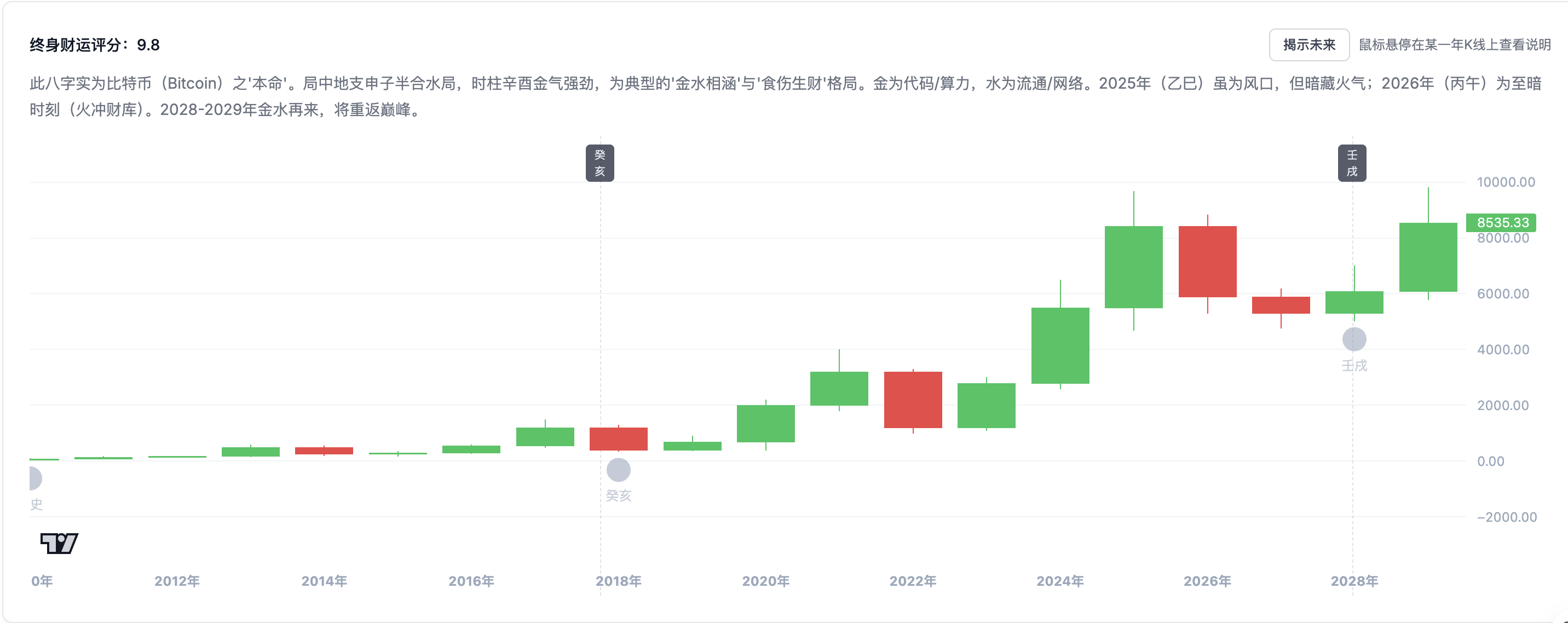
A seasoned crypto trader, deeply familiar with macro indicators, eventually turned to mysticism too. After casting a horoscope for BTC, the result was alarming: "Fire clashes with wealth vault—2026 (the Bing Wu year) will be Bitcoin's darkest hour." I immediately checked my wallet in panic—luckily, it never had any coins to begin with.
Recall how Alen, partner at crypto VC y2z Ventures, openly stated that one of their fund’s core competencies is "face reading." In the past, due diligence meant code audits and business models. Now? First check if the founder has a "wealth-losing face," then analyze whether the project name carries conflicting feng shui energies.
On a recent trip to Shenzhen, I noticed that traders and KOLs don’t carry data terminals as standard gear anymore—each has a "feng shui advisor" standing behind them.
Don’t laugh—this actually works in crypto circles. I know a CEO of a Hong Kong-listed company who’s a devoted feng shui believer, donating real money to temples—possibly more than his company spends on R&D.
And what happened? Feng shui apparently brought him a benefactor. Starting in 2023, he began buying Bitcoin, accumulating enough to earn hundreds of millions in profits. Then, riding the DAT (digital asset treasury reserves) narrative wave, his company’s stock doubled… Sure, we all know this is "survivorship bias," but the guy genuinely got rich.
There are cautionary tales too. A certain frog-profile-picture crypto KOL also had a feng shui advisor warning him not to make moves recently—but he couldn’t resist trading futures and ended up getting cleanly liquidated.
But this isn't purely superstition.
Our traditional agrarian civilizations emphasized farming: sow one grain in spring, harvest ten thousand in autumn—a system built on predictability. But what does a maritime civilization face? Storms and unknown waters.
Why do people along China’s southeast coast worship Mazu? Not out of ignorance, but because on the vast open sea, beyond experience and technique, you need something else.
The crypto world is essentially a modern-day "Age of Exploration." We’re navigating bottomless waters and sudden storms. Humans instinctively seek supernatural anchors when faced with massive randomness and volatility.
When candlestick charts fail, and tweets from Musk, Trump, or CZ can swing markets overnight, feng shui becomes the last psychological defense. This isn’t ignorance—it’s an instinctive human response to extreme financial uncertainty.
After all, when your net worth can swing 50% in a single day, you need to believe in something just to get some sleep. Does it matter whether the God of Wealth understands blockchain?
Join TechFlow official community to stay tuned
Telegram:https://t.me/TechFlowDaily
X (Twitter):https://x.com/TechFlowPost
X (Twitter) EN:https://x.com/BlockFlow_News
 深潮TechFlow


