After refusing to be the bagholder, the 100x coin also disappeared
TechFlow Selected TechFlow Selected
After refusing to be the bagholder, the 100x coin also disappeared
The market is evolving, and retail investors' cognitive abilities and tool usage capabilities are also improving.
 Navigating Web3 tides with focused insights
Author: tochi
Compiled by: TechFlow
Are retail investors smarter now?
To be honest, I'm not exactly sure when things shifted—maybe it happened gradually, or perhaps it was instantaneous. Maybe it's the kind of change you can only recognize in hindsight. Perhaps the Solana meme coin frenzy played a role, but I can't pinpoint the exact reason.
However, at some point, the market became more aware, sharper, and frankly, more efficient. Of course, by "efficient," I mean efficient in the Crypto Twitter (CT) sense, not in an academic one.
This efficiency shows in how people no longer willingly become bags for others to dump on.
Let me try to explain this from my perspective—just observations, don’t take it too seriously, haha.
The information gap is shrinking
The widespread availability of tools and information has changed the game. The more information and tools we have, the less room there is for manipulative schemes in the market. A few years ago, it wasn't like this—you could throw out the most predatory tokenomics model, and Crypto Twitter would still rush in blindly because the mantra back then was "rush first, ask questions later."
Today’s average crypto user is different. They check everything. Just scroll through CryptoRank, and you can instantly see a project’s tokenomics and unlock schedule—and immediately understand why it's suddenly trending on your timeline: oh, because there's a massive token unlock in 48 hours, haha.
The same applies to high-FDV (fully diluted valuation) project launches. You've seen it countless times on your screen: prices plummet straight down within days after TGE (token generation event). You know the pattern, so you enter and exit quickly, because holding too long means regret. Almost nobody buys into overvalued projects on day one anymore.
In short, the market is evolving, and retail investors are becoming more knowledgeable and skilled in using tools. This shift makes the market more rational and efficient, steadily reducing space for scams and manipulation.
Attention shifts at lightning speed
Spend just one day browsing Crypto Twitter (CT), and you’ll see how quickly people jump from one project to another right after a TGE.
Poorly launched projects get punished by the market immediately and are quickly forgotten, as people move on to the next "shiny new thing." Frankly, I'm not sure this is entirely positive, because it’s fostering the idea that TGE is the end goal of a project.
There’s one audience segment that clearly shows just how smart retail has become. They closely monitor every word you say, carefully analyze your views, and even dissect your statements in detail.
Personally, I often do "social listening" on X (Twitter), spending a lot of time reading comment sections and observing people's opinions on various topics. Beyond the infofi slops, I find these discussions are actually quite sophisticated. People don’t just track wallet addresses—they also track so-called "influence circles." For example, you'll see comments like: "Ah, don’t buy what this person promotes—he’s friends with Ardizor."
When you piece all this together, you realize people have learned how to track wallets, tokenomics, marketers (KOLs/influencers), and even sniff out scams from a distance.
But this change also has its downsides
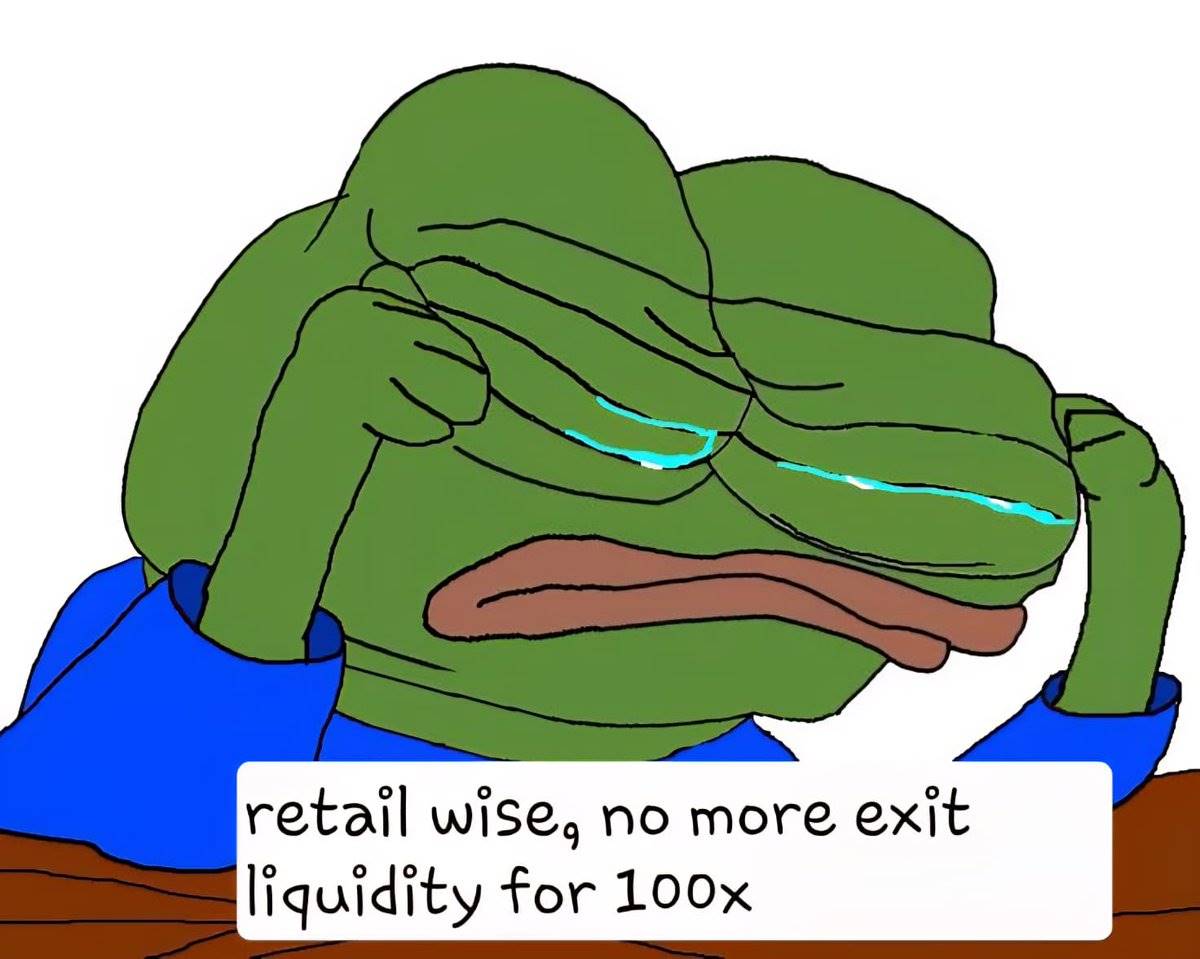
Can there really be downsides to "efficiency"? Let’s explore…
Rising market efficiency may cap potential returns. I tend to think that when everyone has enough information, the so-called "ignorance premiums" disappear. No one holds long-term out of fear of becoming the bagholder.
Nowadays, people don’t mind selling early because "profit is profit," haha—better than ending up holding the bag.
Still, sometimes I miss the relatively "ignorant" days of the market, when 100x opportunities were everywhere.
Of course, the benefits of efficiency are clear—it's ultimately positive for the entire ecosystem. Efficiency keeps everyone more alert and causes the market to punish predatory behavior. You can no longer expect retail to bail you out with predatory tokenomics or garbage projects—you’ll get exposed! It reminds me of recent cases on X (Twitter) where users called out influencers trying to whitewash "apriori scams"—very satisfying.
While this does make finding 10x investments harder, it also means that the projects that eventually succeed are truly valuable and sustainable—those with strong liquidity.
Frankly, I fully support this shift, and I believe this trend toward efficiency will continue. Both project teams and retail investors must adapt to this new reality—or risk being left behind by the market.
Have a great week!
Join TechFlow official community to stay tuned
Telegram:https://t.me/TechFlowDaily
X (Twitter):https://x.com/TechFlowPost
X (Twitter) EN:https://x.com/BlockFlow_News
 @OxTochi