Luo Yonghao at a Crossroads: Podcasts, Youth, and the AI Wave
TechFlow Selected TechFlow Selected
Luo Yonghao at a Crossroads: Podcasts, Youth, and the AI Wave
Young people, don't be afraid, there's nothing to fear.
 Navigating Web3 tides with focused insights
Compiled by Lian Ran
Edited by Jingyu
By the end of 2025, Luo Yonghao returned to the stage of Geek Park once again.
Luo Yonghao was very candid on the stage of Geek Park IF 2026. Facing Zhang Peng, founder and president of Geek Park, Luo said he had found new self-consistency in his new project "Luo Yonghao at the Crossroads": restraining his own talent.
Luo discovered that the core of podcasting isn't about "what I want to do," but rather "what I don't want to do"—no longer seeking verbal dominance, but instead giving the spotlight to China's most remarkable elites.
Although he insists on not accepting paid appearances on his podcast, he has nonetheless achieved a different kind of "comprehensive capture" through this approach.
Facing these young entrepreneurs who "don’t even have the awareness to fear," Luo feels complex—“both happy for them and angry at myself.”
He’s happy because all doors today are open to the young, allowing them early access to the best things; he’s angry because when he was young, material and cultural resources weren’t as abundant. But he finds comfort in knowing that although Smartisan failed, the “legacy” it left behind still nourishes a new generation of product managers—perhaps why he’s reluctantly become “respected.”
But clearly, he doesn’t intend to pass the torch just yet. “Mainly because my ventures haven’t succeeded,” this self-deprecating remark reveals his undiminished fighting spirit.
In the face of an AI wave grander than the Industrial Revolution, he frankly admits, “If we fail this time, there will be no excuse.” Over the next decade, smartphones won’t be replaced—and Luo Yonghao isn’t ready to step away either.
Luo says he can “keep折腾-ing for another decade or so,” because the day he envisions—a time when technological transformation benefits humanity—is arriving.
Below is the full transcript of Luo Yonghao’s dialogue with Zhang Peng at the Geek Park IF 2026 Innovation Conference, compiled by Geek Park:
01 The Initial Motivation Behind the Podcast
Zhang Peng: Back in June, we talked about podcasts during the Founder Park event. Not long after, "Luo Yonghao at the Crossroads" launched. People enjoyed it thoroughly, but I feel you’ve never really had the chance to explain: what exactly was your initial motivation for starting this show?
Luo Yonghao: Well, my motivation wasn’t particularly noble.
Last year, we developed an AI hardware solution integrating software and hardware. If delivered on schedule, it would’ve been undoubtedly the strongest product of the year. But an engineering mishap occurred—previously, our phone projects always suffered from hardware issues; last year, oddly enough, it was the software that failed while the hardware worked fine. This put us in an awkward position—machines we built were stuck sitting in warehouses, collecting dust.
Due to a disastrous R&D setback, the project had to be restarted from scratch, and funds quickly became tight. At that point, I faced two choices:
The first was raising more capital. But the timing was wrong—I’d like to warn fellow founders here: fundraising after a crisis comes with extremely high explanation costs. In fact, many people approached us earlier—we declined every time. We thought we had enough cash and wanted to wait until the product launched spectacularly before negotiating, which would give us stronger leverage. Now, with insufficient funds, going out to raise money would take enormous effort, especially during tough times—it could consume over 50% of a CEO’s time.
The second option was continuing R&D while finding ways to earn some money “to subsidize household expenses.”
Zhang Peng: Can we interpret this as turning yourself into a product to make money since your hardware product hit a snag?
Luo Yonghao: Exactly. And I already had certain traditional advantages in this area, so making money wouldn’t require too much effort.
Zhang Peng: Yet in China’s podcast scene, few seem to make substantial income. What made you confident this could work?
Luo Yonghao: Maybe precisely because someone like me hadn’t entered the space yet—I don’t know. Anyway, we made money on day one.
Zhang Peng: So does the show have a specific positioning?
Luo Yonghao: Not really. I just express appropriate content in the right way at the right moment. When my company collapsed years ago, I didn’t boast—I came out sincerely to review what happened, admitting the basic mistakes we made. I understand nuance; in such situations, boasting is completely inappropriate.
Let me take this opportunity to suggest something to fellow Chinese podcasters: you should absolutely produce video podcasts. I’ve noticed many peers hold a kind of “fundamentalist” belief—that only pure audio qualifies as authentic podcasting. Where does this strange bias come from? I truly don’t understand.
Two facts must be acknowledged:
First, the top-tier American podcasts all release audio and video simultaneously, and video metrics typically far surpass audio.
Second, audio dominates in the U.S. largely because commuting mainly involves driving, forcing people to listen; in China, most commute via subway or bus—making video consumption entirely feasible. So don’t treat “audio-only” as an ironclad rule of podcasting. That’s a compromise under specific conditions, not the essence of the medium.
So I genuinely urge peers to let go of this bias. If you’re producing content anyway, film the video too, distribute across all platforms, and let users choose whether to watch or listen. That’s exactly what we did from day one—launched on 11 platforms simultaneously. Results proved my judgment: video views account for 80–90%, while pure audio remains low. This confirms what I said earlier—China’s commuting environment makes video podcasting mainstream.
Zhang Peng: Looking back, does the outcome of sticking with video podcasting meet your expectations?
Luo Yonghao: Yes, it matches expectations. Performance has been excellent—each episode averages around 10 million views, with peaks reaching 30 million. Let me remind you, Boss Peng, this is achieved in our spare time. Currently, among seven days a week, five are spent on “Thin Red Line,” one for rest (or no rest), and one dedicated to the podcast—roughly like that.
So if the returns grow significantly and management believes allocating more effort makes sense—if that happens—we might shift to twice weekly, totaling 100 episodes annually; three times weekly would mean 150 episodes. Something along those lines—not decided yet.
Zhang Peng: Achieving today’s results using just “one-seventh of Luo Yonghao.”
Luo Yonghao: More like one-sixth. One-seventh would be exaggerating, since we do take one rest day.
Zhang Peng: The show is so popular—inevitably, rumors circulate: getting on Luo Yonghao’s podcast costs big money. Is that true?
Luo Yonghao: That’s outright slander and mudslinging—it’s false. You cannot buy your way onto our podcast. If paid appearances were allowed, having started in August, after three months, we should already be considering an IPO. Countless entrepreneurs are willing to pay to appear—but we never accept payment for podcast spots. Though I’m not a journalist by training, I still hold some journalistic ideals.
So no, you cannot pay to get on. We do have commercial partnerships and earn decent revenue. But when engaging enterprises, we find they most want to purchase—the spot on the podcast itself.
If we compromised—for example, inserting one or two paid episodes per ten—the annual profit would indeed increase substantially. Honestly, I’m human—I’ve been tempted. But I know once that door opens, team values would “go downhill,” and leadership becomes impossible.
So we draw a hard line here. But misunderstandings can arise: some companies both appear on the podcast and pay me separately for ads. This inevitably suggests to outsiders: is “free appearance” merely a front, with ad filming serving as disguised ticket fees?
Some skeptical entrepreneurs have come, insisting on zero commercial investment, appearing purely on the podcast—essentially testing me. But the truth proves: as long as the person fits, even if our business team gets rejected during partnership talks, they still get featured on the show.
These are entirely separate systems. There’s absolutely no bundled transaction like “must do business to appear on podcast.” That’s never happened.
Zhang Peng: So it’s neither pay-to-play nor using free appearances as bait for future deals.
Luo Yonghao: Absolutely not.
02 What’s the Logic Behind Selecting Guests for “Crossroads”?
Zhang Peng: What’s your guest selection logic? Since it’s not “money talks.”
Luo Yonghao: Our country today has outstanding elites across every industry. We simply want to “capture them all.” With our scale—especially aiming for 100 episodes yearly—the number of Chinese individuals worthy of a 5-hour deep-dive interview probably doesn’t exceed 100. So we aim to talk to all of them. Even without this show, I’d still want to hear how others converse with them.
So our criterion is simply the top tier across industries. We want to see what they’d share if freed from traditional TV constraints of 60 or 90 minutes—given ample time, say 5 to 8 hours. That’s our guiding principle.
Zhang Peng: Today’s the reveal. I saw two memes—related to your monetization?
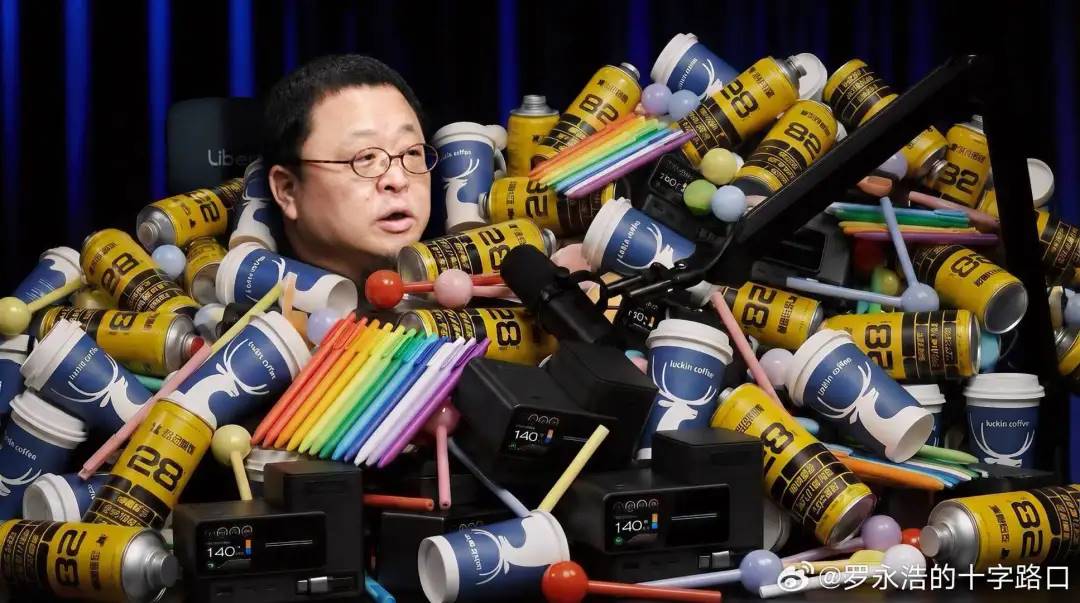
Almost covering Teacher Luo’s face|Image source: Luo Yonghao at the Crossroads
Luo Yonghao: Yes. After launching, many companies immediately approached us wanting product placement. During negotiations—you see Luckin Coffee, Waima Alcohol Delivery, Cuiket Co. power banks and stationery. The chair I sit on is buried there too—Qingxian ergonomic chair.
After placing these items, some viewers complained about interference. I snapped back: “Are you listening for free? Then stop whining.” Why only five now? Because we haven’t secured more sponsors. If possible, we’d gladly pile up merchandise everywhere. The key is what I and our guests discuss.
This on-site sponsorship is crucial to keeping the show free. While we don’t recommend going this far—and the image is exaggerated—in reality, only five items are placed. By mid-next year, we expect over ten. Revenue is solid, and content remains unaffected. Imagine if I paid guests—their content would demand interference, right? Then quality and integrity couldn’t be guaranteed.
With sponsorships, content stays protected. Yet none of these sponsoring CEOs have appeared on the show—keeping things clearly separated.
Zhang Peng: A more concrete question. Content creation demands rigor, yet your personal style is casual. How exactly does your team operate? Walk us through the process—from topic selection, background research to outline preparation.
Luo Yonghao: Are you asking if my team manages me?
Zhang Peng: Right, can they manage you?
Luo Yonghao: Not easily.
Our workflow goes like this:
Step one: “Selecting guests.” Whether called a topic meeting or guest meeting, I participate in discussions to decide whom to invite. The team contacts them first; if unreachable, I use my network to try.
Step two: “Deep dive.” A dedicated team member studies the guest’s entire background—reading materials ranging from tens to hundreds of thousands of characters. For filmmakers, we arrange viewings—I watch too; for authors, we read their books. After completing this homework, the team drafts the first interview outline. I digest their compiled core information—tens of thousands of words—then revise the outline accordingly.
During recording, though I hold a ~60-question outline, it mainly serves as a reminder. Getting excited often leads off-script—this is normal. But if straying too far, the team warns me via teleprompter to refocus.
Personally, I invest roughly 10–12 hours weekly. Our content team now numbers around ten, each with specific responsibilities. This model scales easily—adding staff allows coverage of hundreds of guests.
Regarding “management,” I mostly follow instructions. If disagreements arise during discussion, I might stubbornly push forward. But afterward, editing rights belong to them—they can cut whatever they want.
So the constraint works like this—process isn’t painful, final outcomes aren’t mine to decide—so it’s acceptable.
Better than live streaming. Controlling me during livestreams is tough—and uncomfortable for me too. Here, they don’t restrain me during recording, only afterward in editing. Peaceful coexistence, rarely quarreling.
03 Talent or Hard Work?
Zhang Peng: You instantly set the benchmark for video podcasting—was this due to talent or effort? Is it “just showing up and chatting,” or do you put in serious groundwork for each guest?
Luo Yonghao: You mean the interviewing itself?
Zhang Peng: Do you ever think, “This guest matters, I should spend extra time preparing”? Or is it the same for everyone—just show up and chat?
Luo Yonghao: Show up and chat—but I do prepare substantially.
For example, many authors we invite—I’ve already read their books. I had broad interests when younger. So before inviting them, I’ve often read most of their work. When Liu Zhenyun came, I only needed to read his latest book—since I’d already read most others. This is the advantage of knowledgeable people doing podcasts—no need to cram everything fresh.
Take a film director—their past works I may have already seen, needing only the newest one. Workload isn’t heavy. This isn’t talent—it’s accumulation.
Beyond that, I actually don’t rely much on my talent in podcasting—rather, I restrain it. I’ve always been articulate, combative, good at arguing—none of which applies here. How could I challenge a guest I invited?
Zhang Peng: Final cuts look harmonious. So you’ve truly never challenged or argued with guests?
Luo Yonghao: Almost never. Occasionally, we exceed editorial expectations—spending 20 minutes on one unresolved issue—later edited out. But these aren’t confrontational. It’s not arguing—he’s not my enemy, he’s our guest. Never reaches that point.
I feel this hasn’t used my talent—actually, I must suppress it. Sometimes I disagree internally, but don’t struggle mentally. So it becomes about restraint.
Zhang Peng: You used to react quickly, even somewhat “aggressively.” But podcasting requires drawing guests out—demanding restraint. Does internal conflict ever surface?
Luo Yonghao: Internally, no conflict—only muscle memory occasionally kicks in. Say we’re talking, he says something I slightly disagree with—muscle memory activates—my cerebrum hasn’t even started, maybe my cerebellum resists instinctively—I consciously correct these impulses.
Zhang Peng: “Cerebellum resisting”—does that mean facial expressions start showing it?
Luo Yonghao: If problematic, it can be edited out. Even if my expression looks bad momentarily, it can be removed later.
Zhang Peng: Watching your podcast, your expression stays calm, reactions minimal. Are you deliberately suppressing inner feelings?
Luo Yonghao: Not really. Sometimes control slips—they might “steal shots,” cutting in a composed angle from elsewhere, making me appear steady throughout. As long as it’s not live, solutions exist.
Zhang Peng: Might you adjust your style in the future?
Luo Yonghao: Let me add to your previous question. After the first two episodes aired, someone criticized: “You invited the guest—why talk so much?” So I spoke less, gradually reducing my input—actually easier for me. Why talk so much? Better to speak less, let guests talk more—results improved. I realized the core of my podcasting isn’t what I do, but what I don’t do. That’s surprisingly relaxing.
Zhang Peng: Perhaps the first time you discover “not doing” is more effective than “doing.”
Luo Yonghao: Possibly because initially, I was also a newcomer—not just outwardly humble, but inwardly genuinely humble. I’m confident I’ll excel at this—need maybe six months.
Based on experience, after six months, once I master podcasting, I might not remain this humble. A common misconception: calling it “dialogue with so-and-so,” assuming 50-50 speaking time is fine. But now I realize guests bring incredibly rich insights—I truly don’t need to speak much. Works well.
Zhang Peng: You’ve interviewed over a dozen guests this year. While they’re not here, tell us—who differed most from your expectations?
Luo Yonghao: Most striking impression—first place—magician Liu Qian.
I’m a mild magic enthusiast. My prior knowledge of Liu Qian was limited to CCTV New Year’s Gala: seeing him once a year, then watching nationwide “ququ” (joking/critiquing) him the next day. Before, I saw him merely as a skilled performer—an excellent magician, nothing more.
We invited him based on Tim’s (Luo’s previous podcast guest) recommendation. We aim for “peer-to-peer transmission” among guests. He recommended Liu Qian—I enjoy magic too—so we invited him.
The conversation shocked me. The Liu Qian presented on CCTV Gala is merely the tip of his true capability iceberg. To fit festive moods and “family-friendly” needs, he actually holds back—his range constrained. But his real understanding, pursuit, and international achievements in magic run far deeper than perceived.
Those hours opened an entirely new universe for me, a mild enthusiast. That session was also the “toughest”—our studio staff forgot to work, mesmerized. The only time staff became fully immersed, entering “flow state,” forgetting tasks, just dumbfounded listening.
The on-site impact was immense. You assume he’s one way—then discover a hidden side, ten or twenty times stronger. After airing, audience reactions mirrored mine: knew Liu Qian was impressive, but not this impressive—his grasp of magic reaches philosophical heights, far beyond ordinary perception.
Zhang Peng: What about tech figures?
Luo Yonghao: Tech leaders were generally as expected—I knew them well beforehand, no major perception gaps.
Let me briefly mention our ethical standards when interviewing. Toward guests, we harbor only “goodwill” and “neutrality”—never malice.
If I harbored ill intent, I wouldn’t interview them. If I wanted to criticize an entrepreneur or expose their dark side, I’d conduct independent research, write articles—not lure them into interviews, then edit damaging clips. Such tactics are ethically bankrupt.
We’ll uphold this principle. Within half to one year, I believe we’ll become the top choice for elite professionals across Chinese industries when expressing publicly—I have this confidence.
Today’s internet media, chasing traffic KPIs, frequently resort to “clickbait headlines,” even setting traps during interviews to provoke guests, extracting out-of-context quotes for news. This makes entrepreneurs love-hate media, treating them like thieves.
From day one, we established a rule: Malice means no interview; interview means no malice. I firmly believe upholding this for half to one year, any elite professional wanting public expression will choose us first.
Zhang Peng: Who’s the next guest? Any sneak peek?
Luo Yonghao: Today’s Sunday—tomorrow Monday we’ll tease it, Tuesday release the full episode. This one features Yan Junjie, founder of MiniMax—one of China’s AI “Six Little Dragons” performing exceptionally. Many now claim they foresaw AI early, but Yan truly did. He quit SenseTime a year before ChatGPT exploded to build large models—genuine foresight. Our five-hour chat was brilliant.
Zhang Peng: Any guests you particularly wanted to interview this year but didn’t manage?
Luo Yonghao: Uninvited guests certainly exist. But discussing specifics here feels inappropriate. Mentioning someone I repeatedly tried to invite but failed would pressure them—they may have valid reasons declining. Can’t discuss that.
Zhang Peng: Teacher Luo is considerate—let’s drop this topic.
Luo Yonghao: Few notice my considerate side—you’re one of them. You truly understand.
Zhang Peng: Another observation: people assumed you’d stick to tech, yet your “spectrum” proved remarkably broad. Was this planned from the start?
Luo Yonghao: Yes, designed this way originally.
Podcasting commonly follows two paths: highly specialized, in-depth topics create niche audiences or target specific groups; broader themes attract mass appeal.
Niche formats also hold high commercial value—if we interviewed only entrepreneurs discussing tech exclusively, profitability might even increase. Possible. But why avoid specialization? If we focused solely on tech circles, discussing deeply, we’d directly compete with you, Zhang Peng.
Geek Park has proven its expertise and influence in this domain over the past decade-plus—we wouldn’t recklessly enter competitive territory. Not because we’re friends (laughs).
I hope non-tech audiences engage with tech topics too. Many mistakenly think AI doesn’t concern them—those people may regret it later. I aim to invite professionals from various fields to explain broader concepts, making them accessible. That was the original vision.
Zhang Peng: Indeed valuable. The tech world truly needs someone like you—acting as an “interface,” translating hardcore tech value into public language, helping people “break out of their bubbles.”
Luo Yonghao: Benefits of broader topics are obvious. Afterwards, Ideal Motors and XPeng teams told us—after our episodes aired, their car sales increased.
Crucially, we didn’t discuss how many levels of autonomous driving exist or technical implementation paths—things the public doesn’t care about. People want to know what Li Xiang and XPeng are like as individuals. “Among so many EV startups, which to buy? Let’s pick theirs.” This universality benefits both us and interviewed guests. Another automaker—we don’t even know their CEO—won’t consider them yet. Actually nudging auto execs: if you keep delaying, you’re at risk.
Zhang Peng: Didn’t you just say not to pressure anyone?
Luo Yonghao: Just joking. Take Mr. Li Bin—he hasn’t appeared. We’re not pressuring him. We brought this up because after Ideal and XPeng came, audiences asked when Li Bin would appear. We reached out—timing didn’t align with their events and promotions, so he couldn’t make it. Believe he’ll come later.
04 How Do You View the New Generation of Entrepreneurs?
Zhang Peng: I noticed Tim was the first guest clearly from a noticeably different generation than you.
Luo Yonghao: Slightly awkward. Among our guests so far, only one is older than me—across 12 episodes, possibly just one. Why? Because I’ve aged. Finding someone older is increasingly difficult. From this angle, all our guests are young—Tim and He Tongxue being the youngest.
Zhang Peng: What do you think of today’s youth? Did conversations reshape your prior perceptions?
Luo Yonghao: Outstanding young people emerge endlessly across industries—I feel both happy and angry. Happy because I naturally hope to see more exceptional youth arise, signaling a brighter future; angry because they’re not only talented, but grew up under vastly better conditions.
Zhang Peng: Envy, right?
Luo Yonghao: Anger. I had nothing as a child—they received digital gadgets from parents early. Born in 1972, I suffered malnutrition, let alone digital devices. So sometimes happy, sometimes envious of their upbringing.
Zhang Peng: How has superior upbringing fundamentally differentiated this generation?
Luo Yonghao: Example: I know many music friends in Beijing. They once observed: abroad, you often see 16- or 17-year-olds placing a bowl on the street to perform. Meanwhile, our local “veteran band masters” who’ve practiced for decades listen briefly and feel utterly discouraged. They realize these teens play at nearly their own level.
Why? Half talent, half starting line. They told me: our generation grew up hearing “low-musicality” songs, didn’t truly encounter great music until twenties, began rock only then, achieved modest success by thirty. These kids excel at fifteen or sixteen because at six or seven, they already heard world-class music. Early exposure is crucial.
Same for Chinese youth in their twenties today—grew up missing nothing, abundantly resourced materially, spiritually, culturally. Previously, encountering world-leading achievements in a field, we’d say it “opened a new door.” But this phrase doesn’t apply today—because for them, all doors were already open from childhood, freely accessible. This cultural soil is immensely fertile.
On ZCOOL, I often see teenage illustrators, underage, creating world-class artwork. Unimaginable in our era. My peers’ early illustrations were often “cringingly amateurish.” Today, teens debut at global standard. Again proving: childhood exposure often determines future heights.
Zhang Peng: Exposure is exceptionally valuable wealth. Recently, this “richness of exposure” has indeed manifested among youth.
Luo Yonghao: When we were young, interested in the PC revolution, we only read things like “Zhongguancun Online,” right? Had Geek Park existed back then, we definitely would’ve… you get it.
Zhang Peng: With broad “exposure” established, pursuing depth in “understanding” enables greatness.
Luo Yonghao: Also noteworthy: many high-achieving youth we seek grew up with minimally involved parents—critical. Access to diverse quality resources, plus parents holding open-minded attitudes, greatly increases chances of becoming extraordinary—probability multiplies.
Parents possessing all conditions but strictly controlling children make exceptional achievement unlikely. We’ve aired 12 episodes, completed interviews/research for 17–18. I always ask about childhood beginnings—pattern is consistent.
Chinese “tiger parents” might relax a bit—perhaps that breath of relief becomes their child’s future achievement; what you force now likely won’t pan out.
Zhang Peng: Quite an unexpected perspective.
Luo Yonghao: Some interviewees grew up in rural areas or small towns, parents uneducated—sometimes simply too busy to supervise, leading to child success. Others had parents vaguely sensing they shouldn’t intervene much, noticing the child seemed smart, thinking “I won’t micromanage.” These factors matter. Forced compliance with parental will rarely yields greatness.
Zhang Peng: Speaking of youth—I heard you didn’t just talk; recently took a special trip to Shenzhen for research. This “on-site investigation” reportedly shocked you greatly? What happened?
Luo Yonghao: Teammates felt since commercialization started strong with good returns, they wanted to earn more—asked for ideas. We discussed making bigger waves year-end—also consulted Boss Peng, since you host Geek Park conferences twice yearly—I said “let’s launch a Crossroads Annual Conference.” Boss Peng offered advice. To execute seriously, extensive preparation is needed.
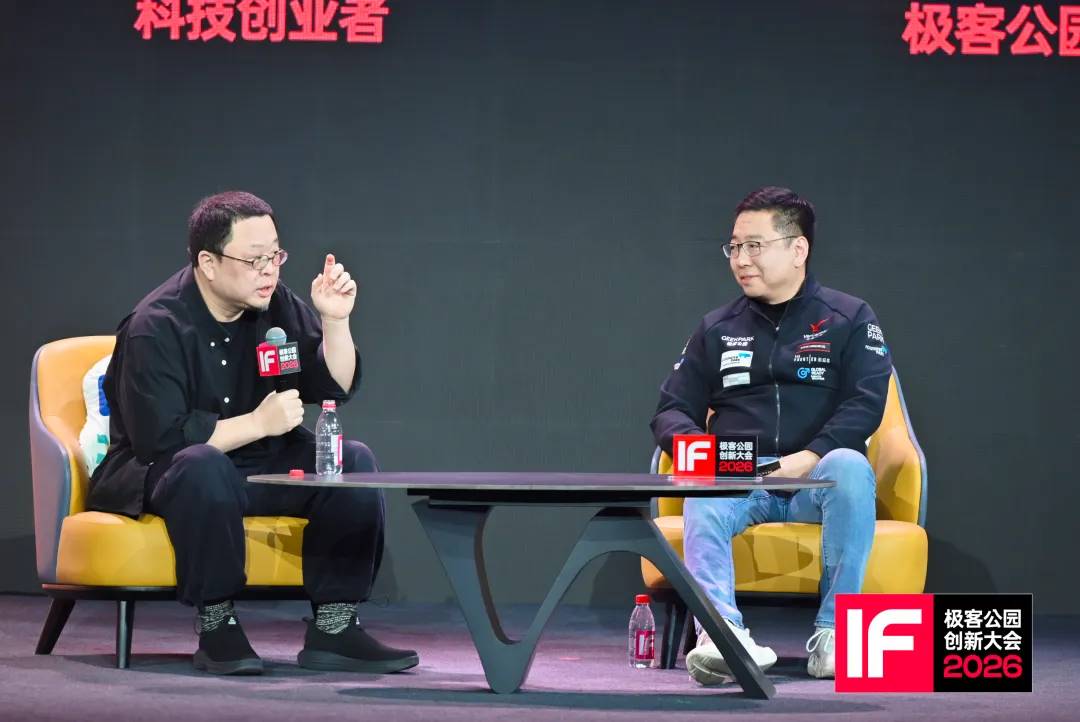
Teacher Luo explains upcoming “Crossroads Annual Tech Innovation Sharing Conference”|Image source: Geek Park
We plan to host the “Crossroads Annual Tech Innovation Sharing Conference” in Shanghai on December 30 this year, showcasing over a dozen innovative software and hardware products—all developed by Chinese teams.
Innovation is mandatory—being “good” isn’t enough. Must be both innovative and excellent. Following this principle when evaluating hardware, we essentially must go to Shenzhen. Hardware exists nationwide, but the central hub is Shenzhen. Earlier speaker Henri from Kickstarter helped introduce us.
We visited Shenzhen twice, toured multiple factories and the XbotPark robotics base—the world’s one-of-a-kind hardware startup incubator. Observed dozens of teams. Deeply impressed—today, Shenzhen is unquestionably the world’s best place for hardware entrepreneurship.
Recently observed: in U.S. tech innovation, software remains on the cutting edge, but hardware lags; Japan rarely sees notable hardware innovation—occasional examples from wealthy heirs, often producing “beautiful but useless” items. Like globally renowned Teenage Engineering—they create beautiful, interesting, but functionless things—admittedly, I enjoy them too. Being a literary youth myself, I appreciate beautiful uselessness.
But for creating genuine technological substance, nowhere compares to Shenzhen. Visiting firm after firm there is profoundly impactful.
Zhang Peng: You visited very early-stage young teams.
Luo Yonghao: Hard to imagine—in my era, or anywhere else on Earth outside Shenzhen, teenagers not yet graduated, aged eighteen or nineteen, gathering with like-minded peers to tinker with hardware—especially smart hardware, software-hardware integration. Truly shocking—again feeling happy for them, angry at myself. Can’t say more now—save surprises for year-end conference. You’ll be amazed.
Zhang Peng: In past years developing phones, you frequented Shenzhen too. Compared to now, what’s the biggest change?
Luo Yonghao: Back then, far fewer young teams created “novel, quirky, cool” things. Though China’s tech scene was vibrant then, with many companies building novel, impressive products, you’d never see teenagers—undoubtedly not students barely starting freshman year—simultaneously studying and doing this.
Zhang Peng: Today’s youth start earlier. Do these new-generation entrepreneurs recognize you?
Luo Yonghao: Mostly yes. Though Smartisan failed, its “legacy” includes certain investors and businessmen looking down on me—I don’t care about them.
But true product experts—China’s product managers—are different. Even when competitors crushed us commercially, many within rival product departments remained my fans—because they understand product. Technical teams? Barely any fans. Monetization departments? Definitely disdain me. That’s the current reality.
Visiting startups, if the CEO comes from a product (not technical) background, they immediately feel close. Often whisper to me: “Old Luo, I bought five Smartisan phones back then…” Especially those working on software-hardware integration or pure hardware—if responsible for product, they feel natural affinity toward me. They think “finally met you”—though you lost commercially, we deeply respect your product. This happens frequently.
Even in Silicon Valley. News reported Zuckerberg poached 11 AI experts from OpenAI—7 Chinese. When in the U.S., I specifically sought to meet these Chinese experts.
A friend added me to a group. I met the highest-valued among them. Upon meeting, this expert was even more excited than me, grabbing my hand declaring himself a “die-hard Hammer & Sickles fan.” Turns out, before studying in the U.S., he applied to intern at Smartisan—but our HR cruelly rejected him twice. Helpless, he went to America, earned a degree, joined OpenAI, becoming one of the top Chinese figures in the AI community.
Zhang Peng: So you indirectly contributed to global AI development.
Luo Yonghao: Could it be our HR rejecting him propelled his extraordinary success? I don’t know—no answer. Anyway, I went home and blocked our HR—also an old friend—on WeChat. Still, I was deeply moved—feeling Smartisan’s legacy might endure for years. Given I haven’t achieved much since, I feel quite guilty toward them.
Zhang Peng: What exactly touched them so deeply—still remembered today, even influenced them?
Luo Yonghao: Product.
Zhang Peng: Because they shared a common aesthetic appreciation for product?
Luo Yonghao: During Smartisan, those who understood product—especially product manager teams—mostly held extremely high regard for our products. A natural outcome.
It’s just that as I aged unconsciously, I didn’t realize this. You’ll understand later—everyone here will age. Growing old, you don’t notice it happening. For example, aging 20 years feels subjectively like only 10. Suddenly, you’re “respected” without realizing how. This feeling is complex.
Now visiting young tech entrepreneurs, if they’re product-focused, they show special affection toward me. That’s when I realize I’ve been forcibly “elevated to respected status.”
Zhang Peng: Here’s the question: you don’t plan to retire, still aiming to build products. Won’t you directly compete with these “younger waves” who grew up admiring you?
Luo Yonghao: The respected can still compete with youth.
People ask: “They accessed superior resources from childhood, achieving excellence so young—do you feel pressure?” Of course there’s pressure—but positive, healthy pressure. Others think: “You’re old—energy, creativity declining—can you still beat them?” Hard to say. Some youth misunderstand “old fogeys”—some have already given up. But someone like me, life without cease,折腾 without end—I believe I can keep going for over a decade more.
Also, let me clarify a common misconception. Many assume winning a lifetime achievement award means you can’t compete anymore—big misunderstanding. I often recall stories to inspire myself: Henry Fonda, Paul Newman—Hollywood legends who won Oscar Lifetime Achievement Awards, then later won Best Actor. Can you argue with that?
So I think—having collected lifetime achievement awards in product design—could I possibly win a “Best Actor” trophy in product innovation next? Watch and see.
Zhang Peng: Indeed something we greatly anticipate.
Luo Yonghao: Average lifespan now exceeds 80. With gene science breakthroughs, living past 100 may soon be possible. My future plans are now framed in “half-century” increments.
05 Are There Opportunities Left for Entrepreneurship Today?
Zhang Peng: During interactions with this generation of youth, what advice have you offered them?
Luo Yonghao: I’m very cautious. We were young once—how annoying when “old fogeys” lecture us. Now discussing products with them, I layer on prefaces.
Zhang Peng: How so?
Luo Yonghao: Prefaces adding about seven layers of Buff. Start with “not sure if I should say this,” then “I’m not specialized in this, you surely know more,” then “my opinion stems from past experiences, possibly flawed,” “I’ll share something for your reference—if wrong, please correct me.”
Zhang Peng: Six layers already.
Luo Yonghao: Plus “probably your team has considered this too.” If needed, I could keep going. But usually by then they grow impatient: “Teacher Luo, just say it.” I reply: “You insisted.”
Final move—shift responsibility to them—then gently suggest potential flaws.
Zhang Peng: Your “user experience” in advising youth seems well-designed.
Luo Yonghao: Speak appropriately for your stage. At our age, it’s easy to become insufferable.
Zhang Peng: I wonder—though age-wise we’re there, how can we avoid “old fogey vibes,” making youth more willing to befriend and communicate with us?
Luo Yonghao: Mainly by not achieving career success. Think—if during Smartisan I’d become a billionaire-status star entrepreneur, ranked among China’s top few—would I still have this drive today? I can’t say. Human nature is complex.
I maintain strong momentum today partly because I haven’t achieved extraordinary success before. Denying this would be dishonest.
Try empathizing—this world would improve greatly. We were bullied by “old fogeys” when young—now as “old fogeys,” should we bully youth? Constantly reminding yourself prevents becoming embarrassing or distorted.
Zhang Peng: Sounds like this year you’ve developed two layers of insight about youth: one, this generation is exceptionally capable.
Luo Yonghao: Exceptionally. In tech innovation—extremely capable, not just ordinarily so.
06 Luo Yonghao: No Plans to “Pass the Baton”
Zhang Peng: But another layer—even if they’re highly capable, Teacher Luo himself hasn’t planned to hand over responsibilities.
Luo Yonghao: Correct—no plans to hand over. I’ll maximize my influence and capabilities to help them succeed, while never abandoning my own pursuits.
Zhang Peng: A few days ago you announced a year-end event. Previously only text previews—today, take the chance to explain details face-to-face? Many speculate—could this be a “year-end mega-selling event”?
Luo Yonghao: No.
Zhang Peng: How should we understand it?
Luo Yonghao: Our year-end event will feature roughly 5–8 software and 5–8 hardware products—totaling十几 to under 20 innovative products. Includes those from large enterprises, SMEs, startups, and entrepreneurial teams. Features both mature goods and newly prototyped engineering units not yet mass-producible.
We select only innovative ones, proactively chosen by us. Within each category, across our reach, we gather the best available—only these receive payment.
Zhang Peng: So prerequisite is always products you deem sufficiently good and convincing?
Luo Yonghao: Yes, though not always. We have a product selection team. Sometimes I mistakenly believe a product is excellent, but they later discuss behind my
Join TechFlow official community to stay tuned
Telegram:https://t.me/TechFlowDaily
X (Twitter):https://x.com/TechFlowPost
X (Twitter) EN:https://x.com/BlockFlow_News
 极客公园
极客公园