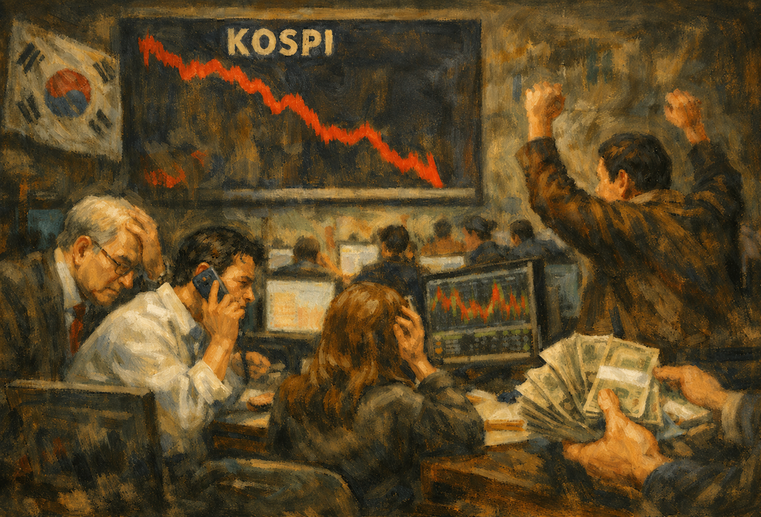
47 days, from earning $44 million to losing all capital—Ma Ji's fate determined by the "gambler's ruin theorem"
TechFlow Selected TechFlow Selected
47 days, from earning $44 million to losing all capital—Ma Ji's fate determined by the "gambler's ruin theorem"
Ma Ji Brother said "just live happily," a carefree attitude of the wealthy gambler—ordinary people shouldn't follow.
 Navigating Web3 tides with focused insights
Ma Jige, former artist and tech entrepreneur, now a major whale in the crypto space. He staged a jaw-dropping rollercoaster of wealth on the Hyperliquid exchange.
Through aggressive leverage, he once pushed his account value to nearly $60 million (with over $44 million in unrealized gains).
However, driven by the "gambler's fallacy" and the "disposition effect," he ignored market reversals, frantically doubling down and holding on, attempting to defy mathematical laws.
In just 47 days, he plummeted from the peak to only $1,718 left—losing all his principal—and vividly, brutally illustrated the final outcome of the "gambler's ruin theorem."
To understand this downfall, you need to grasp three concepts: random walk, absorbing barriers, and negative drift.
① Random Walk
Imagine a drunk man walking along a straight line. He flips a coin: heads he steps forward (profit), tails he steps backward (loss).
Ma Jige’s experience is essentially the steps of this drunkard. In the short term, he might flip several heads in a row, surging forward, with assets soaring to $60 million. But this doesn’t mean he’s skilled—it’s just luck.
② Absorbing Barrier
The path the drunk man walks is asymmetric.
The left side is a high wall (the house/market): formed by the total capital of the market. For an individual, it's practically infinite. You can never win all the market’s money or bankrupt the market.
The right side is a cliff (you): this is the point where your principal hits zero. For Ma Jige, this point is finite.
As long as the game continues, there's always a chance the drunk man steps backward repeatedly. Once he touches the cliff (assets reach zero), he falls off. Falling means being "absorbed"—the game ends, and you lose any chance to recover.
Because your opponent (the market) is effectively infinite while you are finite, given enough time, you will 100% fall off the cliff.
This is the "gambler's ruin theorem."
③ Negative Drift
If it were just a fair coin toss (50% win rate), it might take a very long time for the drunk man to fall. But in casinos and crypto futures trading, fees and slippage act like a strong wind blowing constantly toward the cliff—this is negative drift.
Under negative drift, the mathematical expectation becomes negative. In this round alone, Ma Jige paid hundreds of thousands of dollars in funding fees.
So why didn't he stop when his unrealized profit reached $44.84 million on September 18? Why did he lose all his capital? The reasons are:
a. Leverage. Leverage brings the distant "cliff" right to your feet—only a 4% adverse move (at 25x leverage) is needed to send you falling.
b. Martingale strategy. Using finite "ammunition," continuously doubling down (martingale betting) against an infinite market decline inevitably leads to a broken capital chain, crashing into the absorbing barrier.
c. Mental accounting. Why didn't he take profits when he was up big? Because in a gambler's mind, that $44 million was "the casino's money," so losing it didn't feel painful.
Ma Jige said "it was fun while it lasted"—that's the nonchalance of a wealthy gambler. Ordinary people shouldn't imitate this.
Here are three life algorithms:
1. Engage in "Positive Expectation"
Futures contracts and gambling are negative expectation games—avoid them, unless you're paying for entertainment.
Dollar-cost average into legitimate indices, hold high-quality assets with EV > 0, and be time's ally.
Duan Yongping said ordinary people can profit by dollar-cost averaging into the S&P 500 because the market exhibits "positive drift."
2. Stay Away from "Absorbing Barriers"
Staying alive is the top priority. Avoid leverage; don't let volatility push you off the cliff.
3. Set a "Stop Line"
Speculators: cash out profits and cut losses. Otherwise, according to the gambler's ruin theorem, the end result is zero.
Value investors should use disposable income—money they can afford to lose—to wait for positive drift.
Join TechFlow official community to stay tuned
Telegram:https://t.me/TechFlowDaily
X (Twitter):https://x.com/TechFlowPost
X (Twitter) EN:https://x.com/BlockFlow_News