Interlace亮相FinTech Week 2025: Fund agility becomes new competitive edge in corporate finance
TechFlow Selected TechFlow Selected
Interlace亮相FinTech Week 2025: Fund agility becomes new competitive edge in corporate finance
As an important window for Hong Kong's journey toward becoming a global fintech hub, FinTech Week has become a core platform for dialogue among policymakers, enterprises, and innovators.
 Navigating Web3 tides with focused insights
November 3-7, 2025, Hong Kong FinTech Week 2025 took place in Hong Kong with great fanfare. As one of Asia's most influential fintech events, this year's conference covered cutting-edge fields such as artificial intelligence and blockchain, and hosted multiple dedicated forums on digital assets and Web3, exploring how emerging technologies are reshaping the global financial system and capital flows. Serving as a key window for Hong Kong’s ambition to become a global fintech hub, FinTech Week has become a core platform for dialogue among policymakers, enterprises, and innovators.
TechFlow
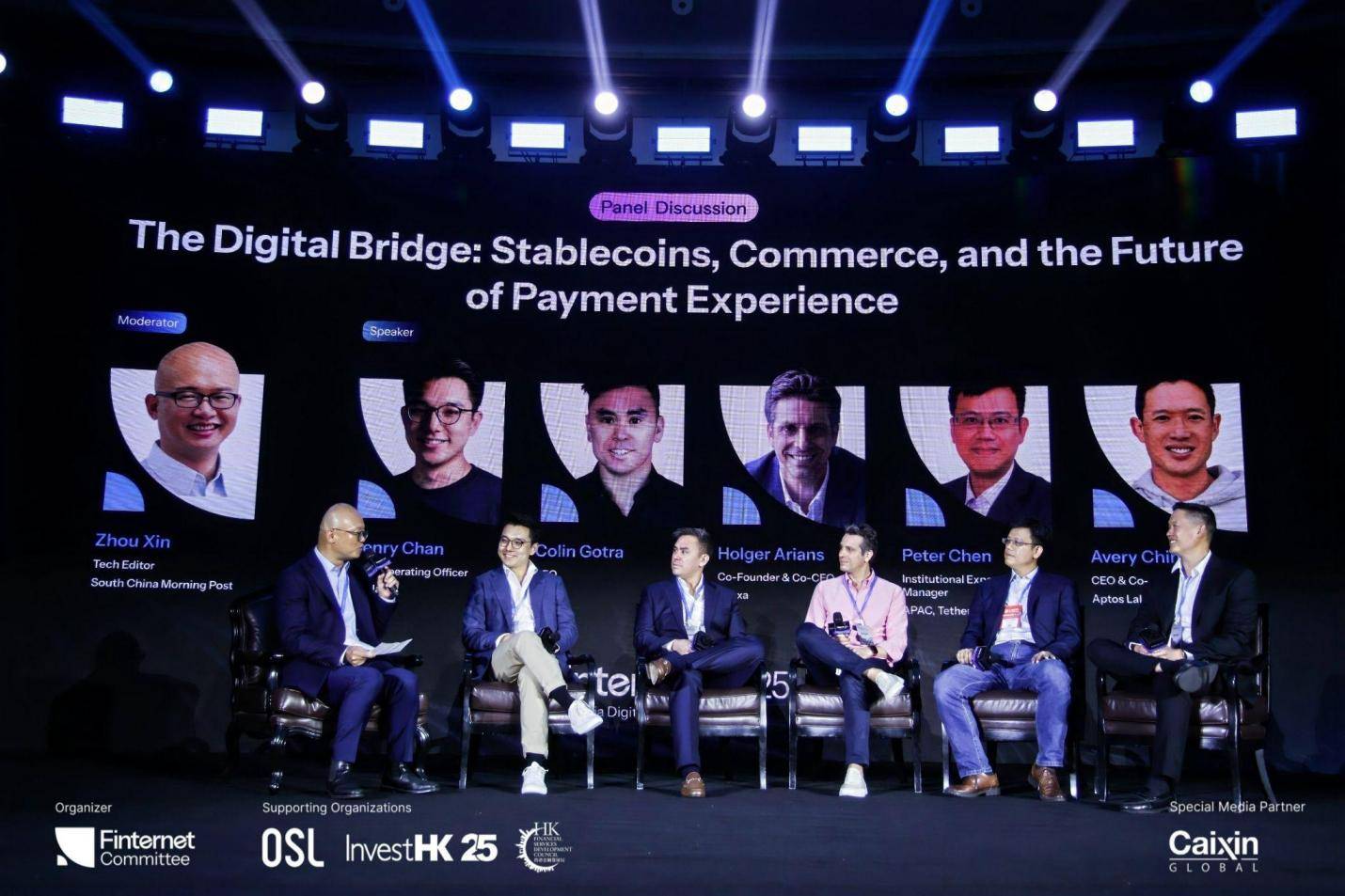
Interlace, a leading global card issuance and fund management platform, was invited to attend Finternet Committee 2025, hosted by Invest HK (Invest Hong Kong), FSDC (Financial Services Development Council), and OSL Group. Interlace COO Henry Chan joined panelists from Tether, Morph, Banxa, Aptos, and other companies to discuss the future of stablecoins, commerce, and payment experiences.
Capital Agility: The New Benchmark of Corporate Competitiveness
Today, under the influence of geopolitical dynamics and macroeconomic policies, market volatility has become the norm. Corporate capital allocation capabilities are facing unprecedented challenges—efficiency and resilience in cross-border, multi-chain, and multi-market fund transfers are becoming critical to maintaining continuous operations—this capability is known as capital agility.
During the roundtable discussion titled "The Digital Bridge: Stablecoins, Commerce, and the Future of Payment Experience," Interlace COO Henry Chan shared insights from the perspective of a company dedicated to bridging Web2 and Web3 financial innovation. He highlighted that stablecoins are evolving into a "digital nexus" connecting the digital economy and real-world commerce, with applications expanding beyond crypto-native use cases into practical scenarios such as cross-border e-commerce, B2B settlements, advertising payments, and payroll. As a result, the narrative around stablecoins has shifted from "decentralized revolution" to "enhancing real-world financial efficiency"—the true value lies in boosting corporate capital agility, enabling seamless movement of funds across different chains, currencies, and settlement networks.
"The attributes of stablecoins—value pegging, programmability, real-time settlement, and on-chain traceability—enable businesses to move freely across multiple currencies and blockchains while maintaining compliance and transparency," said Henry. He added that the adoption of stablecoins is driven not only by increasingly clear regulatory frameworks but also by enterprises’ growing demand for "instant settlement and global interoperability."
Stablecoin Evolution: From Payment Tool to Infrastructure
In the past, the biggest obstacle to enterprise or institutional adoption of stablecoins wasn't technical—it was systemic fragmentation. Funds were often scattered across different blockchains and wallets, lacking integration with fiat accounts and clearing networks. This meant that even if companies wanted to use stablecoins to improve settlement efficiency, they struggled to balance compliance, security, and liquidity. "Enterprises don’t lack innovative solutions; what they lack is an underlying system that connects traditional finance with on-chain capital," Henry shared based on client observations.
Moreover, traditional payment giants such as MasterCard, PayPal, and Western Union are now exploring stablecoin initiatives, signaling that competition in the global payment network is shifting from single-channel models toward infrastructure-level convergence.
As a global card issuance and fund management platform, Interlace remains committed to an open, accessible, and innovative product architecture—from card issuance to risk management, BIN management to multi-currency settlement—enabling enterprises and developers to quickly integrate payment, card issuance, and crypto account functionalities like calling upon basic network infrastructure. With this architecture, Interlace is driving stablecoins toward mainstream financial infrastructure, empowering enterprises with genuine agility in global capital flows.
In addition, Interlace aims to enable businesses to manage cross-system and cross-currency fund movements within a unified platform, offering global accounts, MPC wallets, fiat-to-crypto exchange, card issuance, CaaS APIs, and embedded KYT/KYC/KYB risk control systems—helping enterprises securely, automatically, and compliantly orchestrate funds amid the volatility of multi-chain, multi-currency, and multi-market environments.
From Dialogue to Practice: Onsite Observations at FinTech Week
Beyond speaking engagements, Interlace also set up an exhibition booth at the summit to showcase its latest card issuance, fund management, and API solutions. This offline engagement extended the concept of "capital agility" from panel discussions into hands-on exchanges, allowing more industry participants to see firsthand how Interlace reconnects complex global payment networks through technological and compliance infrastructure.
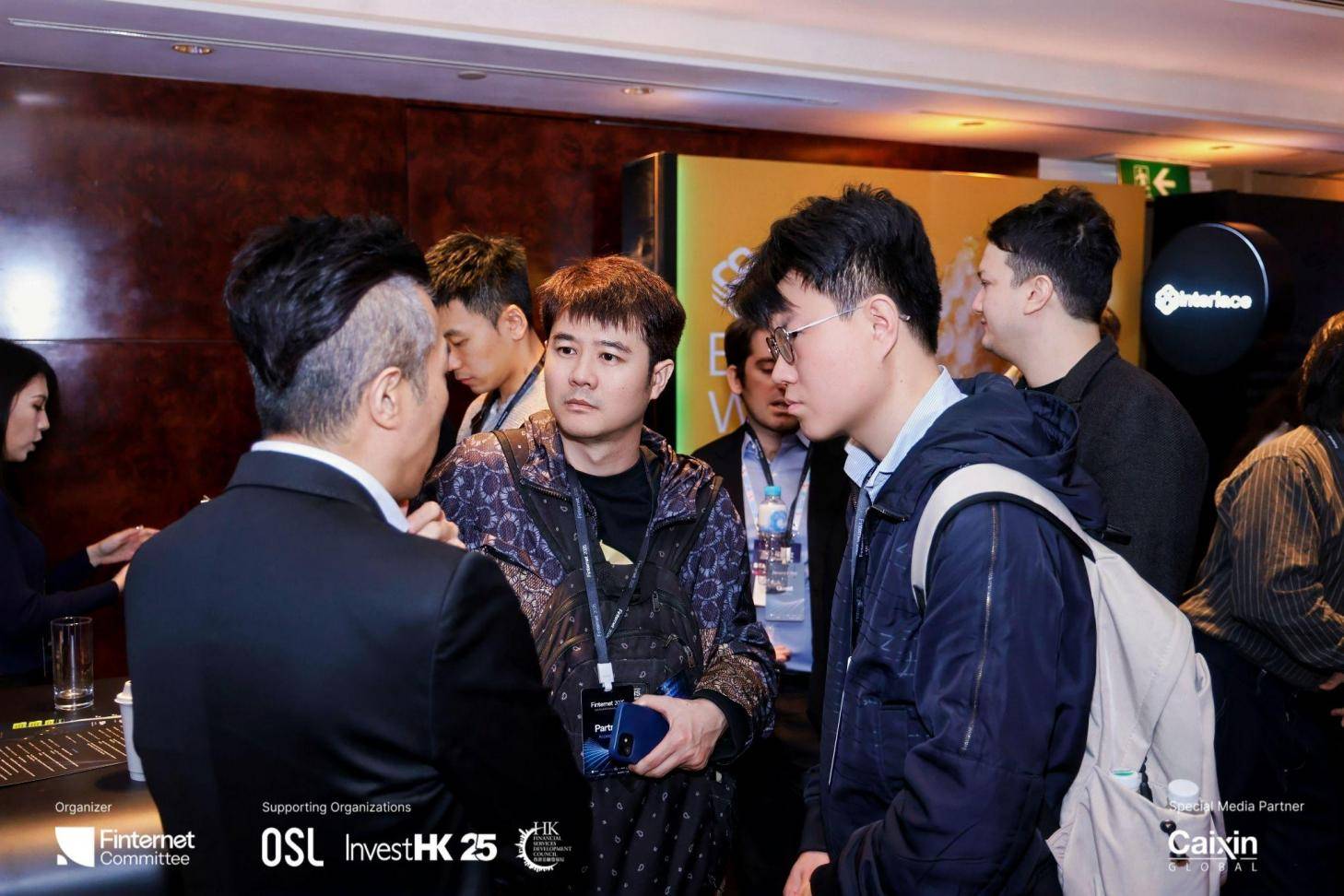
Discussions at Finternet 2025 indicate that the global financial system is entering a phase of "reconnection." Stablecoins are no longer conceptual artifacts of the crypto industry but have become pivotal hubs driving the integration of traditional and new financial systems.
Interlace is turning this "connectivity" into reality through deployable infrastructure—whether it’s enterprise accounts, payment settlements, or card networks, all are redefining the way cross-border capital moves with greater speed and transparency.
To date, Interlace has issued over 6 million cards, serves more than 12,000 enterprise clients—including Web3 companies, cross-border e-commerce platforms, B2B traders, and fintech platforms—operates in 180+ countries and regions, holds multiple financial licenses in the U.S., Hong Kong, and Lithuania, and has achieved PCI-DSS Level 1, the highest level of security certification.
Join TechFlow official community to stay tuned
Telegram:https://t.me/TechFlowDaily
X (Twitter):https://x.com/TechFlowPost
X (Twitter) EN:https://x.com/BlockFlow_News
 @InterlaceMoney