








The next step for crypto is only one path: to become the mainstream world itself
TechFlow Selected TechFlow Selected
The next step for crypto is only one path: to become the mainstream world itself
Let crypto become a vehicle for technology, not a gambler's paradise.
 Navigating Web3 tides with focused insights
Author: Zhou Zhou, Foresight News
For Crypto, there is only one path forward—no longer existing on the fringes of mainstream society, but becoming mainstream itself.
On October 29, when NVIDIA's market capitalization surpassed $5 trillion, becoming the first publicly traded company in the world to achieve this milestone, the crypto community collectively "broke down." This was not only because NVIDIA alone had a higher market cap than the entire cryptocurrency market (which stands at $4 trillion), but also because NVIDIA and the AI sector it represents are actively expanding the boundaries of our world and pursuing new growth. In contrast, crypto often gives the impression of being trapped in endless zero-sum games. Many people have not only failed to gain wealth, but have also lost their sense of future.
AI professionals discuss hot topics such as autonomous driving, robotics, biotech, space exploration—and how AI will deeply transform and reshape the value of these industries. Meanwhile, as one crypto KOL put it, what do crypto practitioners talk about every day? Cats, dogs, frogs, Chinese memes, who got listed on Binance Alpha, which celebrity liked or reposted something... After all the noise, nothing substantial remains.
The repeated collapse of altcoin and meme waves may gradually help crypto practitioners find clarity. Only by integrating with technology and real-world applications can crypto secure a sustainable and enduring future. Let crypto become a vehicle for technology, not a gambler’s playground.
A more pressing reality is this: when USD stablecoins reach a market cap of $250 billion (compared to around $2.5 trillion in circulating U.S. dollars), when Bitcoin’s market cap exceeds $2.2 trillion (gold sits at $27 trillion), and when Binance’s daily spot and derivatives trading volume hits $100 billion (Nasdaq trades around $500 billion per day), crypto has run out of alternative paths. Its only way forward is to become the mainstream itself.
One: Use blockchain technology to completely replace the global financial system.
Stablecoins are gradually replacing the operating systems of fiat currencies; crypto exchanges are capturing market share from traditional securities exchanges like Nasdaq; Bitcoin is emerging as a new global value anchor following gold; public blockchains like Ethereum are attempting to replace Swift and build new international value transfer networks... From money markets, securities markets, gold markets, international trade, to payment systems—crypto is reshaping the entire financial world.
And throughout this process, the crypto industry itself continues to evolve.
Stablecoins are evolving toward "decentralized stablecoins"—after USDT and USDC, projects like Ethena are emerging; crypto exchanges are moving toward decentralized models—after centralized giants like Binance and Coinbase flourished, decentralized platforms such as Uniswap, Phantom, and Hyperliquid were born; Bitcoin's market cap is approaching one-tenth of gold’s; an increasing number of countries are viewing Ethereum as a new network for international trade settlement.
Each advancement in these areas represents technology reshaping and reconstructing the real world.
The internet once triggered a complete overhaul of the global financial system. Now, blockchain is driving the second wave—one that is even more systematic and comprehensive.
Crypto has gradually moved beyond the margins of the financial system, integrating into—and potentially surpassing—the mainstream. Its pioneering progress across multiple domains has already captured roughly one-tenth of the mainstream financial system.
For example, USD stablecoins account for exactly one-tenth of circulating U.S. dollars—$240 billion versus $2.4 trillion; Bitcoin’s market cap is nearly one-tenth of gold’s—$2.2 trillion versus $27 trillion; Binance’s daily trading volume accounts for about one-tenth of Nasdaq’s—Binance’s daily spot volume is approximately $30 billion, with total spot and futures volume around $100 billion, while Nasdaq trades about $500 billion daily.
Two: Gradually become a platform for frontier tech companies, just like early Nasdaq.
In its early days, Nasdaq was—as today’s Binance and other crypto exchanges are now—seen as the most popular platform for "junk stocks."
Nasdaq did not start out as a mainstream blue-chip exchange like the NYSE. Instead, it focused on small- and mid-cap stocks, tech stocks, and shares of private companies, offering transparent quotes and electronic matching. At the time, the dominant NYSE still relied on floor traders shouting orders in a physical trading pit.
Early Nasdaq was far from the prestigious institution it is today. Between the 1970s and 1980s, the Nasdaq market was rife with scams, resembling the "pink sheet" market depicted in *The Wolf of Wall Street*, filled with junk stocks and manipulated penny stocks.
Leonardo DiCaprio’s character Jordan Belfort was a fund sales manager during that chaotic era, masterfully selling worthless stocks. He would pick an obscure stock from the pink sheets—like the fictional "Aerotyne International" in the film, a non-existent airline—and pitch it with confidence:
"Sir, I’ve got a company here developing revolutionary aerospace technology, with Boeing executives investing and NASA watching closely. You don’t want to miss this opportunity, do you?"
Countless retail investors bought these pink sheet stocks, much like today’s crypto media and KOLs:
"Sir, this is an ultra-revolutionary x402 protocol token. Companies like Google and Visa are involved, and Coinbase is diving in headfirst. You don’t want to miss this opportunity, do you?"

Yet behind many of these tokens, no such company actually exists.
It wasn’t until the late 1980s and 1990s tech boom, with the listings of Microsoft, Apple, Intel, and other major tech firms, that Nasdaq began to emerge as a mainstream exchange and achieve its current status.
In 2004, Nasdaq’s average daily trading volume matched that of the New York Stock Exchange (NYSE) for the first time. From its founding in 1971, Apple’s IPO in 1980, to finally overtaking the NYSE in 2004—Nasdaq took 33 long years.
Throughout this extended journey, Nasdaq lost its way at times, but ultimately waited for the rise of internet and high-tech giants like Apple, Microsoft, Intel, and NVIDIA—eventually becoming the world’s most prominent equity capital market.
Nasdaq’s journey may offer valuable lessons for crypto practitioners: focus on the unique strengths of crypto markets—fair launches, global liquidity, early user airdrops—just as Nasdaq initially offered quote transparency and electronic trading. Don’t fear early market chaos, just as Nasdaq endured its era of rampant junk stocks, and just as today’s crypto market suffers from countless low-quality altcoins and memes.
The future of crypto lies with companies that can profoundly impact humanity. Just as Nasdaq relied on Apple, Microsoft, Intel, and NVIDIA, the crypto market will depend on Tether, Ethereum, Polymarket, Hyperliquid, Farcaster, Chainlink, and similar organizations. The vast majority of altcoins and memes will vanish into history.
Nasdaq trades hundreds of billions daily, while the largest crypto exchange, Binance, now reaches tens of billions. Judging by volume alone, it’s not unrealistic for crypto exchanges to surpass Nasdaq and become the world’s largest capital market.
A trading market becomes legendary because it aggregates the majority of the world’s technological innovators. It’s not just about capital flows—it’s about the pulse of technological progress. It carries the world’s newest productive forces and the greatest investment enthusiasm.
Three: Crypto Will Ultimately Move Beyond the “Meme Era” and Enter Its “iPhone Moment”
Binance’s daily trading volume has reached one-tenth of Nasdaq’s, USD stablecoins one-tenth of circulating U.S. dollars, and Bitcoin’s market cap is nearing one-tenth of gold’s... The next step for crypto is clear: to become the mainstream world itself.
Luckily, Nasdaq was once just an obscure trading venue, and Apple computers spent their first two decades serving only niche enthusiasts and hobbyists. Back then, no one imagined they would one day dominate the mainstream.
Apple was founded in 1980, but it took another 20 years for the internet revolution to truly take off. Nasdaq didn’t overtake the NYSE until 2004, finally integrating into the mainstream as the world’s most important capital market.
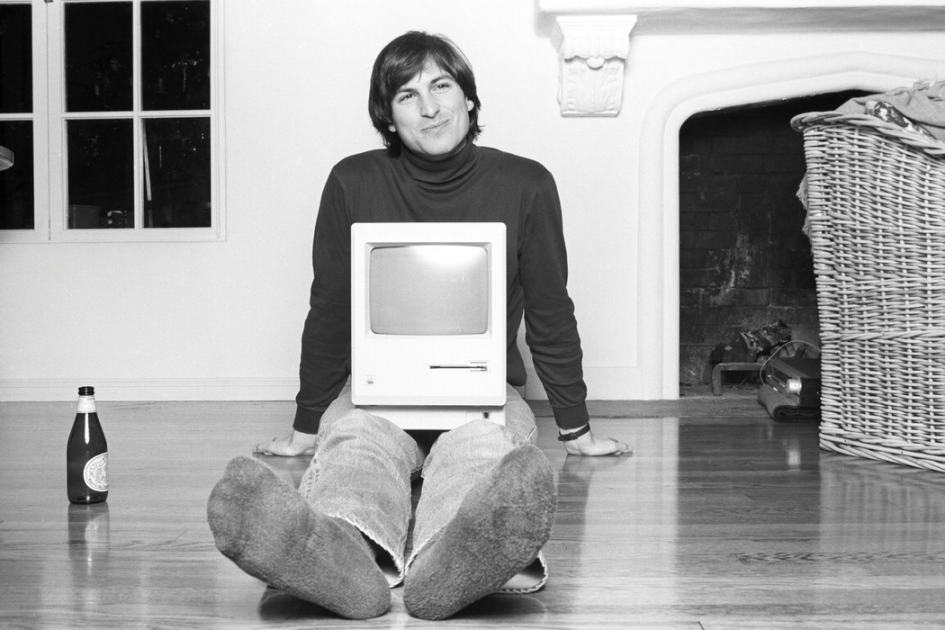
Without foundational companies like Apple and Microsoft building and refining the underlying infrastructure, internet and AI companies could never have proliferated. Similarly, today’s Ethereum, Tether, Solana, Binance, Hyperliquid—these foundational infrastructure providers—still need time to mature. Only when they fully come of age will the Web3 revolution truly arrive, unleashing mass-adoption products like Amazon, Facebook, and TikTok in explosive waves.
The internet is a vast concept encompassing not just internet companies and fintech, but also infrastructure like computers and smartphones, as well as capital markets like Nasdaq that adopt cutting-edge technologies—ultimately impacting all real-world enterprises. Likewise, crypto is a broad concept that extends beyond crypto-native firms to include core technical protocols and companies, capital markets like Hyperliquid and Binance leveraging the latest technologies, and will eventually give rise to a new wave of application-layer companies that widely influence real-world industries.
Technology is the ultimate force driving continuous improvements in human quality of life. The future of crypto is destined to be deeply integrated with technology—and may even become the carrier and synonym for the next generation of technological innovation.
Join TechFlow official community to stay tuned
Telegram:https://t.me/TechFlowDaily
X (Twitter):https://x.com/TechFlowPost
X (Twitter) EN:https://x.com/BlockFlow_News
 Foresight News











