A Comprehensive Overview of the Past and Present of Prediction Market Liquidity
TechFlow Selected TechFlow Selected
A Comprehensive Overview of the Past and Present of Prediction Market Liquidity
Regardless of the type of liquidity, it depends on the specific market.
 Navigating Web3 tides with focused insights
Author: Dora Lsk
Compiled by: TechFlow
Recently, more and more people have started discussing prediction markets.
Although they are becoming increasingly popular, there are also some drawbacks.
One of them is low liquidity, which plays a crucial role in trading.
What is liquidity?
In simple terms:
In a high-liquidity market, you can buy shares with a large amount of money without causing significant price changes. For example:
-
High-liquidity market: You can purchase over $3,000 worth of "YES" shares at 77 cents per share, with almost no price fluctuation.
-
Or you can place an order at 75 cents, which might get filled quickly due to sufficient liquidity and active traders in the market.
But in a low-liquidity market, even a small purchase can noticeably impact the price.
For example, as I recently wrote about one market case:
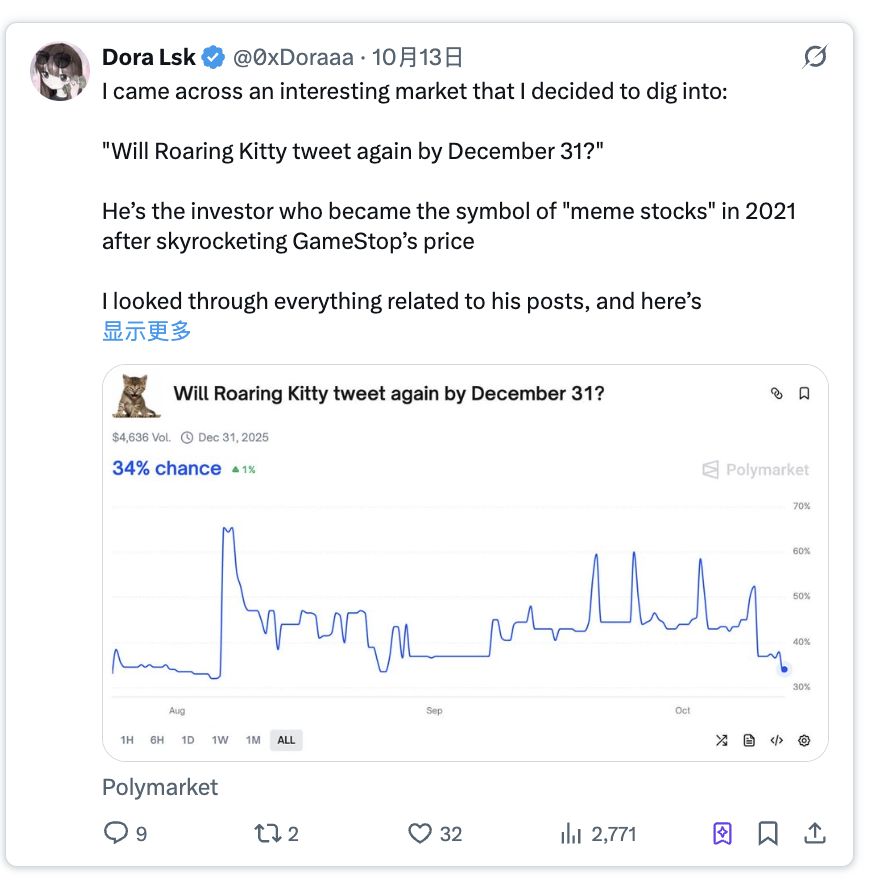
Original tweet link: Click here
On Polymarket, when I wrote that article, the trading volume in this market was only $4,636, with a probability of 34%.
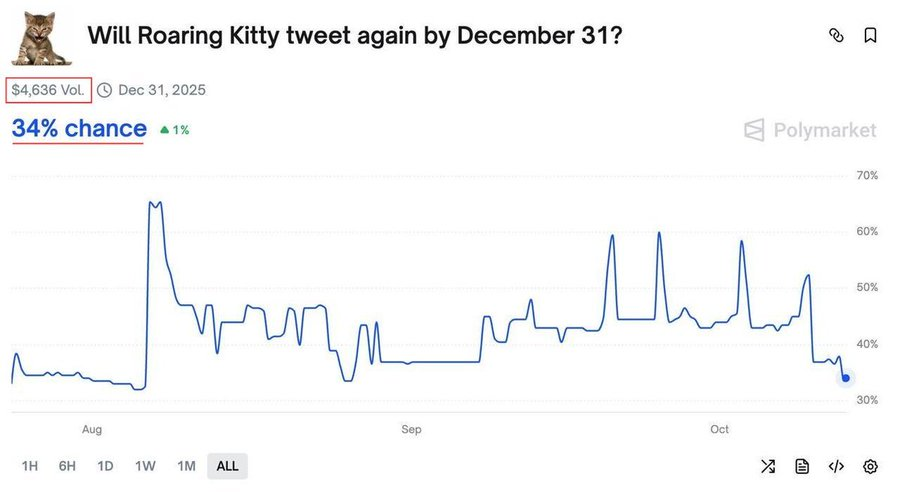
But later, after just $500 more in volume, the price was significantly affected, pushing the probability up to 55%.
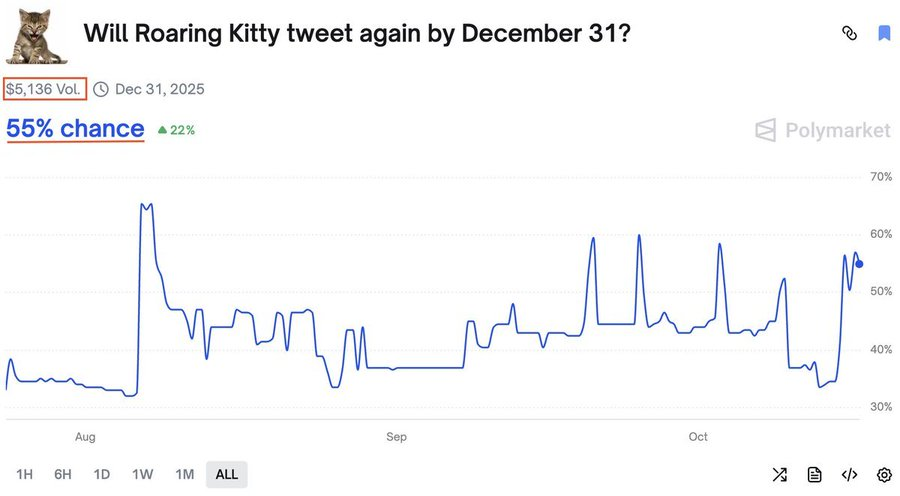
Therefore, in prediction markets, liquidity is an important measure of how easily you can buy or sell positions without significantly changing the price.
Past liquidity: AMM model
Prior to 2022, Polymarket used an AMM (Automated Market Maker) based model.
An AMM is an algorithm that enables trading without requiring traditional buyers or sellers.
-
It operates via formulas, allowing regular users to deposit funds into the market and earn fees from others' trades.
-
However, when the market settles, one of the tokens becomes worthless, while liquidity providers still hold that token.
-
This often results in fee earnings failing to offset losses.
As a result, most who provided liquidity through the AMM model ended up losing money.
For more details, see the following tweet:
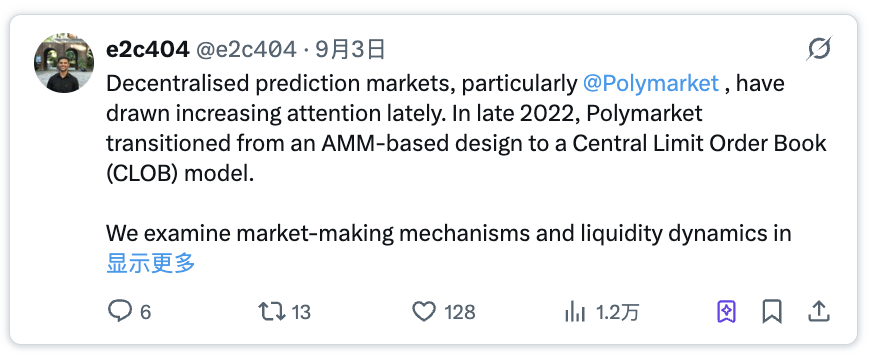
Original tweet link: Click here
Current liquidity: CLOB model
At the end of 2022, Polymarket switched to the CLOB (Central Limit Order Book) model.
The CLOB is essentially the familiar order book system:
-
Here, prices are set by traders themselves, rather than being auto-generated.
-
This model makes CLOB markets more profitable and allows market makers to profit from bid-ask spreads.
Polymarket also incentivizes users to provide liquidity through a rewards program.
Here's how it works:
You place a limit order, buying or selling shares on markets that need liquidity.
In the top right corner, hover over "Rewards," and you will see:
-
Available rewards
-
Maximum spread (qualifying orders are highlighted in blue)
-
The minimum number of shares you need to buy or sell
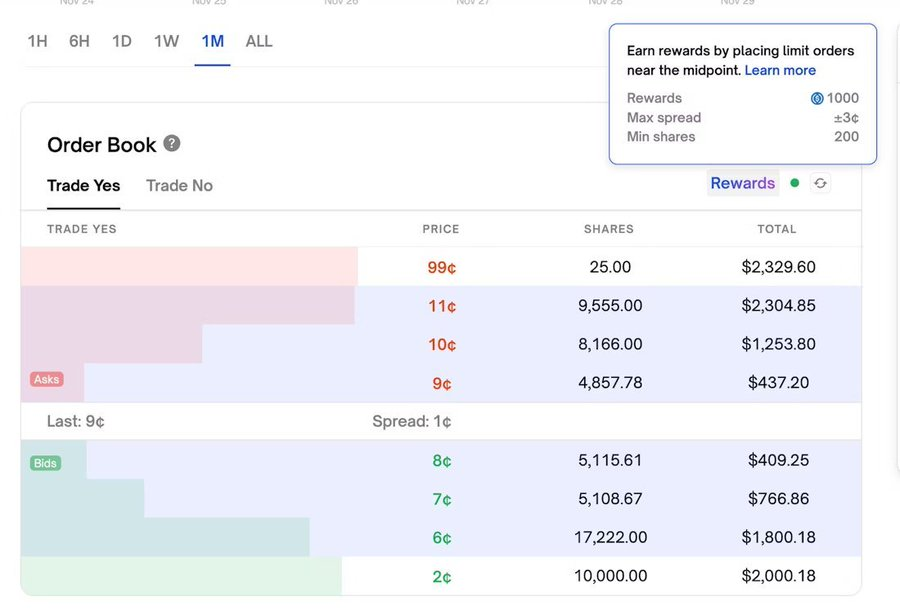
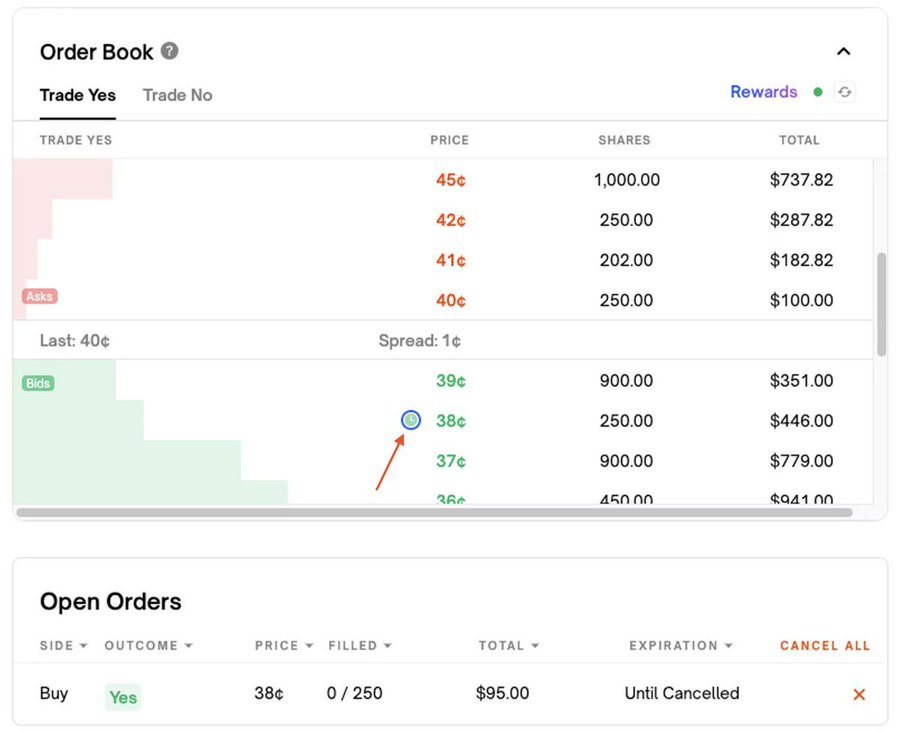
If your order qualifies for rewards, you'll see a blue-highlighted clock icon.
You can find all information about earning liquidity rewards in the official documentation: Polymarket Liquidity Rewards Guide.
Where does liquidity come from initially?
Now that we understand what liquidity is and how it works, we still have one question:
Where does liquidity originally come from?
When a market is first created, no one holds "YES" or "NO" shares, and no price has been set.
At this point, someone can place an order, for example:
-
"I'm willing to buy YES shares at 70 cents."
If another trader places the opposite order, such as:
-
"I'm willing to buy NO shares at 30 cents."
Once these orders match, the market establishes its first price.
Subsequently, the price is determined by the average of what people are willing to buy (bid) and sell (ask):
-
Bid: The highest price someone is willing to pay for a share.
-
Ask: The lowest price someone is willing to sell a share for.
-
Spread: The difference between the bid and ask prices.
If the spread is less than or equal to 10 cents, the interface displays the midpoint price:
Formula: Midpoint = (Bid + Ask) / 2
If the spread exceeds 10 cents, the last traded price is shown instead of the midpoint.
Markets with the strongest and weakest liquidity
The category with the strongest liquidity is political markets, partly because the first major wave of prediction markets occurred during U.S. elections.
At that time, political markets reached record levels of liquidity and media attention.
Meanwhile, some of the least liquid markets I've encountered are mention markets.
Of course, there are exceptions within each category—liquidity ultimately depends on the specific market, regardless of type.
Join TechFlow official community to stay tuned
Telegram:https://t.me/TechFlowDaily
X (Twitter):https://x.com/TechFlowPost
X (Twitter) EN:https://x.com/BlockFlow_News
 @0xDoraaa