








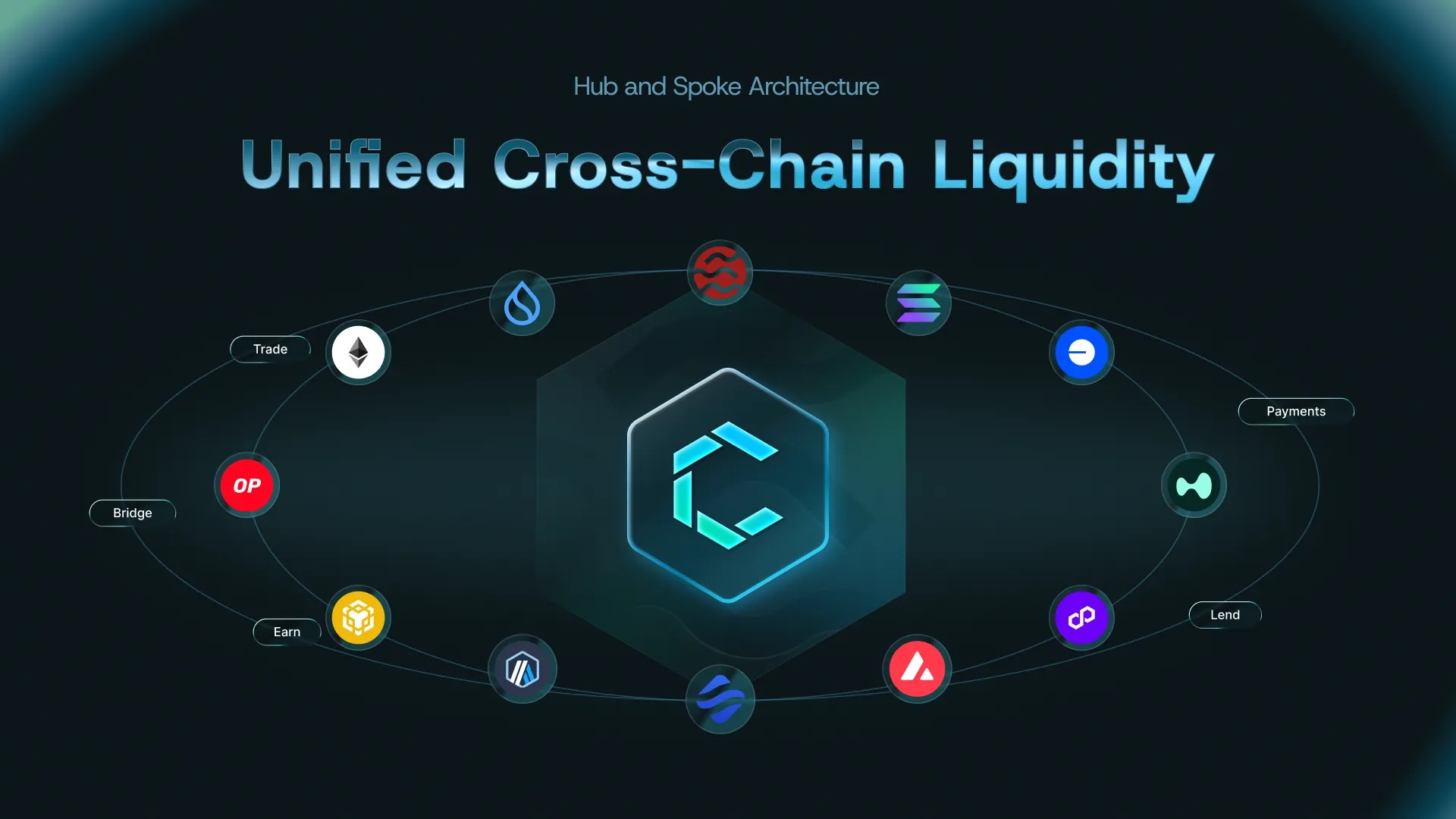
Clovis: Leading smarter flows of DeFi capital
TechFlow Selected TechFlow Selected
Clovis: Leading smarter flows of DeFi capital
Clovis's endgame is to enable DEXs, under fully self-hosted conditions, to evolve beyond mere trading functions and become genuine on-chain decentralized exchanges, delivering seamless liquidity experiences comparable to top centralized exchanges.
 Navigating Web3 tides with focused insights
The Cycle of Technology and Finance: From Unbundling to Rebundling
In the convergence of technology and finance, we repeatedly witness a classic cycle: "The Great Unbundling" and "The Great Rebundling." Just as Craigslist's functionalities were disaggregated into vertical applications like Airbnb and Zillow, traditional banking services have been disrupted by fintech innovators such as Stripe and Robinhood. Yet, once these vertical leaders reach a certain scale, they often move toward reintegration, evolving into comprehensive super apps.
Today, this cycle is unfolding in DeFi at an unprecedented pace. Over the past few years, we've witnessed the era of DeFi unbundling: Aave deployed across multiple chains, Uniswap's liquidity pools scattered across various Layer2 networks—each protocol instance becoming a single-function yet isolated liquidity island. This fragmentation not only leads to massive capital inefficiency but also subjects users to unbearable operational friction and complexity.
Yet, history’s pendulum is swinging back. A new paradigm is emerging—one that no longer settles for building fragile bridges between islands, but instead seeks to fundamentally bridge the gap and reunify the fragmented financial landscape. This marks the beginning of "The Great Rebundling."
The Age of Fragmentation: DeFi’s Tower of Babel and the Liquidity Trilemma
The rise of DeFi resembles a Cambrian explosion—hundreds of public chains, Layer2s, and application protocols forming a thriving ecosystem, while simultaneously fragmenting capital across more than 400 isolated networks. Like the builders of the Tower of Babel confused by different languages, today’s DeFi ecosystem suffers from efficiency losses due to liquidity fragmentation—Aave’s pools on Arbitrum and Base operate independently; every new version of Uniswap must bootstrap liquidity from scratch. Beneath the surface diversity lies massive systemic friction and capital waste, forcing many emerging ecosystems to rely on ineffective liquidity driven by high token incentives.
This challenge is especially evident at the user level. Take seasoned trader Bob, whose assets span multiple major ecosystems: ETH collateralized on Arbitrum, chasing meme opportunities on Base, and participating in liquid staking on Solana. Managing these cross-chain assets is akin to running a multinational company with disconnected offices—when a fleeting opportunity arises on Base, the ETH locked on Arbitrum cannot help at all, trapping capital in single-threaded operation. Meanwhile, despite attractive airdrop expectations, new chains lack deep DEXs and stable lending markets, resembling ghost towns unable to retain users or capital.
Worse still, Bob’s cross-chain operations themselves test patience and luck: choosing among dozens of cross-chain bridges, enduring high gas fees, slippage, and security risks. This reflects a shared pain point across the entire ecosystem: liquidity, composability, and user experience form an irreconcilable trilemma.
Just as the Industrial Revolution evolved from household workshops to centralized factories and efficient railway networks, DeFi is undergoing a pivotal shift—from decentralization to coordination. The market urgently needs a unified command center capable of breaking down chain barriers and intelligently orchestrating global capital. This is not just a patch to existing architecture, but a paradigm revolution at the foundational level.
Cognitive Leap: Evolving from Cross-Chain to Cross-Settlement-Layer
For years, we’ve tried to solve cross-chain issues with better bridges—but always addressed symptoms, not root causes. The core problem lies in our continued focus on physically moving assets rather than logically unifying credit.
Clovis does not merely build another DeFi app; it constructs a unified cross-chain clearing and execution infrastructure—a definitive blueprint aiming to end the era of liquidity silos.
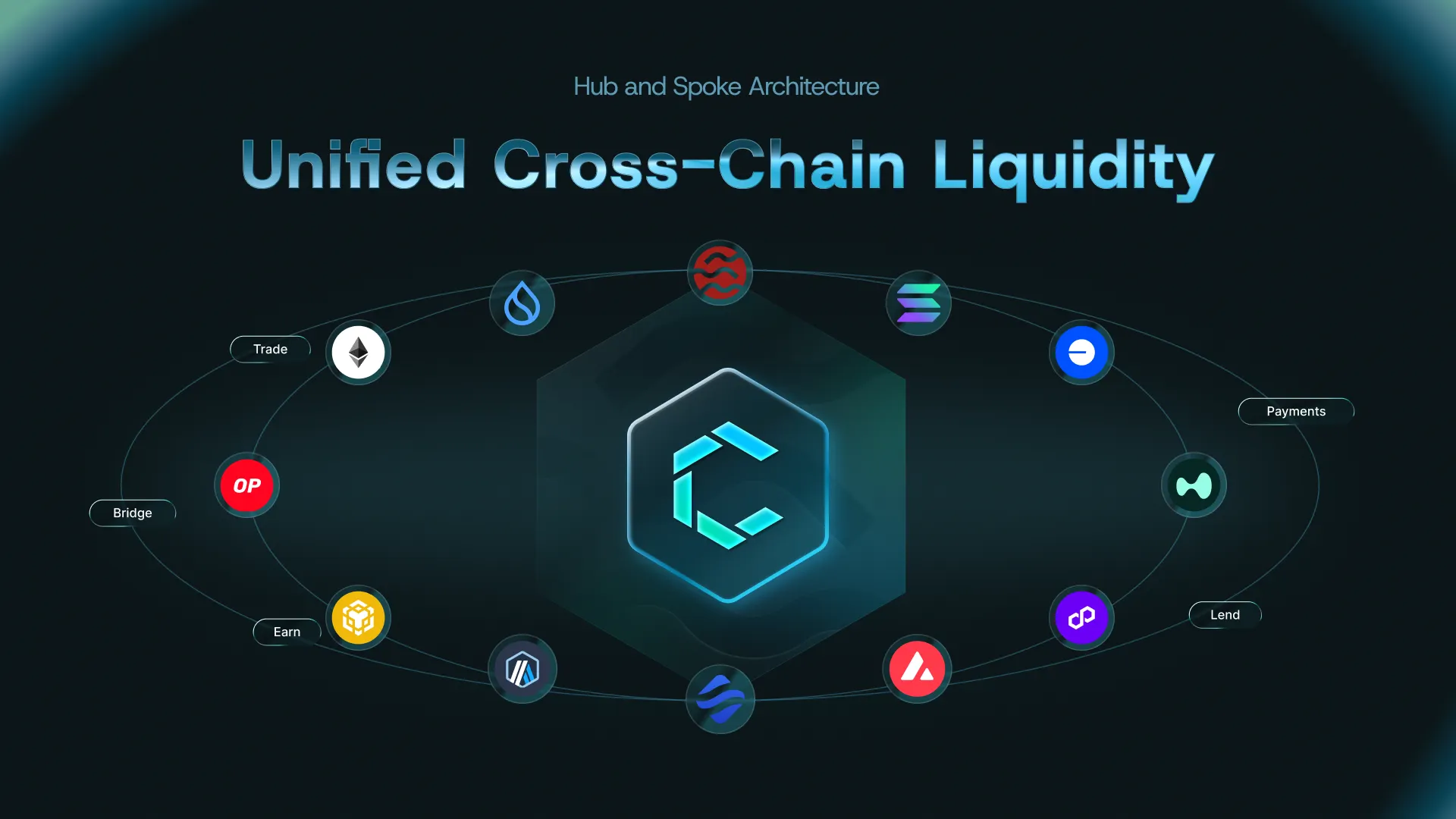
Clovis introduces a fundamental shift: separating logical clearing from asset settlement. Instead of painstaking reconciliation across hundreds of independent ledgers, why not establish a unified central ledger, with local vaults acting in coordinated response to instructions?
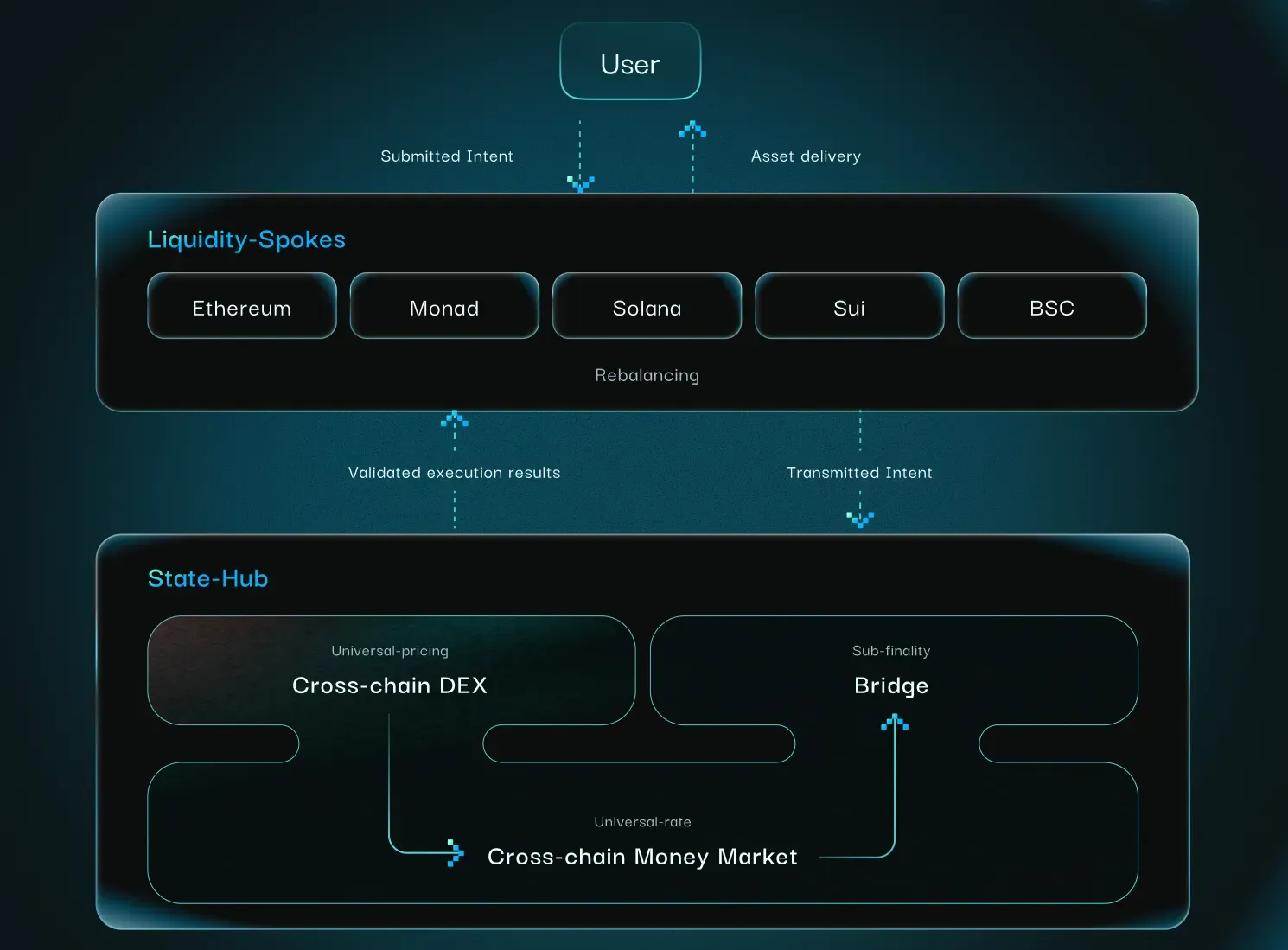
The Hub, serving as the global risk control center, runs on the high-performance Sei network. It does not directly hold assets, but acts as the sole source of truth, handling all global computations: tracking users’ cross-chain assets and liabilities, updating health factors in real time, setting uniform interest rates and prices.
Spokes are lightweight vault contracts deployed across individual chains, serving as protocol extensions that hold local liquidity and execute user actions instantly upon Hub instructions, such as disbursing loans.
This Hub-and-Spoke architecture transforms cross-chain interaction: user credit is globally synchronized, while asset delivery remains locally instantaneous. The greatest friction point in DeFi—cross-chain operations—disappears from the user’s view.
Architecture Deep Dive: Efficient Coordination Between Brain and Tentacles
Clovis offers an elegant solution to the multi-chain dilemma through its "brain and tentacles" model.
The clearing layer (Hub) functions like a central bank—setting rules, managing the master ledger, controlling risk, and ensuring consistent, fair economic logic.
The settlement layer (Spoke) acts like local branches interacting directly with users. When Bob borrows on Base, the local vault disburses funds instantly because the Hub has already confirmed his sufficient collateral on Arbitrum.
In Clovis’s system, Bob no longer manages disconnected offices—he now has a unified global account. Depositing ETH on Arbitrum updates his global credit in real time; spotting an opportunity on Base allows him to borrow or trade immediately. Chain boundaries quietly dissolve.
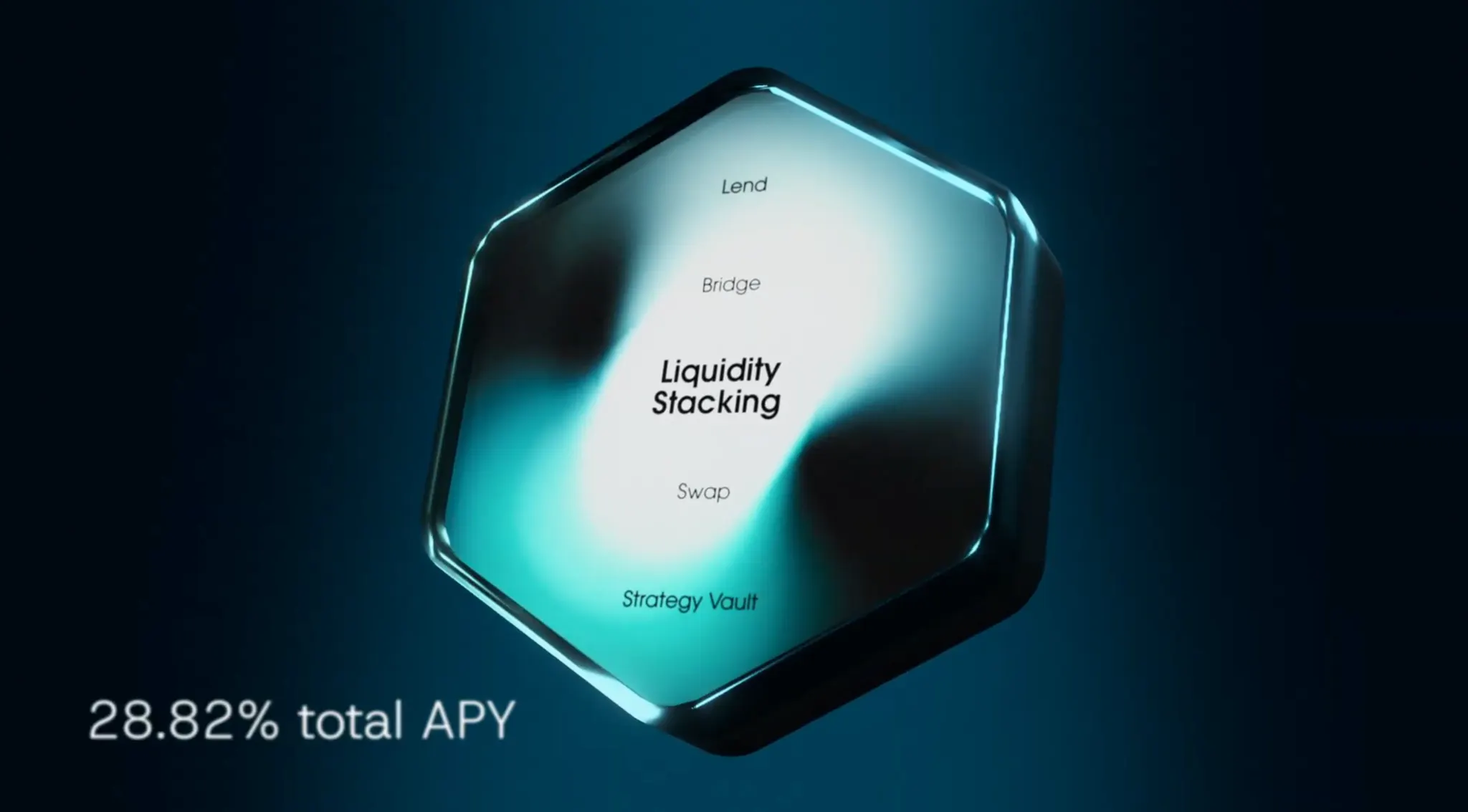
Leveraging this two-layer architecture, Clovis builds four deeply integrated core products sharing a common liquidity pool, designed to make every unit of capital work efficiently and earn layered returns.
Clovis Market (lending), the liquidity cornerstone, aggregates deposits across all chains into a globally shared pool. A user depositing on chain A receives interest-bearing cloTokens, which can be used to instantly borrow on chain B. The shared pool enables a unified global interest rate, ending fragmentation.
Clovis Exchange (DEX) is a revolutionary cross-chain exchange. Liquidity providers can directly use interest-bearing cloTokens to create trading pairs, earning quadruple yield: lending interest, trading fees, cross-chain fee revenue share, and asset management gains—maximizing capital efficiency.
Clovis Transport (cross-chain) is more than a bridge—it is an embedded settlement network. By leveraging local liquidity buffers on each chain, it enables instant cross-chain transfers and integrates seamlessly with lending and trading flows. Through intelligent rebalancing, it reduces costly active bridging operations.
Clovis Vaults (asset management), the yield-enhancement layer, automatically deploys idle capital into external blue-chip DeFi protocols to earn zero-friction bonus returns, transforming idle funds into additional yield without compromising liquidity.
Rebalancing Mechanism: The Invisible Engine of Efficiency
Maintaining a globally unified liquidity pool that is physically distributed requires a powerful intelligent orchestration system. Clovis Rebalancer is precisely this invisible engine of efficiency.
Clovis Rebalancer employs a multi-layered, market-driven adaptive control strategy.
First, healthy target positions are set for local inventory on each chain. When user activity causes inventory deviation from optimal ranges, the system prioritizes economic levers: dynamically charging a "deviation penalty" on withdrawals that worsen imbalance, and redistributing part of the penalty as incentives to subsequent depositors—creating a market-based feedback loop that encourages users to self-correct imbalances.
Only when economic measures prove insufficient does Clovis Rebalancer trigger "forced bridging," intelligently selecting the lowest-cost, optimal-path third-party bridges to restore balance.
This mechanism transforms the most friction-prone aspect of DeFi—cross-chain operations—into an occasional, automated backend maintenance task.
Security & Risk Control: Compartmentalized Defense System
In complex cross-chain systems, security is the foundation of innovation. Clovis’s Hub-and-Spoke architecture inherently provides risk isolation.
The Hub, as the clearing layer, handles accounting and execution logic without direct exposure to single-chain risks. Vault contracts (Spokes) on each chain are physically isolated—should an extreme issue occur on any chain or asset, the risk is contained within the local buffer zone and cannot contaminate the global liquidity pool. The Hub can immediately pause interactions with the affected chain to protect system integrity.
In addition, a clear global liquidation process, reliable oracles, and strict asset caps collectively form a multi-layered, deep defense system.
Market Positioning: More Than a Protocol—An Infrastructure Layer
Viewing Clovis simply as a competitor to Aave is inaccurate. Clovis pioneers a new category: cross-chain clearing and execution infrastructure.
While other protocols focus on cross-chain stablecoin mobility, Clovis holds a broader vision: providing a unified liquidity settlement layer for all assets and multiple DeFi primitives (lending, trading, cross-chain). If competitors are building intercity high-speed rail, Clovis aims to construct a national financial clearing system.
Clovis’s key advantage lies in offering plug-and-play liquidity for emerging ecosystems. A new L2 needs only one integration to launch day-one with a fully functional, liquidity-rich DeFi ecosystem, completely eliminating cold-start struggles.
Ecology Strategy: Building the Future with Top-Tier Infrastructure
Clovis’s ambitious vision is not built on thin air, but on deep collaboration with top-tier infrastructure.
It leverages mature cross-chain messaging layers like Wormhole and LayerZero to ensure secure instruction delivery; during rebalancing, it intelligently aggregates leading bridges such as Stargate and CCTP to find optimal paths.
Its core ecological strategy is to become the Chief Liquidity Officer (CLO) for new chains. By offering one-stop solutions to emerging L1s/L2s, Clovis can rapidly expand its network coverage and form deep partnerships with nascent ecosystems, sharing in their growth upside.
Business Model: A Proven Value Flywheel
Clovis has a clear business model already validated by the market. Its predecessor, Yei Finance—the leading protocol in the Sei ecosystem—once achieved over $400 million in TVL and $5.5 million in protocol revenue, proving strong product-market fit.
Clovis generates diverse and sustainable revenue streams, primarily from lending spread, trading fees, and cross-chain service fees. As this proven model expands to more mainstream chains, revenue potential could grow exponentially—projected annualized revenue reaching $15.38 million by 2026.
TechFlow announces that CLO, the native token of Clovis—the cross-chain liquidity protocol developed by Yei Finance—will launch trading on Binance Alpha at 19:00 (UTC+8) on October 14, 2025, followed by the listing of the CLOUSDT perpetual contract on Binance Futures at 19:30 (UTC+8) on the same day, with up to 50x leverage. A token airdrop will also be distributed to eligible users. For details, see Binance announcement: https://www.binance.com/zh-CN/support/announcement/detail/afc87b1d3dbe4280bfdee237a017a013
Ultimate Vision: Paving the Way for the Next Billion DeFi Users
Clovis’s near-term roadmap focuses on integrating more mainstream chains, deepening blue-chip protocol partnerships, and optimizing the Clovis Rebalancer. But its ultimate vision extends far beyond.
Clovis’s endgame is to transform the DEX—under full self-custody—not just into a trading venue, but into a true decentralized exchange on-chain, delivering seamless liquidity experiences rivaling top centralized exchanges. In the future, when users interact with Clovis, they won’t need to think about underlying chains, gas tokens, or bridges. They’ll face just one unified financial account, enabling them to mobilize assets across all chains from a single interface and perform any operation—from spot trading to leveraged lending.
This represents not only a giant leap in DeFi user experience but also a critical step toward mass adoption. By completely hiding complexity behind the scenes, Clovis is paving the way for the next billion DeFi users.
Join TechFlow official community to stay tuned
Telegram:https://t.me/TechFlowDaily
X (Twitter):https://x.com/TechFlowPost
X (Twitter) EN:https://x.com/BlockFlow_News
 @YeiFinance






