AINFT New Narrative: Building TRON's Core AI Infrastructure, Creating a New Ecosystem for the Crypto AI Economy
TechFlow Selected TechFlow Selected
AINFT New Narrative: Building TRON's Core AI Infrastructure, Creating a New Ecosystem for the Crypto AI Economy
AINFT is committed to becoming the core AI infrastructure and innovation center for AI Agent application frameworks within the TRON ecosystem.
 Navigating Web3 tides with focused insights
When AI's "intelligent productivity" meets Web3's "decentralized economic system," the digital world is poised for another paradigm-level leap following the mobile internet era. On October 9, APENFT, the leading NFT platform within the TRON ecosystem, officially adopted its new brand identity "AINFT," completing a critical transition from an "NFT trading platform" to a "crypto AI infrastructure."
In its newly released whitepaper, AINFT systematically outlines its vision for integrating AI and Web3: aiming to build a self-evolving AI Agent intelligent ecosystem through deep integration of AI and blockchain. AINFT aspires to become the cornerstone of the next-generation internet, establishing itself as the AI infrastructure and innovation hub for AI Agents on the TRON network, creating a smart, trustworthy, and autonomous future digital ecosystem.
This transformation goes beyond mere rebranding—it carries dual significance in strategic continuity and market positioning. AINFT will fully leverage APENFT’s established user base, asset ownership capabilities, and proven on-chain operational experience in the NFT space, providing a solid ecological foundation for deeper AI and Web3 integration. Riding the wave of AI advancement, AINFT is strategically positioned at the intersection of "AI + Web3," accelerating the智能化 process of the TRON ecosystem and ushering in a new chapter of decentralized AI economy.
AINFT Vision: Building Core AI Infrastructure for the TRON Ecosystem, Solving the “Siloed Struggles” of AI and Blockchain
AINFT aims to become the core AI infrastructure and innovation center for AI Agent frameworks within the TRON ecosystem, supporting large-scale deployment, model training, and tokenized issuance of AI Agents. Ultimately, it seeks to create a new generation of encrypted AI economic ecosystem where AI Agents operate autonomously, data rights are clearly defined, and the economic system is self-sustaining—breaking through the current isolated limitations of AI and Web3 operating independently.
Although both AI and Web3 represent cutting-edge technologies, their lack of synergy limits their combined potential. While blockchain enables "trustworthy value transfer," it lacks intelligent decision-making and complex interaction abilities; on-chain smart contracts execute only predefined scripts mechanically and struggle to adapt to dynamic scenarios such as real-time market fluctuations. Conversely, while AI possesses powerful cognitive and generative capabilities, it remains trapped in a "centralized black box"—data sovereignty is unclear, value distribution is unfair, and technological benefits are monopolized by a few major players.
With the rise of large models and AI Agents, market demand for cryptographic digital assets has shifted from "static proof of ownership" to "dynamic value creation." Traditional static NFTs can only serve as ownership certificates or sit idle in wallets awaiting trade, unable to autonomously manage social accounts or optimize DeFi strategies in real time like intelligent entities. They no longer meet the needs of an intelligent era where "interaction equals productivity." As stated in the AINFT whitepaper: future digital assets should not merely be "proof of ownership," but intelligent entities capable of interaction, learning, and creation.
The deep integration of AI and Web3 is precisely the key to resolving this dilemma. The two technologies are naturally complementary in terms of productivity and production relations: Web3 uses decentralized architecture and token economics to address issues of data transparency and fair value distribution in AI, while AI enhances blockchain usability and intelligence with real-time decision-making and automation.
Built on this understanding, APENFT’s evolution into AINFT drives a shift from static NFT collectibles toward an interactive, evolving, revenue-generating AI Agent ecosystem. AINFT firmly believes that combining AI’s creativity with blockchain’s fairness will give rise to a new digital world led by users, powered by intelligence, and sharing value equitably.
The emergence of multimodal models like Sora, which can transform text into context-rich videos, marks AI’s breakthrough beyond unimodal text-based limitations. AINFT plans to integrate external multimodal models such as Sora into its decentralized AI ecosystem, embedding advanced AI generation capabilities into AINFT AI Agents—enabling them not only to interpret unstructured data and simulate complex scenarios but also to autonomously generate verifiable NFT digital assets and experiences, ultimately achieving AI Agent creation, tokenization, and monetization on-chain.
In practical implementation, AINFT does not simply combine AI and blockchain technologies; instead, it achieves precise alignment and value closure through "bidirectional empowerment," specifically manifested as follows:
Addressing the three core elements of the AI industry—"data, computing power, and models"—AINFT leverages blockchain technology to break open the "black box" of AI and build a trusted intelligent foundation:
· Data Trustworthiness: Utilizing blockchain’s immutability, AINFT ensures AI training data is recorded on-chain with full traceability, and combined with privacy-preserving computation, achieves "data usability without leakage, value shareability."
· Democratized Computing Power: Building a decentralized computing network that aggregates global idle GPU/CPU resources, incentivizing ordinary users via tokens to contribute spare computing power, thereby breaking monopolies and reducing training costs.
· Assetization of Models: Recording AI models and training processes on-chain and enabling model ownership and trading via NFTs, quantifying contributions from data and computing providers, ensuring transparent and traceable revenue distribution.
At the same time, AINFT empowers blockchain with high-level AI tools to enhance Web3 application user experience and performance:
· Security and Governance Upgrade: AI monitors abnormal on-chain transactions in real time, automatically audits smart contract vulnerabilities, and assists DAOs in making efficient decisions, significantly improving ecosystem security and governance efficiency.
· Application Intelligence: Upgrading traditional wallets into AI Agents that support automated asset management and strategy execution—such as managing DeFi positions and dynamic portfolio rebalancing—allowing non-professionals seamless access to sophisticated on-chain services.
· Ecosystem Autonomy: Enabling AI Agents to become "on-chain digital citizens" capable of independently participating in market trading, liquidity management, and protocol governance, building an open AI economy centered on user sovereignty and preventing concentration of technological gains among a few giants.
Through this "blockchain breaks AI black boxes, AI empowers on-chain intelligence" bidirectional enhancement, AINFT addresses critical challenges in AI—including data monopoly, centralized computing power, and unfair profit distribution—while simultaneously enhancing blockchain’s capabilities in security, usability, and automation through AI.
Ultimately, by deeply integrating blockchain’s "trusted foundation" with AI’s "intelligent vitality," AINFT creates a next-generation digital ecosystem capable of handling complex cognitive tasks while ensuring fair value distribution, advancing the crypto world from "static proof of ownership" into a self-evolving era of "AI Agents."
Five Years of NFT Industry Experience Fuels AINFT’s Expansion into AI
AINFT’s rebranding is not a simple extension of APENFT’s NFT business, but rather a strategic leap across sectors. Transitioning from a native NFT marketplace on the TRON ecosystem to an industry-wide open-source crypto AI infrastructure, AINFT makes a pivotal shift from a "static NFT asset verification tool" to a "dynamic AI service foundation."
This leap does not start from scratch. The core competencies and resources accumulated by APENFT over nearly five years in the NFT domain will serve as "critical fuel" for AINFT’s entry into the AI field, offering robust foundational support for its crypto AI infrastructure.
As the largest NFT platform in the TRON ecosystem, APENFT rapidly emerged as a cross-sector benchmark connecting traditional art and Web3 after its founding in 2021, backed by top-tier artworks donated by TRON founder Justin Sun. Its collection includes masterpieces by Picasso, Andy Warhol, Beeple, and others, forming a cross-temporal art collection valued at over 200 million RMB, earning it recognition as a "museum-grade NFT curation library."
APENFT’s end-to-end NFT ecosystem covering "issuance–ownership verification–trading–incubation" has equipped AINFT with core users and asset circulation capabilities. Its flagship product, APENFT Marketplace, hosts over 2 million NFTs, with transaction volumes reaching tens of millions of dollars and over 500,000 core users—a ready pool of potential users for AINFT’s AI Agents. Existing asset circulation channels can also seamlessly support the "tokenization of AI models and assetization of AI Agents," avoiding underutilization after creation.
More importantly, APENFT’s experience in asset ownership provides valuable insights for AINFT in addressing ownership and pricing of AI-generated content. Through practices in tokenizing traditional art, APENFT has established a complete chain of "creation–verification–trading–revenue sharing," a mature ownership framework directly applicable to on-chain verification of AI models and AIGC works, laying the groundwork for a "trusted AI ecosystem."
On the product side, APENFT has evolved into a comprehensive ecosystem encompassing NFT trading (APENFT Marketplace), GameFi centers, TRONscription (TRON’s inscription market), and NFT Pump (fair NFT launchpad), providing AINFT with ready-made platforms for multi-scenario AI Agent operations. For instance, GameFi can integrate AI Agents for asset management, while the inscription market can adopt AI-assisted creation, greatly shortening the time-to-market for AI features.
In July, APENFT formed multiple deep collaborations with Binance, the world’s largest CEX: its NFT token was listed on Binance Alpha, and its app was fully integrated into Binance Wallet, allowing users to purchase NFT tokens directly via Binance and seamlessly interact with APENFT on-chain. This partnership preemptively solves key challenges for AINFT’s ecosystem launch—user acquisition and efficient asset circulation—and accumulates crucial experience for large-scale deployment. Leveraging Binance’s traffic, AINFT can quickly reach millions of core users, gaining global exposure and rapid market recognition upon launch.
Within the TRON ecosystem, meme issuance platform SunPump has already pioneered AI Agent applications with SunAgent and SunGenX. SunAgent is an intelligent assistant that improves user decision-making and execution efficiency through smart dialogue, validating the feasibility and user acceptance of AI Agents on TRON. SunGenX is an AI-powered meme token creation tool on X that allows users to launch tokens by tweeting, offering inspiration for AINFT’s future development of "cross-platform AI Agents." These successful innovations provide valuable technical accumulation and practical reference for AINFT’s AI infrastructure strategy.
Thus, AINFT transforms APENFT’s proven strengths in asset ownership, circulation, and value anchoring in the NFT space into key competitive advantages for building AI infrastructure. Combined with TRON ecosystem’s "innovation DNA, resource backing, and AI practical experience," AINFT avoids starting from zero, instead building directly atop a mature ecosystem to rapidly deploy and scale its crypto AI infrastructure.
In the future, every encrypted asset in the AINFT ecosystem could be an interactive "AI Agent intelligent entity," where each AI Agent interaction or model invocation triggers fair on-chain value distribution.
Building a Web3-Native AI Aggregation Gateway
In terms of product positioning, AINFT aims to create a Web3-native, privacy-first AI aggregation gateway. Unlike mainstream AI aggregation apps such as Poe or Perplexity that target mass markets, AINFT avoids competing in crowded spaces and instead focuses on carving out a new niche—bridging the Web3 ecosystem with cutting-edge AI services.
Technically, AINFT builds on deep integration between AI and blockchain, using the TRON network as its foundational infrastructure to create a future digital ecosystem supporting intelligent agents (AI Agents), data autonomy, and economic independence. This is more than just technical integration—it represents a paradigm shift, moving the AI industry from "platform dominance" to "user sovereignty," from "data monopoly" to "value sharing," and from "manual intervention" to "intelligent autonomy."
In technical architecture, AINFT adopts a layered modular design, structured from bottom to top into four clear layers: Infrastructure Layer, Core Components Layer, Intelligent Services Layer, and Ecosystem Interaction Layer—collectively establishing a solid foundation for efficient AI+Web3 collaboration.
· Infrastructure Layer: Serving as the trust and computing backbone of the AINFT system, this layer primarily relies on the high-throughput, low-fee TRON network as the mainchain, responsible for asset settlement and smart contract governance. It also integrates BTFS for decentralized storage, permanently recording AI models and interaction data to ensure trustworthiness, traceability, and immutability.
· Core Components Layer: Focused on enabling AI Agents to be "collaborative and assetizable," this layer offers配套 tools and frameworks for building AI-driven dApps. For example, a multi-agent framework supports cross-application communication and complex coordination among Agents, while unified APIs help developers quickly build workflows. An asset issuance management framework enables one-click minting of AI Agents and issuance of dedicated tokens.
· Intelligent Services Layer: Packages AI capabilities into plug-and-play service modules, productizing AI functions. For instance, the DeFAI service module provides an on-chain intelligent strategy library, allowing AI Agents to directly invoke DeFi strategy templates and deliver smart asset management solutions to users.
· Ecosystem Interaction Layer: Acting as the bridge between users and AI, this layer offers standardized plugins and APIs, enabling AINFT Agents to securely connect to major social platforms like Twitter, Discord, and Telegram for automated content publishing and fan engagement, enhancing user experience and participation.
In terms of business implementation, AINFT has outlined four clear product lines, transforming technical capabilities into tangible services tailored to different market segments—including developers, general users, investors, and AI researchers—to drive its vision forward:
· AINFT Agent Framework (AI Agent Toolkit for Developers): A proprietary multi-agent system (MAS) developed by the AINFT team, providing complete components (e.g., unified APIs) and toolchains needed for multi-agent system development. Developers can use this framework to rapidly build custom AI Agent applications (e.g., multi-Agent collaborative DeFi strategy systems), drastically reducing development complexity and supporting ecosystem innovation.
· AINFT Nova (One-Click AI Agent Launch Platform): Enables users to "create an AI Agent + issue a companion token" in one click, with seamless integration into social platforms like Twitter and Discord. Even non-technical users can deploy AI Agents to autonomously manage communities and engage fans, benefiting from the value generated by "intelligent assets."
· AINFT AgenTX (AI-Powered DeFi Trading Framework): The core product implementing "DeFAI (AI + DeFi)," AINFT AgenTX delivers intelligent on-chain asset investment and management solutions. It includes investment strategy templates such as cross-chain arbitrage, loan liquidation alerts, and liquidity mining optimization, all directly callable by AI Agents, offering investors convenient and efficient tools.
· AINFT Grid (Decentralized AI Model Training Platform): Using a distributed framework to aggregate global idle computing resources, it allows data owners to participate in model training without exposing raw data. Trained models can be converted into NFTs, with contributors of data, computing power, and models receiving token rewards based on contribution, providing researchers with an open and fair training environment.
These four core components work closely together, enabling AINFT to establish a full-stack capability covering "underlying framework development—application innovation—financial empowerment—efficient model training" for AI Agents. Their synergistic operation drives AINFT’s strategic shift from an NFT platform to AI infrastructure, ultimately building a next-generation decentralized intelligent economic ecosystem led by users, driven by AI, and sharing value—opening a new path for crypto AI development.
For developers, AINFT provides robust underlying infrastructure and a full suite of development tools, enabling rapid and efficient deployment of AI Agents and related applications, significantly lowering development barriers and timelines. For everyday users, AINFT supports one-click creation of personalized AI Agents and flexible use of various intelligent applications for automated on-chain asset management. Additionally, users can participate in model training by contributing data or computing power and receive corresponding incentives, truly realizing "participation equals reward, co-building equals sharing."
According to the disclosed ecosystem roadmap, AINFT will construct a comprehensive AI infrastructure spanning development, interaction, finance, and model training through systematic technological planning and platform building—laying a solid foundation for the industry and helping TRON achieve a strategic upgrade from the "Internet of Value" to the "Internet of Intelligence."
Specifically, AINFT will enhance on-chain interaction and development efficiency on the TRON network using large AI models, creating a decentralized incubation, operation, and economic system for AI Agents that continuously injects innovative energy into the ecosystem. At the same time, by leveraging AI capabilities, it offers users end-to-end asset growth support—from project discovery to quantitative strategies—making TRON the ideal platform for efficient AI Agent operation and enabling users to achieve intelligent asset management and appreciation.
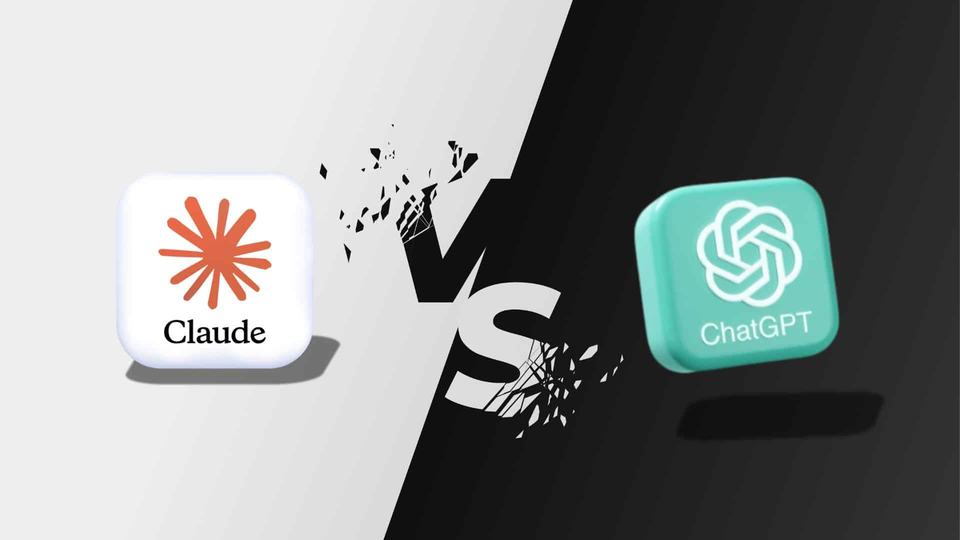
In the future, within the decentralized AI ecosystem built by AINFT, users and developers will not only be able to directly call mainstream AI large models (such as OpenAI GPT, Claude, Gemini, and Grok series), but also pay associated fees using cryptocurrencies. Meanwhile, using AINFT Nova—the one-click AI Agent creation platform—users can easily deploy AI Agents equipped with social and economic functionalities, building a large-scale AI Agent economy and moving toward a more open and innovative future.
Join TechFlow official community to stay tuned
Telegram:https://t.me/TechFlowDaily
X (Twitter):https://x.com/TechFlowPost
X (Twitter) EN:https://x.com/BlockFlow_News