Old crypto veteran Jia Yueting
TechFlow Selected TechFlow Selected
Old crypto veteran Jia Yueting
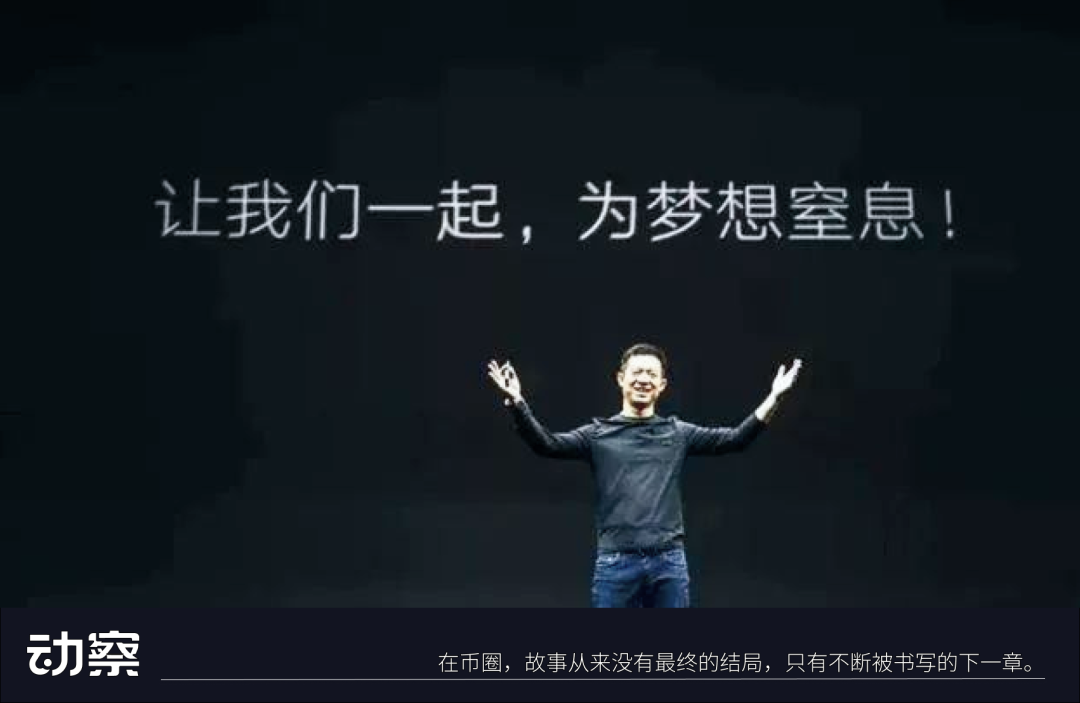
In the crypto world, stories never have final endings—only the next chapter constantly being written.
 Navigating Web3 tides with focused insights
Author: Sleepy.txt
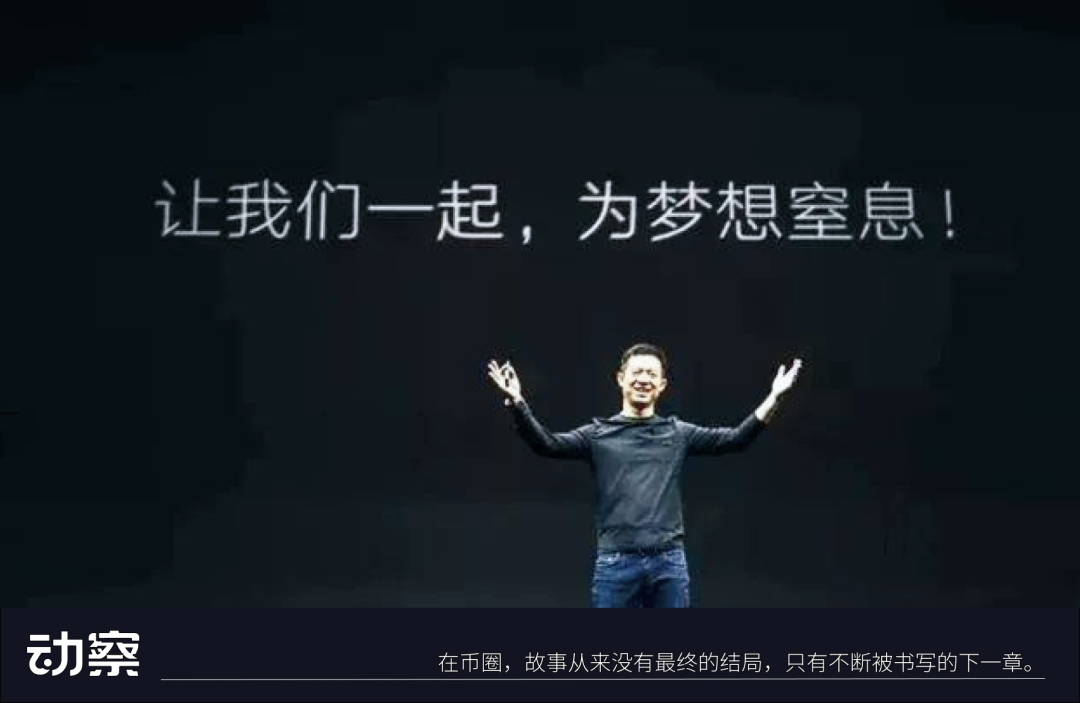
Jia Yueting has figured out how to play the crypto game.
On October 8, he posted a car image branded with "BNB" on X, captioned "Drive Binance Cars, Live a Binance Life." The meme coin of the same name, "Binance Car," surged in market value, rising to $30 million within hours.
As the hype peaked, Jia personally stepped in to debunk rumors: he had never launched any coin.
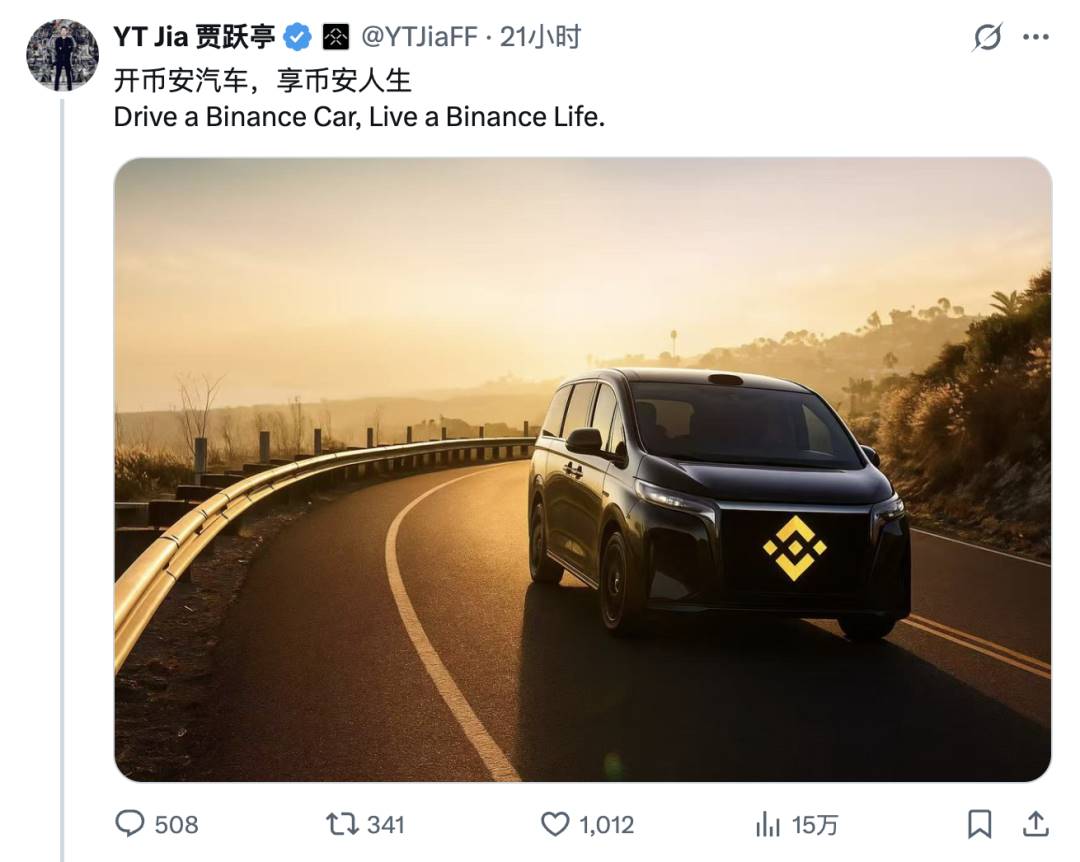
Image source: X
Mr. Jia’s car venture remains unproduced, but he clearly knows how to stir waves in the crypto world. Yet this time, his playful nod to Binance wasn’t accidental.
Just weeks earlier, in September 2025, C10 Treasury, the crypto asset fund managed by Jia Yueting, announced its latest returns, with unrealized gains of about 7%. A few days later, he made an even bigger move—spending $41 million to acquire Nasdaq-listed QLGN.
If approved by shareholders, QLGN will be renamed CXC10 and pivot toward cryptocurrency and Web3 operations. As planned, C10 Treasury will then initiate allocation into the top ten cryptocurrencies.
From content and cars to finance, Jia Yueting has always been searching for a stage to sustain his narrative. This time, he's once again tied himself to the crypto world.
Over a decade ago, lights at LeEco Tower in Beijing often burned late into the night. It was an era of ambition, where Jia stood on stage shouting "ecological disruption," aiming to assemble a vast future blueprint from hardware, content, and finance.
He was like a dreammaker, building the future on concepts and visions. Investors and media below were ignited layer by layer by slogans like "disrupting TV," "redefining smartphones," and "building China's Tesla."
Today, based in Los Angeles, the returns of C10 Treasury and the QLGN acquisition plan have become new materials for his narrative. He now builds a grander story framework using data, compliance, and capital.
Is this transformation genuine evolution, or just another case of old wine in new bottles? To understand, we must revisit the past fourteen years of his entanglement with the crypto world.
The Wild Ride Era
In 2011, Jia Yueting was climbing the peak of his life.
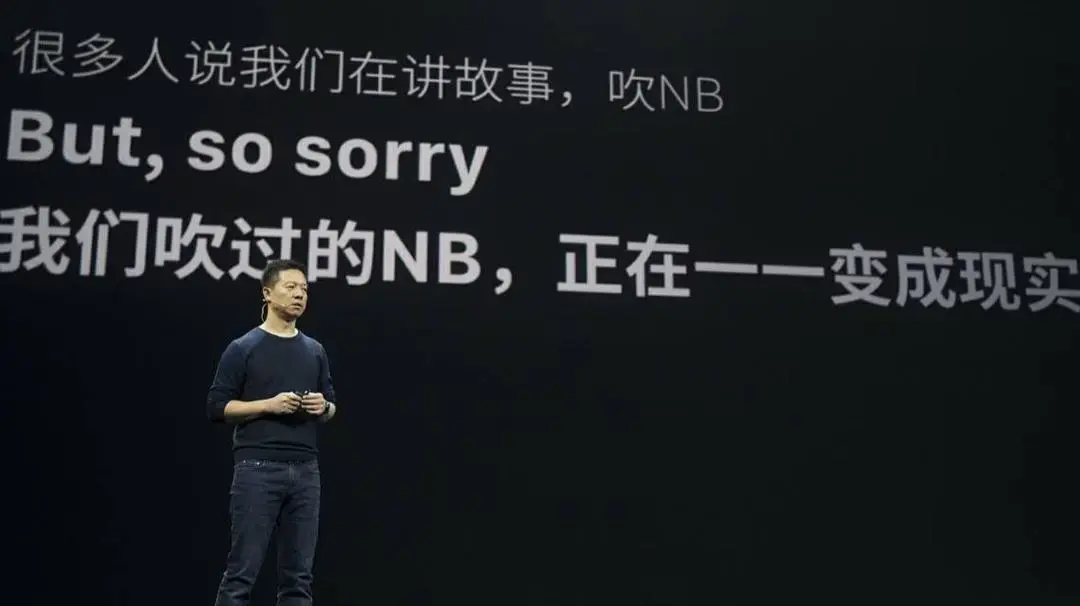
Jia Yueting speaking at a press conference; Image source: Huxiu
LeEco had just gone public on the ChiNext board, becoming the "first video stock in China." That year, the company reported revenue of 598 million yuan, up 151% year-on-year, with net profit reaching 131 million yuan, up 87%. But his ambitions went far beyond a video platform—he wanted to build an ecosystem spanning content, devices, platforms, and applications.
That year, Li Ming entered his radar. Li Ming was the technical lead at LeEco Cloud who dabbled in Bitcoin during his spare time, running nodes on his home computer. At that time, WeChat had just launched, Alibaba was preparing for its IPO, and Baidu remained the center of the traffic kingdom. Almost no one paid attention to this digital currency experiment.
But Jia took notice. Always sensitive to new technologies, he could detect new directions amid chaotic trends. This instinct made him recognize blockchain’s potential earlier than others. He began talking to Li Ming, asking about Bitcoin’s underlying logic, and exploring whether this overlooked technology could become part of LeEco’s ecosystem.
From 2012 to 2013, Jia Yueting’s “ecological disruption” reached its climax.
He first launched the first-generation Super TV, followed by the LeEco Box the next year. The logic was simple: subsidize hardware to gain users, recoup costs through content subscriptions, and amplify profits via platform effects. This strategy was unique at the time—while others struggled with copyright fees, he had already figured out how to offset hardware costs through sales.
Then, Bitcoin prices hit $1,000 for the first time. Li Ming sent Jia an email proposing to add mining functionality to LeEco Boxes and TVs, allowing users to mine coins redeemable for their annual 499-yuan membership fee.
This proposal involved hardware, software, networks, and finance—far more complex than standard products. But it tightly integrated hardware, content, digital currency, and user incentives into one system, perfectly aligning with Jia’s vision. Later, he directly named Li Ming as project lead during a strategy meeting, bypassing normal reporting lines. “Usually, the boss wouldn’t personally assign someone to lead a project,” Li recalled.
In 2015, LeEco reached its peak. Annual revenue hit 13.017 billion yuan, nearly doubling year-on-year, with market cap briefly surpassing 150 billion yuan, making it a star on the ChiNext board. Super TV sales exceeded 3 million units, the newly launched LeEco phone gained instant market popularity, and sports rights and car projects expanded simultaneously. Jia Yueting’s “ecological disruption” showed real power for the first time.
That year, he turned his gaze to finance. Hardware and content supported the surface story, but to keep the entire system running, a new pivot was needed. Finance became the lever he believed would truly enable the ecosystem to self-sustain.
In August 2015, Wang Yongli, former vice president of Bank of China, officially joined LeEco as CEO of LeEco Financial. Jia spared no effort to recruit him, painting a grand vision: financial innovation as a pillar of the LeEco ecosystem.
After Wang joined, LeEco Financial rapidly expanded, adding payment, wealth management, insurance, credit reporting—and even blockchain—to its exploration list. Jia gave him a clear mission: achieve “ecological disruption” in finance too.
In March 2016, under Jia’s push, LeEco Financial announced the establishment of a blockchain lab. At a time when most Chinese internet companies were still观望, few set up dedicated labs. Jia instructed the team not to focus solely on mining or token issuance, but to seek practical applications aligned with LeEco’s existing business.
Thus, the lab began experimenting in several directions: embedding blockchain functions in LeEco Boxes and TVs so user devices could act as nodes; using blockchain for copyright protection and token-based creator incentives; exploring blockchain-powered payments, wealth management, and insurance services.
That same year, Jia began aggressively expanding overseas.
He established subsidiaries in the U.S., negotiated the acquisition of Vizio’s TV business, and invested part of his funds into Faraday Future. Cross-border cash flows became an unavoidable challenge for international expansion. Traditional payment channels were costly, slow, and burdened by regulatory layers. Blockchain offered an alternative—decentralized networks enabling faster, lower-cost settlements.
In December that year, LeEco Financial announced a strategic partnership with Stellar. At the time, Stellar was one of the few blockchain public chains focused on payments, offering fast transaction confirmation and low energy consumption, better suited for commercial use.
LeEco presented its blockchain ecosystem strategy in detail to Stellar’s team, explaining the critical role of blockchain technology within it. This vision impressed Stellar, and cooperation was quickly agreed upon. This deal brought LeEco’s blockchain exploration onto the international stage for the first time.
This layout gradually evolved into a comprehensive blueprint: blockchain embedded in hardware, token-based settlements in content, financial services exploring payments and wealth management, and applications extending to identity verification and supply chain. The vision was vast, the pace aggressive—but highly dependent on funding and internal coordination.
2016 was too early.
In the second half, LeEco’s cash flow tightened—phone business losses mounted, car development kept burning money, and overseas expansion continued draining resources.
In November, Jia admitted internally that the company needed to "hit the brakes." As cash flow contracted, the blockchain lab’s plans were forced to pause.
Twilight of an Empire
2016 to 2017 marked a turning point in Jia Yueting’s life.
That year, the empire he built began to crumble. The once-celebrated entrepreneur swiftly fell from grace, becoming a target of public criticism.
On November 6, 2016, he published the famous internal letter: “LeEco’s Sea and Flame: Drowned by the Waves or Boiling the Ocean.”
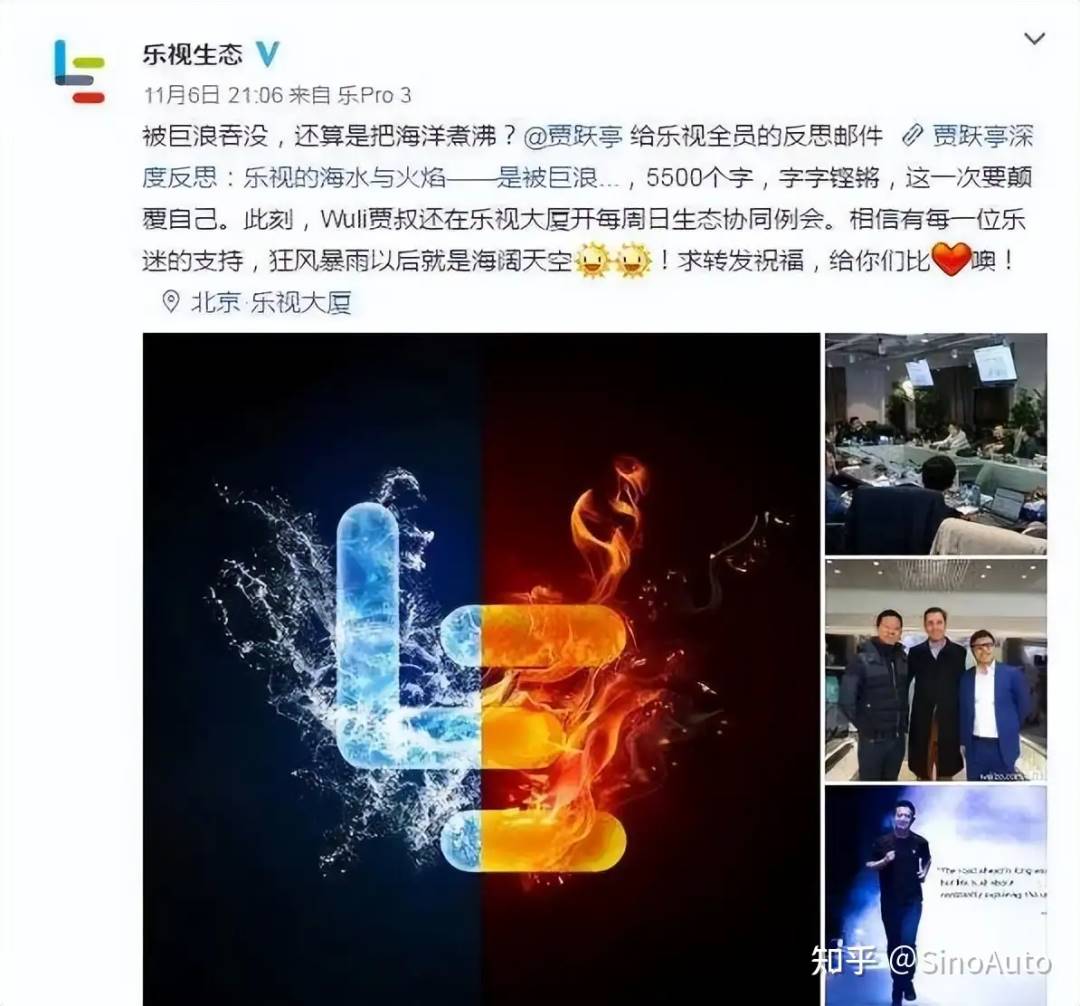
Image source: Weibo
In the letter, he admitted: “The LeEco ecosystem faces major challenges. Our blind sprint, burning cash for scale expansion, has reached its end.”
The letter was a long-overdue awakening. Jia began confronting his past decisions—scale obsession, reckless expansion, neglect of cash flow. During that near-uncontrolled growth, he once believed that as long as the ecosystem grew large enough, problems would be buried beneath momentum.
But reality soon proved otherwise. Every part of LeEco’s business drew from the same lifeline. When too many projects drained it simultaneously, the massive system became an unsustainable cycle.
On July 4, 2017, over half a year after the letter, Jia boarded a flight to the U.S. He claimed it was a short business trip. He never returned.
To the outside world, it looked like a hasty escape. LeEco was drowning in debt, suppliers camped outside office buildings, investors and regulators piled on pressure. From his perspective, it was a strategic relocation. Faraday Future’s headquarters was in Los Angeles, requiring his presence. The U.S. capital markets were more open, regulations clearer—he believed a restart might be possible there.
At that time, the U.S. was in the midst of a blockchain and crypto frenzy. Bitcoin prices kept hitting new highs, the ICO market exploded, new projects emerged daily, capital and concepts chasing each other—a stage lit by desire.
A year later, the wave reached China.
China’s blockchain industry briefly celebrated. ICOs became the hottest fundraising method, and nearly every sector tried to attach itself to the “blockchain+” label. Against this backdrop, LeEco subsidiary Leshi Zexin partnered with Yilian Tech on July 11 to launch the “Yilian Box.”
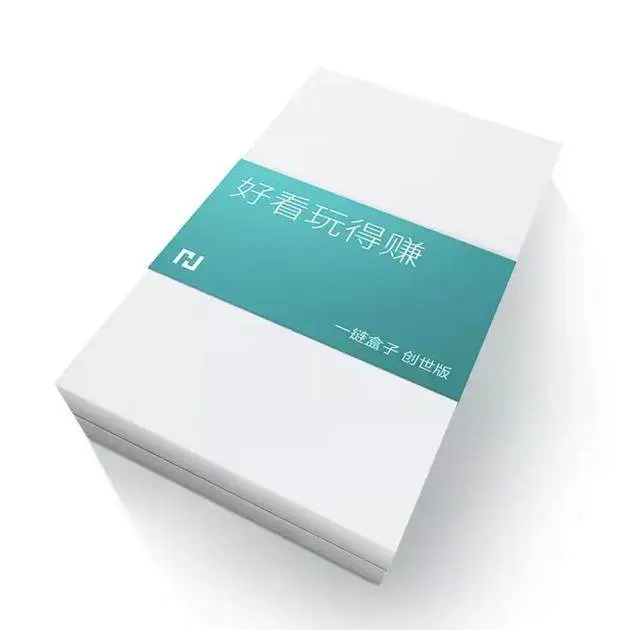
Yilian Box; Image source: Smart TV Network
Priced at 599 yuan, this TV box came with built-in blockchain features. Users could earn OC (OneChain Token) by sharing idle bandwidth, redeemable for goods on LeEco’s e-commerce platform. For a crumbling LeEco, it felt less like a well-thought-out strategy and more like a desperate survival attempt.
Shortly after launch, the Shenzhen Stock Exchange issued an inquiry letter questioning whether LeEco was using blockchain to manipulate its stock price. Regulatory intervention cast an immediate shadow over the project.
Jia had hoped the “Yilian Box” would prove blockchain’s commercial value, but instead, he was labeled a “concept hype.” LeEco quickly clarified it did not involve token issuance or trading. Yet the damage was done. Public perception didn’t change. The “Yilian Box” quietly faded away, marking LeEco’s final appearance in blockchain.
This failure reflected the broader limitations of the blockchain industry at the time.
In 2018, the technology was still in its infancy, practical applications scarce, and public skepticism toward digital currencies remained high. Global regulations wavered, and projects carried inherent high risks. It was an age of concepts—but any delay in execution meant rapid loss of momentum.
This episode gave Jia a more realistic understanding of blockchain. He realized the technology was far from ready for real-world application, needing both regulatory clarity and mature market mechanisms. LeEco’s attempt may have come too early, too fast, but it revealed the real gap between business and technology. This insight would later guide his comeback.
The LeEco crisis took away money—and people. Ironically, many former employees went on to join the blockchain industry. According to public records, at least 17 ex-LeEco staff entered the crypto space in those years, continuing to chase that unfinished dream.
The Second Half of the Bet
Inside Faraday Future’s factory, Jia Yueting spent the quietest years of his life.
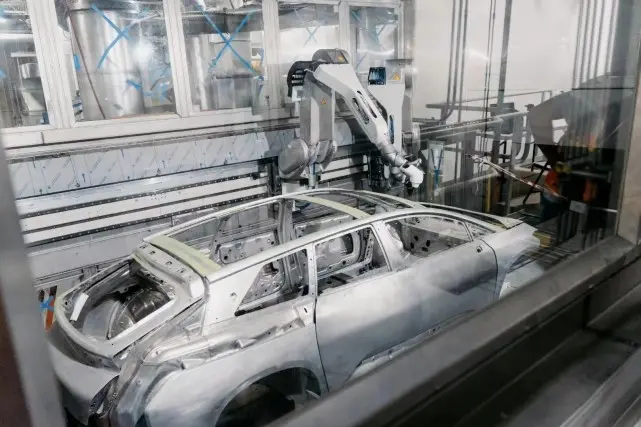
Faraday Future factory; Image source: Tencent News
From 2019 to 2024, he almost vanished from public view, trapped in the minutiae of car-making—technical bottlenecks, tight funding, fierce competition, regulatory hurdles. None could be avoided. Faraday Future repeatedly faced financing obstacles in the U.S., pushing back mass production plans again and again. He finally grasped the complexity and slowness of manufacturing.
The internet runs on speed; car-making runs on patience. This experience forced him to adapt to a different rhythm—step-by-step testing, reviewing, correcting. Between speed and risk, he had to slow down.
Meanwhile, the crypto world entered a new cycle. Tesla announced it had purchased $1.5 billion worth of Bitcoin, shaking global markets. Soon after, MicroStrategy, Square, PayPal, and others followed. The influx of institutional capital began transforming what was once a speculator’s playground into a legitimate asset class.
Between 2019 and 2024, the blockchain industry underwent unprecedented evolution.
Ethereum’s smart contracts matured, DeFi protocol assets surged from hundreds of millions to hundreds of billions of dollars; NFTs brought digital art and virtual assets into the mainstream; DAOs introduced community governance as a new organizational model.
Looking back at Jia’s “ecological disruption” vision at LeEco, these new technological paths bore familiar echoes—though the context and tools had completely changed.
By 2024, the industry’s infrastructure was worlds apart from six years prior. Institutional capital, stablecoins, mature DeFi, and AI integration made the market more stable and actionable.
Compared to the “Yilian Box,” today’s entry points and environment are entirely different. Re-entering this space requires a clearer market logic and a more disciplined execution path.
On August 17, 2025, in Pebble Beach, California, Jia Yueting stepped onto the stage again, announcing the launch of the “EAI + Crypto Dual Flywheel” strategy.
Unlike previous launches, no new car was unveiled—instead, a new business framework was introduced, binding EAI (Electric AI) and Crypto into a bidirectional growth loop.
The strategy is straightforward. EAI represents Faraday Future’s electric vehicles and AI business—the cash-generating real economy arm. Crypto is the other pole, opening doors to larger opportunities in digital asset management and the digital economy. They feed each other: EAI provides cash flow, while Crypto’s returns flow back to fund manufacturing and R&D.
C10 Treasury marks the starting point of the “Dual Flywheel” strategy. It’s a crypto asset management platform using an “80% passive + 20% active” approach. Most funds are strictly allocated according to the C10 Index to the top ten cryptocurrencies (excluding stablecoins), while the remainder is actively managed by the team.
Passive investment acts as the foundation, ensuring structural stability; the active portion preserves room for aggressive moves. As of September 18, 2025, C10 Treasury managed around $10 million in assets, with unrealized gains of seven percentage points.
On September 20, Jia struck again. Faraday Future acquired Nasdaq-listed QLGN for $41 million, planning to rename it CXC10. QLGN (Qualigen Therapeutics) was originally a small biotech firm. What attracted Jia wasn’t its core business, but its status as a compliant public company with access to capital markets.
In other words, a ready-made capital shell.
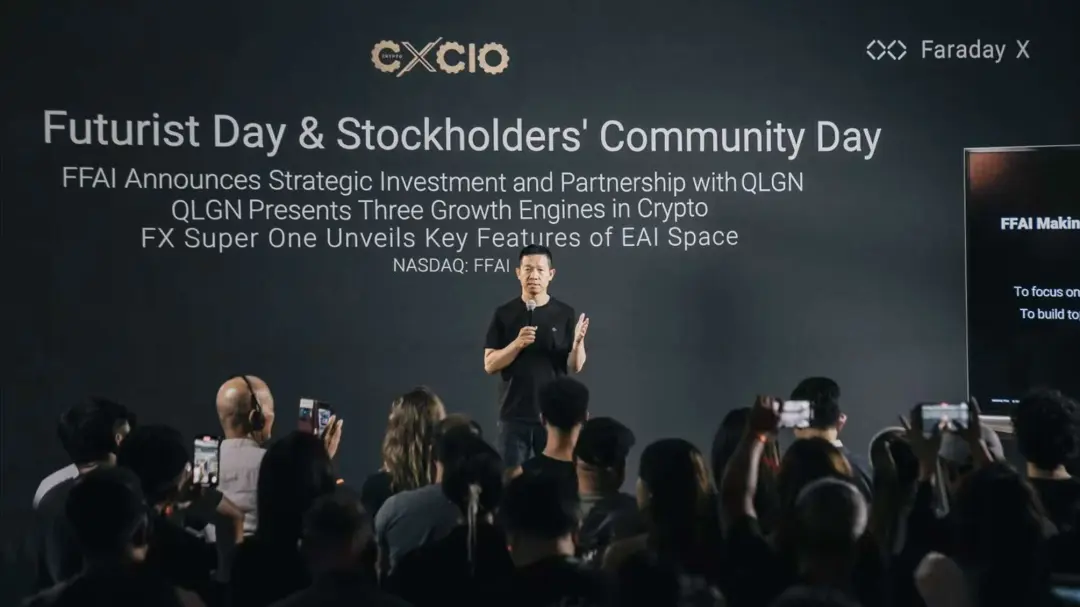
Jia Yueting at the CXC10 launch event; Image source: Faraday Future official X
In this acquisition, Jia personally invested $4 million, acquiring about 7% equity, which he voluntarily locked for two years. On the day of the announcement, QLGN’s stock price surged 255%, with pre-market trading jumping from $2.8 to over $10.
More importantly, a new name appeared in the deal: the SIGN Foundation. SIGN is a blockchain tech company backed by top-tier institutions including Binance Labs and Sequoia Capital. Its involvement brings not only capital but also technical and resource credibility. For Jia, this means regaining access to the industry’s inner circle.
Compared to the LeEco era, Jia’s posture is clearly different. This time, he builds his new story through capital structure, compliance pathways, and institutional alliances. Whether this shift represents true transformation or merely a more refined cycle, only time will tell.
The Unfinished Road
Looking back today, Jia Yueting’s business trajectory resembles a circle.
In the LeEco era, he told the story of “ecological disruption”; with Faraday Future, he painted the future of mobility with electric vehicles; by 2025, he pushed forward the “EAI + Crypto Dual Flywheel.”
Each pivot landed on a pivotal moment in time—and each came with controversy.
The real test lies ahead. C10 Treasury’s gains largely reflect favorable market conditions—the ability to weather volatility remains unproven. The “Dual Flywheel” logic sounds coherent but hasn’t survived a full market cycle. More crucially, has he truly learned restraint from past failures, or has he simply refined his storytelling? No one can answer yet.
From LeEco Tower in Beijing’s Chaoyang District, to factory floors in California, to the Nasdaq capital stage—this story spans geography and industries.
In crypto, stories never reach final endings—only ever-continuing next chapters.
Jia Yueting’s story continues.
Join TechFlow official community to stay tuned
Telegram:https://t.me/TechFlowDaily
X (Twitter):https://x.com/TechFlowPost
X (Twitter) EN:https://x.com/BlockFlow_News
 BlockBeats