








Apple's billion-dollar buyback strategy reappears in crypto as tokens learn the "AAPL" playbook
TechFlow Selected TechFlow Selected
Apple's billion-dollar buyback strategy reappears in crypto as tokens learn the "AAPL" playbook
See how Hyperliquid and Pump.fun play the Apple buyback game.
 Navigating Web3 tides with focused insights
Author: Prathik Desai
Translated by: TechFlow
Seven years ago, Apple executed what may be its greatest financial maneuver. In April 2017, Apple spent $5 billion to build Apple Park—a 360-acre campus in Cupertino, California—nicknamed the "spaceship." A year later, in May 2018, Apple announced a stock buyback program worth up to $100 billion. This amount was 20 times the investment in its headquarters, sending a clear message to the world: another one of Apple’s “products”—its stock—was as important as the iPhone, perhaps even more so.
This was then Apple’s largest-ever buyback announcement and part of a decade-long spree during which Apple has cumulatively spent over $725 billion repurchasing its own shares. Six years later, in May 2024, Apple broke its own record again, announcing an $110 billion buyback plan. This move demonstrated not only Apple’s scarcity in device manufacturing but also its mastery in managing equity scarcity.
The crypto industry is now adopting this strategy at a faster pace and larger scale.
Two major revenue engines in crypto—perpetuals exchange Hyperliquid and memecoin issuance platform Pump.fun—are using nearly all their fee income to buy back their own tokens.
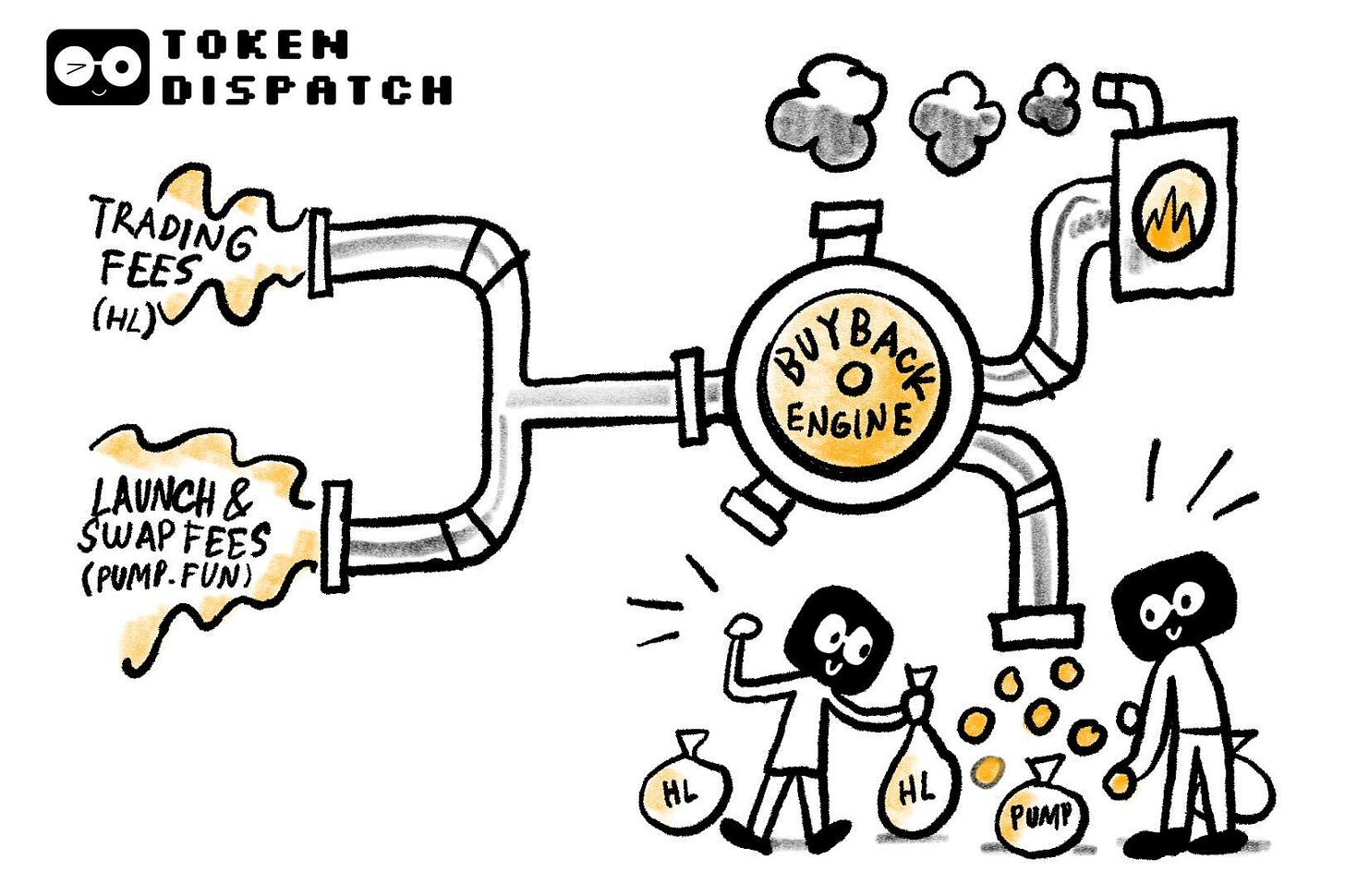
In August this year, Hyperliquid generated a record $106 million in fees, with over 90% used to buy back HYPE tokens on the open market. Meanwhile, Pump.fun briefly surpassed Hyperliquid in daily revenue on a single day in September, earning $3.38 million. And all that revenue had one destination—entirely funneled into buying back PUMP tokens. In fact, such buybacks have been ongoing for two consecutive months.
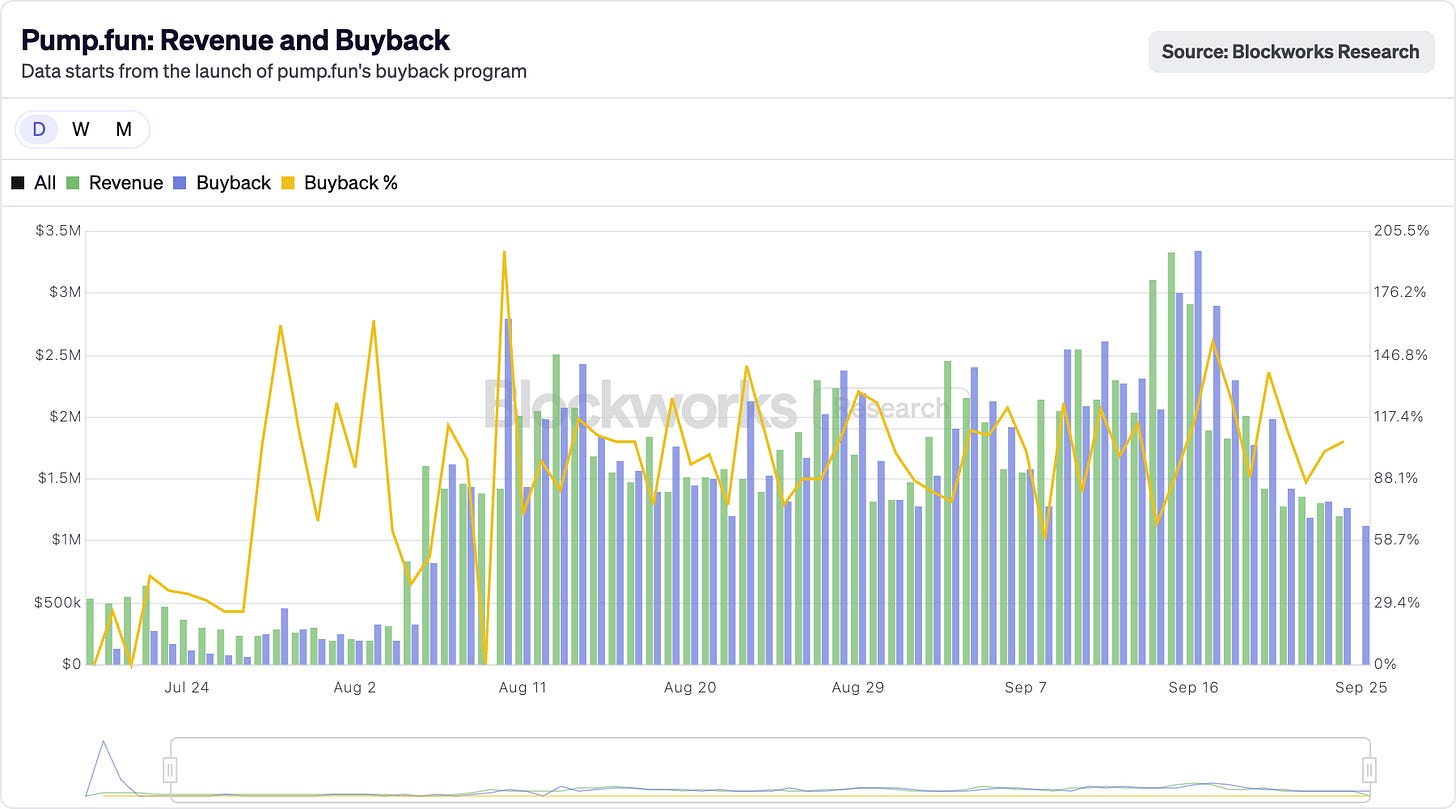
This behavior makes tokens begin to function like shareholder proxies—an unusual phenomenon in crypto, where tokens are typically dumped onto investors whenever possible.
This strategy attempts to replicate the long-term success of Wall Street's "dividend aristocrats"—companies like Apple, Procter & Gamble, and Coca-Cola—that have rewarded shareholders through consistent dividends or share buybacks. For example, Apple spent $104 billion on buybacks in 2024, representing about 3% to 4% of its market value at the time. In contrast, Hyperliquid’s buybacks offset 9% of its token supply.
Even by equity standards, these figures are extraordinarily high. In crypto, they are unprecedented.
Hyperliquid’s strategy is simple and direct.
It built a decentralized exchange focused on perpetual contracts with a user experience rivaling centralized exchanges (like Binance), yet fully operating on-chain. Zero trading fees, high leverage, and a Layer 1 ecosystem centered around perps. By mid-2025, the platform’s monthly trading volume exceeded $400 billion, capturing about 70% of the decentralized finance (DeFi) perpetuals market.
What sets Hyperliquid apart is how it uses its revenue.
Daily, Hyperliquid allocates over 90% of its income into an account called the "Assistance Fund," which directly purchases HYPE tokens on the open market.
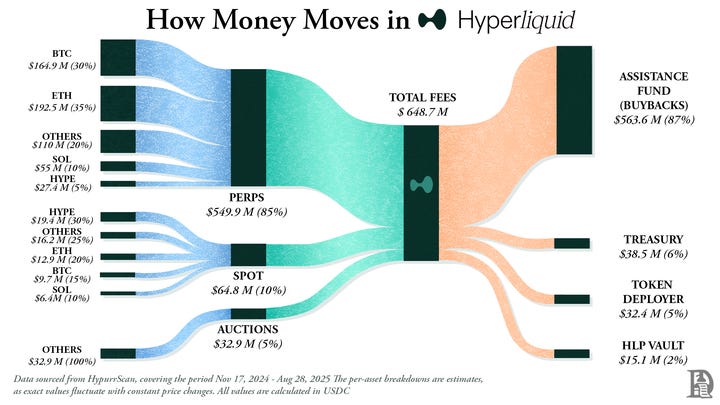
As of this writing, the fund has bought back over 31.61 million HYPE tokens, worth approximately $1.4 billion—ten times the 3 million tokens bought back in January.
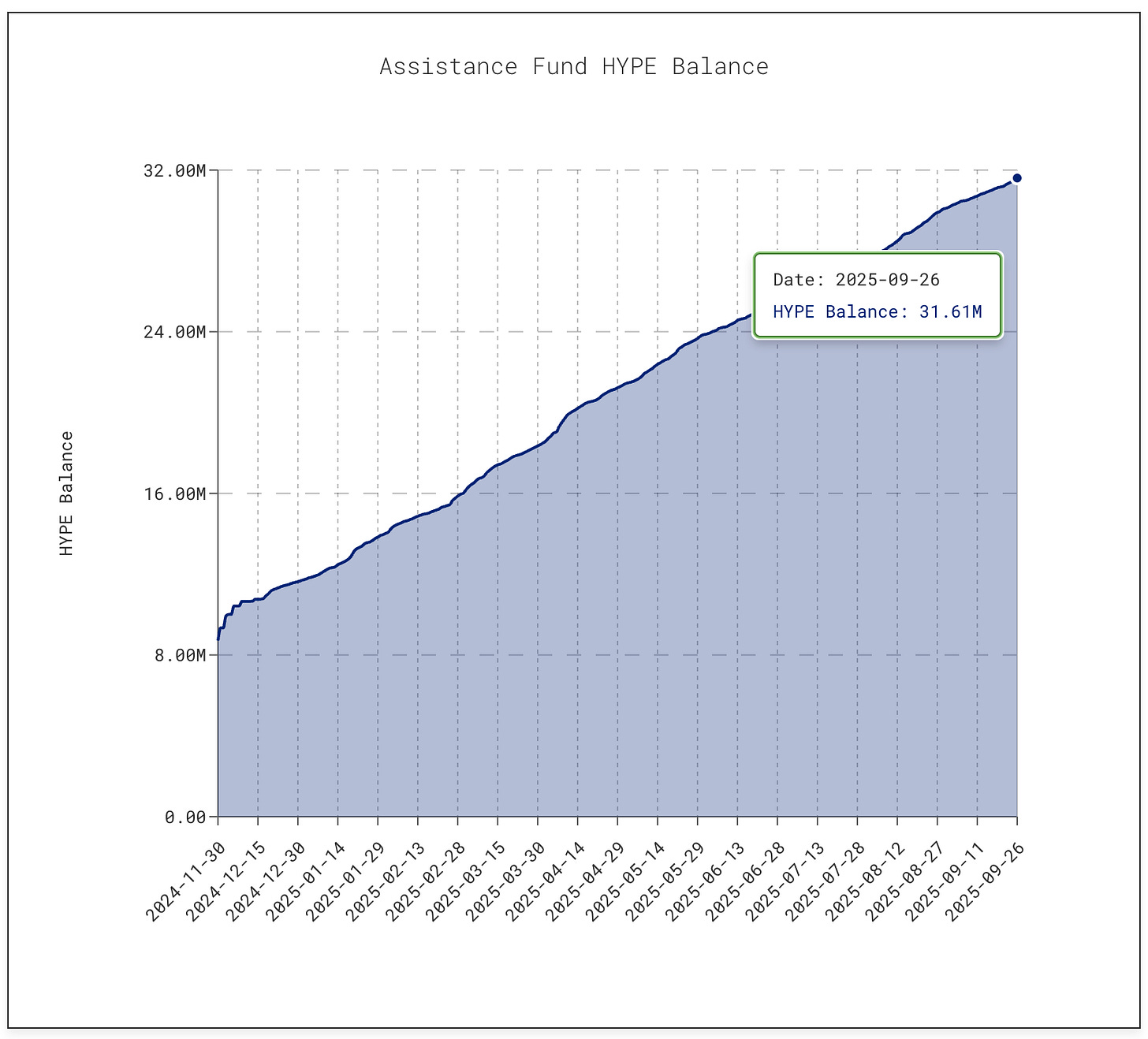
This buyback frenzy has absorbed about 9% of the circulating supply, driving the price of HYPE to a peak of $60 per token in mid-September.
Meanwhile, Pump.fun has reduced its token supply by approximately 7.5% through buybacks.
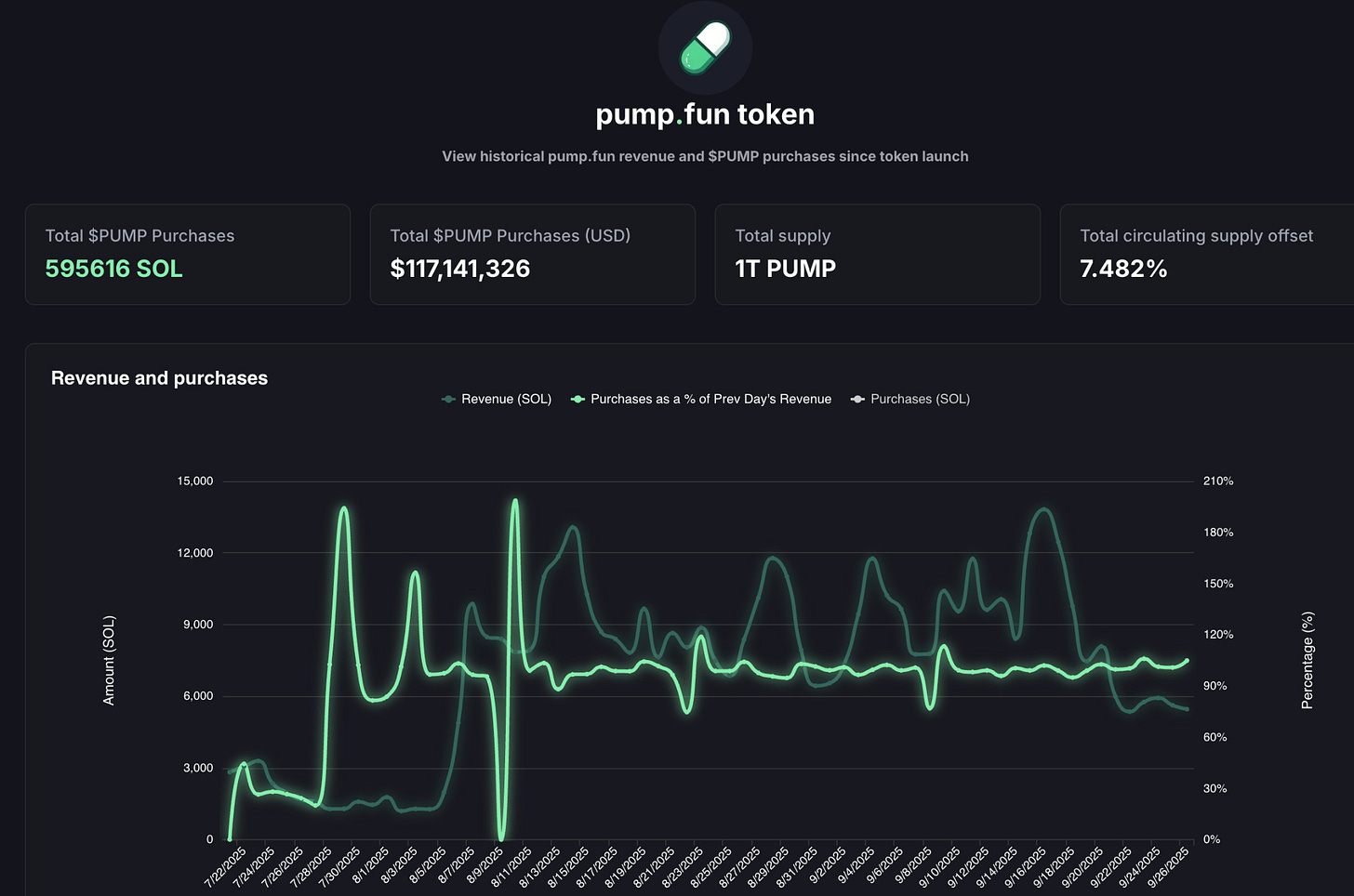
The platform has transformed the memecoin craze into a fee-based business model. Anyone can launch a token on the platform, set a bonding curve, and let the market speculate freely. What started as a joke tool has become a factory for speculative assets.
But instability remains.
Pump.fun’s revenue is closely tied to the热度 of memecoin launches, making it highly cyclical. In July this year, its revenue dropped to $17.11 million—the lowest since April 2024—leading to reduced buybacks. However, by August, its monthly revenue surged to over $41.05 million.
Nonetheless, questions about sustainability persist. When the memecoin hype cools down (which has already happened and will happen again), the pace of token burns will slow accordingly. Moreover, Pump.fun faces a $5.5 billion lawsuit alleging its entire business model resembles unlicensed gambling.
The core driver currently supporting both Hyperliquid and Pump.fun is their willingness to return earnings to the community.
In some years, Apple has returned nearly 90% of its profits to shareholders via buybacks and dividends, but these are typically phased decisions announced incrementally. In contrast, Hyperliquid and Pump.fun return virtually 100% of their daily revenue directly to token holders.
Of course, the two aren’t identical. Dividends are real cash—taxable but reliable—while buybacks at best provide price support and can quickly lose effectiveness if revenues decline or unlock volumes surge. Hyperliquid faces looming token unlocks, while Pump.fun worries about losing its memecoin user base. Compared to Johnson & Johnson’s 63 years of steady dividend growth or Apple’s relentless buybacks, these crypto projects resemble tightrope walks.
But perhaps that’s okay.
The crypto industry is still maturing and far from stability. Right now, it has found “speed.” Buybacks offer speed: they’re flexible, tax-efficient, and deflationary. This strategy fits perfectly with a speculation-driven market. So far, it has turned two very different projects into top-tier revenue machines.
We don’t yet know whether this model is sustainable in the long term. But one thing is certain: for the first time, this approach has made crypto tokens behave less like casino chips and more like company shares that return value at speeds comparable to Apple.
There’s a broader lesson here. Apple understood long before crypto did that it wasn’t just selling iPhones—it was also “selling” stock. Since 2012, Apple has spent nearly $1 trillion on buybacks—more than the GDP of most countries—reducing its outstanding shares by over 40%.
Despite maintaining a market cap of over $3.8 trillion, part of this success lies in treating equity as a product—something to be marketed, refined, and kept scarce. Apple doesn’t need to issue more shares to raise capital because its balance sheet is strong enough. In this model, stock becomes a product, and shareholders become customers.
The same model is now expanding into crypto.
Hyperliquid and Pump.fun are mastering this technique by converting business revenue into buying pressure on their own equity, rather than reinvesting in operations or hoarding cash.
This also changes how investors view assets.
iPhone sales certainly matter, but bullish Apple investors know there’s another driver: scarcity. Likewise, traders are beginning to view HYPE and PUMP tokens in a similar light. They see an asset underpinned by a promise—over 95% of every token spent or traded is likely to be converted into market buybacks and burns.
Apple also reveals another side of this strategy.
The strength of buybacks depends on underlying cash flows. What happens when revenue declines? If iPhone and MacBook sales slow, Apple’s historical balance sheet allows it to issue debt to fulfill buyback commitments. Hyperliquid and Pump.fun have no such buffer. If trading volume dries up, buybacks stop immediately. Unlike Apple, they can’t pivot to dividends, services, or new products—these protocols haven’t yet developed backup plans.
For crypto, this also brings dilution risk.
Apple doesn’t worry about 200 million new shares flooding the market overnight. Hyperliquid does. Starting November this year, approximately $12 billion worth of HYPE tokens will begin unlocking for insiders—a volume far exceeding daily buyback capacity.
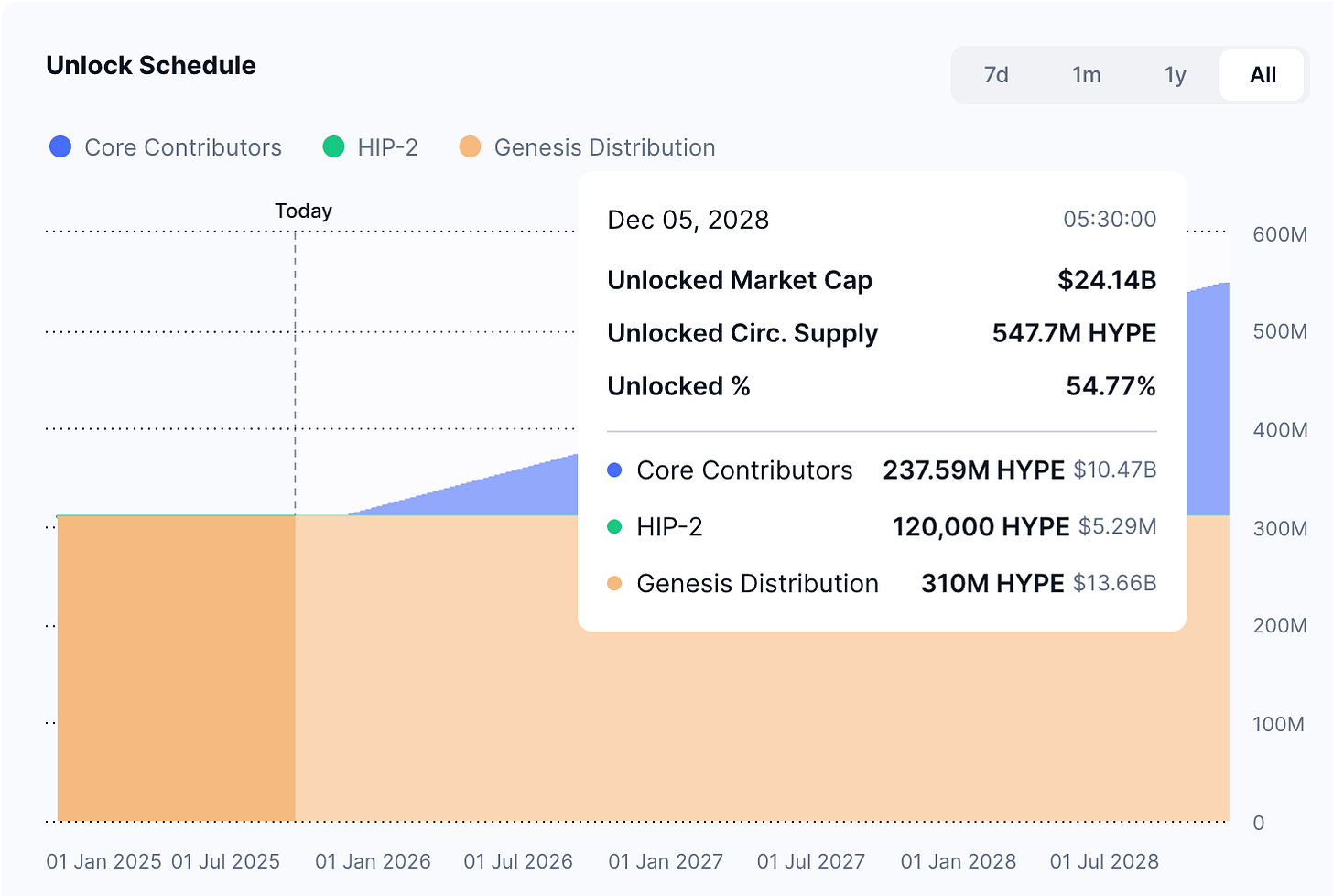
Apple controls its float; crypto protocols must contend with unlock schedules set years in advance.
Still, investors see the narrative and want to participate. Apple’s buyback strategy is obvious, especially to those familiar with its decades-long evolution. By turning equity into a financial product, Apple successfully cultivated shareholder loyalty. Hyperliquid and Pump.fun are attempting to forge a new path for crypto—one that’s faster, louder, and riskier.
Join TechFlow official community to stay tuned
Telegram:https://t.me/TechFlowDaily
X (Twitter):https://x.com/TechFlowPost
X (Twitter) EN:https://x.com/BlockFlow_News












