Richard Teng: Steering Binance through its darkest hour under Zhao Changpeng's shadow
TechFlow Selected TechFlow Selected
Richard Teng: Steering Binance through its darkest hour under Zhao Changpeng's shadow
Teng, who is approaching the two-year anniversary of his CEO tenure, has a mixed performance record.
 Navigating Web3 tides with focused insights
Author: Thejaswini M A
Translation: Luffy, Foresight News
A notification on crypto Twitter (X platform) has sparked widespread discussion: Changpeng Zhao (CZ) removed the "ex-Binance" label from his personal profile.
Prediction markets began speculating about the likelihood of a presidential pardon from Trump, and my X timeline became flooded with rumors about the founder's imminent return. Everyone is asking whether Changpeng Zhao will reclaim leadership of the world's largest cryptocurrency exchange.
Yet, while the entire internet scrutinizes every digital trace left by Zhao, one man has quietly led Binance through its most perilous period in history.
Now, we tell his story.
Richard Teng has quietly transformed Binance from a "compliance nightmare" into one of the most regulated crypto exchanges in the industry. He took over at the company’s darkest hour—facing a $4.3 billion fine, regulatory fury, and fundamental questions about its very survival. Eighteen months later, Binance has reached record highs in user numbers, licenses held, and institutional partnerships.
The 52-year-old former regulator insists he focuses on the future, not the past. But his position is far more precarious than it appears: the choices he's made to push Binance toward compliance and legitimacy may have cost the exchange its original revolutionary spirit.
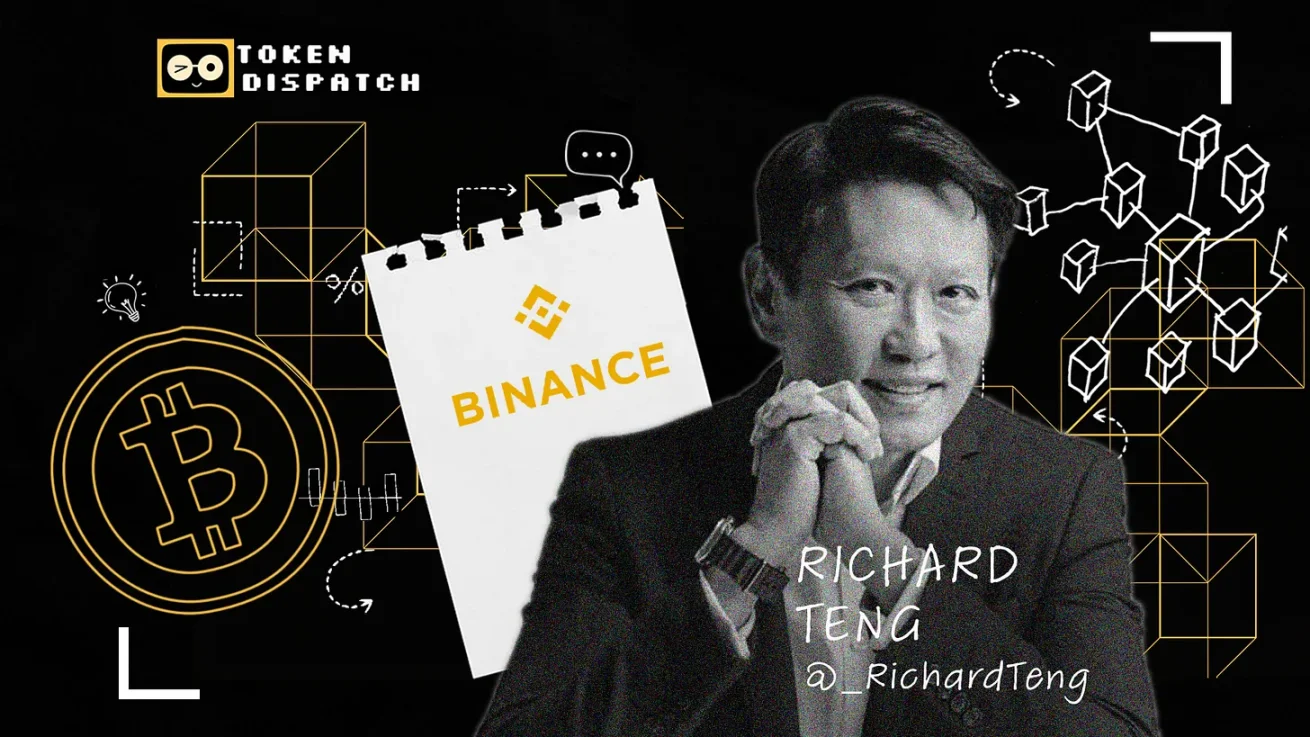
Richard Teng’s journey in crypto began within a highly formal institution: the Singaporean government. In 1994, he graduated with honors in accounting from Nanyang Technological University, then served as a regulator at the Monetary Authority of Singapore (MAS) for 13 years.
Teng came from modest beginnings—his mother worked at an elderly care facility, and details about his father are not publicly available. This government role provided him with the security and prestige his family background could not.
During his tenure at MAS, Teng gained deep insight into financial regulation. He helped transform Singapore into a global financial hub, developed regulatory rules banks had to follow, and investigated non-compliant institutions. To him, strong regulations empower innovation rather than stifle it.
In 2015, Teng reached a pivotal career moment: he moved to Abu Dhabi to lead the Financial Services Regulatory Authority under the Abu Dhabi Global Market (ADGM). It was in 2017 that he first encountered cryptocurrencies there, making a career-defining decision: instead of banning crypto assets, he would attempt to regulate them.
ADGM became one of the first financial centers to establish comprehensive crypto regulations. This framework attracted dozens of crypto companies and earned Teng a reputation as a "progressive regulator." But it also marked his shift—from rule enforcer to rule follower. In 2021, Teng crossed over to join Binance as CEO for Singapore.
A man who spent decades enforcing financial rules now served an exchange that seemed to ignore them entirely.
When Zhao appointed Teng to lead Binance’s Singapore operations in 2021, it was widely seen as a strategic hire. At the time, Binance faced mounting global regulatory pressure, and Teng’s credentials were expected to help ease tensions with regulators. But his rise within Binance exceeded all expectations: within just two years, he advanced from managing a single-country operation to overseeing markets across Asia, Europe, and the Middle East. By late 2023, he was viewed as a potential successor to Zhao.
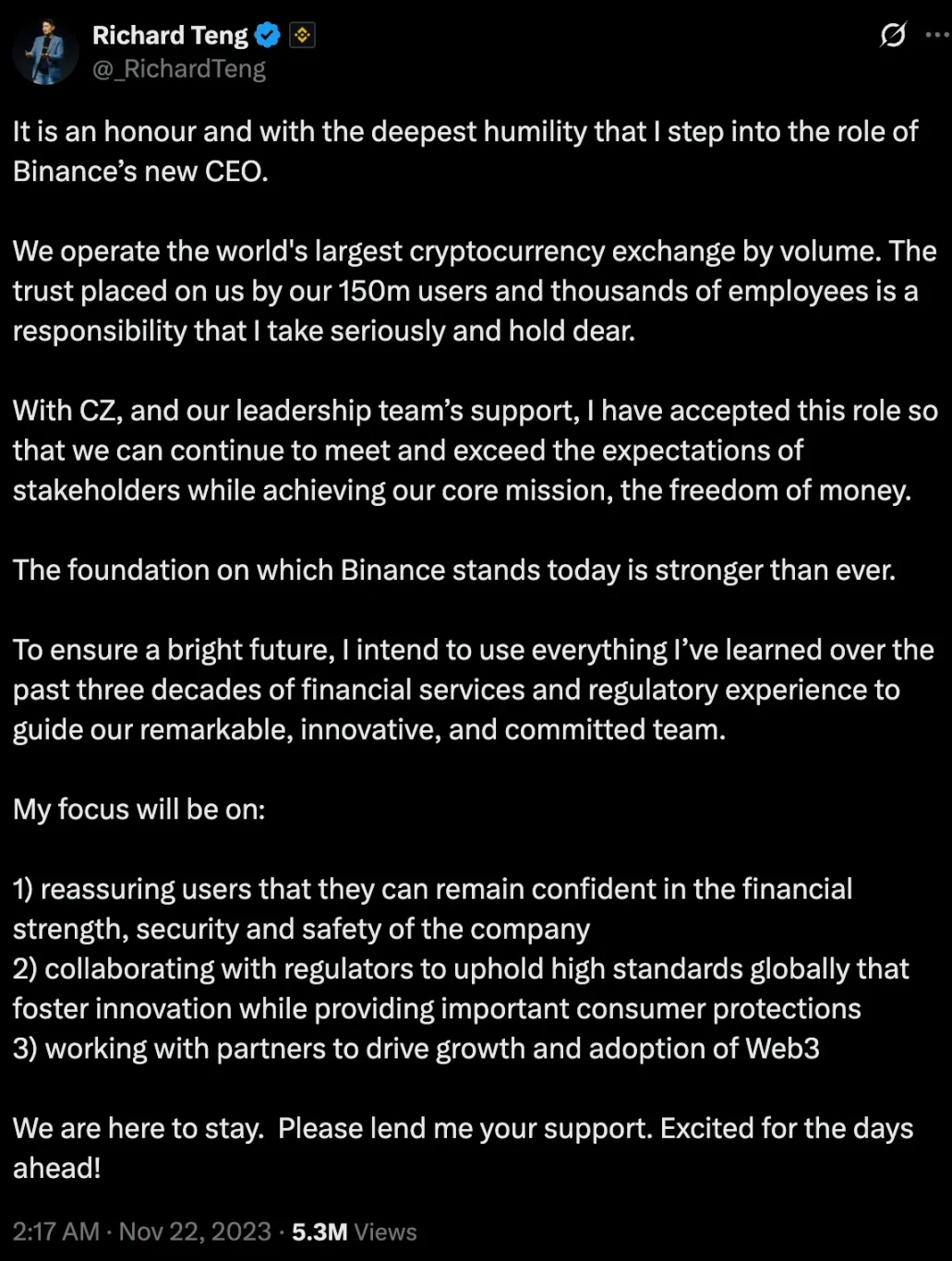
Still, almost no one anticipated the transition would happen so abruptly. On November 21, 2023, as part of a guilty plea agreement with U.S. regulators, Zhao stepped down—and Teng was immediately named CEO, taking control of a company in crisis.
At the time, Binance faced the largest penalty ever levied by the U.S. Treasury, investigations or bans from multiple countries’ regulators, and massive user withdrawals due to concerns over platform stability.
Teng had to act fast.
Compliance Revolution or Surrender?
Teng’s top priority was clear: repair Binance’s relationship with regulators.
Under Zhao, Binance operated largely outside regulatory oversight, treating compliance as an afterthought. Teng completely reversed this approach.
He hired hundreds of compliance officers, established the company’s first formal board of directors, and invested “hundreds of millions of dollars” in building risk management systems. He shifted from confrontation to cooperation with regulators.
The results have been impressive: Binance now holds regulatory licenses in 21 jurisdictions—more than any other crypto exchange. Major institutions that once avoided the platform are now actively seeking partnerships.
Yet critics argue Teng has gone too far. They claim that in appeasing regulators, he has stripped Binance of much of its innovative edge and competitive advantage.
Unlike the rapid pace of token listings under Zhao, new tokens now take months to go live on Binance; its compliance process has become so strict that some projects choose other platforms. The startup once known for “move fast and break things” has become “slow and bureaucratic.”
Teng rejects this criticism, arguing that compliance is essential for crypto to gain mainstream acceptance.
“We’ve paid a heavy price,” he said. “I hope others in the industry can learn from our experience. Only by working together to remove bad actors can the industry grow stronger.”
Perhaps Teng’s greatest challenge isn’t regulatory pressure or user complaints—but the shadow of his predecessor. Zhao remains Binance’s largest shareholder, and if his legal issues are resolved, he could theoretically return to operational leadership.
This creates an awkward reality: Teng is CEO in name, but everyone knows his position depends on the will of someone who has officially stepped away. Even though Zhao should no longer be involved in decisions, major strategic moves still require his tacit approval.
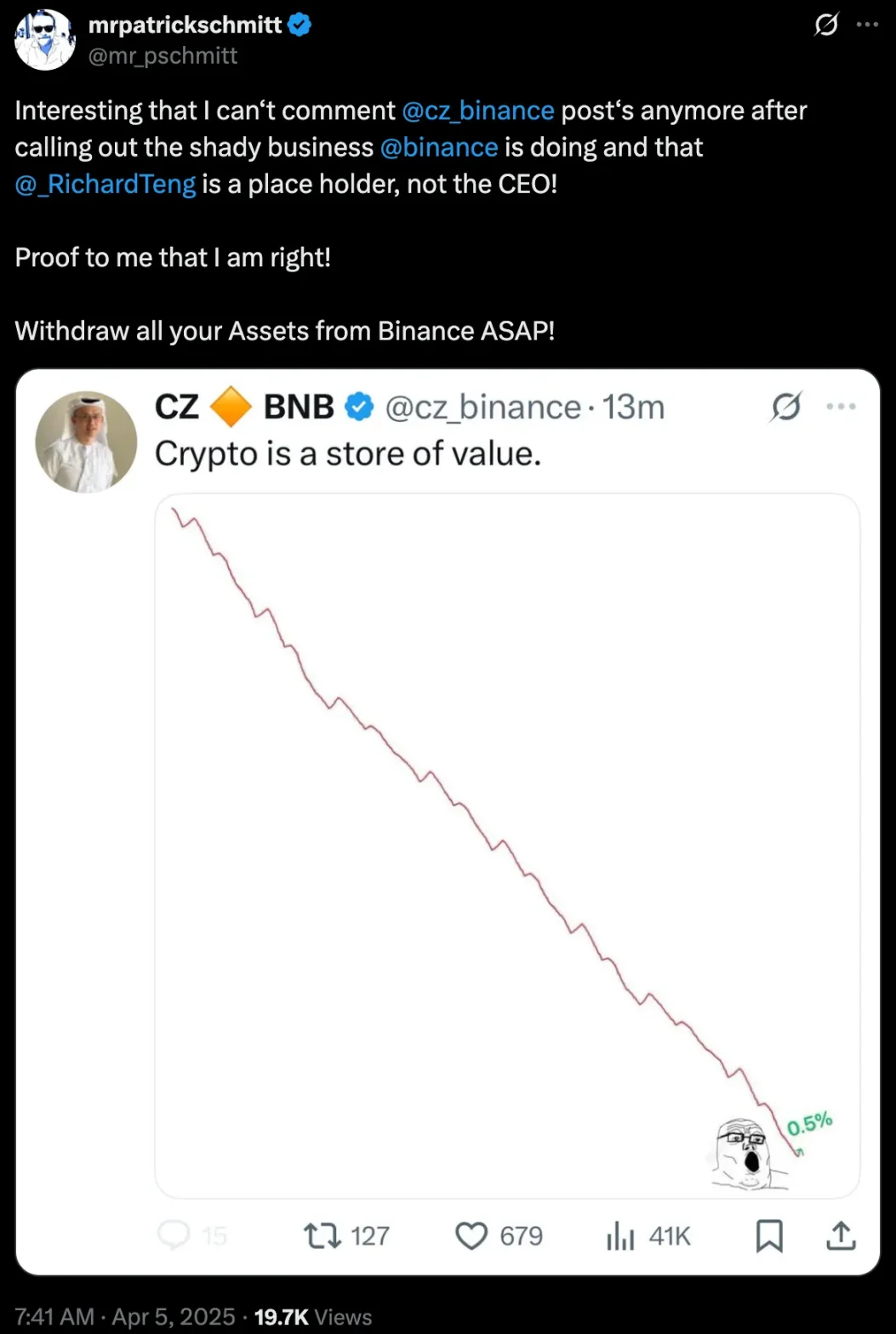
Zhao’s removal of the “former CEO” tag from his social media profiles has further complicated the situation. Teng insists he isn’t worried about being replaced, but his position is inherently unstable: if Zhao does return, what becomes of the man who stabilized the company during his absence?

Despite internal tensions, Teng has carved out a distinct identity as CEO. His central mission is financial inclusion—using crypto to serve billions globally excluded from traditional banking.
He often highlights cross-border remittances as crypto’s killer use case. Traditional money transfer services charge fees exceeding 10% for international transfers, while crypto enables near-instant transactions at almost zero cost.
“Over the past few years, especially in countries suffering hyperinflation, people have significantly improved their lives by holding stablecoins,” Teng explained.
As of mid-2025, Binance’s payment service, Binance Pay, has processed over 300 million transactions totaling more than $230 billion. Teng estimates users have saved over $1.75 billion compared to traditional remittance services.
This emphasis on “real utility” over “speculative trading” stands in stark contrast to the Zhao era. The former CEO targeted day traders and yield farmers, while Teng’s focus is on the global poor and unbanked. While noble, this mission raises questions about priorities: as the world’s largest crypto exchange, should it prioritize experienced traders who generate most of its revenue, or provide basic financial services to people who may never trade at all?
Teng’s biggest bet is on institutional adoption. Under his leadership, Binance actively courts hedge funds, family offices, and traditional financial institutions.
But this institutional focus involves trade-offs: professional investors expect service and safeguards comparable to traditional finance, including independent custody, insurance coverage, and regulatory compliance—all of which entail high costs and complex processes.
Teng believes institutional adoption brings legitimacy and stability to the crypto market, ultimately benefiting everyone. But whether these trade-offs are worth it remains an open question.
Leading the world’s largest crypto exchange also makes you the prime target for hackers. In January 2025, rival exchange Bybit suffered a sophisticated attack, losing $1.5 billion—an event that sent shockwaves across the industry.
Teng has made security a cornerstone of his leadership, investing “hundreds of millions of dollars” in defense systems. Binance maintains a $1 billion insurance fund and regularly publishes “proof of reserves” reports.
Yet some security experts question whether these measures are sufficient: despite its size, the insurance fund covers only a small fraction of user deposits; while proof-of-reserves enhances transparency, it cannot prevent insider fraud or sophisticated cyberattacks.
The Meme Coin Dilemma
Teng continues to face challenges in balancing token listings. Binance’s decision to list a token can instantly propel a project to multi-billion-dollar valuations, placing immense pressure on the exchange.
The explosive growth of meme coins and speculative tokens has intensified the dilemma: millions of new tokens launch each month, most lacking real utility or long-term viability. Users demand access to the latest trends, while regulators demand consumer protection—two goals that are hard to reconcile.
Teng has attempted to address this through “community voting” and “stricter due diligence,” but these methods have created new problems: listing processes have become lengthy and expensive, making it difficult even for compliant projects to get listed on Binance.
Some industry observers note that well-funded top-tier projects have spent over a year navigating Binance’s due diligence, only to receive listing offers demanding large token allocations. These near-equity-like demands could force projects to pay tens of millions of dollars just for exchange access.
But Teng’s team argues such strict requirements are necessary to protect users from “rug pulls” and token dumps. This tension reflects a deeper industry challenge: how to protect retail investors from scams while ensuring fair market access for legitimate projects?
The Path Ahead and the Past
Approaching his second anniversary as CEO, Teng’s record is mixed. He has undoubtedly stabilized Binance, repaired ties with regulators, driven user growth, and maintained the exchange’s market dominance.
Yet the crypto industry values bold leadership and risk-taking—traits often at odds with compliance. While Teng’s cautious strategy may work today, its sustainability in a rapidly evolving industry is uncertain.
The “Zhao factor” adds further uncertainty: if the founder returns, will Teng accept a subordinate role? Will he be pushed out entirely? Or will he finally step out of the shadow and forge his own legacy?
Teng now faces a core question about Binance’s identity: is it a crypto-native platform that happens to comply with rules, or a traditional financial institution that happens to trade digital assets?
His answer will determine not only his own fate, but also the future of the world’s most important cryptocurrency exchange.
Join TechFlow official community to stay tuned
Telegram:https://t.me/TechFlowDaily
X (Twitter):https://x.com/TechFlowPost
X (Twitter) EN:https://x.com/BlockFlow_News