Human Proof and the "Dead Internet"
TechFlow Selected TechFlow Selected
Human Proof and the "Dead Internet"
Don't let those "tin cans" control you or steal your tokens.
 Navigating Web3 tides with focused insights
Author: @schizoxbt
Translation: AididiaoJP, Foresight News
Some things are starting to get weird.
We've officially entered a truly bizarre realm.

In what feels like an instant, AI has taken over the internet and seeped into our daily lives as thoroughly as during the peak of the pandemic. I'm not even sure anymore which comments on X are real. Humans are using AI to reply and post, and then there's AI actively mimicking human voices in its posts.
This feels like a dystopian robot era.
The idea that the "Silent Internet Theory" might actually come true is somewhat concerning, yet here we are. For those unfamiliar, this theory suggests that most online interactions are driven by AI, signaling the arrival of an age where genuine human interaction breaks down.
I don't fully subscribe to this view—it feels a bit far-fetched. But the reality is that AI is already here, and we interact with it every day.
Becoming a verifiable human is becoming more important than ever, and you can see this trend unfolding in real time. People deeply crave authentic human interaction. In my view, this is exactly why streamers like Kai Cenat and Speed (Jia Teng Ge) have recently exploded in popularity.
Humans aren't meant to be isolated. And certainly not meant to be wiped out by rapidly evolving AI. That’s why I believe “Proof of Humanity” could become a rather significant movement.
Think about how many people have been fooled by deepfakes. What if we could eliminate that? What if you could verify someone’s identity anytime? Anyone who’s been tricked by a deepfake during a Zoom call would want to confirm they’re actually talking to the person they think they are.
Luckily, several protocols and projects are now working on “Proof of Humanity.” Essentially, they aim to distinguish real, flesh-and-blood humans from dirty tin-can machines.
@Worldcoin, @Humanityprot, @SelfProtocol, and many others are striving to help differentiate real humans from circuits and wires. While I won’t dive into each protocol’s specifics, I want to highlight their work in this space, because we can draw some fascinating insights from this movement.
How does it work?
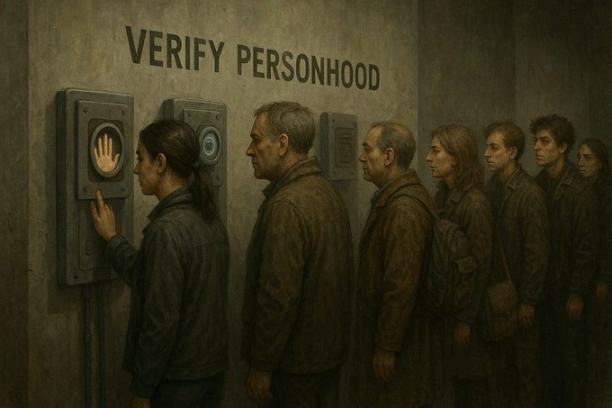
These projects share at least one thing in common: they must correctly identify whether someone is human and have a way to share that verification anytime. There are various methods to achieve this—iris codes, palm prints, and more.
They also focus on privacy, ensuring personal identity data remains securely in the owner’s hands. This means people can anonymously submit biometric identifiers (like eye photos or palm prints), knowing their information is stored only on their own devices and nowhere else.
Zero-knowledge proofs have made significant leaps here, allowing you to prove something is true without revealing the underlying data. Recently, the @3Janexyz project enabled secure, anonymous checks of credit scores and bank information without exposing exact balances or numbers.
So for Proof of Humanity, these projects can securely prove to others that you’re human without disclosing the actual data behind that proof.
ZK proofs are good tech.
Adoption
Currently, adoption of Proof of Humanity isn’t very high, except for @Worldcoin, which recently passed 15 million verified users.
Yet I remember when Worldcoin first launched, many people strongly opposed handing over any personal information. And there will always be those too paranoid to share such data with any protocol—which is perfectly valid. I also think these projects may have been, and perhaps still are, ahead of their time outside crypto circles to gain real attention.
But I believe the timing is coming. Humanity matters. In a world increasingly filled with AI, we need to distinguish real flesh-and-blood humans from tin cans.
That’s where speculative fun comes in: beyond obvious reasons, why would anyone want to declare and prove their human identity?
Better benefits for humans

I recently read Self’s article about their integration with @Aave, and the use case immediately made sense: offering higher yields to verified humans. Essentially, they provide incentive programs only to wallets owned by verified human users, filtering out those with multiple wallets attempting Sybil attacks on rewards.
This is one of the most obvious benefits of Proof of Humanity—allowing protocols to eliminate Sybil attacks by giving extra rewards to real humans. The downside, of course, is that users who value complete anonymity may opt out, paying the price of missing these incentives.
I assume users who choose not to verify for higher Aave yields will only receive base returns. So no one is excluded from DeFi—they just won’t earn extra rewards. Until more people grow comfortable with ZK proofs, some will remain unwilling to place any personal data at potential risk.
Asset insurance
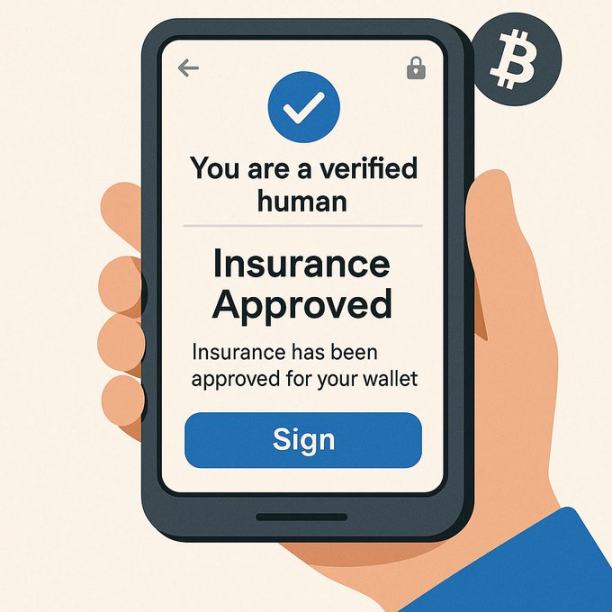
I think it would also be fascinating if users could obtain wallet and asset insurance via Proof of Humanity, linking it to real-world identity. Imagine having a wallet you’ve verified as yours through ZK proof, confirming you’re a real person. Then your wallet gets hacked and you lose all funds—but luckily, you had insurance on those assets! Because you’re a real person with a wallet tied to your identity, you’re covered and can work with your insurer to recover everything.
I think this would be an extraordinary use case for many. Perhaps you could even add assets in your wallet to your balance sheet, linking the wallet to your identity to help boost credit scores or simplify tax filing.
These more advanced applications may take longer to realize, while anti-Sybil and fair airdrops will likely be the main initial use cases—but we should think broadly about the wider implications beyond that.
Zoom meetings

What if you could be certain the person talking to you on Zoom is a real human? That’s a real solution Proof of Humanity can offer!
If calls only start when both users have verified their humanity, you can ensure you won’t be scammed. If we can prevent the scenario above, we all win. Worldcoin has a potential solution called Deep Face, using their Worldcoin ID to verify human identity.
Gambling games
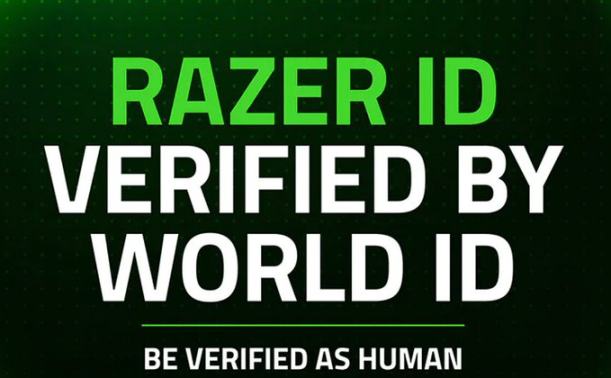
Also, if you're a hardcore gamer like me, you've probably fought bots in multiplayer games more than once. Most of them might just be outdated players like myself, but there's a real possibility they’ll soon be AI. It seems people are already preparing—Razer has partnered with Worldcoin to help tackle this.
AI is rapidly bringing social change and will drastically disrupt the world, for better or worse. But we humans shouldn’t just surrender and fade away.
Conclusion
The race against AI has already begun. We must start implementing safeguards before we’re all knocked out by the changes ahead. While I believe solutions will emerge—and I prefer to stay optimistic—I still carry a lingering cloud of concern that makes me pause. This could impact us in crypto in many ways, good or bad, and we should be prepared.
Don’t let those tin cans control you.
Most importantly, don’t let them take your coins.
Join TechFlow official community to stay tuned
Telegram:https://t.me/TechFlowDaily
X (Twitter):https://x.com/TechFlowPost
X (Twitter) EN:https://x.com/BlockFlow_News
 @castle_labs