Silicon Valley Study Tour Summary: Crypto, AI, and the Innovation Secrets of Silicon Valley
TechFlow Selected TechFlow Selected
Silicon Valley Study Tour Summary: Crypto, AI, and the Innovation Secrets of Silicon Valley
A new wave of crypto prosperity is becoming a consensus.
 Navigating Web3 tides with focused insights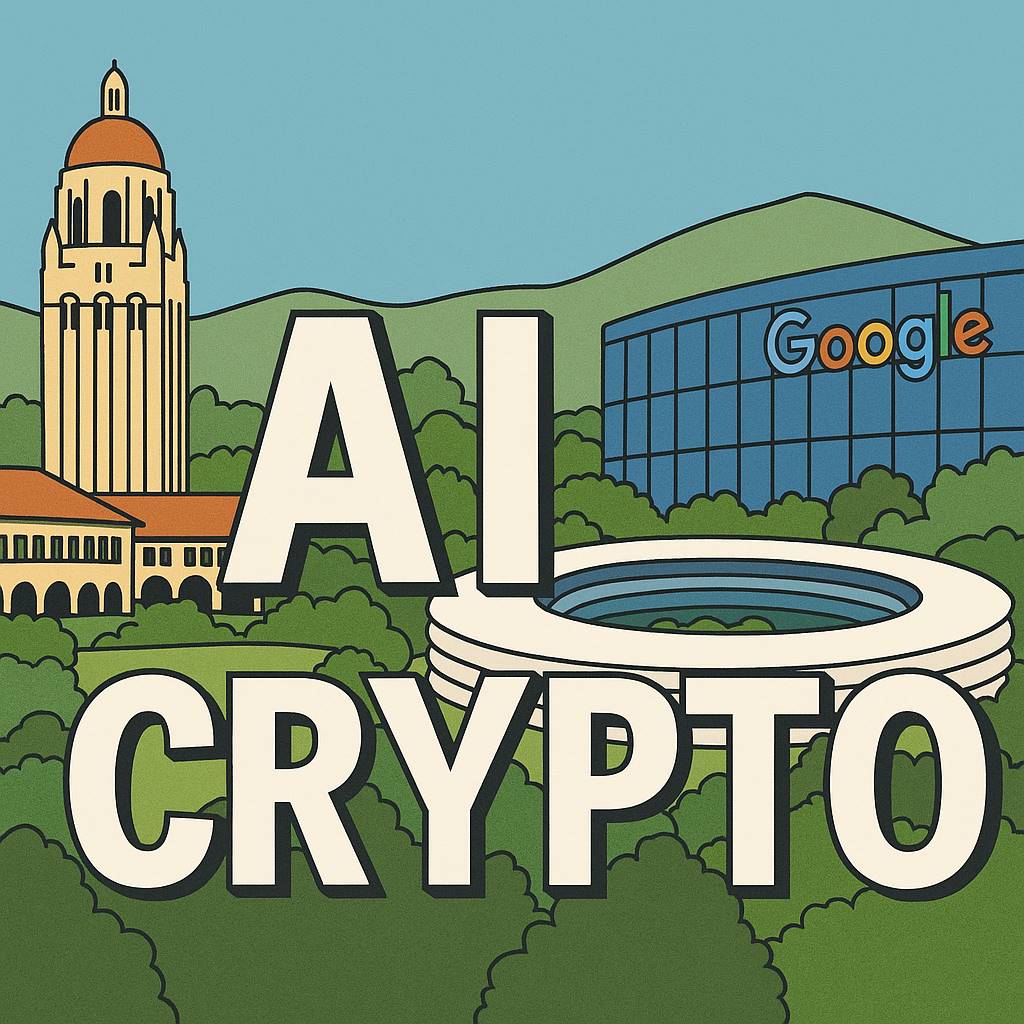
From August 17 to 23, I participated in the 2025 U.S. Silicon Valley Crypto Industry Study Tour organized by Uweb. This was my first time fully attending this type of study tour. Previously, from a distance, I had held certain biases and skepticism toward such programs. How much could strangers with different goals temporarily gathered together for a short period possibly learn through a cursory tour? I was deeply doubtful. Especially after reading some overly dramatic and exaggerated study tour summaries that felt heavily promotional and thus suspicious.
This time, having personally participated throughout, I was unexpectedly and greatly rewarded. Silicon Valley is the global center of technological innovation, and I have many old friends there, having visited numerous times. Particularly over the past year, I’ve been there several times for both business and personal reasons, so my expectations were low going into this trip. It's a familiar place, a popular pilgrimage site for Chinese tech enthusiasts visiting the U.S.—I've seen countless sincere shares and boastful promotions. What novelty could remain? Yet under Principal Yu Jianing’s leadership, more than twenty fellow travelers spent an information-packed, content-rich week together. Honestly speaking, it was immensely rewarding. After returning, I asked myself: why hadn’t I gained so much despite multiple visits and meetings on my own? The answer seems clear—visiting individually only allows partial use of one’s own network, whereas a study tour aggregates and superimposes the networks of organizers and all participants, creating an energetic field that intensively interacts with one’s own thinking, triggering many insights. After a few days of reflection back in Australia, I now feel it necessary to summarize key takeaways from this journey to share with readers.
This trip delayed my series of summary articles about Hong Kong. But as the saying goes, every cloud has a silver lining—visiting Silicon Valley provided a contrast that clarified my understanding of Hong Kong’s crypto landscape. In the coming period, I’ll focus on writing up summaries for both trips. However, while memories are still fresh, I’d like to jump ahead and publish the Silicon Valley summary first. Some readers have been urging me for the Hong Kong summary—please bear with me, I won’t ghost you this time.
The content of this study tour was extremely rich, making full documentation impossible. Here I only summarize the points that struck me most deeply. Each section focuses on one theme and can be read independently. These reflections represent only my personal views, neither comprehensively reflecting the entire tour nor constituting any investment advice.
A New Wave of Crypto Prosperity Is Becoming Consensus
My main takeaway from this Silicon Valley trip is that a broad consensus has formed across America's tech community: a new era of crypto prosperity is imminent. Every person we met and spoke with—regardless of their level of involvement in crypto, their understanding of it, or even those holding negative views—agreed that crypto is entering a boom period. When reaching this conclusion, they paid little attention to attitudes in other regions like China or Europe, believing that even if the rest of the world does not follow suit, the combination of U.S. policy, capital, and technological conditions alone would be sufficient to drive industry-wide prosperity.
This optimism stems, without doubt, primarily from the Trump administration’s new crypto policies. Beyond actively promoting stablecoin legislation (GENIUS Act) and market structure bills (CLARITY Act), core members of Trump’s team have publicly supported crypto in various forums and personally engaged in related businesses. As these favorable conditions accumulate, people in Silicon Valley widely believe that the crypto industry is about to enter a prolonged, large-scale boom, with the U.S. not only serving as its birthplace but also its central hub.
This outlook conveys a strong sense of urgency.
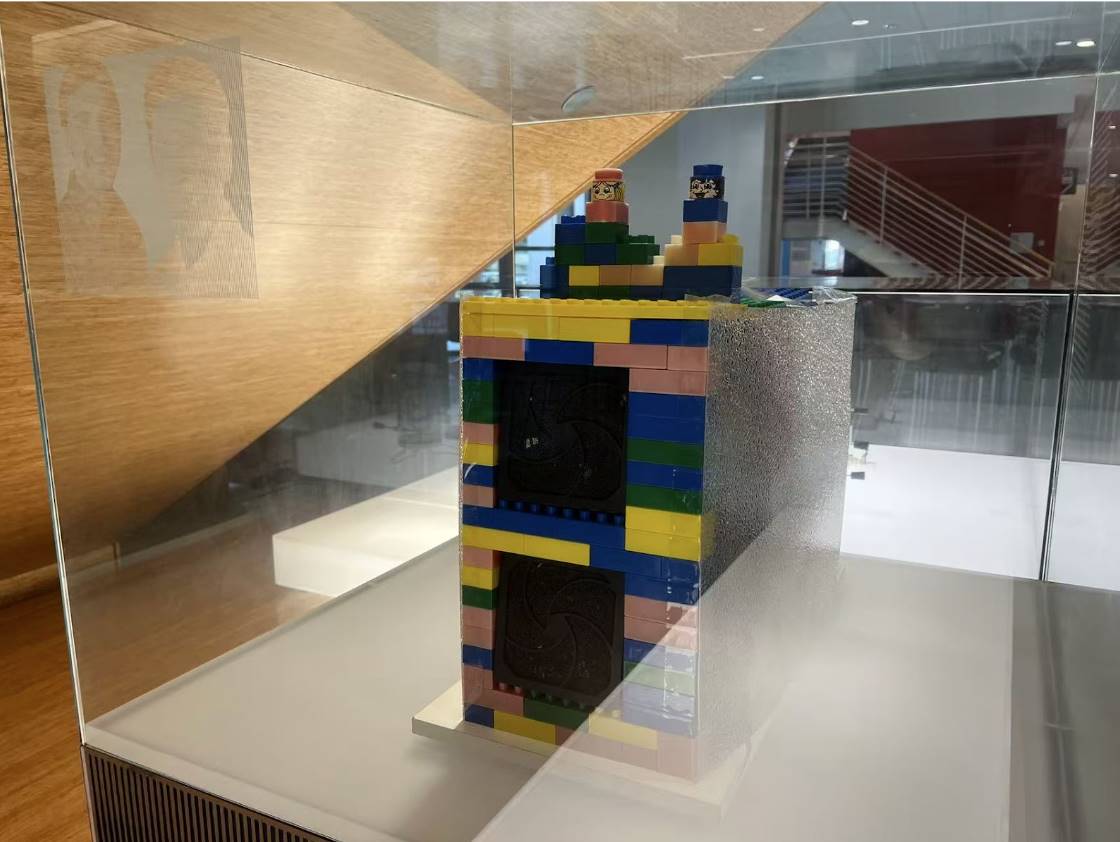
On the last day of our trip, I visited NVIDIA Hall at Stanford University’s School of Engineering and saw this exhibit: Google’s first server, hand-built in 1996 by its two founders inside a Stanford PhD dorm room, with its outer casing assembled from Lego bricks. A famous display at Stanford, many have seen it before. But for someone of my generation, seeing it evokes particular feelings. Someone familiar with China’s internet history once told me that around the time this server was built, China luckily chose the right direction in managing the internet. At the time, there was a proposal for telecom authorities to regulate the internet like landline phones—if implemented, today’s Chinese internet would likely be unremarkable, and the story of the past two decades would look completely different. Fortunately, China made the right choice, leading to tremendous achievements in its internet industry over thirty years. Times change—will people thirty years from now still speak confidently about China’s blockchain industry with a sense of “we didn’t miss out”?
"Stablecoin Wars" Did Not Happen As Expected
When the U.S. stablecoin bill passed in July, a global wave of discussion on stablecoins emerged. At the time, I predicted that once the law passed, all qualified institutions and companies would quickly launch dollar-pegged stablecoins, resulting in a short-term "stablecoin war." One purpose of my Silicon Valley visit was to check whether this scenario was unfolding.
Why does this matter? Because it relates directly to the speed of adoption for "stablecoin payments." Those familiar with the field know that stablecoins offer significant efficiency advantages over traditional cross-border payments. However, traditional payment systems are already highly competitive, dominated by powerful players across various segments. While stablecoin payments are advanced, no strong solution providers have yet emerged, making it difficult to break into established markets. What could truly accelerate stablecoin adoption is incumbent payment firms and banks proactively issuing their own stablecoins. A "stablecoin war" would create urgency and dramatically speed up this process.
But unfortunately, my Silicon Valley trip forced me to admit my initial assumption was wrong. We did not witness the expected "stablecoin war." This doesn’t mean no new stablecoins are being planned—in fact, as I write this, Hyperliquid has announced a new USD-pegged stablecoin USDH, proving new entrants continue to join. But the anticipated rush has not materialized. Especially telling is the continued restraint and caution among banks and major internet platforms—entities that stand to benefit most and could most powerfully push stablecoin payments into real economies—remain notably cautious.
Why hasn't the stablecoin war erupted as expected? I have three hypotheses.
First, perhaps these banks and internet giants simply aren’t ready. Trump’s election caused a near 180-degree policy shift on U.S. stablecoins within half a year—large institutions may not have had enough time to make strategic decisions.
Second, the legislative thresholds act as barriers. During the tour, Coinbase’s senior legal counsel shared how Coinbase used effective political donations to strongly influence U.S. crypto strategy, including shaping laws like GENIUS, embedding carefully designed measures to precisely hinder potential competitors from entering the USD stablecoin market. This can be seen as a self-protective strategy by early movers in the crypto industry—unethical-sounding but understandable.
Third, and perhaps most fundamentally, is Christensen’s "Innovator’s Dilemma": disruptive technologies often conflict too much with existing business models and利益 structures, causing innovation teams in leading companies to be suppressed internally, unable to push radical changes—especially when such innovations are controversial. This effect has been widely discussed, with tragic precedents like Kodak and Nokia—but remains hard to overcome.
Stablecoin payments represent a classic controversial disruption. If there were universal praise like with AI, the innovator’s dilemma wouldn’t arise. The danger lies precisely in divisive technologies like blockchain, which easily trap large organizations in innovation paralysis. Even now, many remain skeptical or outright deny the technical and economic value of blockchain payments, insisting stubbornly that proprietary technologies they’ve meticulously developed hold superior advantages. Ordinary users fail to grasp powerful but abstract forces like open systems and network effects, judging only by surface-level UX, sending no clear signal to decision-makers. This leaves blockchain teams within large enterprises extremely weak, consistently losing internal resource battles and struggling to deliver tangible results to convince CEOs. I’ve interacted with blockchain departments in many banks and payment firms—all operate on the periphery, struggling to drive meaningful internal change. Despite this, many outsiders still assume stablecoin payment opportunities belong to large banks or internet payment firms with massive user bases. I believe exchanges and cross-border e-commerce companies have far greater chances of winning in this space.
For now, I must concede: the anticipated stablecoin war hasn’t broken out. But I still believe it will happen—just still brewing.
Crypto Enters RWA Cycle, Massive Portfolio Shift Imminent
One of my biggest questions before coming to the U.S. was: “Is there still an altseason?” I hoped this trip would help me reach a clear judgment.
"Altseason" is industry shorthand for an "altcoin bull market." Originally, "altcoins" referred to all cryptocurrencies besides Bitcoin. But as Ethereum and others proved themselves over time, "altcoins" now refer to smaller-cap, lower-liquidity, lower-ranked digital assets, contrasting with "major coins." In the previous two major bull runs, altcoins collectively surged tens or even hundreds of times in value—dubbed "altseason."
The typical crypto bull market pattern starts with Bitcoin recovering and breaking previous highs, followed by Ethereum accelerating beyond Bitcoin’s pace, eventually triggering altseason. Altseason usually marks the climax of a bull market, spawning new assets and next-generation flagship projects, while simultaneously sowing seeds for the eventual crash.
Since this bull market began, Bitcoin, Ethereum, and other major cryptos have successively broken out—the first half of the pattern has played out. The critical question now is: will altseason arrive as expected?
Based on interactions with numerous crypto institutions and experts in Silicon Valley, I reached a clear conclusion: this cycle will not see a traditional "altseason." Or put differently, there will be an "altseason," but the underlying assets will differ—they won’t be the usual colorful, bizarre crypto altcoins, but rather RWA (Real World Assets)-themed tokens. Thus, it can no longer be called "altseason."
I base this judgment on three reasons.
First, the dominant players have changed. The last bull market occurred amid unprecedented global monetary easing, with governments directly handing cash to households—retail investors became exceptionally powerful, driving massive rallies and even competing head-on with Wall Street. But since 2022, tightening cycles wiped out most retail wealth. Only institutional investors retained capital. Since 2023, it’s become clear: Wall Street and institutions now dominate. After the U.S. policy shift, waves of professional institutions entered, solidifying institutional control. Their arrival fundamentally shifts market preferences toward liquidity and compliance. I seriously doubt that past-style alt projects—built on flashy demos and grand narratives—can gain acceptance from these dominant players.
Second, market sentiment has shifted. With mainstream institutions and capital entering, entrepreneurs and investors have changed their mindset. Some Silicon Valley crypto VCs I know well have adjusted their criteria, focusing more on stablecoin- and RWA-related projects and prioritizing equity investments. Recklessly launching altcoins is now seen as a red flag.
Third, the industry theme has evolved. This bull market is clearly centered on RWA. Note: in Chinese communities, mentioning RWA often brings to mind real estate, forests, mines, jade, antiques—very "real" and "tangible" assets. But in reality, bonds, equities, copyrights, securities, and other "virtual" real-world assets are far larger in scale and easier to tokenize. Logically, RWA implementation will first target already virtualized, homogenized, securitized assets before moving to physical ones. Currently in the U.S., the RWA focus is very specific: U.S. stocks. Slightly broader, high-quality private company equity is also in view.
Something we realized in Silicon Valley: if all types of corporate rights can be tokenized, purely crypto-native altcoins become highly uncompetitive. Most altcoins exist solely for digital asset trading and speculation, with weak or no ties to the real economy, and teams lacking real-world resources or experience. By comparison, traditional markets contain vast amounts of优质 company stocks, equity, and rights yet to be tokenized. If优质projects in AI, biotech, new energy, smart hardware issue tokens and enter crypto markets, can insular, isolated altcoins compete?
Of course, I know the crypto space contains seasoned, human-nature-exploiting "whales" skilled at pumping and dumping during bull markets, profiting each cycle. But overall, with high-quality RWA assets flooding in, market focus will shift to RWA—after all, liquidity is finite.
RWA tokenization is still in preparation—CLARITY Act hasn’t passed yet. But institutions interested in crypto are already adjusting their preferences. A large-scale portfolio shift is imminent. For alt projects, seizing RWA opportunities in some way is essential—otherwise prospects grow even bleaker.
From an industry development perspective, moving toward RWA is highly beneficial—it signifies crypto re-entering an open system.
Looking back, from 2009 to 2017, though crypto was in infancy with primitive infrastructure and many scammers, it remained an open system focused on using new tech to transform the world. But after 2018, as major countries adopted negative stances, crypto gradually detached from reality, becoming a closed system. Most projects revolved around speculative gambling "demands," making the industry increasingly detached. This is the inevitable fate of closed systems: cutting off external energy exchange leads to entropy increase, eventually falling into "heat death"—no meaningful patterns emerge. By late 2024 and early 2025, at the peak of meme madness, the crypto market appeared entirely chaotic, reduced to robot K-line gambling between whales and retail—a textbook dead end for closed systems. Fortunately, the industry didn’t linger long on this path. With stablecoins and RWA emerging, the system reopened, resuming energy exchange with the real world. Many may not realize: this is actually crypto’s rebirth.
Three Hotspots in U.S. Crypto
Summarizing our exchanges with the crypto industry in Silicon Valley, current U.S. crypto has three hot topics: coin-stock linkage, U.S. stocks on-chain, and everything exchanges.
"Coin-stock linkage" refers to forming resonant relationships between stock and crypto markets in some way. Currently, coin-stock linkage shows real effects in both U.S. and Hong Kong markets, though at different stages. Hong Kong’s version remains in the phase of blockchain and digital asset hype, while in the U.S., the dominant form is Digital Asset Treasury (DAT) companies. We encountered several professional institutions in the U.S. actively exploring and executing DAT listings. Thanks to MicroStrategy’s successful case, this has become the most mature and effective path. But from a coin-stock linkage perspective, it’s shallow—limited to treasury holdings, not penetrating into operations or leveraging tokenomics. It’s merely "entry-level." Recently, DATs have sharply corrected, raising concerns about sustainability. Some crypto-experienced institutions in Silicon Valley are now planning DAT 2.0 models, though interpretations vary. Which model will prevail remains to be seen through market competition. I firmly believe DAT evolution will inevitably lead to deep coupling between tokenomics and business operations.
Even simple DAT execution involves many complexities. We learned from hands-on practitioners in Silicon Valley about practical paths like SPAC mergers and RTOs (reverse takeovers), finding them still challenging and costly. I believe coin-stock linkage should inspire more creative approaches beyond just DAT.
U.S. stocks on-chain is a clearly brewing hotspot. Coinbase, Robinhood, and Kraken have all announced concrete plans. Robinhood moves fastest, launching tokenized U.S. stocks on Arbitrum in Europe, listing over 200 U.S. stocks and ETFs. Kraken targets non-U.S. clients with xStocks on Solana, enabling continuous trading of over 50 U.S. stocks and ETFs. Coinbase focuses on the domestic U.S. market, treating tokenized stocks as part of its grand "Exchange for Everything" vision, actively seeking SEC approval via no-action letters or enforcement discretion to achieve compliant tokenized stock trading.
I initially thought after the stablecoin bill passed, the industry would spend time digesting stablecoin progress and pushing stablecoin payments. But now I see I was wrong—the industry didn’t linger on stablecoins but moved straight to U.S. stocks. Rolling out stablecoin payments threatens banks and traditional payment firms’ interests, requiring delicate handling. Instead, the industry frontier naturally follows the path of least resistance: rapidly bringing more优质assets on-chain to pair with stablecoins. U.S. stocks are clearly the current hotspot. I believe in months, stock tokenization will become the hottest topic in the industry.
The third hotspot is the so-called "Exchange for Everything." During our Silicon Valley visit, learning about VC focus areas revealed that exchanges are the shining stars. This isn’t surprising. Exchanges sit atop the entire crypto ecosystem, the apex predators. But the赛道is fiercely competitive, making it hard for newcomers to succeed. Still, whenever the market shifts portfolios and new asset classes emerge, new rules, user groups, and market structures appear—reshuffling opportunities arise for exchanges. Bitcoin in 2011, Litecoin-led altcoins in 2013, the 2017 ERC-20 token explosion—all spawned dominant exchange giants. If this pattern holds, the industry-wide shift to RWA will inevitably birth a new generation of exchanges.
What will this new generation look like? In several speeches on crypto, SEC Chair nominee Allison Herren Lee repeatedly mentioned the concept of a "super app"—a single platform capable of trading all asset types. The U.S. crypto industry later rebranded this as "Exchange for Everything," now the absolute hottest theme in American crypto venture capital.
Currently, two paths are emerging. One is the centralized "Exchange for Everything" represented by Coinbase’s "Project Diamond"; the other is the decentralized version led by Hyperliquid. Both have clear plans to aggregate digital assets, stocks, bonds, gold, forex, and even niche prediction markets like Polymarket on a single platform—ambitious and bold.
Whether we admire or despise such a monstrous platform, the "Exchange for Everything" aligns with market logic and network effects. Aggregating all tradable assets, liquidity, information, and users on one platform is the holy grail of trading—the most efficient market possible. While such a perfect exchange can’t exist in reality, the pursuit itself will generate behemoth platforms and profoundly reshape industry structure and rules.
I hope Chinese-speaking crypto communities prepare and position themselves for this trend.
Silicon Valley’s Unique Innovation Edge Built on “Inner Circles”
During the tour, the organizers fully considered Silicon Valley’s uniqueness and richness, not limiting all activities to crypto but including substantial sessions on AI and other innovative technologies. The first session featured renowned tech expert and author Dr. Wu Jun, who gave an overview of Silicon Valley and global tech trends. Several heavyweight guests then joined us, helping deepen our understanding.
I’ve visited Silicon Valley many times, knowing its stats by heart. Including San Francisco, the total area is 4,800 sq km, with only about 500 sq km being core urban zones. The Bay Area has roughly 9 million people, but the Silicon Valley tech corridor hosts only 3 million. Dr. Wu provided finer details: 1.7 million employees, 150,000 software engineers, average household income of $200,000, 40% first-generation immigrants, with Chinese and Indian Americans each at 6%. Fascinating data. We call Singapore a city-state, but in terms of urban area and population, Silicon Valley is smaller than Singapore—yet its achievements are extraordinary. Almost every visitor wonders: “Why is this place so magical?”
Silicon Valley is undoubtedly Earth’s most successful and innovation-friendly tech special zone. In 2024, the region attracted $69.7 billion in venture capital, up 125% year-on-year, accounting for 52% of total U.S. VC funding. Beyond famous public tech giants, Silicon Valley hosts nearly 300 private unicorns—about 40% of the national total. In a private chat, a Chinese-American VC manager proudly told us: 20% of the world’s successful startup opportunities lie within a 40-minute drive. A Wall Street banker friend said: Wall Street ignores startups unless they’re from Silicon Valley or Israel.
What Makes Silicon Valley So Innovative?
This question has generated endless debate. Even in Chinese literature, views vary: some emphasize Stanford’s role, others credit early tech firms like HP, Fairchild, Intel, and Apple for shaping culture, some highlight abundant VC and industrial clusters, while many simply say it gathers the world’s brightest minds.
But to me, these explanations aren’t convincing—they often reverse cause and effect. Take "bright minds": it’s not that Silicon Valley soil breeds geniuses, but that geniuses worldwide flock here. Frankly, many innovations credited to Silicon Valley weren’t originally invented there—or even in the U.S.—but came to Silicon Valley to transform from invention to viable startups. As a local investor said during the tour: Silicon Valley’s strength isn’t invention, but assembling innovation, talent, capital, and institutions into successful startups. So my real question is: what enables Silicon Valley to excel at incubating startups?
This question arises largely from my recent entrepreneurial experience. Practicing has taught me that startups need VC, which relies on trust—a quality hardest to assess in investing. For a founder to earn investor trust, receive real money, then resist the temptation to waste it or pocket it and walk away, instead persevering through hardships to build something real—that defies human nature. It requires immense willpower and self-discipline. On one hand, most startups can’t survive without adequate funding. On the other, for investors, identifying trustworthy, capable founders is extremely hard. Hence, in China’s VC industry, mechanisms like "valuation adjustments" and "buybacks" are common to protect investors. But these shift all risk onto founders, deviating from true venture capital and stifling innovation. I used to complain about these distorted "VCs" as uniquely Chinese. But abroad, I found similar toxic clauses prevalent in Hong Kong, Singapore, and Malaysia. In contrast, Silicon Valley’s authentic VC model is the real deal—and an exception. This makes me wonder: how does Silicon Valley balance trust and accountability, becoming the world’s unique startup incubation haven?
This trip gave me new insights. From limited exposure to Silicon Valley’s VC circles, I sensed that venture investing there is built on "inner circles." Founders and investors connect through classmates, colleagues, and shared interests, binding together via strong, trusted relationships. Over time, they link, select, and eliminate based on high standards, passing trust, commitments, and constraints, forming layered trust networks. For investors, founders who finally enter these circles have undergone rigorous screening and long observation, facing soft constraints from multiple sides—making them trustworthy. For founders, once accepted, they gain access to rare levels of trust and resources: money, people, connections—all provided generously. Success probability skyrockets, while misconduct carries severe consequences. Rationally, they choose integrity.
In other words, while Silicon Valley produces the world’s top-tier tech startups, the mechanism behind it is ancient: close-knit social circles and clique culture—not advanced game theory or financial tools. By compressing founders and investors into small, tightly connected groups with constant interaction, a powerful incubation mechanism emerges—one that strongly constrains and supports innovation, guiding founders onto the right path while maximizing resource pressure to ensure success. Many marvel at Silicon Valley’s "smallness," but its success stems precisely from being small enough for inner-circle dynamics to work.
I discussed this "inner circle theory" with several Silicon Valley friends, who agreed. My question is: can this model be replicated?
How Does Silicon Valley View the “AI Bubble” Debate?
Visiting Silicon Valley means you can’t talk only about crypto—you must address AI. In fact, the U.S. crypto hub is New York, while Silicon Valley’s undisputed theme is AI. Before this tour, I decided to investigate how Silicon Valley views the growing "AI bubble" narrative.
Many may still be unfamiliar with the "AI bubble" theory. Based on my reading in Chinese cyberspace, AI is almost universally bullish—approaching a political correctness. But in reality, concerns about an AI bubble have been growing louder over the past few years. Since ChatGPT 3.5’s breakthrough, experts like Meta’s chief AI scientist Yann LeCun have publicly questioned or criticized whether large language models (LLMs) can achieve artificial general intelligence (AGI). With ChatGPT 5’s release, the slowdown in core model capabilities has become evident, fueling recent momentum behind the "AI bubble" theory, championed by cognitive scientist and NYU psychology professor Gary Marcus.
Gary Marcus has long criticized Silicon Valley’s connectionist AI approach. His critiques focus on three areas. First, he argues Silicon Valley excessively chases short-term profits, hypes AI as a "panacea," while ignoring real limitations and societal risks. Second, he criticizes the overreliance on massive data and compute, calling deep learning "autocompletion on drugs," lacking research into common-sense reasoning, causal understanding, and transparency—leading to AI that "talks but doesn’t understand." Third, he accuses Silicon Valley firms of insufficient ethical responsibility, obsessed with capital market hype and storytelling while avoiding serious discussions on AI safety, bias, and regulation. These are Marcus’s longstanding views, but after ChatGPT 5’s release, he’s become especially active, giving media interviews claiming this wave of AI has exhausted its potential and the bubble is about to burst.
So how do people in Silicon Valley view the “AI bubble” theory?
I encountered three distinct attitudes during my tour.
The first dismisses it outright, believing no AI bubble exists and the future is bright. Some investors express strong confidence in AI’s prospects. While acknowledging ChatGPT 5 fell short, they point to rapidly growing revenues and soaring valuations at leading AI firms, predicting the emergence of pre-IPO AI companies valued at $500 billion or more next year.
The second firmly believes an AI bubble exists—and it’s huge. An unnamed prominent scholar, when asked, replied that AI companies in Silicon Valley today are as inflated as China’s "Four AI Dragons" were at their peak. Though unsure when it will burst, he warned that when it does, Silicon Valley will suffer heavy losses. Another rising Silicon Valley investor has even predicted the timing of the bubble’s collapse and begun positioning investments accordingly—to turn crisis into opportunity.
The third view acknowledges an AI bubble but sees it as not necessarily bad—AI will "dance with the bubble" and keep advancing. This moderate, balanced view represents the majority opinion.
In principle, I support the third view, but I do have personal concerns about the current AI development model.
The defining feature of deep learning-based AI is its opacity—the first "black box" in human technological history that cannot be explained. The most advanced AI models contain hundreds of neural network layers, exceeding anyone’s ability to interpret. So no one knows exactly why it’s smart—or why it’s not smart enough. A direct consequence of "unexplainability" is that when AI falls short, the only recourse is piling on more compute. Add a bit more compute, performance improves slightly. Not good enough? Add more. No one knows where this technical path ends—whether AGI is reachable before exhausting available energy. On social media and Silicon Valley dinner tables, you hear optimistic or pessimistic views, but all stem from personal belief—no one can peer into those hundreds of neural layers to find truth.
The U.S. reported fixed asset investment growth of 5.4% in August—the first time in over thirty years exceeding China. Nearly half of this investment is directly or indirectly tied to AI infrastructure. Massive resources go into building enormous computing centers, while usable internet data has long been exhausted. The current model resembles an industry devoted to constructing ever-grander temples, hoping to summon the deity of AGI—an endeavor severely testing human patience.
Does Silicon Valley worry? I think divisions are emerging. If core LLM capabilities don’t regain rapid improvement, and if no clearly perceptible intelligent advances emerge—only incremental application expansion—then soon, Wall Street and the American public may grow angry at the endless, hundred-billion-dollar compute spending.
Silicon Valley Has Its Limits
Near the end of the tour, I summarized insights with fellow travelers, and we all independently felt that Silicon Valley has its own closed-mindedness and limitations. While passionate and reverent about technological innovation—like tech pilgrims—it displays indifference toward many major external issues, especially ordinary people’s lives.
Recently, at a tech summit hosted by Trump, Silicon Valley leaders like Zuckerberg and Cook unveiled multi-trillion-dollar tech investment plans, delighting Trump. But U.S. media noted these trillion-dollar plans mostly fund data centers, AI chips, and supporting energy—technologically advanced and massive, but doing little to improve American employment.
Does Silicon Valley care? Not really. It has its own concerns—and cares almost exclusively about them. Toward the outside world, it exhibits self-sufficient neglect and indifferent detachment. Silicon Valley startups raise money only from Silicon Valley, and the massive wealth created before IPOs is distributed almost entirely within Silicon Valley. People there don’t indulge in entertainment, eat modestly, earn nominally high salaries, and live fairly dull lives. But for them, leisure isn’t important. What matters is gaining advantage in the tech race, securing the next funding round, watching valuation curves rise, improving algorithm performance, expanding infrastructure, and proving oneself a true standout in fierce competition. Whether these efforts genuinely solve real-world problems like education, healthcare, inequality—or worsen them—is rarely a concern. To Silicon Valley, the outside world is an abstract object to be transformed and optimized by their technological magic, not a community of billions like themselves to be jointly responsible for.
In recent years, a思想popular in Silicon Valley is represented by programmer and blogger Curtis Yarvin—"Dark Enlightenment," also termed "Neo-Reactionary," classified politically as a branch of neo-fascism. This ideology opposes democracy, supports Trump, and likens the nation to a corporation governed efficiently by managers elected by "shareholders," not mass voting and party competition. Because Curtis Yarvin uses "Mencius Moldbug" as a pen name, many in Chinese circles call him "Mengzi Yawen."
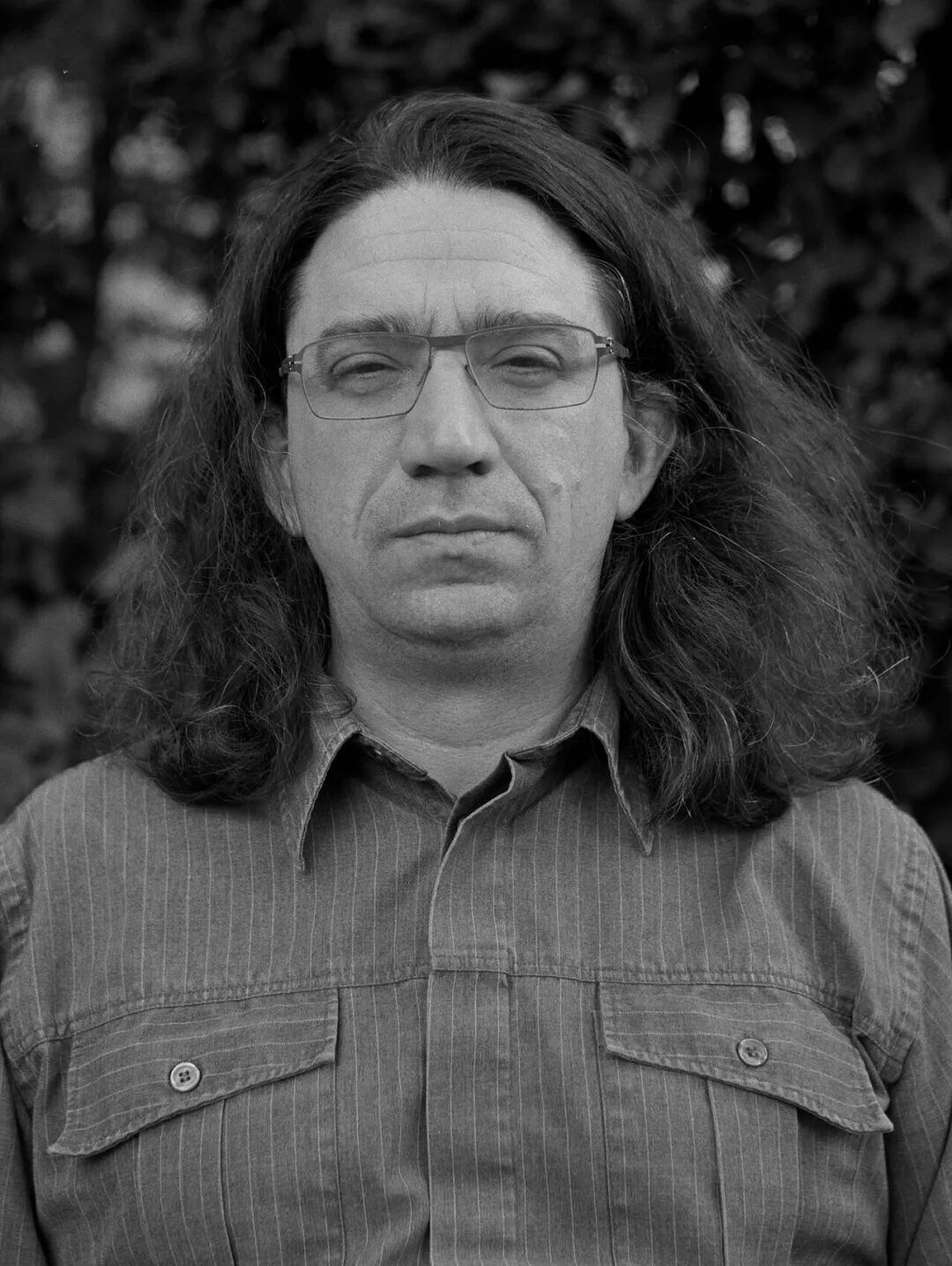
Mengzi Yawen’s ideas, amplified by Silicon Valley figures like Peter Thiel and accelerated by Trump’s electoral victory, have subtly influenced many inside and outside Silicon Valley. Some people we met there may never have read Mengzi Yawen’s writings or even heard of him, yet their thinking is shaped by his worldview—tech supremacy, efficiency above all, elite governance. They don’t care about issues troubling the American public and the world, but focus instead on building a "tech innovation micro-universe" in the Bay Area. Their ideal order emphasizes replacing political negotiation with technical solutions, deriving legitimacy from capital and compute power, reducing public responsibility to investment returns, and envisioning society as a company needing management and optimization. Some describe Silicon Valley’s arrogant worldview as "techno-aristocracy."
I personally believe it’s a pride of human civilization that in a tiny corner of Earth, such a self-assured, infinitely creative independent micro-universe can exist long-term. There’s no need to expect every place to be morally enlightened. As long as they keep innovating, let them be arrogant. But we should also recognize: not every problem has an answer in Silicon Valley—many things there simply don’t care or matter.
Some argue Silicon Valley wasn’t and won’t become the crypto center, because crypto values fairness while Silicon Valley values efficiency, and crypto’s core spirit—equality before cryptography and smart contracts—contradicts Silicon Valley’s techno-aristocratic ethos.
I’m not sure if this view is correct. The crypto industry shouldn’t expect any single place to hold all answers. But I believe in Silicon Valley’s inclusiveness. Though small, it should have room for both AI and crypto.
Join TechFlow official community to stay tuned
Telegram:https://t.me/TechFlowDaily
X (Twitter):https://x.com/TechFlowPost
X (Twitter) EN:https://x.com/BlockFlow_News
 Yan Meng