How much money can you make in the crypto space to change your life?
TechFlow Selected TechFlow Selected
How much money can you make in the crypto space to change your life?
The true "win" lies in knowing when to stop.
 Navigating Web3 tides with focused insights
Author: 2Lambroz
Translation: Saoirse, Foresight News
A few days ago, a friend asked me: "Do you think $200,000 can change your life?"
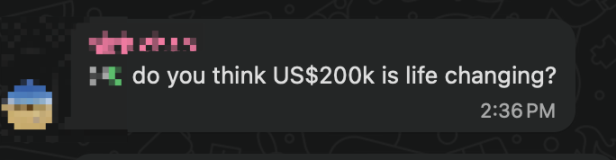
For some people, the answer is yes; for others, it's hardly significant. It's precisely this gap in perception that leaves most of us confused—because we’ve never clearly defined what “life-changing money” or “financial freedom money” truly means to us.
I’m going to tell a story: about my friend’s unexpected windfall, and about a poker player who, with clear goals and disciplined restraint, chose to fold his “pocket Aces” (an extremely strong starting hand in poker).

At first, I didn’t take it seriously and casually replied, "$200,000 is decent money, but not life-changing."
My friend immediately interrupted: "You’re being overly unrealistic because of the crypto circle."
He was right. In the cryptocurrency world, people talk about million-dollar gains and losses as casually as pocket change. This environment distorts your perception, making you feel like “any amount under seven figures isn’t worth mentioning.”
But step outside this bubble and you’ll realize: $200,000 can help someone pay off debts, cover part of a mortgage, or buy several years of “breathing room”—a period free from financial stress. That kind of money truly can change a life.
To understand this, you need to answer three key questions:
-
How much do you need?—The amount required to cover living expenses, debts, and emergency reserves.
-
How much do you want?—The amount that improves your quality of life, allows for comfort, or means “never worrying about bills again.”
-
How much can you realistically earn?—Based on your income, savings rate, and actual advantages within the crypto space.
For a teacher earning $80,000 a year, a one-time gain of $200,000 is absolutely life-altering;
For a banker earning $200,000 annually, this sum is great, but not transformative;
And for someone making seven figures a year, $200,000 might just be another day’s profit from a routine trade.
"Life-changing money" is never an absolute number—it always depends on your personal baseline and mindset.

The Psychology of "Enough"
Here’s a cognitive trap: human desires keep escalating.
When you make $200,000, your mental target suddenly jumps to $500,000; when you hit $500,000, you start thinking $2 million is the real threshold. Cryptocurrency amplifies this mindset because gains can come so explosively: you wake up in the morning feeling like your life has changed, only to be back at square one by nightfall.
It’s like playing poker: sometimes folding “pocket aces” (a very strong hand) seems absurd, but stubbornly chasing even bigger wins in the next round could leave you losing everything.
The real risk isn’t “losing”—it’s never realizing you’ve already won.
Think in Ranges, Not Absolute Numbers
Instead of seeing “life-changing money” as a binary, black-or-white concept, view it as a gradient range:
-
Life-improvement tier: Money that brings small joys and enhances daily comfort.
-
Life-changing tier: Money that resets your baseline and fundamentally improves your circumstances.
-
Financial freedom tier: Money that gives you full autonomy over your life, eliminating compromise.
Which level do you truly want to reach? And which can you realistically achieve? Without clarity, you’ll keep playing by others’ rules, blindly chasing arbitrary targets.
Trading Time for Money
Adopt a clearer perspective: don’t just focus on the “amount,” but on how much “time” that money can buy you.
-
$200,000 today might buy you 3–5 years of “buffer time”—freedom from financial pressure, time to plan your next move;
-
Or you might choose to gamble, trying to turn $200K into $2M, and end up with nothing.
In crypto, “get rich overnight” stories are common, but the real challenge lies in turning fleeting gains into sustainable security. Measuring success by “how much free time you’ve earned” rather than “how many digits are in your account” keeps you grounded and focused.

Lessons from Poker
A poker tournament video made this lesson real for me.
David Fishman, originally a teacher, entered a high-stakes poker game. He was dealt “pocket aces”—one of the strongest starting hands—but before the flop, he chose to fold (video at 19:00 shows this moment).
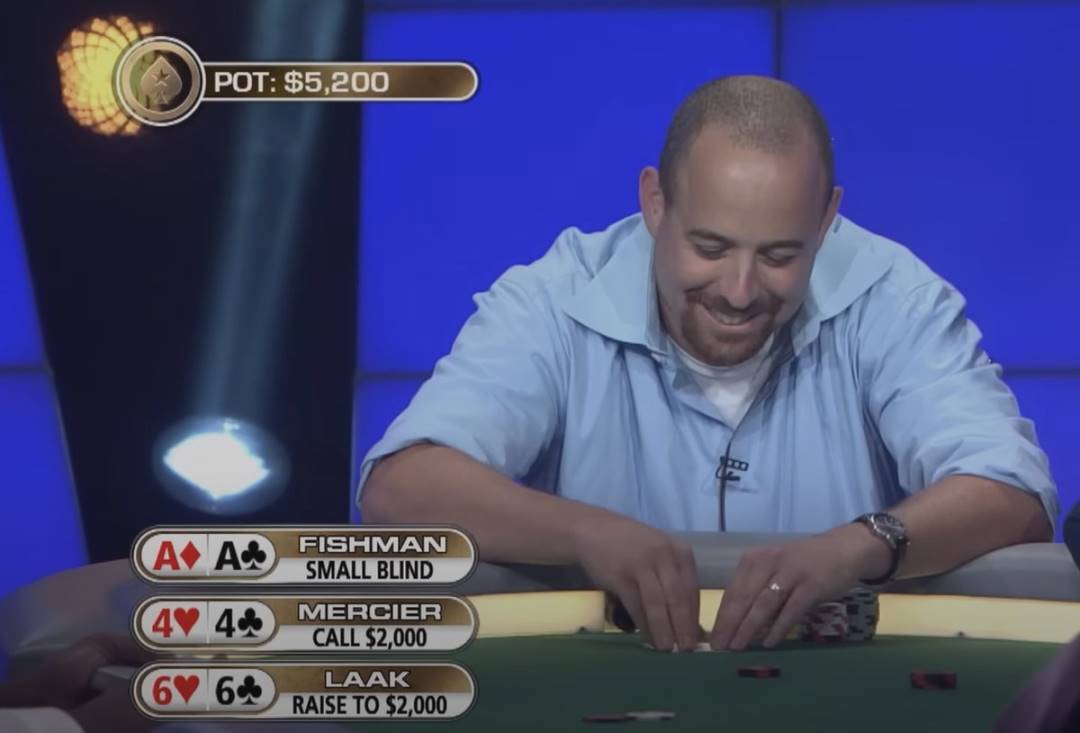
Everyone thought he’d gone crazy—until the flop revealed the other player held “four sixes,” a hand that easily beats pocket aces. If Fishman had stayed in, he would have lost badly. Folding pocket aces seemed irrational, but that decision preserved his existing winnings.
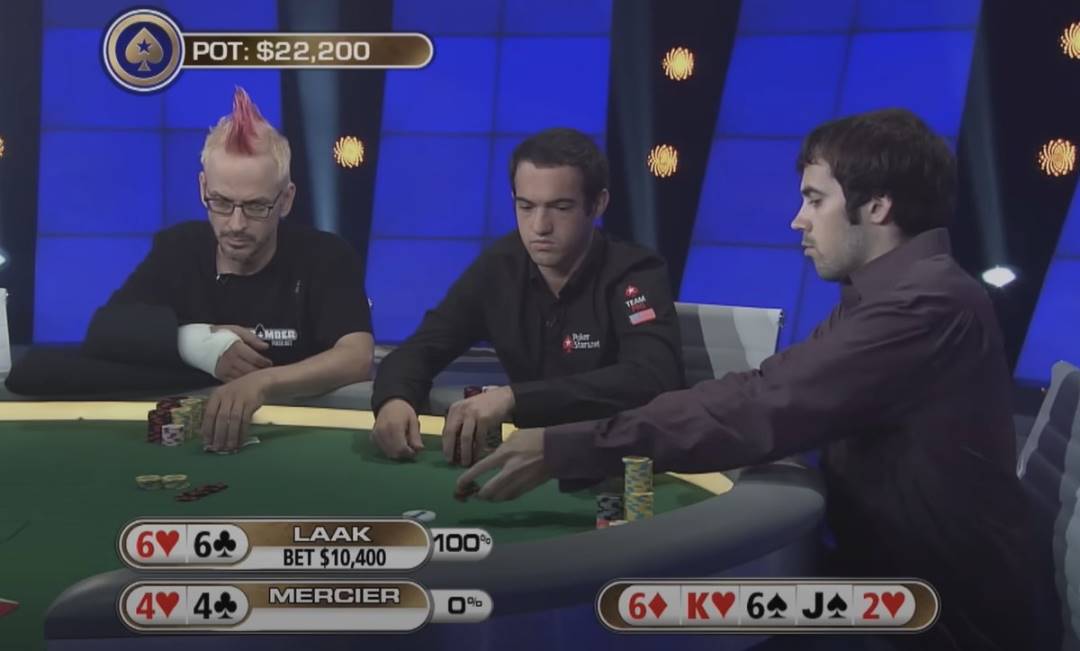
Why did he fold? Because he had already set a clear “target amount.” At that point, his profits were triple his annual teaching salary. To him, this was “life-changing money.” He didn’t want to risk losing funds that could transform his life just to “prove he could play poker.” He knew exactly what he wanted: secure the win, go home to his family, and lock in the gains.

This clarity of purpose was his greatest advantage.
Conclusion
The crypto world is like an endless poker game: everyone wants to play the next round, chasing bigger rewards. But true winning means knowing when to stop—not necessarily forever, but with a clear strategy in place.
Life improvement, life transformation, financial freedom—first decide which level you’re aiming for, then define your “target amount.”
If you don’t define it yourself, the market will decide for you—and that outcome is rarely kind.
Join TechFlow official community to stay tuned
Telegram:https://t.me/TechFlowDaily
X (Twitter):https://x.com/TechFlowPost
X (Twitter) EN:https://x.com/BlockFlow_News
 2Lambroz.eth