Jack Dorsey: The Man Reshaping Global Communication
TechFlow Selected TechFlow Selected
Jack Dorsey: The Man Reshaping Global Communication
"Bitcoin changed everything completely," he declared in 2018.
 Navigating Web3 tides with focused insights
By: Thejaswini M A
Translation: Block unicorn
Silence filled the conference room. In October 2008, Jack Dorsey looked around the table at Twitter’s board members, searching for an ally—but found none.
Evan Williams avoided eye contact. Venture capitalists spoke cautiously of “operational challenges” and “management issues.”
The platform frequently crashed. Employees complained he left early for yoga class. The board had lost confidence in him.
Fred Wilson delivered the verdict: they wanted new leadership. Williams would take over as CEO. Dorsey could remain chairman, but his day-to-day control over Twitter was over.
He didn’t argue. At 31, he’d never run a company of this scale—the pressure was suffocating. But as he walked out of the building that housed his creation, a sharp pain pierced through him. This platform had originated from his teenage fascination with dispatch communications. Now, that vision belonged to someone else.
Being fired from the company he founded taught him lessons no business school ever covered. For Dorsey, this was just the beginning.
Getting Hired Through Hacking
Jack Patrick Dorsey grew up in a Catholic working-class family in Missouri. His father built mass spectrometers; his mother ran a café. Young Jack suffered from a speech disorder and spent much time indoors, where he became immersed in computers and communication systems.
Dorsey wrote dispatch software. Real taxi companies used his code to coordinate their fleets, solving real-world problems for actual businesses.

His obsession wasn’t accidental. Dorsey had realized the immense power of short, frequent updates in coordinating complex systems. Emergency dispatchers didn’t waste time—clarity saved lives. What if that same efficiency could improve everyday communication?
At Bishop DuBourg High School, he worked part-time as a fashion model. After school, he hacked into systems—not to destroy them, but to understand how they worked.
A life-changing hack happened when he was 16. Dispatch Management Services had built a website but omitted contact information. When Dorsey discovered a security flaw, he didn’t exploit it—he emailed the company’s president, explaining the vulnerability and how to fix it.
Dorsey used the opportunity to start a conversation.
President Greg Kidd decided to hire him within a week. A teenager from Missouri was now working for a logistics firm in Manhattan, learning how to coordinate transportation and resources in real time.
At 14, his dispatch software was already being used by taxi companies. At 18, he dropped out of New York University one semester before graduation—his mind too full of ideas to wait for a diploma.
What if people could send brief status updates to friends, just like dispatchers reporting their location and activity? What if you could know everyone’s current status across your network without making calls or writing long emails?
A Platform That Swept the Globe
In 2000, Dorsey moved to California to launch a company focused on web-based dispatching for couriers and emergency services. The venture failed. Over the next five years, he worked as a freelance programmer, refining his ideas while waiting for the right moment.
That moment came in 2006, when he joined the struggling podcasting company Odeo. During a brainstorming session, Dorsey pitched his idea of status updates—a platform combining the broadcast nature of blogs with the immediacy of instant messaging.
Teaming up with Noah Glass and Biz Stone, Dorsey built Twitter’s first prototype in two weeks. The name “twttr” followed the five-character SMS shortcode format, inspired by Flickr.
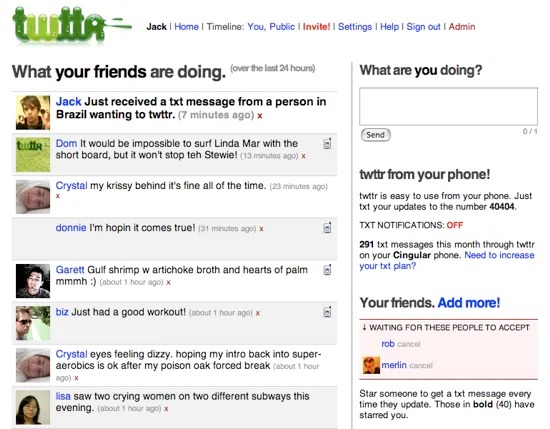
On March 21, 2006, at 9:50 PM, Dorsey sent the first tweet: “just setting up my twttr.”
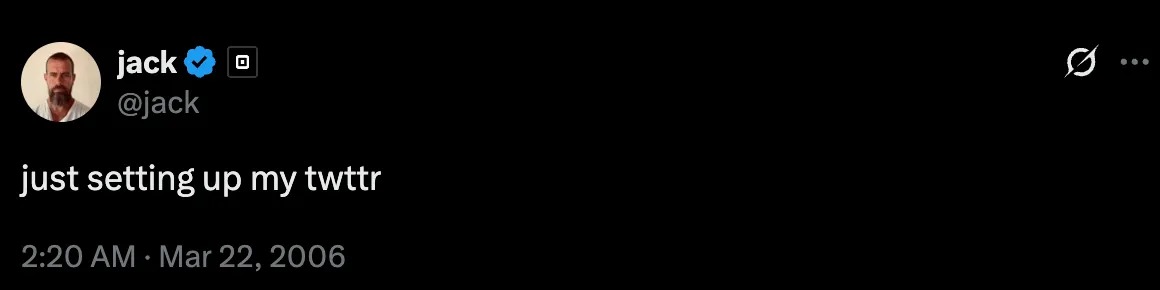
Those 24 characters changed how millions communicate.
Twitter’s breakthrough came at the 2007 South by Southwest festival. Attendees used the service to coordinate meetups and share live updates. Daily tweets surged from 20,000 to 60,000 during the event. Dorsey’s teenage intuition about status updates proved correct.
But success brought challenges he wasn’t ready for. As CEO from 2007 to 2008, Dorsey struggled with Twitter’s operational demands. The service crashed often. Employees criticized his management style. Reports surfaced of him leaving early for yoga and fashion design classes.
The board lost patience.
October 2008 arrived like judgment day. They fired him from his own creation. Co-founder Evan Williams took over. Dorsey kept the title of chairman, but everyone knew the truth. The boy genius who conceived Twitter was deemed unfit to run it.
The lesson was painful but clarifying. Dorsey could build products people loved, but he hadn’t yet learned how to build organizations capable of scaling.
Instead of retreating, he transformed.
His former boss, Jim McKelvey, had recently lost a sale of glass art because he couldn’t accept credit card payments. Millions of small business owners, like McKelvey, were equally frustrated at being excluded from merchant services.
Their solution was a small, square device that plugged into a smartphone’s headphone jack. Anyone could accept credit card payments anywhere. The first Square reader cost just $10, turning every phone into a point-of-sale system.
Square embodied the same philosophy as Twitter: removing barriers, democratizing access. If Twitter gave everyone a broadcast platform, Square gave every entrepreneur the payment-processing capabilities once reserved for large corporations.
The company officially launched in 2010.
This time, Dorsey applied the lessons from Twitter. He built stronger operational systems, hired experienced managers, and focused on sustainable growth rather than viral spikes.
By 2015, Twitter was floundering under new leadership. User growth stalled, and its stock price fell. Competitors like Facebook and Instagram captured more attention.
The board asked Dorsey to return as CEO—but with an unprecedented condition: he must continue serving as Square’s CEO. Critics questioned whether anyone could effectively lead two major public companies simultaneously.
He maintained offices at both companies, scheduled his days down to the minute, and relied on leadership teams for strategic direction.
The arrangement worked. Twitter stabilized. Square continued growing and went public in November 2015. Both companies benefited from Dorsey’s design sensibility and his ability to simplify complexity and seek elegant solutions.
The ousted CEO had learned to become a leader.
Building the Money of the Future
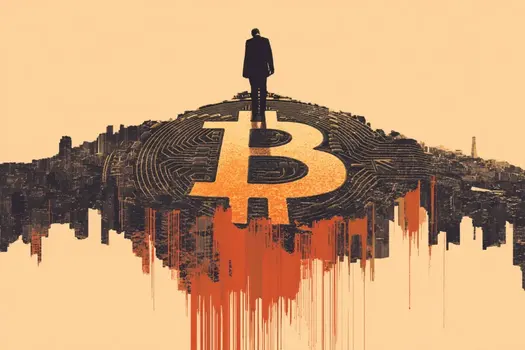
During his career reinvention, Dorsey discovered Bitcoin. The cryptocurrency embodied principles he had learned from dispatch systems: decentralization, peer-to-peer communication, and eliminating intermediaries.
“Bitcoin changed everything,” he declared in 2018. If he weren’t managing Twitter and Square, he said, he’d work on Bitcoin full time.
He didn’t stop at verbal support. In 2020, Square invested $50 million in Bitcoin, followed by another $170 million. Through Square’s Cash App, he made Bitcoin accessible to millions who had never owned cryptocurrency.
Dorsey also created Spiral, a division funding open-source Bitcoin development. Unlike most corporate crypto projects driven by profit, Spiral’s mission was altruistic: improving Bitcoin’s infrastructure for everyone.
But during his second tenure as Twitter CEO, platform moderation intensified. The 2016 election revealed how foreign actors exploited Twitter to spread misinformation. Congressional hearings and advertiser boycotts became routine.
After the 2020 election, tensions peaked. Twitter began labeling controversial tweets and ultimately suspended high-profile accounts—including President Trump—after the January 6 Capitol riot.
Dorsey defended these decisions as necessary, yet acknowledged their impact. “I believe this is the right decision for Twitter,” he wrote regarding Trump’s suspension. “But I also believe it's important to examine the broader implications of this action on global public conversation.”
This experience strengthened his growing conviction: centralized platforms held too much power. He began funding research into decentralized alternatives, including Bluesky, a Twitter-supported project developing an open social media protocol.
On November 29, 2021, Dorsey stepped down as Twitter CEO for the second time. His resignation letter explained why: “I’ve decided to leave Twitter because I believe the company is ready to move on from its founders.”
Unlike his first departure, this exit was voluntary and planned. He prepared his successor, CTO Parag Agrawal, believing Twitter needed leadership unburdened by the founder’s legacy.
Less than a year later, Elon Musk acquired Twitter for $44 billion and began implementing his own vision. Dorsey retained a 2.4% stake but made almost no public comments about the changes.
After leaving Twitter, Dorsey became a vocal advocate for decentralization. He donated 14 Bitcoin to support Nostr, a decentralized social networking protocol requiring no central server or corporate control.
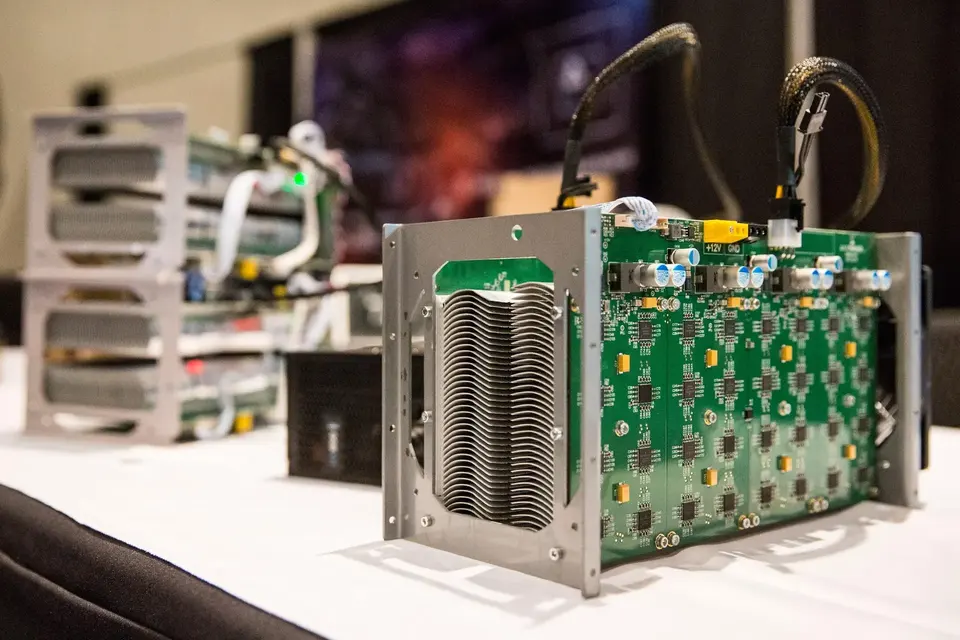
At Block, he doubled down on Bitcoin initiatives. The company developed a 3-nanometer Bitcoin mining chip and launched Bitkey, a self-custody wallet designed for mainstream users. Block’s mining hardware features modular design with an expected lifespan of ten years—far beyond the industry standard of three to five.
Today, Dorsey stands at the intersection of technology and ideology. Through Block, he’s building financial infrastructure for a post-traditional banking world. Through Bitcoin advocacy and Nostr funding, he’s advancing alternatives to existing internet platforms.
Running through it all is his belief that individuals should control their financial and digital lives. Bitcoin removes reliance on banks and governments. Nostr removes reliance on platform companies. Self-custody wallets remove reliance on exchanges.
These are expressions of a political philosophy that values individual sovereignty over institutional control.
Dorsey remains focused on the future, just as he was when dreaming of real-time city maps. His current projects reflect his belief that the most important internet infrastructure is still being built.
The police scanners that first inspired him continue to shape his thinking about communication. The best information is concise, clear, and actionable.
They tell you where someone is, and where they’re going.
Everything else is noise.
Dorsey’s achievements extend beyond Twitter or Block. He has shown that complex systems can be simplified without losing functionality.
The scanner still crackles. He’s still listening. He’s still building a map of what’s happening in real time.
Join TechFlow official community to stay tuned
Telegram:https://t.me/TechFlowDaily
X (Twitter):https://x.com/TechFlowPost
X (Twitter) EN:https://x.com/BlockFlow_News