









Why do we need "DeFi"?
TechFlow Selected TechFlow Selected
Why do we need "DeFi"?
DeFi's architecture unlocks new financial freedom, breaking down barriers of geography, identity, and institutions.
 Navigating Web3 tides with focused insights
Author: zacharyr0th, Aptos Labs
Translation: Alex Liu, Foresight News
Real-World Use Cases of DeFi
-
Traditional banking remains the foundation of finance but has long been plagued by systemic risks, regulatory failures, and conflicts of interest.
-
Decentralized finance (DeFi) offers permissionless access to financial tools—enabling censorship-resistant operations, borderless use of stablecoins, and transparent yield generation.
-
The future of finance will emerge from a pragmatic integration between traditional institutions and decentralized infrastructure.
The global financial system is built on a vast network of intermediaries processing trillions of dollars in transactions daily. While this architecture has historically supported global trade and capital flows, it also introduces bottlenecks, inefficiencies, and systemic risks.
Despite technological progress, traditional institutions remain deeply entrenched—not only operationally, but also politically and socially. Some are deemed "too big to fail," while others collapse silently. Despite their prestigious reputations, many institutions have histories marred by regulatory violations and unresolved conflicts of interest.
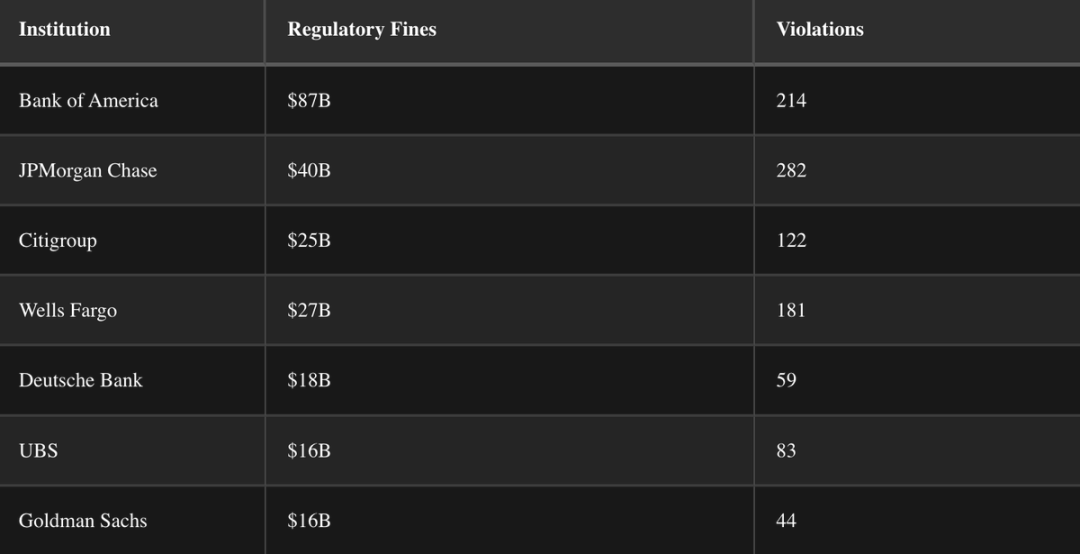
These phenomena reflect a deep systemic issue—not merely insufficient regulation, but a fundamental design flaw.
Worse still, the boundary between regulators and the regulated is often blurred. Former SEC Chair Gary Gensler worked at Goldman Sachs for 18 years before regulating Wall Street; Federal Reserve Chair Jerome Powell accumulated substantial investment banking wealth prior to setting monetary policy; former U.S. Treasury Secretary Janet Yellen received over $7 million in speaking fees from financial institutions she later oversaw.
To be sure, expertise across public and private sectors can be compatible, but this "revolving door" phenomenon is hardly new—it has nearly become the norm.
Mission and Mechanism of Central Banks
In 1913, following a series of bank runs, the Federal Reserve was established. Designed by financiers like J.P. Morgan, the Fed is a quasi-governmental institution: theoretically accountable to Congress, yet independently operated in practice.
In 1977, the Fed's dual mandate was formally codified:
-
Maximize employment
-
Maintain price stability (currently interpreted as approximately 2% inflation)
While monetary policy continues evolving, its core tools remain unchanged: interest rate adjustments, balance sheet expansion, and open market operations.
Since 2012, the Fed has explicitly targeted a 2% annual inflation rate—a goal with wide-ranging implications for asset valuations and dollar purchasing power. From a long-term historical perspective, interest rates have shown a steady downward trend.
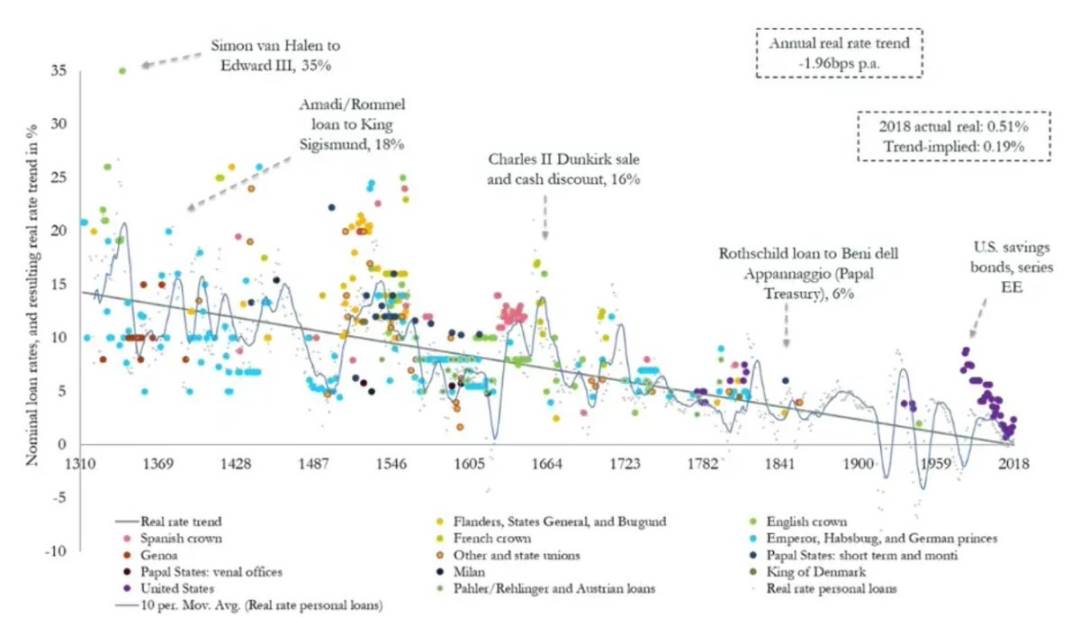
As financial systems grow increasingly complex and interconnected, borrowing costs continue to decline.
Value and Perception
Since 2008, the correlation between the Federal Reserve's balance sheet and the S&P 500 index has strengthened, raising questions about the long-term effects of monetary expansion.
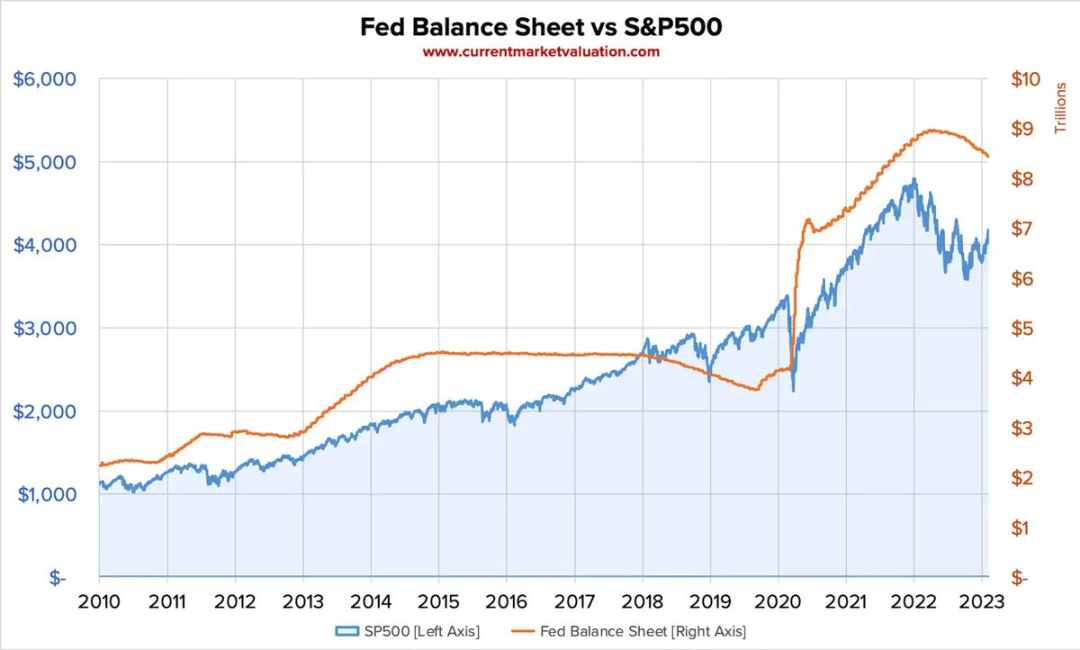
Some argue that due to its global dominance, the U.S. can "print money freely" with minimal consequences; the dollar's reserve currency status and global trust in American institutions provide a buffer against inflationary erosion. But not all nations enjoy this privilege. Across much of the world—especially where goods and services aren't priced in USD or EUR—DeFi isn't an option, it's a necessity.
In developed economies, people may debate the theoretical benefits of decentralization; but for billions in developing regions, the challenges are real and urgent: currency devaluation, capital controls, lack of banking infrastructure, political instability. These demand solutions beyond the traditional system.
Stablecoins and Inflation Resistance
Between 2021 and 2022, Turkey experienced severe economic turmoil, with year-on-year inflation reaching as high as 78.6%.
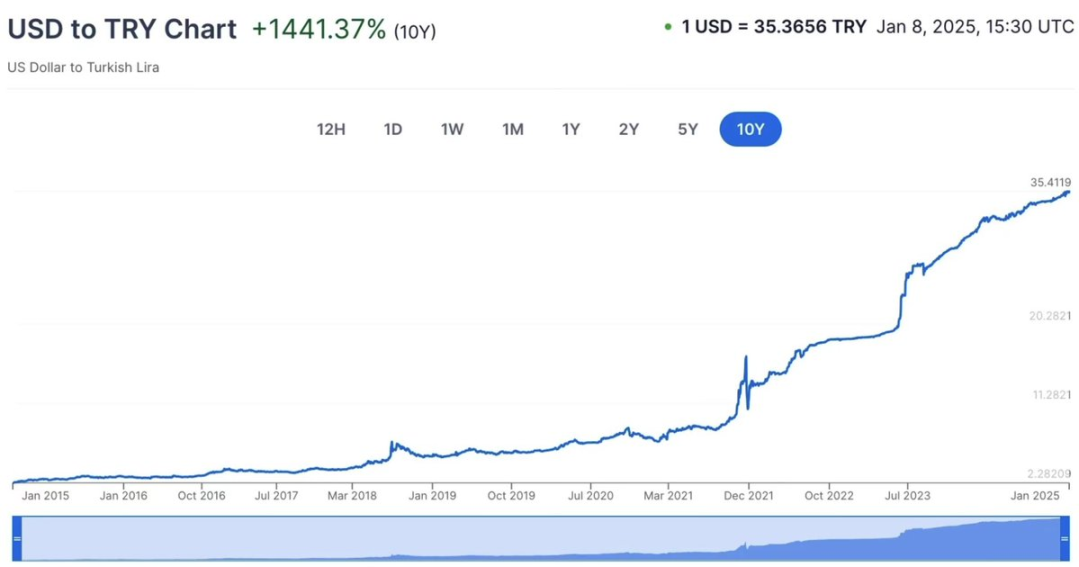
For ordinary citizens, local banks offered no effective remedies—but DeFi did. Through stablecoins and non-custodial wallets, individuals could preserve asset value, conduct global transactions, and bypass unjust capital controls—all using open-source tools accessible to anyone.
These wallets require no bank account, no cumbersome paperwork—only a private key or seed phrase to access on-chain assets.
Censorship Resistance
Numerous truckers protesting along the U.S.-Canada border had their bank accounts frozen by authorities, leaving them unable to repay loans or purchase basic necessities—even though they hadn’t violated any specific laws.
In centralized systems, financial autonomy is not guaranteed. DeFi offers an alternative model: open infrastructure governed by code rather than regional policies.
Yield and Innovation
DeFi protocols have redefined financial primitives—lending, trading, insurance—though these innovations come with new risks.
Some protocols collapsed, bad actors were exposed, but the market naturally filters sustainable innovation. Survivors—such as automated market makers (AMMs) and liquidity pools—represent best practices in DeFi: building transparent, permissionless infrastructure that distributes transaction fees to liquidity providers, rather than concentrating market-making profits among a few gatekeepers.
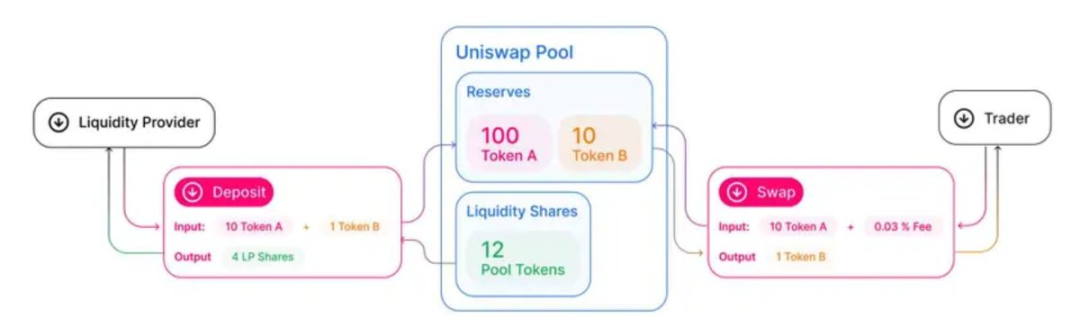
This stands in stark contrast to traditional finance, where market access—especially market-making—is highly restricted and opaque.
A Balanced Future
At least in the short term, the future of finance won't be fully decentralized or fully centralized, but hybrid. DeFi isn't meant to replace traditional finance entirely, but it does fill critical gaps left unaddressed by legacy systems: accessibility, censorship resistance, transparency. In economies suffering from regional inflation or financial repression, DeFi is already solving everyday problems.
In countries like the U.S., where banking systems are more secure, DeFi’s value proposition holds—but largely in theory. For most people in stable economies, traditional banks still offer convenience, consumer protection, and reliability that DeFi has yet to fully match. Once legacy financial infrastructure upgrades to blockchain-based settlement layers, this vision will gradually become reality.
Until then, some will pursue financial sovereignty, some entrepreneurs will build at the frontier, and some sophisticated capital will leverage DeFi primitives for higher risk-adjusted returns—alongside, of course, plenty of meme coins and airdrops.
What Others Say?
"The goal of DeFi is not to oppose traditional finance, but to build an open, accessible financial system that complements existing infrastructure." — Vitalik Buterin, co-founder of Ethereum
"DeFi protocols represent a paradigm shift in financial infrastructure, offering programmable, transparent alternatives to traditional financial services." — Dr. Fabian Schär, Professor of Distributed Ledger Technology at the University of Basel
"While DeFi platforms may offer promising technological innovations, they must still operate within a framework that protects investors and maintains market integrity." — Former U.S. SEC Chair Gary Gensler
Why DeFi Matters
In a world of economic volatility and eroding institutional trust, decentralized systems are increasingly demonstrating their ability to enhance traditional payments and financial operations through the novel properties of blockchain.
DeFi’s architecture—permissionless, global, transparent—unlocks new financial freedoms, breaking down barriers of geography, identity, and institutional gatekeeping. Smart contracts automate complex processes, reduce costs, and eliminate friction—capabilities that traditional infrastructure simply cannot match.
Risks remain, but progress is underway.
Join TechFlow official community to stay tuned
Telegram:https://t.me/TechFlowDaily
X (Twitter):https://x.com/TechFlowPost
X (Twitter) EN:https://x.com/BlockFlow_News
 @AptosLabs






