Almanak Research Report: The Inclusive Path of On-Chain Quantitative Finance
TechFlow Selected TechFlow Selected
Almanak Research Report: The Inclusive Path of On-Chain Quantitative Finance
The speed of ecosystem expansion, evolution of the competitive landscape, and stability of technology implementation will be the three core variables determining its ability to maintain long-term leadership.
 Navigating Web3 tides with focused insights
Author: 0xjacobzhao and ChatGPT 5
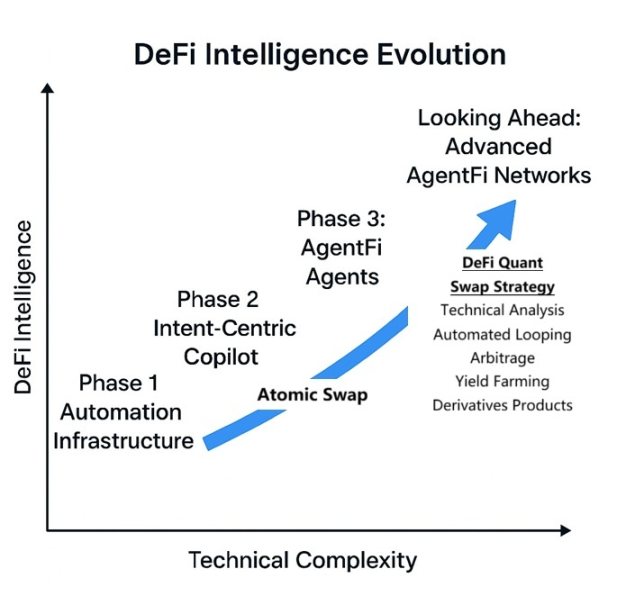
In the report "The Intelligent Evolution of DeFi: From Automation to AgentFi", we systematically reviewed and compared three stages in the intelligent development of DeFi: automation tools (Automation), intent-centric copilots, and AgentFi (on-chain agents). We pointed out that a significant portion of current DeFAI projects still primarily focus on "intent-driven + single atomic interaction" Swap transactions. These interactions, which do not involve continuous yield strategies and require neither state management nor complex execution frameworks, align better with lightweight intent assistant models and cannot be strictly classified as AgentFi.
Within our high-level vision for the future of AgentFi, beyond lending and yield farming—two near-term, high-value, and easily implementable use cases—Swap-based strategy combinations also represent a promising direction. When multiple Swaps are combined sequentially or conditionally, they form "strategy chains", such as arbitrage or yield arbitrage. This model requires state machine management of positions, conditional triggers, and multi-step automated execution, embodying the full closed-loop characteristics of AgentFi—Perceive → Decide → Execute → Rebalance.
1. DeFi Quantitative Strategy Landscape and Feasibility Analysis
Traditional quantitative finance relies on mathematical models, statistical methods, and algorithms, using historical prices, trading volumes, macro indicators, and other data for data-driven decision-making. It achieves low-latency, high-frequency, automated trading through programmatic execution, supported by strict risk controls (stop-loss, position management, VaR, etc.). Its main applications include high-frequency trading (HFT), trend following and mean reversion (CTA), cross-market/cross-asset arbitrage, and derivatives pricing and hedging, forming mature infrastructure, exchange systems, and data ecosystems in traditional markets.
On-chain quantitative finance inherits the logic of traditional quant but operates within blockchain's programmable market structure. Data comes from on-chain transaction records, DEX quotes, and DeFi protocol states; execution occurs via smart contracts (AMMs, lending, derivatives protocols); transaction costs include gas fees, slippage, and MEV risks; and the composability of DeFi protocols enables automated strategy pipelines.
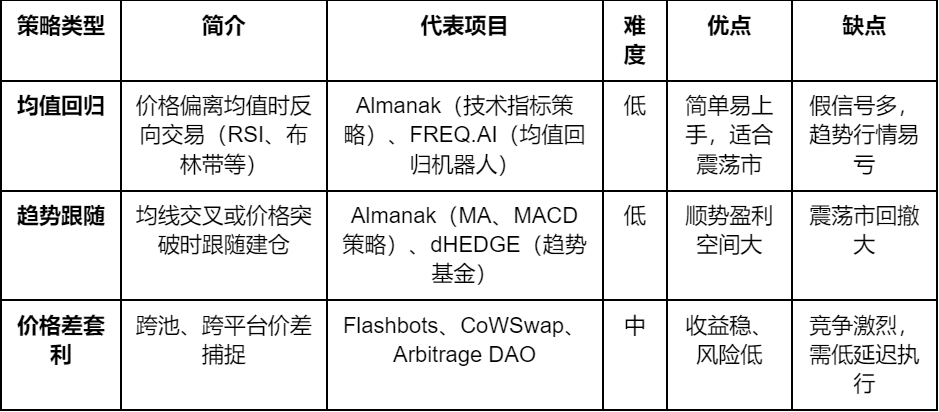
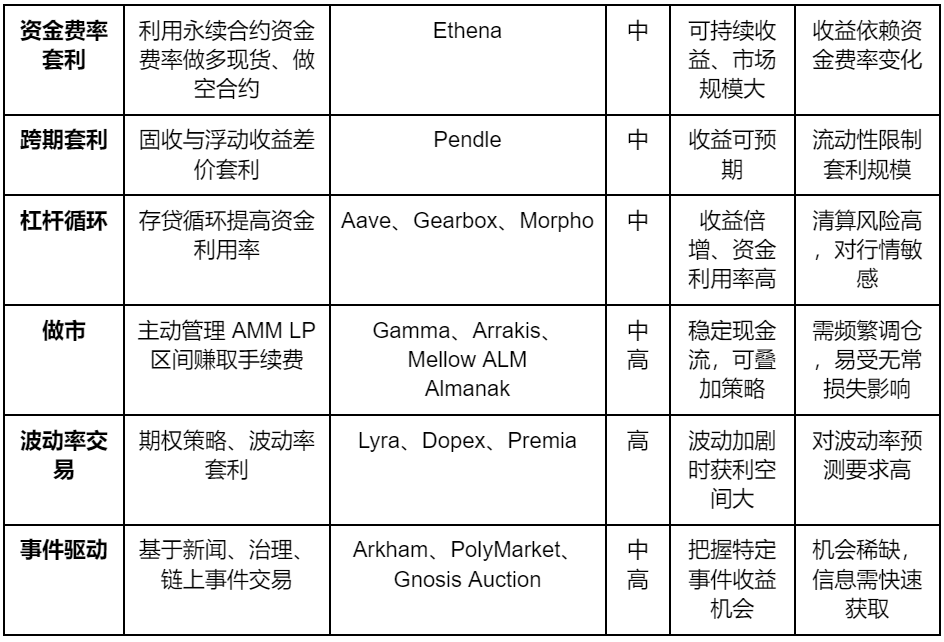
Current on-chain quantitative finance remains in its early stages, constrained by multiple factors that hinder the implementation of complex strategies: first, market structure limitations—insufficient liquidity depth and AMMs lacking ultra-fast matching mechanisms restrict the feasibility of high-frequency and large-volume trading; second, execution and cost challenges—block confirmation delays and high gas fees make frequent trading unprofitable; third, data and tooling gaps—underdeveloped development and backtesting environments, along with limited data dimensions, lack multi-source inputs like corporate financials or macroeconomic data. Among currently feasible DeFi quant strategies, mainstream directions include:
-
Mean reversion / trend following — making buy/sell decisions based on technical indicators (e.g., RSI, moving averages, Bollinger Bands);
-
Yield futures arbitrage — represented by protocols like Pendle, profiting from fixed vs. floating yield differentials;
-
Market making + dynamic rebalancing — actively managing AMM liquidity ranges to earn fees;
-
Leveraged yield looping — enhancing capital efficiency via lending protocols.
Potential future growth areas include:
-
Maturity of on-chain derivatives markets, especially options and perpetual contracts;
-
More efficient off-chain data integration via decentralized oracles to enrich model inputs;
-
Multi-agent collaboration enabling automated execution and risk balancing across multi-strategy portfolios.
2. Almanak’s Positioning and Vision: Exploring AgentFi for On-Chain Quant Finance
In previous Crypto AI reports, we introduced many outstanding AgentFi projects, most of which remain focused on intent-driven DeFi execution, lending, or fully automated liquidity management. Few teams have deeply explored quantitative trading strategies. Currently, Almanak is almost the only project explicitly targeting quant trading as its core mission. It enters the space with no-code quant strategy development, offering a complete toolkit covering strategy coding (Python), deployment, execution, permission management, and vaultization (Vault), giving it a unique positioning within the AgentFi landscape and making it a representative case for on-chain quantitative finance.
In traditional finance, Inclusive Finance aims to lower participation barriers and serve more long-tail users. Almanak extends this philosophy to the blockchain, aiming to democratize access to quant trading capabilities. By leveraging AI-powered agent execution, the platform significantly reduces capital, technical, and time costs, providing end-to-end support—from strategy ideation to on-chain execution—for active DeFi traders, financial developers, and institutional investors. Ordinary users without technical backgrounds can now participate in crypto asset trading and yield optimization using fully automated, transparent, customizable quant strategies.
Almanak introduces AI multi-agent collaboration (Agentic Swarm), enabling users to rapidly create, test, and deploy Python-based automated financial strategies in a no-code environment while ensuring non-custodial, verifiable, and scalable execution. Through modules like State Machine strategy framework, Safe+Zodiac permission management, multi-chain protocol integration, and Vault asset custody, Almanak maintains institutional-grade security and scalability while dramatically lowering the barrier to strategy development and deployment. This report will systematically analyze its product architecture, technical features, incentive mechanisms, competitive positioning, and future roadmap, exploring its potential value in inclusive finance and on-chain quant domains.
3. Almanak’s Product Architecture and Technical Features
Almanak’s product architecture follows the flow “Strategy Logic → Execution Engine → Security → Assetization & Expansion”, building a full-stack system for AI agent-driven on-chain quant finance. Within this system, the Strategies module provides a framework for developing and managing strategies from concept to execution, currently supporting a Python SDK with future natural language generation support; Deployments acts as the execution engine, autonomously running strategy logic within authorized boundaries and enabling adaptive optimization via AI decision-making; Wallets ensures fund and permission security through a non-custodial Safe + Zodiac architecture, delivering institutional-grade key management and granular access control; Vaults transforms strategies into tokenized financial products via standardized vault contracts (ERC-7540), enabling capital raising, profit distribution, and strategy sharing—granting full composability and seamless integration into the broader DeFi ecosystem.
1. Strategy Infrastructure (Strategies)
Almanak’s strategy infrastructure covers the entire pipeline from ideation to execution, including Ideation, Creation, Evaluation, Optimization, Deployment, and Monitoring. Compared to traditional quant stacks, it differs in three key aspects: first, it's designed for AI agent-led strategy development rather than human-operated workflows; second, it incorporates Trusted Execution Environments (TEE) to protect strategy alpha privacy; third, it adopts a non-custodial execution model using Safe Wallet + Zodiac permission management, ensuring secure and controllable fund and execution at the foundational level.
Core Features
-
Python-based: written in Python, offering highly flexible and powerful programming capabilities.
-
State Machine Architecture: enables complex decision trees and branching logic based on market conditions.
-
High Reliability: runs on Almanak’s dedicated infrastructure with comprehensive monitoring and failover mechanisms.
-
Default Privacy: all strategy code is encrypted, protecting users’ proprietary trading logic.
-
Abstracted Transaction Logic: no need to handle low-level blockchain interactions, wallet management, or transaction signing directly.
Under this architecture, the strategy framework is built on a persistent state machine design, fully encapsulating on-chain interaction and execution layers. Users only need to write business logic within the Strategy component. Developers can either perform highly customized Python development via SDK or, in the future, use a natural language strategy generator to describe goals in English—after which a multi-agent system will generate code for user review. Users retain full autonomy to approve, reject, or modify strategies before deployment, choosing whether to publish them as standalone strategies or Vaults. Vaults can also implement whitelist-based access control, offering controlled entry for institutions or liquidity funds. Strategy code is stored encrypted by default to protect proprietary logic; underlying transaction construction, signing, and broadcasting are handled officially, ensuring high reliability and consistency in execution.
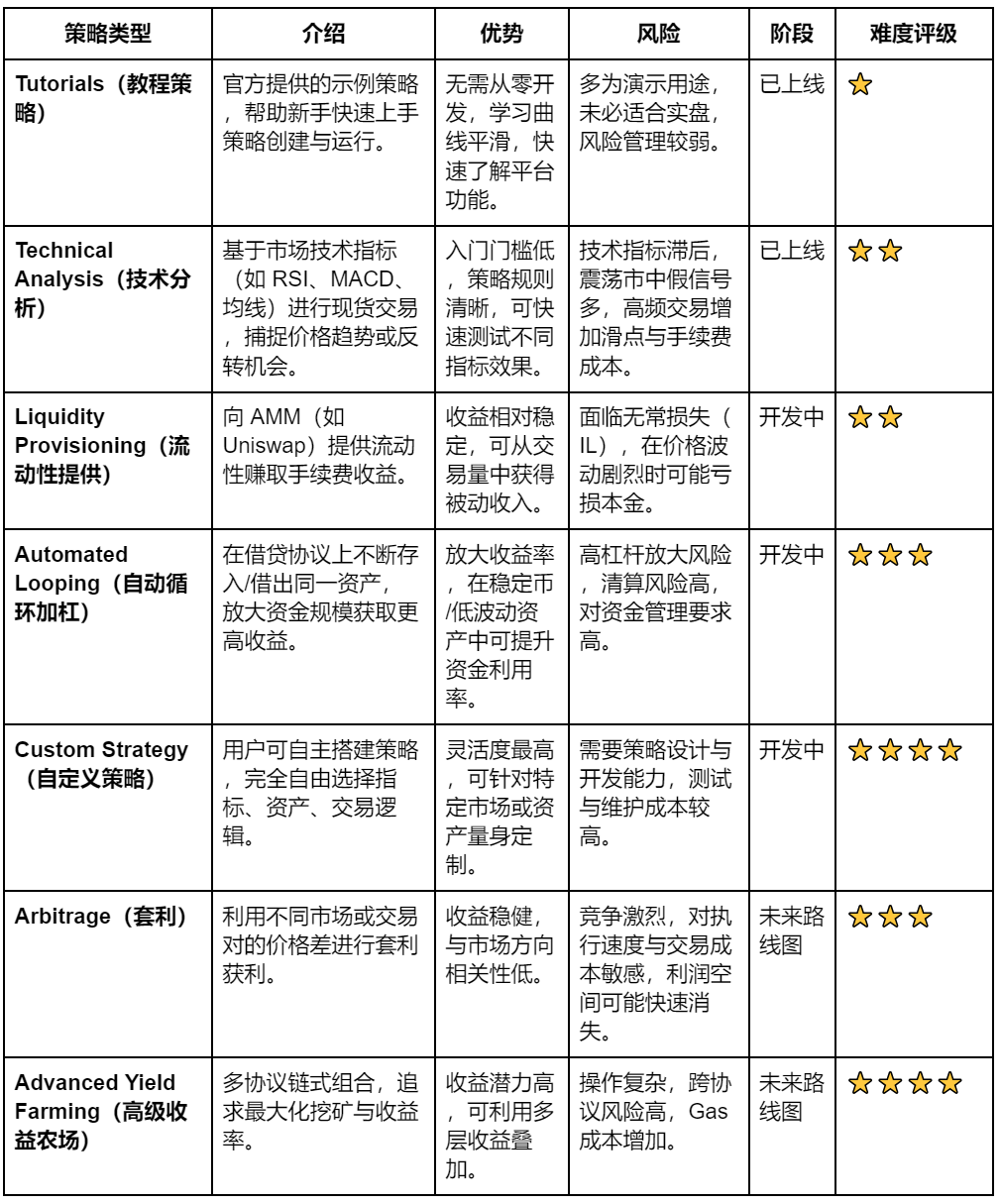
Inside Almanak’s currently whitelist-only strategy library, AI KITCHEN, we can glimpse its strategic scope: currently live strategies include Tutorials and Technical Analysis, while internally developed ones cover Liquidity Provisioning, Automated Looping, and Custom Strategy. The future roadmap plans to introduce advanced strategies such as Arbitrage, Advanced Yield Farming, and Derivatives & Structured Products, reflecting a clear product evolution path from beginner-friendly to professional quant, and from single strategies to cross-protocol complex compositions.

2. Deployment System (Deployments)
Deployments is the core execution layer connecting strategy logic to on-chain actions, responsible for automating trades and operations within user-granted permissions. The current primary form is StrategyDeployment, which runs periodically or conditionally based on predefined logic, suitable for stable, reproducible trading strategies emphasizing stability and control. Upcoming LLMDeployment will integrate one or more large language models (LLMs) as decision engines, enabling strategies to adapt to market changes and continuously learn and optimize, exploring new opportunities under strict permission controls.
The Deployment workflow covers the full process: authentication and authorization, strategy execution, transaction construction, permission validation, signature submission, and execution monitoring. Core components are maintained officially: TransactionManager converts strategy actions into compliant on-chain transactions and simulates validation; AccountManager generates transaction signatures; ExecutionManager broadcasts transactions, tracks status, and retries when necessary—forming a highly reliable闭环 from strategy to on-chain execution. In the future, Almanak will expand to multi-deployment coordination, cross-chain execution, and enhanced analytics, supporting more complex multi-agent strategy operations.
3. Wallet System and Security Mechanisms (Wallets)
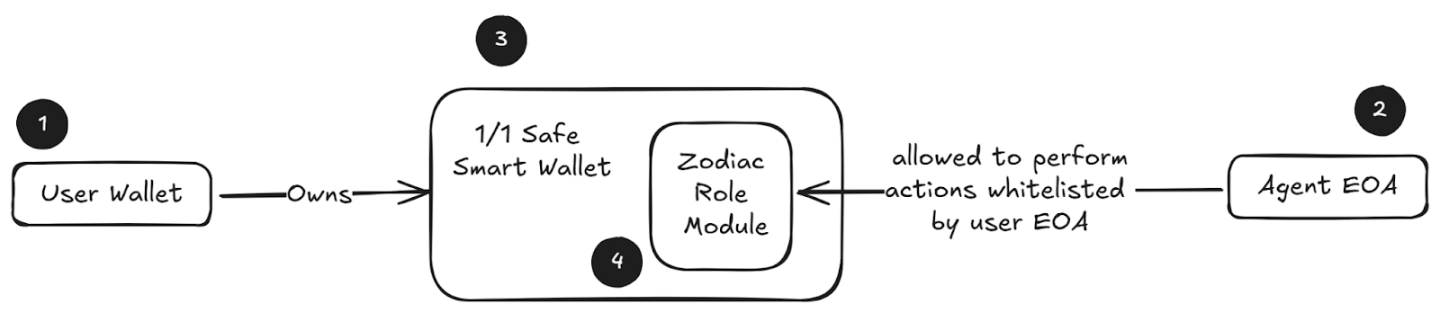
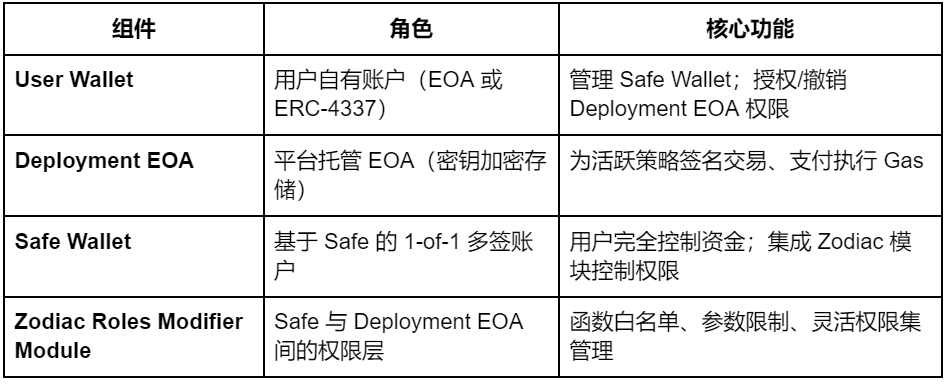
The wallet system is central to ensuring fund safety and controlled strategy execution. Almanak uses a Safe + Zodiac non-custodial solution, guaranteeing users full ownership of funds while precisely delegating required execution permissions to automated accounts (Deployment EOA). Users directly control their Safe Wallet via a User Wallet (EOA or ERC-4337 smart account). The Safe Wallet embeds the Zodiac Roles Modifier module, allowing strict function whitelisting and parameter restrictions for the Deployment EOA, ensuring “only permitted actions can be performed,” with permissions revocable at any time.
The Deployment EOA is platform-hosted, with private keys stored encrypted at rest and managed by Google’s security infrastructure—completely inaccessible to humans. In extreme cases, the platform immediately notifies users to revoke permissions and generates a new EOA to replace it, ensuring uninterrupted strategy operation. To ensure continuous execution, users must purchase Autonomous Execution Fees service packages covering on-chain operational costs (including Gas). This architecture achieves institutional-grade security standards through complete separation of funds and execution rights, fine-grained permission management, enterprise-level key security, and rapid incident response—laying the trust foundation for widespread adoption of automated DeFi strategies.
4. On-Chain Quant Strategy Vaults (Vaults)
Almanak Vaults are user-deployable, fully on-chain, permissionless vault contracts that transform trading strategies into tokenized, composable financial products. Unlike static “closed containers,” these vaults are built on ERC-7540—an asynchronous extension of ERC-4626—designed as programmable capital allocators capable of native integration into the DeFi ecosystem.
By tokenizing AI-generated strategies, vaults introduce a new DeFi primitive: the strategy itself becomes an ERC-20 asset, usable for LPing, collateralization, trading, transfer, or composing structured products. This composability unlocks “DeFi Lego” at the strategy level, enabling seamless integration with protocols, funds, and structured products.
Vaults can be owned by individual curators or communities. Built on Lagoon Finance’s open-source contracts (MIT licensed), Almanak Vaults inherit Lagoon’s audit and security safeguards and comply with the ERC-7540 standard. Their permission system mirrors Almanak Wallets, relying on Zodiac Roles Modifier to enforce function whitelists and parameter limits, ensuring all operations strictly adhere to authorized scopes.
Operational flow includes:
-
Strategy Binding – linking existing Python or AI-generated strategies to a vault;
-
Fundraising – investors acquire vault tokens for proportional ownership;
-
On-chain Execution & Rebalancing – the vault executes trades and dynamically adjusts positions per strategy logic;
-
Profit Distribution – earnings distributed proportionally to token holders, with management and performance fees automatically deducted.
Key advantages:
-
Each vault position exists as an ERC-20 token, ensuring portability and interoperability;
-
Strategies are deterministic, auditable, and executed on-chain;
-
Capital is both secure and liquid—security and composability are no longer mutually exclusive;
-
Developers can permissionlessly integrate vault tokens into their own protocols, while capital allocators flexibly deploy capital across the ecosystem.
In short, Almanak Vaults evolve DeFi capital management from isolated wrappers into intelligent, composable systems. By transforming AI-generated strategies into tokenized financial primitives, it pushes DeFi beyond passive yield containers toward responsive, modular capital networks, fulfilling the long-standing vision of programmable, interoperable finance.
5. DeFi Agent Swarm (DeFi Agentic Swarm)
Almanak AI Swarm architecture serves as an end-to-end platform covering the full strategy development lifecycle, autonomously completing complex DeFi strategy research, testing, creation, and deployment under full user control and non-custodial asset management. It aims to simulate and replace the entire workflow of traditional quant trading teams. Notably, the AI Swarm “team” consists entirely of AI agents—not humans.
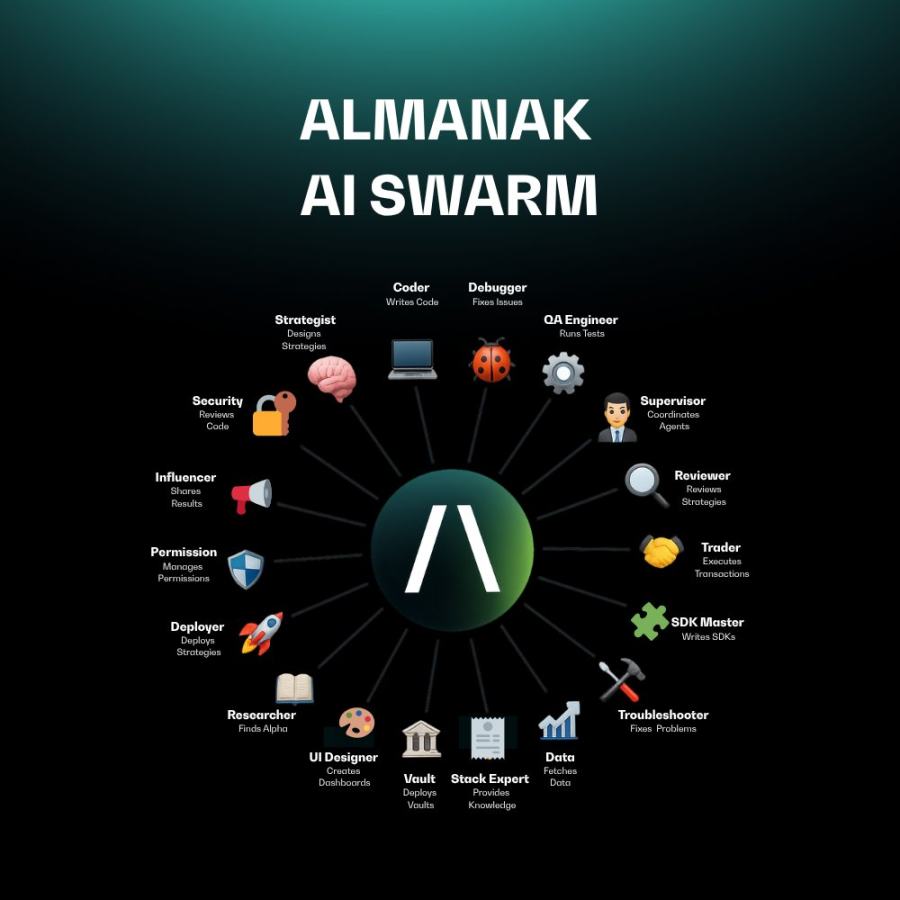
Strategy Team: Translates user natural language instructions into deployable on-chain strategies, encompassing roles such as strategist (logic design), programmer (smart contract coding), auditor (correctness verification), debugger (error fixing), quality engineer (simulation testing), permission manager (execution configuration), UI designer (visualization panel creation), and deployer (mainnet deployment), ensuring full lifecycle coverage from idea to execution.
The Strategy Team leverages LangGraph for deterministic workflow orchestration, persistent state sharing (TeamState), human-in-the-loop (HITL) validation, parallel processing, and interruption recovery. It can execute fully autonomously but defaults to human confirmation for reliability.
Alpha Seeking Team: Continuously scans the entire DeFi market to identify inefficiencies, explore new ideas and alpha opportunities, and propose novel logic and strategy concepts to the Strategy Team.
Optimization Team: Conducts large-scale simulations using historical and predictive market data to rigorously evaluate strategy performance, performs pre-deployment stress tests and cycle analysis, identifies potential drawdowns and vulnerabilities, and ensures strategy stability and robustness across diverse market conditions.
Additionally, auxiliary AI tools include Stack Expert AI and Troubleshooting AI: the former specializes in answering user questions about Almanak’s tech stack and platform operations, providing instant technical support; the latter focuses on real-time monitoring and issue diagnosis during strategy execution, ensuring operational stability and continuity.
Almanak’s core principle is: all AI operations are logged, reviewed, and structured; no AI runs independently; and all strategy logic must undergo complete human-AI dual verification before launch, with users retaining ultimate control and custody.
4. Almanak Product Progress and Roadmap
Autonomous Liquidity USD Vault
Almanak has officially launched the Autonomous Liquidity USD (alUSDC Vault) stablecoin yield optimization vault on Ethereum mainnet via community efforts. Like Giza and Axal—other lending-yield-focused AgentFi products—its core is the Stable Rotator Agent, which continuously scans the DeFi ecosystem to identify and capture the highest available yields, automatically rebalancing portfolios based on customizable risk parameters. Before execution, the strategy performs intelligent transaction cost analysis, adjusting positions only when yield gains exceed all costs, and combines advanced routing with auto-compounding to maximize capital efficiency. Currently, the vault integrates various USDC derivative assets from protocols including Aave v3, Compound v3, Fluid, Euler v2, Morpho Blue, and Yearn v3.
Almanak Liquidity Strategies and Swap Trading Strategies
Almanak’s currently live strategies fall into two categories: LP series (Dynamic LP Blue Chip, Dynamic LP Degen) and indicator-based spot strategies (MyAmazingStrat, PENDLERSI_Momentum, VIRTUALBollingerBandsMeanReversion), with detailed content shown in the table below:
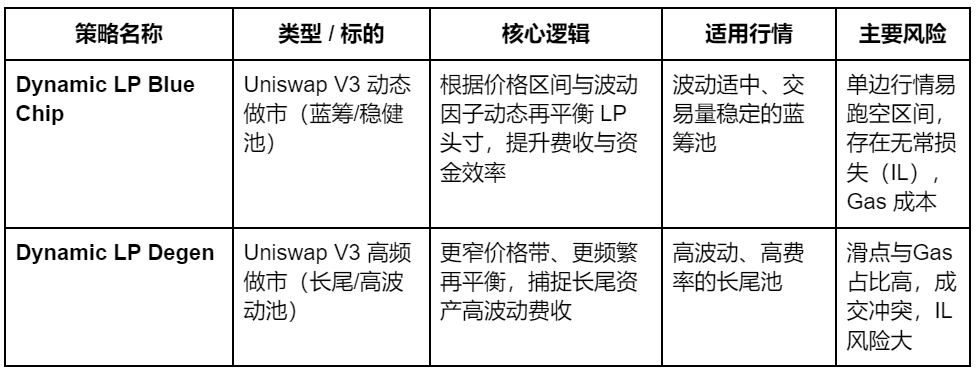
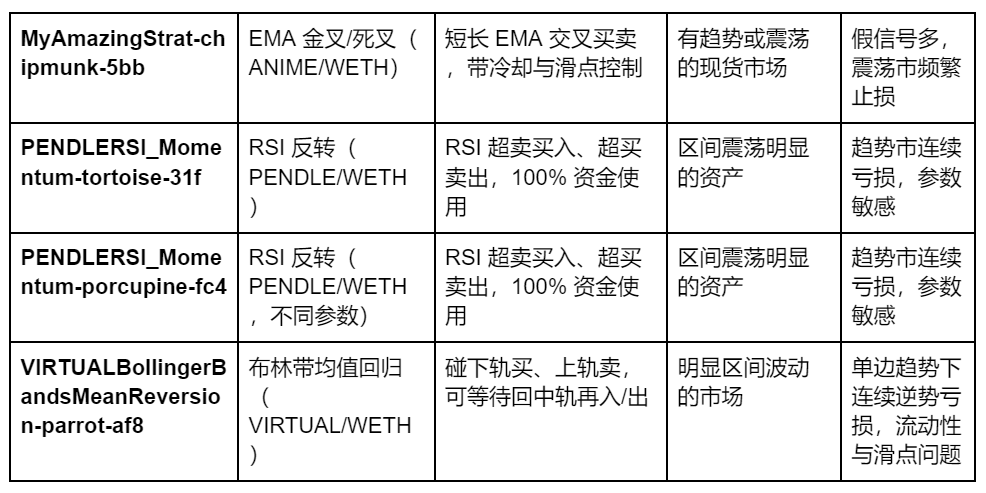
Analysis of the above strategy code via AI tools leads to the following conclusions:
-
LP Dynamic Market Making (Blue Chip / Degen): suitable for pools with consistent trading volume and tolerance for impermanent loss; Blue Chip targets stable fee income, Degen aims for higher-frequency yield capture.
-
Indicator Spot (EMA/RSI/BB): lightweight, supports multi-parameter grid experiments on long positions; requires strict cooldown/slippage/min-volume controls, with attention to pool depth and MEV.
-
Capital and Scale: Long-tail assets (Degen/ANIME/VIRTUAL) suit small-scale/multi-instance strategies for risk diversification; blue-chip LPs are better suited for mid-to-long-term/higher TVL allocations.
-
Minimum viable live combination: Dynamic LP Blue Chip (stable fee income) + one indicator spot strategy (e.g., RSI/BB for volatility capture) + small-scale Degen LP or EMA crossover as a “high-volatility testbed.”
Almanak Development Roadmap
Almanak’s platform evolution is divided into three phases, progressively advancing from technical foundation to full-scale adoption.
-
Phase 1 focuses on infrastructure and early community building, launching a public beta version covering the full quant trading stack and forming core user groups through the Legion platform with private access distribution. Simultaneously, it begins accepting capital into AI-designed community vault strategies, achieving the first wave of on-chain automated asset management.
-
Phase 2 plans to fully open AI Swarm functionality to the public by year-end. Prior to that, access will gradually expand as the system scales, marking the official rollout of the platform’s token economy and incentive system.
-
Phase 3 shifts focus to global retail user acquisition, launching user-friendly products for savings and retirement accounts, integrating with centralized exchanges (e.g., Binance, Bybit) to enable seamless CeFi-DeFi interoperability. It will also leverage low-risk, high-capacity RWA strategies to expand asset classes and launch a mobile app to further lower entry barriers.
Additionally, Almanak will continue expanding multi-chain support (including Solana, Hyperliquid, Avalanche, Optimism, etc.), integrating more DeFi protocols, and introducing Multi-Agent Systems and Trusted Execution Environments (TEE) to enable AI-driven automatic alpha discovery, building the most comprehensive AI DeFi intelligent execution network globally.
5. Almanak Tokenomics and Points Incentive Program
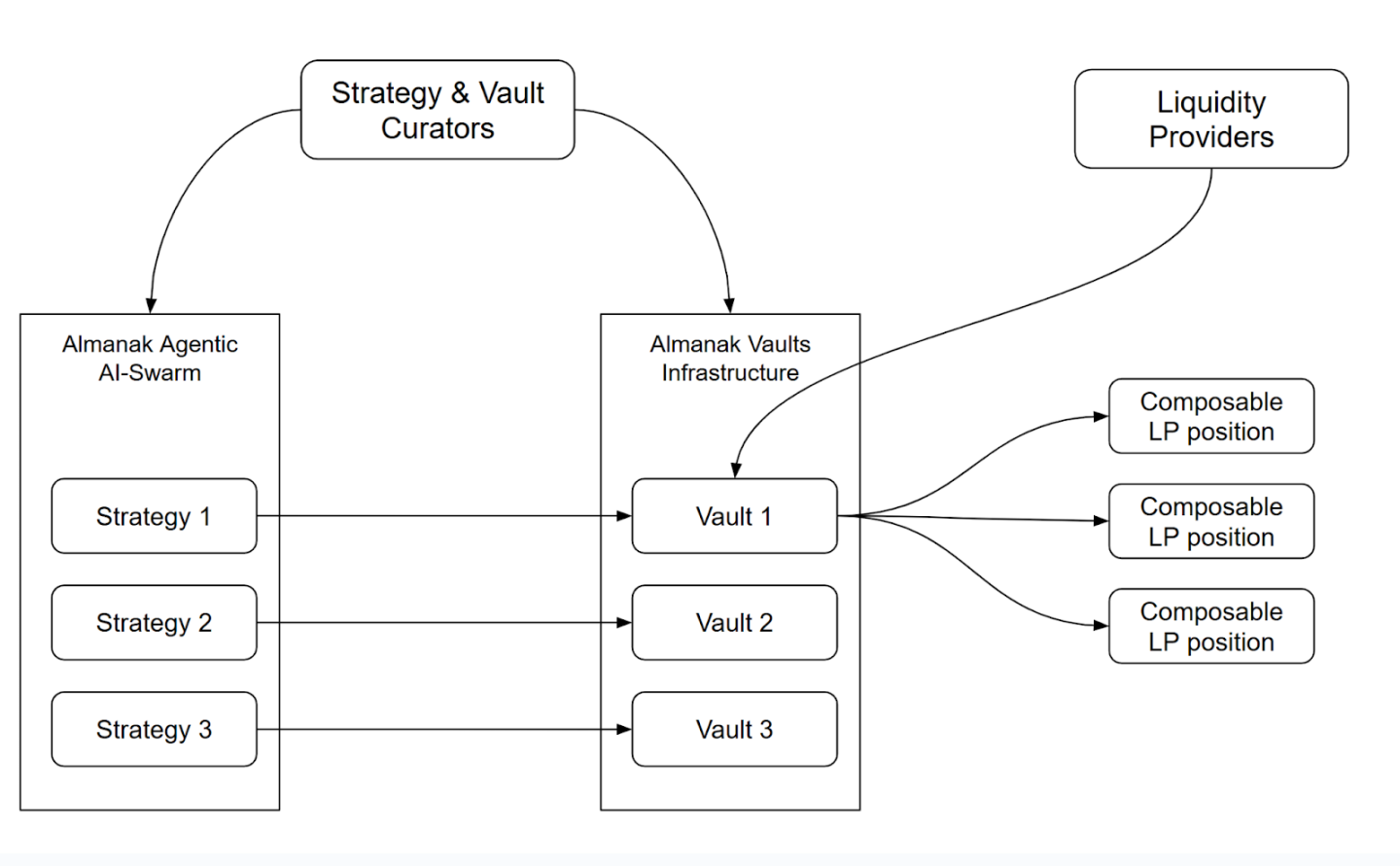
Almanak’s token economy aims to build an efficient, sustainable value exchange network for AI-driven financial strategies, enabling high-quality strategies and liquidity capital to efficiently match on-chain. The platform builds an ecosystem loop around two core roles: Strategy & Vault Curators and Liquidity Providers. The former use AI agent swarms (Agentic AI-Swarm) to design, optimize, and manage verifiable deterministic strategies in a no-code environment, deploying permissionless vaults to attract external capital and collect management and performance fees. The latter deposit funds into these vaults to gain tokenized exposure and share in profits.
On strategy privacy, curators can choose private mode (closed-source, not listed in the strategy library, accessible only to themselves) or public mode (open-source, listed and available for community and third-party protocol use), balancing IP protection with knowledge sharing.
The token model draws inspiration from traditional hedge funds’ dynamic capital allocation logic, combined with Bittensor’s demand-driven emission mechanism and Curve Finance’s governance incentives: the former allocates emissions weighted by TVL and strategy ROI, encouraging capital concentration in high-performing strategies; the latter introduces a “veToken + Bribe” model, allowing protocols to boost specific vault emissions via voting, directing AI agent traffic to targeted protocols.
Emission distribution uses a weighted formula based on AUM and ROI, ensuring vault contributions in capital attraction and profit generation directly translate into token rewards; governance multipliers (“Almanak Wars”) can add up to 3x weight to target vaults, creating a three-way incentive market among protocol, curator, and liquidity providers. For long-term sustainability, protocol fees (vault revenue shares, compute resource premiums, etc.) partially flow back into the emission pool, gradually offsetting new emission pressure as the ecosystem matures.
Token utility includes Staking and Governance: holders can stake to receive platform compute discounts, increase voting power, direct emissions to specific vaults, and participate in DAO governance to decide key parameters such as compute premium rates, vault fee ratios, and emission curves. The governance structure is expected to include an Ecosystem Parameters Committee and an Innovation & Development Committee, responsible for protocol parameters, revenue distribution, treasury management, and ecosystem grants.
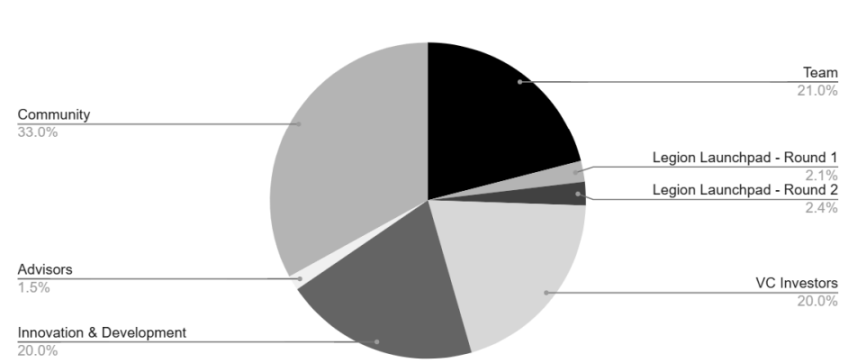
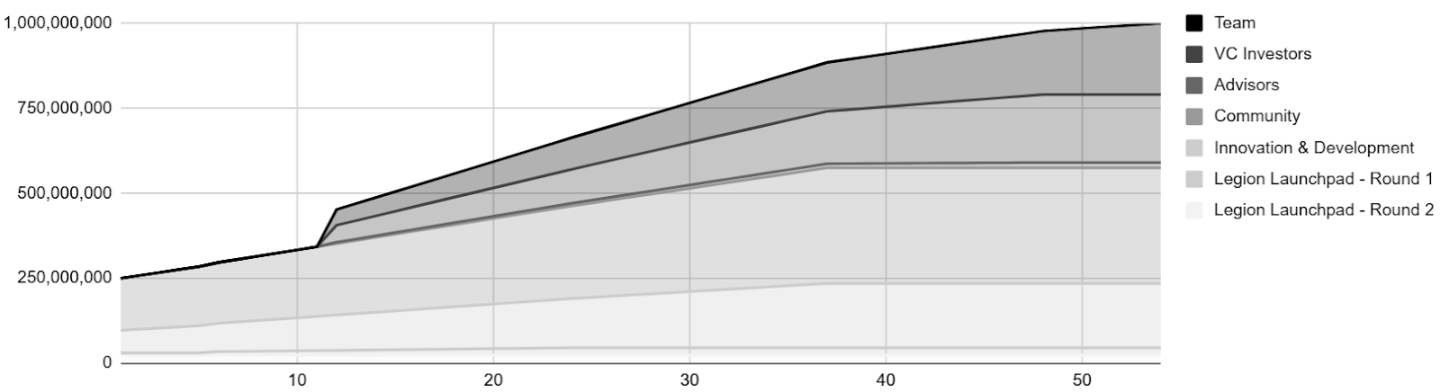
For token distribution, Almanak sets linear vesting schedules: team (54 months, 12-month cliff), institutional investors (48 months, 12-month cliff), advisors (48 months, 12-month cliff), innovation and ecosystem development (35% at TGE, remainder over 36 months), community and early participants (45% at TGE), Legion community rounds (two rounds: first 30% at TGE + 24-month linear, second 100% at TGE). The emission pool rewards network participants and early adopters, with annual halving inflation to maintain long-term incentive and governance activity.
Almanak Points: Platform Engagement Incentive Mechanism
Almanak Points is the core mechanism measuring user engagement and contribution on the platform, designed to drive asset retention, strategy usage, and community growth via a points system. Points are issued in seasons, with each season adjusting emission volume, eligible activities, and calculation methods.
Users can earn Points in multiple ways: ① Deposit funds into community vaults listed on Almanak, earning points based on amount and holding duration (current vault deposits enjoy 2× bonus); ② Hold assets in Almanak Wallet, accumulating points by balance and duration; ③ Activate and actively manage Deployments, earning extra points based on managed assets, duration, and strategy complexity; ④ Refer new users to platform activities, receiving an additional 20% of the referred user’s Points. Points are non-transferable and non-tradable but will convert 1:1 to tokens upon token launch. Points will also serve as the basis for governance rights, feature access, and ecosystem benefits.
Funding and Token Launch Strategy
Almanak collaborates closely with Cookie.fun and Legion.cc, introducing the Snaps/cSnaps mechanism via Attention Capital Formation to analyze on-chain traceable contribution scores, directly linking user activity in community outreach, content engagement, and financial support to token allocation—enabling a transparent, structured “contribution equals ownership” distribution model.
On funding, Almanak received early incubation support from Delphi Digital and NEAR Foundation, and later secured investments from prominent firms including Hashkey Capital, Bankless Ventures, Matrix Partners, RockawayX, AppWorks, Artemis Capital, and SParkle Ventures, raising a total of $8.45M.
-
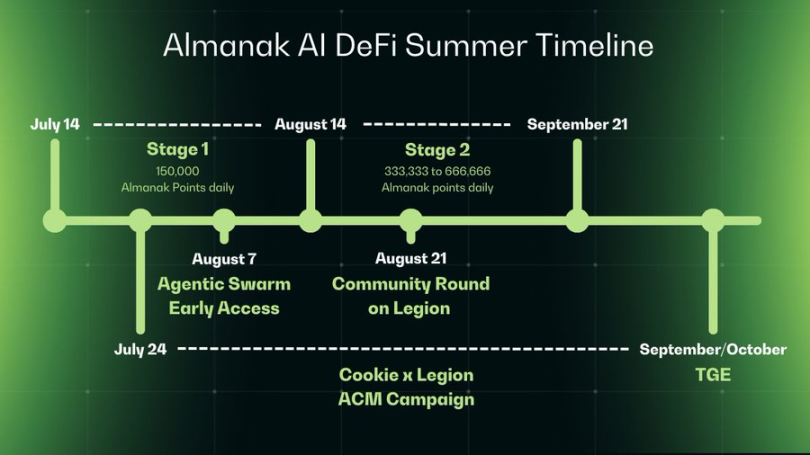
January 8, 2025: Completed $1M IDO via Legion at $43M valuation, with 30% unlocked at TGE and the remaining 70% locked for 6 months, linearly released over 24 months.
-
August 21, 2025:即将启动 Legion community fundraising round at $90M FDV, targeting $2M raise (up to $2.5M). Open to all verified accounts, with 100% of tokens fully unlocked at TGE. TGE expected late September to early October.
-
Cookie DAO Priority Rights: Top 25 Snappers and top 50 cSnappers qualify for investment at $75M FDV, also 100% unlocked at TGE.
-
Activity Incentives – 0.55% of total supply allocated: 0.4% to top 500 cSnappers (80% of pool), 0.1% to top 250 Snappers, 0.05% to $COOKIE stakers.
This issuance mechanism not only improves fairness and accessibility in token distribution but also deeply integrates fundraising, community building, and long-term governance into a sustainable interest共同体, laying the foundation for Almanak’s long-term expansion in the AI × DeFi space.
6. Investment Thesis and Risk Analysis
Investment Thesis
Almanak currently best fits the positioning of “the most user-friendly retail DeFi strategy sandbox,” with significant advantages in user experience, security architecture, and low barriers—especially ideal for retail users with no coding background or prior on-chain strategy experience. Almanak’s core competitiveness lies in the deep integration of AI multi-agent architecture and non-custodial execution systems, delivering institutional-grade security and strategy privacy without sacrificing performance. Its tech stack—built on TEE (Trusted Execution Environment) + Safe Wallet + Zodiac Roles Modifier—enables fully automated on-chain execution with granular, function-parameter-level permission control, clearly outperforming most AgentFi models that rely solely on EOA delegated signing.
The technical architecture forms a complete闭环: from data acquisition (Sensors), strategy execution (persistent state machine with Prepare/Validate/Sadflow), transaction execution (TransactionManager/AccountManager/ExecutionManager), monitoring and metrics, to productization (ERC-7540 Vault) and external fundraising/revenue collection—the entire pipeline is smooth and commercially scalable. Particularly, the Vault productization capability upgrades strategies from personal tools to publicly issuable financial products, generating scalable management and performance fee revenues for the platform.
Operationally, the Points incentive system is already live, with transparent rules oriented toward AUAM (Assets Under Agentic Management), effectively driving TVL and engagement. Through Attention Capital Formation analyzing on-chain traceable contributions, it tightly couples fundraising, community building, and long-term governance into a sustainable interest共同体, establishing a solid foundation for Almanak’s long-term expansion in the AgentFi space.
Potential Risks
Despite Almanak’s relatively high technical and functional maturity, it still faces several key challenges:
First, protocol testing is not yet fully open. Currently, only Ethereum mainnet lending protocols and Uniswap V3-based LP and Swap strategies are supported. While the underlying Kitchen already supports Ethereum, Base, and Arbitrum and has the capacity to scale to 8+ EVM chains and 200+ protocols, the pace of broader expansion—including multi-chain (e.g., Base, Solana, Hyperliquid), multi-protocol integration, and CEX fusion—will directly impact strategy diversity, yield opportunities, and market competitiveness.
Second, strategy sophistication remains basic. Current strategies are mostly entry-level technical analysis (TA), falling short of institutional or professional quant standards. Future success depends on introducing richer advanced strategy libraries (covering on-chain liquidity management, funding rate arbitrage, cross-pool spreads, multi-signal fusion, etc.) and improving backtesting, simulation tools, built-in cost optimizers, and multi-strategy portfolio management—essential to becoming the go-to gateway for retail users entering DeFi quant.
Third, the ecosystem and user base remain early-stage. Despite having launched Points and Vault mechanisms and ranking among the top tier of AgentFi, the growth of AI-driven Vault-managed TVL still needs time to prove itself, and user engagement and retention will be critical long-term metrics.
Overall, Almanak combines technical maturity, clear commercial pathways, and strong incentive drivers, occupying a rare position in the AI-driven on-chain quant and asset management space. However, the speed of ecosystem expansion, competitive dynamics, and technical execution stability will be the three core variables determining its ability to sustain leadership.
Join TechFlow official community to stay tuned
Telegram:https://t.me/TechFlowDaily
X (Twitter):https://x.com/TechFlowPost
X (Twitter) EN:https://x.com/BlockFlow_News