History's Greatest Trader: How the U.S. Drug Enforcement Administration Accidentally Outperformed Wall Street by "Money Laundering"
TechFlow Selected TechFlow Selected
History's Greatest Trader: How the U.S. Drug Enforcement Administration Accidentally Outperformed Wall Street by "Money Laundering"
The U.S. Department of Justice revealed that DEA agents, during a decade-long undercover operation, not only dismantled an international drug trafficking network but also inadvertently became legends in cryptocurrency investment.
 Navigating Web3 tides with focused insights
Author: Luke, Mars Finance
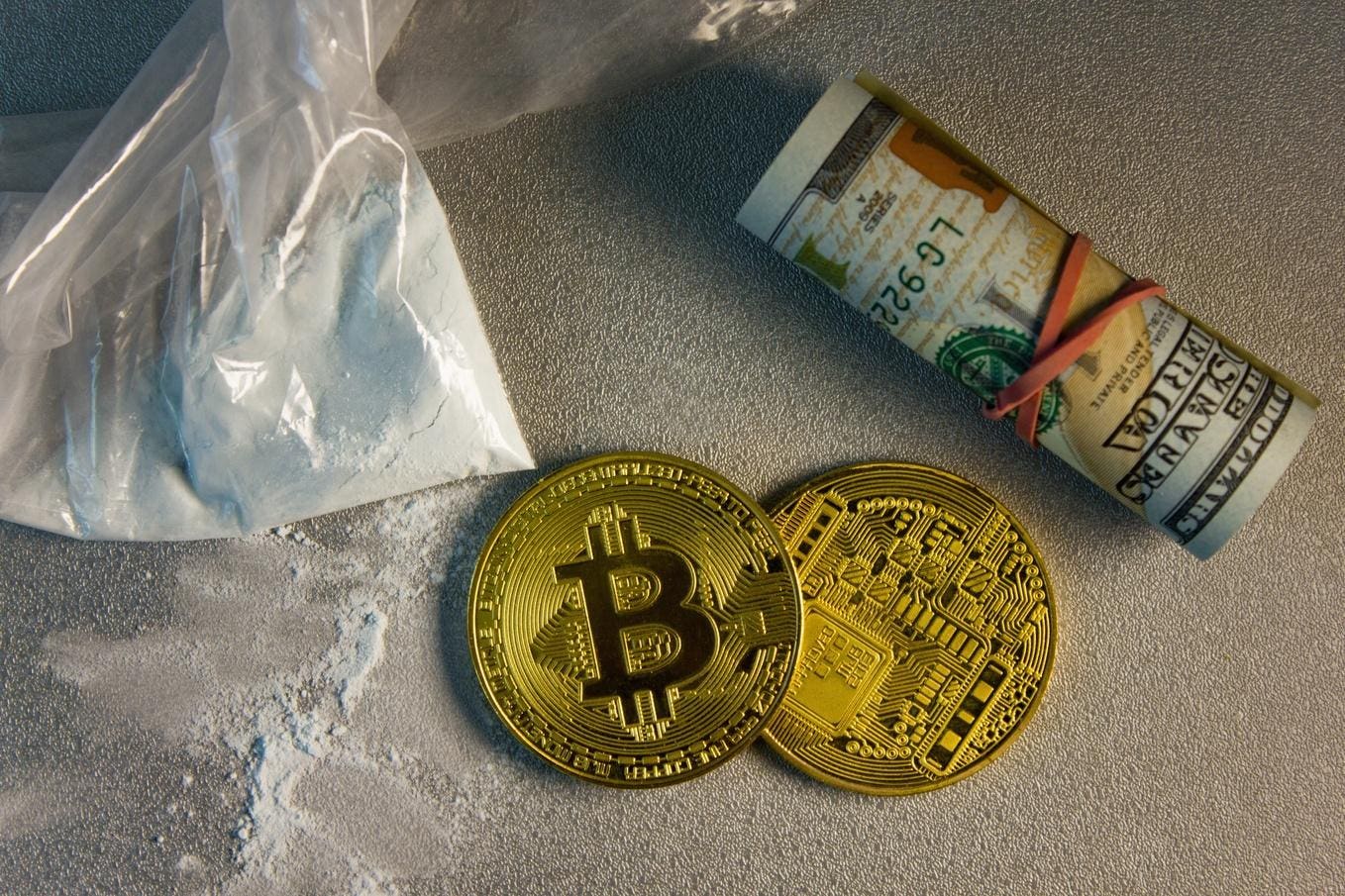
In August 2025, when U.S. Department of Justice documents were made public, perhaps the most elite traders on Wall Street felt an indescribable sense of absurdity. While they stayed up all night chasing gains of a few basis points, a group of undercover agents from the U.S. Drug Enforcement Administration (DEA), operating in the shadows for a decade, had not only dismantled a vast drug trafficking network but also casually pulled off a legendary cryptocurrency investment with a return of 1000%.
This story did not begin in a bright, modern trading hall, but in the damp jungles of Colombia and the dusty streets along the Mexican border. It is a tale of deception, danger, and loyalty, and more importantly, of the strange chemical reaction that occurs when an old industry confronts a disruptive new technology. This is not a movie script, but a real-life "Infernal Affairs," where the protagonists must outwit dangerous criminals while inadvertently becoming experts at money laundering—and one of the most successful Bitcoin investors in history.
A Decade Undercover: When Hunters Become Prey
The story began over a decade ago. Facing increasingly sophisticated transnational drug cartels with ever-more-complex financial methods, the DEA realized that traditional tactics of arrest and infiltration were no longer effective. The core of these modern criminal organizations was no longer just armed force, but rather the massive, efficient financial network behind them—one capable of instantly "laundering" illicit funds. To destroy the empire, they first had to seize its treasury.
Thus, a highly secretive and daring undercover operation was launched. The DEA decided to "use the enemy's tactics against them"—they would create their own fake, professional money-laundering team, even more credible than real criminal groups, to infiltrate the financial heart of the drug cartels.
The selected agents then began living double lives. By day, they were federal employees; by night, they transformed into discreet, globally savvy operators—masters of underground banking. Their clients were the most notorious drug cartels in Colombia and Mexico. Their business? Receiving bundles of cash stuffed into suitcases from street deals, then funneling this tainted money through a labyrinth of shell companies, offshore accounts, and complex financial derivatives to make it "clean," before transferring it to accounts designated by the drug lords.
This was the ultimate role-playing game, with lives on the line. Every step had to be flawless. Imagine this scene: in a heavily secured hotel suite in Bogotá, a DEA agent meets with a financial chief of a drug cartel. The air is thick with cigar smoke and distrust. The agent must use the most technical jargon to explain how an offshore trust structure can evade regulators. His tone, gaze, even the slight tremble of his fingers, could become clues for the other side to uncover his true identity. Any hesitation could mean instant death.
Over ten years, this team of agents posing as a money-laundering ring processed at least $19 million in drug money. With impeccable professionalism, they earned the "complete trust" of the cartels. Drug lords even bragged to peers about finding the most reliable financial service provider in the U.S., unaware that this service provider was actually paid by American taxpayers.
2018: A Bold Bet on the Future
By 2018, the world of crypto faced a "great disillusionment." After the wild bull run of 2017, Bitcoin crashed from nearly $20,000 to a fraction of that value, leaving the market in ruins. Yet, while ordinary investors fled in panic, sharp-minded criminals saw immense potential in crypto’s anonymity and decentralized transactions. Cryptocurrency was rapidly becoming the new darling of money laundering.
The DEA's undercover team quickly caught this shift. To maintain their image as cutting-edge professionals, they knew they had to add this latest tool to their "money-laundering toolkit." How could they claim to be top-tier experts if they didn’t even know Bitcoin?
This decision was undoubtedly a gamble. For a disciplined government agency, using an unregulated, volatile new asset for official operations carried high risk. But the greater danger was falling behind real criminals in operational capability. If their "skills" lagged, the trust painstakingly built over years would collapse instantly, and the entire undercover mission would fail.
In the end, they took the risk. In one transaction, the undercover team used $150,000 in drug money to purchase over 13 Bitcoins via the mainstream Coinbase exchange. At the time, this was merely a routine move to mimic criminal methods—to make the act more convincing and lure the targets faster. As the agents pressed the trade button, their minds were likely focused on reporting the "security" and "efficiency" of the operation to their "clients." They probably never imagined that the crypto wallet created for evidence collection would undergo a nuclear-level value explosion in the years to come.
An Unexpected Windfall: When Law Enforcement Becomes the Best Investment
Fast forward to today. After a decade of meticulous planning, the DEA had gathered core evidence of the drug network and moved in for the final takedown. When two key traffickers were arrested and brought to court, the prosecutor's office began organizing all collected evidence—including the crypto account created in 2018 holding 13 Bitcoins.
When a financial analyst pulled up the current balance of this account, there was a moment of silence in the office. Everyone was stunned.
Due to another explosive bull run in the crypto market in the following years, that once-insignificant asset worth $150,000 was now valued at over $1.5 million. A piece of "prop" acquired for investigative purposes had accidentally become a "value investment" yielding a 1000% return.
The irony was palpable. While the world's top investment firms and Wall Street elites agonized over market volatility, analyzing K-charts and macroeconomic data, the DEA had effortlessly outperformed almost everyone—through the "side hustle" of fighting crime. This may be the strangest investment case in history: the secret to success wasn't precise market analysis, but perfect imitation of criminal methods.
A Sweet Dilemma: The Legal Quandary of One Bitcoin
Now, as the case enters the judicial process, this unexpected windfall has presented the U.S. Department of Justice with a sweet dilemma. Legally, illegal proceeds seized during law enforcement operations must be returned to the national treasury. But the nature of this sum is highly unusual: the principal originated from drug money, yet over 90% of its appreciation came from market activity. Should this be treated as "illegal proceeds" or as legitimate "government investment income"?
This case ends with biting irony and raises a profound question of our times. In the actions of some of the nation’s most steadfast enforcers lies a paradox: to bring criminals to justice, they had to become expert "criminals" themselves—and in doing so, accidentally proved their unmatched "investment talent."
The story shows us that reality is often more absurd than fiction. In an era of rapid technological change, the line between justice and evil can blur in unexpected ways. Perhaps next time someone asks who the most successful Bitcoin trader in history is, the answer might not be some mysterious whale or Wall Street genius—but a DEA agent who once hid deep in the Colombian jungle, skillfully playing both sides while calmly placing trades.
Join TechFlow official community to stay tuned
Telegram:https://t.me/TechFlowDaily
X (Twitter):https://x.com/TechFlowPost
X (Twitter) EN:https://x.com/BlockFlow_News