








Anatoly Yakovenko: The Soul of Solana
TechFlow Selected TechFlow Selected
Anatoly Yakovenko: The Soul of Solana
His ultimate vision is to transform Solana into the backbone of global finance, enabling information dissemination as fast as news.
 Navigating Web3 tides with focused insights
Author: Thejaswini M A
Translation: Block unicorn
Preface
Anatoly Yakovenko was angry.
It was 2017, and news had spread that the Bitcoin conference would no longer accept Bitcoin payments because transaction fees had soared to $60–$70 per transaction.
The world's premier cryptocurrency event couldn't use cryptocurrency.
So he did what any frustrated engineer would do. He went to Café Soleil in San Francisco, ordered two coffees and a beer, and stayed up until 4 a.m., thinking about why Bitcoin was so slow.
Between his second espresso and the last sip of beer, Yakovenko had a flash of insight—a "eureka moment," as he called it. He suddenly figured out a way to encode the passage of time into a data structure.
He didn’t know this function had a name (verifiable delay function), so he couldn’t Google it. He thought he had invented something entirely new.
In a way, he really did.
When Solana launched in 2020, it could process 65,000 transactions per second. Today, the blockchain built by Yakovenko in his garage once peaked at over $50 billion in market capitalization.
The Making of a Systems Thinker
Yakovenko’s journey into blockchain began with an early immigrant story. Born in Ukraine in 1981, he moved to the United States with his family in the early 1990s, joining the wave of Eastern European immigrants seeking opportunities in America’s tech boom.
As a teenager, he became fascinated with the C programming language, captivated by the precision and power of low-level systems programming. “The idea that writing some code could solve a major problem in the world was just magical,” he later recalled of his early programming days during the dot-com era.
At the University of Illinois Urbana-Champaign, Yakovenko studied computer science and founded his first startup, Alescere, a VoIP system for small businesses, in the early 2000s. The company failed, but gave him valuable experience with real-time networking protocols.
In 2003, fresh from his startup experience, Yakovenko joined Qualcomm in San Diego. Starting as a regular engineer, he spent 13 years tackling the company’s most challenging technical problems.
He worked on projects ranging from QChat push-to-talk servers to the BREW mobile operating system, eventually rising to senior engineering manager. He also optimized communication between different processors. Yakovenko became an expert in “securely extending operating system services and protection domains to auxiliary processors”—in simple terms, figuring out how different parts of a computer system can work together without slowing each other down.
The patent portfolio from this period reads like a blueprint for his later blockchain work: “Exposing host operating system services to auxiliary processors” and “Extending protection domains to coprocessors.” His work focused on minimizing overhead and improving coordination efficiency across distributed components.
“I started thinking about how we solved scaling issues with wireless protocols at Qualcomm, which led me deeper into this field,” he said.
The cellular tower technology he worked on used a method called time-division multiple access, coordinating multiple signals through precise time management. After more than a decade at Qualcomm, Yakovenko began working on compression and distributed systems at Dropbox in 2017. But what truly changed everything was his side project.
He teamed up with Stephen Akridge, Qualcomm’s GPU lead, to build hardware for deep learning and cryptocurrency mining to offset costs. It started as a machine learning project, not a blockchain innovation.
But as Yakovenko observed their mining rigs coordinating with thousands of other computers, one question kept bothering him: Why is proof-of-work so inefficient?
Bitcoin transaction fees had climbed to $60–$70 per transaction. The network, meant to be peer-to-peer electronic cash, couldn’t even handle basic payments. The Bitcoin conference further irritated him.
That’s when the Café Soleil moment happened.
Proof of History
Imagine: 10,000 people trying to agree on when something happened, all shouting at each other—complete chaos.
This is essentially how Bitcoin works. But Bitcoin’s problem goes far beyond noise.
Bitcoin creates a new block every 10 minutes, a careful balance between security and speed. Too fast, and the network might split into competing versions; too slow, and transactions take too long. This 10-minute rhythm means Bitcoin can only handle about 7 transactions per second.
In contrast, Visa processes around 24,000 transactions per second on average.
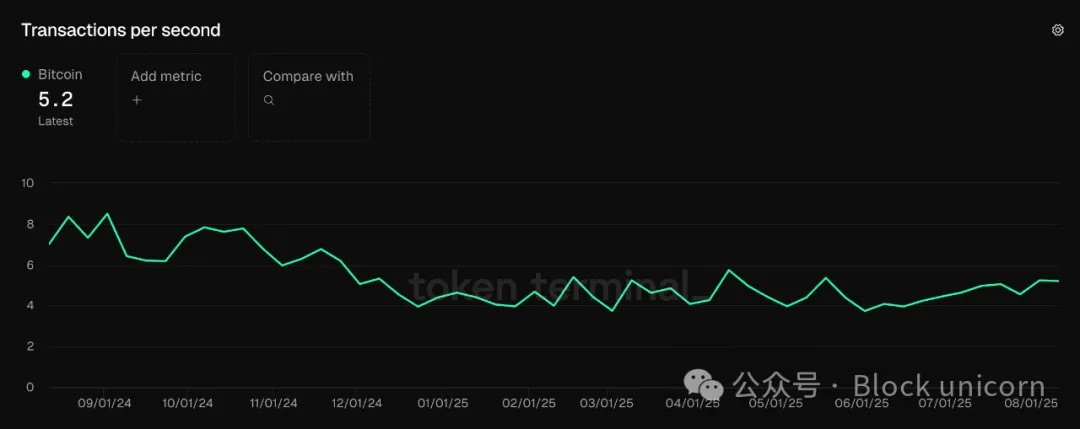
The real issue is that in a distributed system with thousands of computers worldwide, there’s no central clock. Each computer’s clock runs slightly differently. Network messages take time to travel. The order of events appears different depending on where you observe them from.
Thousands of Bitcoin computers spend much of their time arguing over basic questions: “Did this transaction happen before that one?” “When was this block created?” “Which version of the blockchain is correct?”
The more computers join, the louder the arguments become.
Yakovenko had an idea: What if they didn’t have to argue about time at all?
What if the blockchain had a built-in clock that couldn’t be faked? Every transaction would automatically get a timestamp, verifiable independently by anyone.
No longer would thousands of computers need to constantly message each other to reach time consensus. They’d simply look at the same tamper-proof clock and instantly know the order of events.
No endless back-and-forth messages—just a cryptographic stopwatch keeping perfect time.
He called it “Proof of History.”
Replace argument with computation. Instead of thousands of conversations about time, just check the clock. Simple and elegant.
Building Solana
With this breakthrough, Yakovenko co-founded Solana Labs in 2018 with Greg Fitzgerald (another Qualcomm veteran) and Raj Gokal. The name came from their frequent surfing trips to Solana Beach, California.
The founders would wake up, go surfing, bike to work, and return to the beach after coding all day.
They built the project during the crypto winter of 2018–2019, when funding was scarce and enthusiasm waned. But Yakovenko saw this as an advantage. They could focus on engineering without hype or pressure.
“It was like the asteroid impact that killed the dinosaurs. Yes, it was crypto winter—you saw many teams disbanding. We were always conservative, never raised huge amounts, and our runway was only about two years, so we were always thinking, ‘We must get this right quickly and stay laser-focused on the key products we believe will make a difference.’” he recalled.
The team didn’t just build Proof of History—they created an entire ecosystem of innovations enabling high throughput:
Sealevel: A parallel smart contract runtime that allows the blockchain to process multiple transactions simultaneously by pre-declaring the accounts involved in each transaction.
Turbine: A system inspired by BitTorrent that uses erasure coding and random weighted trees to propagate transaction data across the network.
Gulf Stream: A mempool-less transaction forwarding system that sends transactions to future block producers before blocks are generated.
Cloudbreak: A horizontally scalable account storage system designed for high-concurrency access.
Each innovation targeted a different bottleneck. Together, they created something unprecedented: a blockchain that gets faster as it scales.
March 16, 2020—a day of global chaos. Stock markets crashed, countries locked down, startups collapsed. Yakovenko chose this day to launch Solana. Within months, it became clear he had picked the perfect moment to unveil the world’s fastest blockchain.
By the end of 2020, Solana had processed 8.3 billion transactions, created 54 million blocks, and attracted integration from over 100 projects in DeFi, gaming, and Web3. Validator nodes had expanded to over 300 globally—an impressive feat for a network less than a year old.
Developers began building applications impossible on slower blockchains. High-frequency trading systems, real-time games, and social media platforms became feasible for the first time in blockchain history.
Years of Interruption
Success brought new challenges. Solana’s high throughput made it a target for adversarial traffic, exposing systemic weaknesses.
September 14, 2021: A surge in transactions during the Grape IDO caused a network fork, resulting in 17 hours of downtime.
May 1, 2022: NFT “blind mint” bots triggered a consensus failure, taking the network offline for 7–8 hours.
May 31, 2022: A bug in off-chain transaction processing led to 4.5 hours of downtime.
October 1, 2022: A configuration error caused 6 hours of downtime.
Critics pointed out that these incidents proved Solana sacrificed decentralization for speed. Its monolithic design meant that when something broke, the consequences were severe.
The team responded with systematic improvements: better deduplication handling, improved randomness processing, fixing fork-choice bugs, and introducing the QUIC protocol to enhance network reliability.
In November 2022, Solana faced its biggest test—the FTX collapse.
Sam Bankman-Fried was once one of Solana’s most prominent supporters. When his exchange FTX imploded, panic spread rapidly. Investors assumed anything tied to FTX would fail, and Solana’s token price plummeted as people rushed to sell.
The Solana community didn’t wait for someone else to fix things.
FTX controlled Serum, a popular trading platform relied upon by many Solana users. When FTX collapsed, the platform effectively became an “orphan,” with no clear path forward.
Within hours, Solana developers and community members sprang into action. They copied all of Serum’s code and created a fully independent version named OpenBook.
The technical term is “fork”—creating a new version with identical functionality but without the problematic ownership.
Throughout the crisis, Solana itself never stopped running.
Despite crashing prices and widespread panic, the blockchain continued processing transactions. No downtime. No technical failures.
Unlike traditional companies that might collapse when a CEO is arrested, Solana had grown larger than any individual or company supporting it. The technology and community could survive independently.
Future Vision
At 44, Yakovenko has achieved extraordinary success while maintaining a unique blend of engineering pragmatism and crypto idealism—a hallmark of successful blockchain founders.
He advocates for “reasonable rules,” such as policymakers trying the technology themselves before regulating it.
Ironically, despite hoping for crypto-friendly policies, he opposes Trump’s proposed government crypto reserve plan. He sees it as overly centralized, and this principled stance makes one wonder if he’d fit in politics. He’d rather see innovation flourish organically than have bureaucrats control digital money—even if those bureaucrats happen to favor his blockchain.
His ultimate vision is to transform Solana into a backbone of global finance, making information move as fast as the news.
Although Solana directly competes with Ethereum in the so-called “blockchain wars,” Yakovenko rejects tribal thinking. He insists different blockchains can coexist and complement each other rather than being locked in zero-sum battles. This mature perspective is refreshing in an industry where minor technical differences often lead to predictions that competing protocols will “go to zero.”
Yakovenko built one of the world’s most powerful distributed computers using an insight that now seems obvious in hindsight but had eluded everyone before—turning time itself into a blockchain data structure.
His personal net worth is estimated between $500 million and $800 million. Financial success allows him to focus on building rather than accumulating wealth.
But recognition is beginning to come in the most important form in finance: other people’s money. Currently, four publicly traded companies hold over $591 million worth of Solana tokens in their corporate treasuries, led by Upexi, which accumulated 1.9 million SOL tokens in just four months. SOL Strategies takes a more systematic dollar-cost averaging approach. Classover Holdings announced plans to invest $500 million in Solana, and Trump’s proposed U.S. Strategic Cryptocurrency Reserve lists Solana alongside Bitcoin and Ethereum as a strategic asset. When public companies start treating your blockchain token like treasury bonds, you’ve probably built something truly significant.
Institutional adoption suggests Yakovenko’s vision of Solana as global financial infrastructure may not be far off. Asset managers like Franklin Templeton and Fidelity are filing for Solana spot ETFs. Companies choosing SOL as treasury reserves do so for the same reason they hold BTC or ETH: it’s a store of value and potentially a foundation for the future financial system.
If that frustrated night at Café Soleil truly sparked a breakthrough enabling money to move at the speed of light, corporate treasurers are starting to notice.
Join TechFlow official community to stay tuned
Telegram:https://t.me/TechFlowDaily
X (Twitter):https://x.com/TechFlowPost
X (Twitter) EN:https://x.com/BlockFlow_News


