








3.3 Trillion in Tax Cuts, 5 Trillion Debt Ceiling, Musk Angry: Decoding Trump's "Big Beautiful Bill"
TechFlow Selected TechFlow Selected
3.3 Trillion in Tax Cuts, 5 Trillion Debt Ceiling, Musk Angry: Decoding Trump's "Big Beautiful Bill"
The magnitude is already evident; the beauty awaits revelation.
 Navigating Web3 tides with focused insights
By: TechFlow
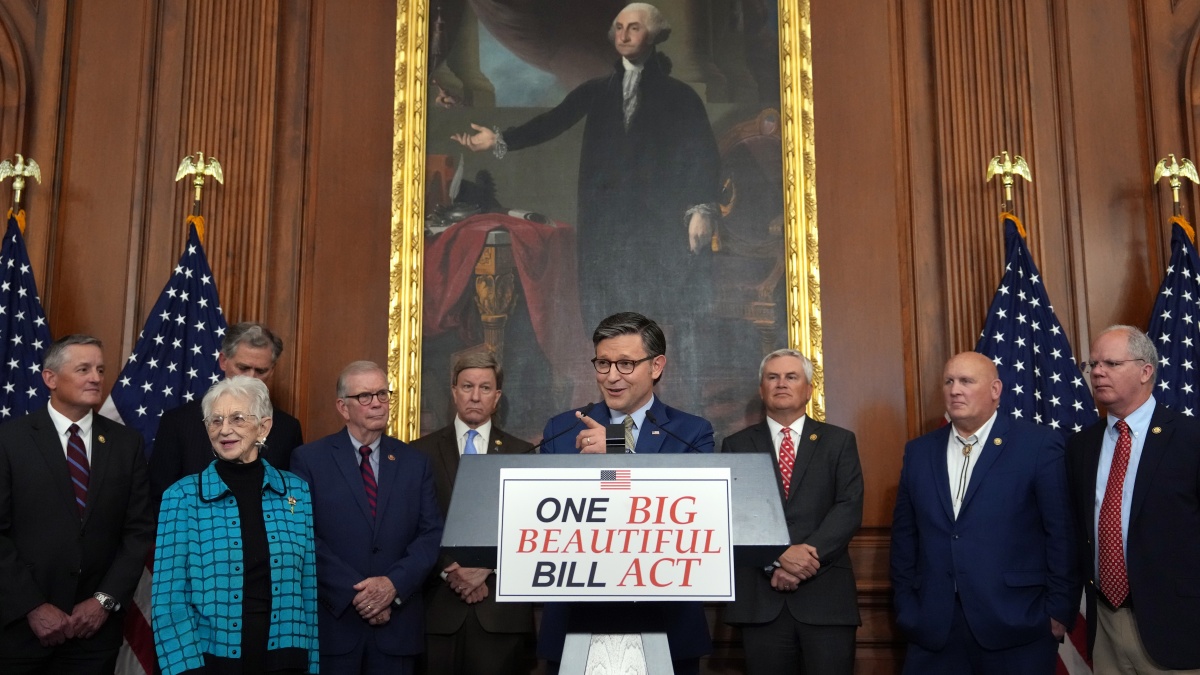
A $3.3 trillion tax cut, $1.13 trillion in spending reductions, a 1,118-page legislative text—this so-called "One Big Beautiful Bill Act of 2025" (OBBBA) is reshaping America's economic landscape while igniting fresh partisan conflict—and even provoking Elon Musk’s fury.
On July 1, Musk posted on X, stating that if the current “crazy spending bill” ("One Big Beautiful Bill") passes, he will launch the “America Party” the following day as a protest.
Serving as a hallmark policy of Trump’s second term, this sweeping legislation embodies Republican ambitions and has sparked intense societal debate.
This article offers an in-depth analysis of the core provisions of the "One Big Beautiful Bill," the controversies it has ignited, and its potential implications for the crypto industry—offering a comprehensive look at this legislative storm.
The Big Bill
The "One Big Beautiful Bill" is a major tax and spending act championed by U.S. President Donald Trump in 2025. It spans six key areas: tax reform, healthcare, immigration, defense budgeting, energy policy, and education and welfare reform.
As a signature legislative initiative of Trump’s second term, it aims to stimulate the economy through large-scale tax cuts, increased spending, and policy adjustments, while addressing fiscal, immigration, and national security challenges.
The bill runs 1,118 pages with 237,272 words, containing numerous complex clauses. During Senate deliberations, reading the full text aloud took 16 hours. According to a BBC report from June 28, the OBBBA centers on nine main components:

The Tax Foundation estimates the bill will reduce federal tax revenue by approximately $3.3 trillion between 2025 and 2034 (dynamic modeling), while increasing defense spending by about $150 billion—primarily for missile defense, ammunition, and shipbuilding. At the same time, it would cut spending by $1.13 trillion, including $800 billion in Medicaid reductions and $330 billion saved through student loan program reforms.
Economically, the bill could boost long-term GDP growth by 0.6%, but decrease capital stock and pre-tax wages by 0.2% and 0.1% respectively, while creating around 794,000 full-time jobs. Ultimately, it is projected to increase deficits by $3.3 trillion from 2025 to 2034, posing long-term fiscal sustainability risks due to higher interest rates and crowding-out effects on private investment.
Moreover, the Congressional Budget Office (CBO) estimates that if enacted in its House version, the bill would increase U.S. debt by $2.4 trillion, reduce purchasing power for the bottom 10% of households by 4% between 2026 and 2034, while increasing it by nearly 3% for the top 10%, fueling accusations of “robbing the poor to pay the rich.”
But the disputes go far beyond that.
The Big Dispute
The "One Big Beautiful Bill" was first unveiled by the House Ways and Means Committee on May 12, 2025. It narrowly passed the House on May 22 by a vote of 215–214, and cleared a procedural vote in the Senate on June 28 by 51–49, advancing into formal deliberation. It is expected to be signed into law by Trump before July 4—the U.S. Independence Day holiday. Due to its massive scale, complexity, and far-reaching impact, it has become a focal point in American politics and public discourse, triggering widespread controversy.
Proponents view the bill as central to the Trump administration’s agenda. Supporters argue that tax cuts and increased defense spending will stimulate economic growth and strengthen national security. In particular, the bill’s hardline immigration and border policies have won backing from certain voter segments.
Yet divisions within the Republican Party are evident. Hardliners demand deeper cuts to social welfare programs, while moderates seek to preserve initiatives like Medicaid, warning the bill could widen deficits and hurt low-income populations.
The razor-thin margins in both the May 22 and June 28 votes underscore deep internal rifts.
Beyond intra-party splits, perhaps the most prominent opposition comes from Elon Musk, former head of the Department of Government Efficiency (DOGE) and founder of Tesla. His public clash with President Trump over the bill is seen as a definitive break between the two. Since June 3, Musk has labeled the bill “massive, absurd, and utterly disgusting,” and after the latest procedural vote on June 28, he still called it a case of Republican “political suicide.”
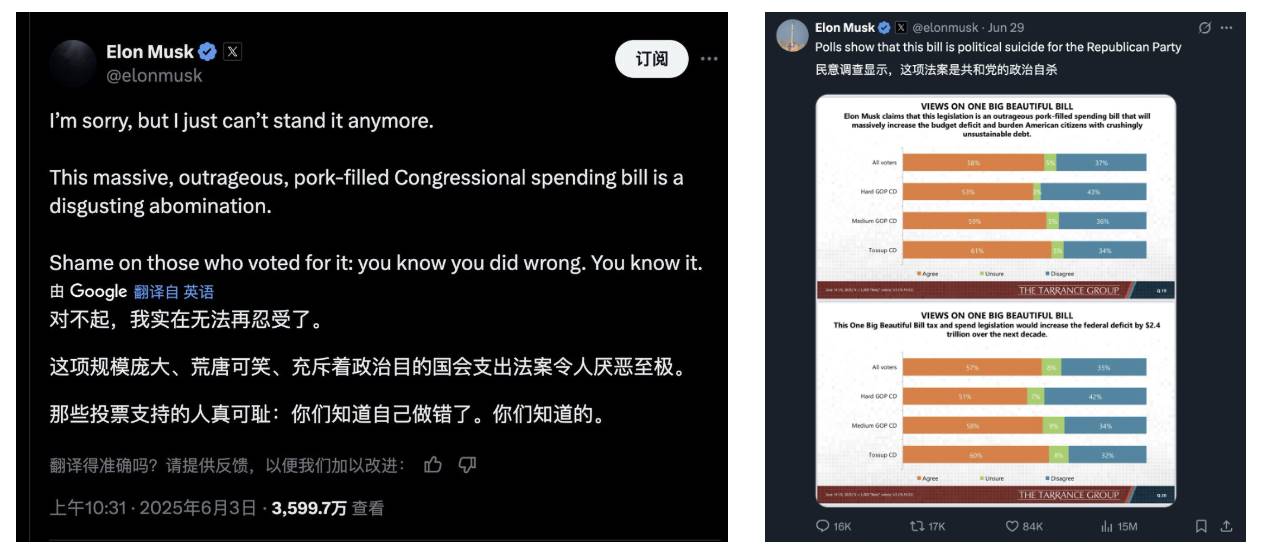
Musk argues the bill will dramatically inflate the budget deficit, projecting a $600 billion increase in the next fiscal year and cumulative deficits of up to $2.5 trillion over the next decade—directly contradicting the Trump administration’s stated goal of reducing government spending.
Additionally, the bill’s phaseout of electric vehicle tax credits could negatively impact Tesla, further fueling Musk’s ire. His proposal to transfer air traffic control operations from the Federal Aviation Administration (FAA) to his Starlink network was not adopted, adding to the friction. Musk has even threatened to fund primary challenges against Republicans who support the bill, highlighting the depth of his split with Trump.
Democrats have unanimously opposed the bill, accusing it of cutting healthcare and welfare benefits for the poor to finance tax breaks for the wealthy—an archetypal case of “robbing the poor to pay the rich.” Senate Democratic leader Chuck Schumer demanded the entire bill be read aloud word-for-word to delay the vote, signaling strong resistance. Nobel laureate economist Paul Krugman criticized the bill as unprecedented wealth redistribution from poor to rich, warning that combined with Trump’s tariff policies, it would further harm the bottom 80% of households.
Public and media reactions are sharply divided.
Supporters say the bill fulfills Trump’s campaign promises—such as tax reduction and strict immigration controls—while opponents fear it may deepen inequality and debt burdens. Some users also raised concerns about digital identity systems and mass data surveillance following the bill’s passage, sparking privacy debates.
From an international perspective, foreign investors remain cautiously optimistic, believing the stimulus measures might partially offset the roughly 1% GDP drag caused by Trump’s tariff policies. However, Section 899 of the bill—“Implementing Remedies Targeting Unfair Foreign Taxes”—introduces retaliatory taxation, raising concerns about foreign investment motives and dollar stability.
Overall, the passage of the “One Big Beautiful Bill” has not only triggered wide-ranging political and social controversies domestically but also significantly impacted the global economic environment and investor confidence. Despite the White House publishing a myth vs. fact rebuttal addressing many current criticisms, the actual outcomes of its implementation remain to be seen.
What About Crypto?
At first glance, the widely known provisions of the One Big Beautiful Bill—curbing federal court powers, undermining healthcare, increasing debt, intensifying immigration enforcement, restricting foreign investment, worsening air pollution, and boosting defense spending—seem to have little to do with cryptocurrency.
But appearances can be deceiving. The passage of the OBBBA could profoundly affect the cryptocurrency and financial sectors.
The 2024 Republican Party platform already explicitly supports cryptocurrencies, opposes excessive regulation, and affirms citizens’ rights to self-manage digital assets—reflecting the government’s positive stance toward the crypto industry. Moreover, an executive order establishing a “Strategic Bitcoin Reserve” formally includes Bitcoin among national strategic reserve assets, marking a fundamental elevation in Bitcoin’s status.
The bill is expected to add approximately $5 trillion in new deficits to the U.S. government. Such massive fiscal expansion could erode market confidence in the U.S. dollar and Treasury bonds. As foreign divestment from Treasuries becomes a structural trend, outflows may shift toward Asian equities, gold, and Bitcoin (BTC), further enhancing BTC’s role as a global store of value—especially given its inclusion in the U.S. strategic reserve.
Meanwhile, the bill’s tax cuts and fiscal stimulus create a more favorable macroeconomic environment for crypto assets. Preferential capital gains tax treatment encourages long-term holding of digital assets, injecting sustained capital into the crypto market and reinforcing the U.S.’s position as a global crypto hub.
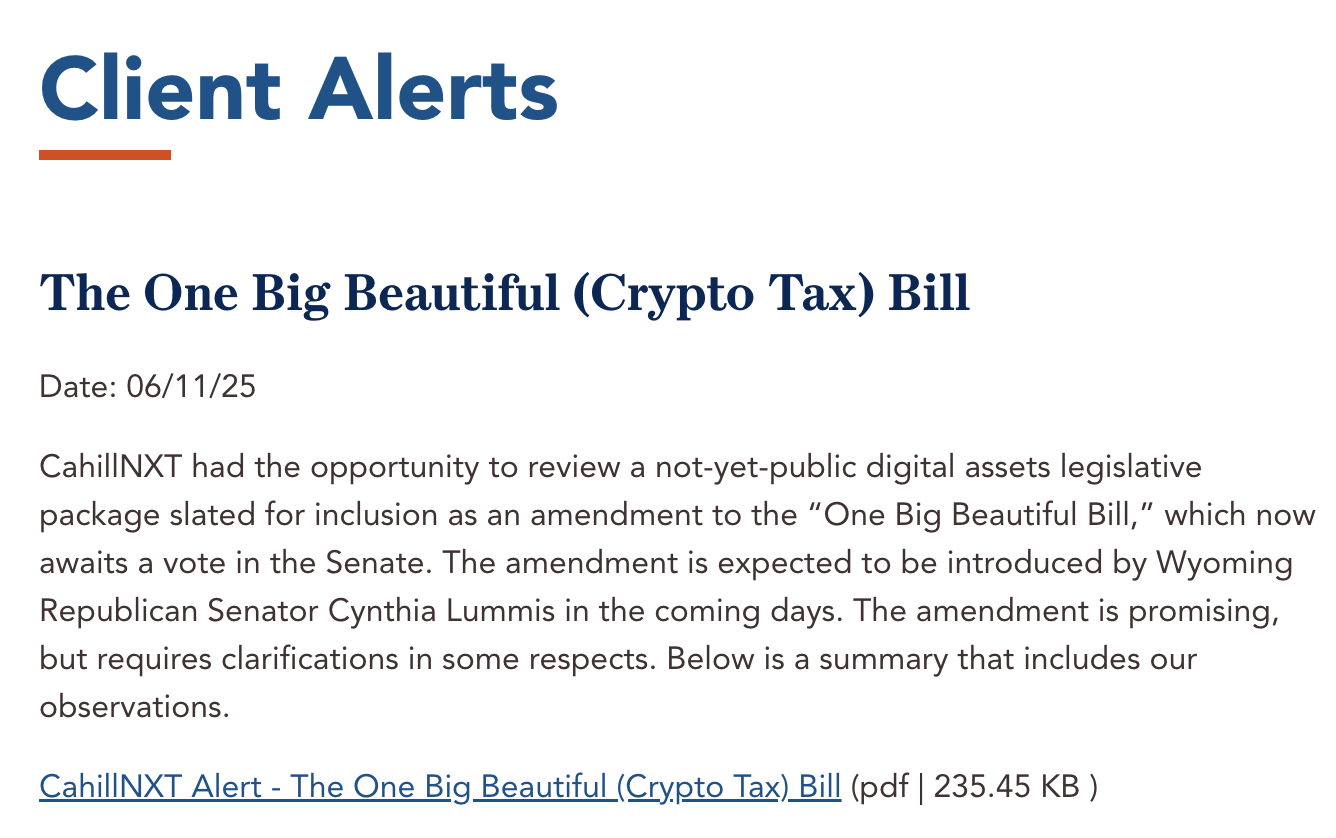
On June 11, 2025, Cahill released an analytical report on an upcoming digital asset legislative amendment. The report states that this “yet-to-be-released digital asset legislative proposal,” expected to be introduced by Republican Senator Cynthia Lummis of Wyoming, “is planned to be incorporated as an amendment to the One Big Beautiful Bill.”
This proposed legislation includes specific regulations on mining, staking, airdrops, and cross-border transactions, along with broad policies such as a $600 minimum threshold and tax rules for foreign investors—reflecting regulators’ cautious approach to balancing industry growth with tax oversight.
Market trends indicate that since May, exchanges like Coinbase have seen outflows exceeding 100,000 BTC, with whales continuing to accumulate—suggesting persistent bullish sentiment toward Bitcoin’s long-term prospects.
Whether through the trade-offs between tax cuts and deficits, the hardline turn in immigration policy, or the potential ripple effects on cryptocurrency and financial markets, these developments will continue shaping America’s economic and social fabric for years to come.
The “big” is already visible. Whether it’s truly “beautiful” remains to be seen.
Join TechFlow official community to stay tuned
Telegram:https://t.me/TechFlowDaily
X (Twitter):https://x.com/TechFlowPost
X (Twitter) EN:https://x.com/BlockFlow_News
 深潮TechFlow


