What Do All "Viable" AI Protocols Have in Common? A Capability Scan of Mainstream Projects and Product Breakthroughs for Content Platforms
TechFlow Selected TechFlow Selected
What Do All "Viable" AI Protocols Have in Common? A Capability Scan of Mainstream Projects and Product Breakthroughs for Content Platforms
The explosion of the AI+Web3 ecosystem requires not only foundational models and hardware, but also reliable, usable interactive products and application scenarios.
 Navigating Web3 tides with focused insights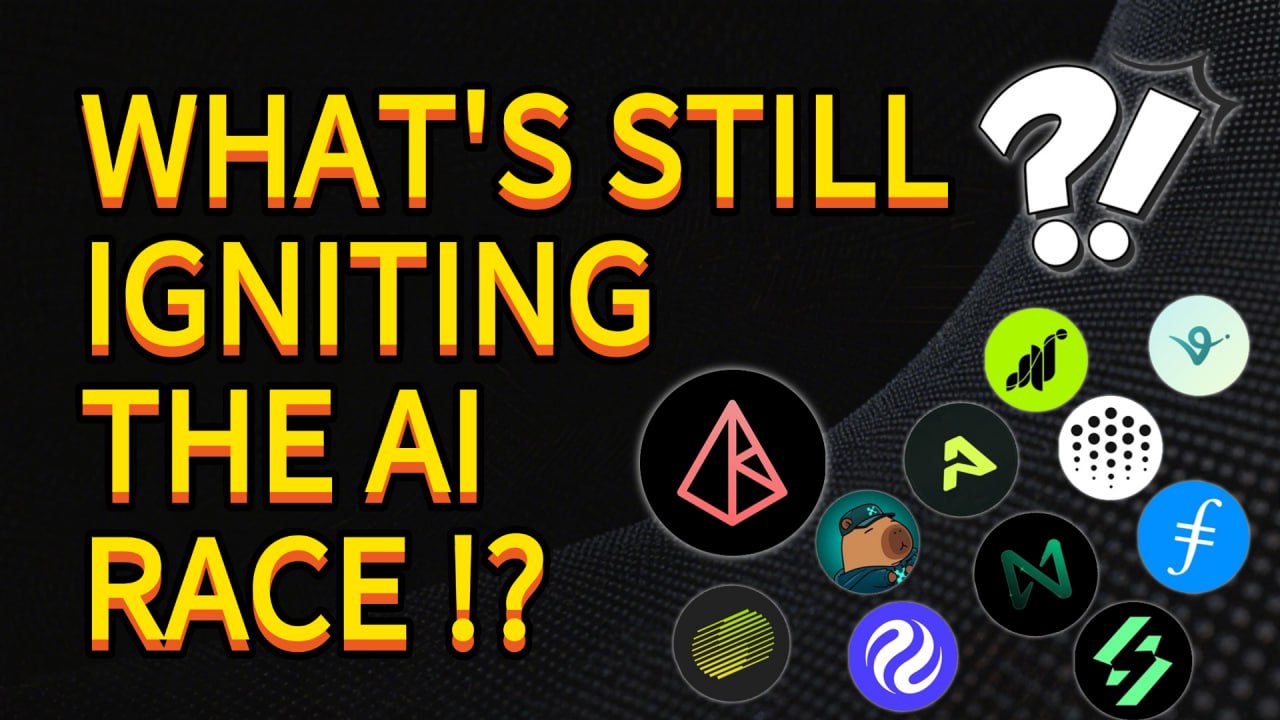
Since 2024, the convergence of AI and Web3 has become increasingly evident. We've witnessed rapid growth across multiple technical trajectories—from decentralized inference networks (such as Bittensor) and GPU marketplace protocols (like Render and Aethir), to content rights verification and IP market protocols (such as Story Protocol and Grass). While these projects share a foundational logic of "AI-native incentives + blockchain verifiability," they differ significantly in technical focus, target audiences, and commercial pathways.
This article focuses on four mainstream directions: infrastructure resources, data protocols, development tools, and content creation. It analyzes their functional architectures and ecosystem integration through representative projects, with particular attention to the rise of "creator-collaborative AI protocols," which are opening new possibilities for creators and project teams alike.
1. Mapping the Mainstream AI+Web3 Landscape: Four Archetypal Models
Currently, AI+Web3 projects can be broadly categorized into four types:
1. Infrastructure Resource Protocols
Representative Projects: Bittensor, Aethir, Render, Filecoin
These projects provide underlying resources for AI model training and inference, covering GPU computing networks, data storage, and incentivized model collaboration. Bittensor implements subnet systems to enhance model specialization and on-chain governance; Aethir delivers enterprise-grade edge GPU networks; Render has built a robust node ecosystem for 3D rendering; Filecoin promotes data provenance and training data circulation via FVM and NFT standards.
2. Data & Content Protocol Type
Representative Projects: Story Protocol, Grass
These protocols emphasize on-chain ownership verification, data incentives, and content licensing mechanisms. Story focuses on creator IP authorization pathways, while Grass collects web data via browser plugins and rewards users in return.
3. Developer & Platform Tooling Protocols
Representative Projects: Virtuals, Injective, NEAR, Internet Computer
Focused on programmable capabilities such as APIs, SDKs, and on-chain containers, these serve B2B developers. Virtuals offers vAgent registration and revenue-sharing mechanisms; Injective deploys strategy execution frameworks in AI-driven quant trading and DeFi applications; NEAR and ICP provide high-performance contract environments suitable for AI model deployment.
4. Content Creation & Product-Led Protocols
Representative Project: AKEDO
This category emphasizes user-AI interaction, focusing on content generation, product delivery, and social dissemination—representing the most user-visible path in today’s AI+Web3 landscape.
2. The Rise of Content-Centric AI Protocols: Why They Matter
As prompt engineering and agent orchestration become more accessible, AI is clearly shifting from basic capability to creative execution. Content-focused protocols have key advantages:
- Powerful AI-generated content with low barriers and fast feedback loops
- Better compatibility with social channels, enabling viral distribution
- Ability to establish closed-loop economies of “creation → monetization → re-creation”
In this space, AKEDO stands out as one of the few projects that has already launched a working prototype and validated user engagement (DYOR).
3. Case Study: AKEDO's Three-Way Collaborative Content Flywheel
1. Current Status: Achieving Product-Market Fit with Millions of Interactions
AKEDO is an AI-powered creation platform built on multi-agent collaboration, allowing users to generate interactive, executable content through natural language commands. It leverages token incentives, content virality, and community engagement to form a self-reinforcing creative flywheel.
The core product loop includes:
- Users rapidly generate story frameworks and plots by calling AI modules via natural language;
- Visual editing support lowers the barrier to entry;
- Content can be embedded and run directly within web pages or social platforms like X;
- Creatives, players, and sharers all earn $AKE tokens, creating shared value.
Unlike most projects still in the “protocol vision” phase, AKEDO has already accumulated millions of on-chain interactions and active community participation through real-world operations—demonstrating genuine user demand and content consumption patterns. Some publicly available metrics include:
- 2M Telegram subscribers, 303K followers on X;
- 1M on-chain interactions, ranked #4 highest on DappBay historically;
- User engagement热度 reaching 1.2M for interactive content;
- Partnerships established with 8 major IPs (e.g., BNB, Mew)

2. Platform Evolution: Closing the Loop Toward IP Services
While maintaining its identity as a creator platform, AKEDO is expanding its offerings to serve project teams directly:
- AI-Powered Content Education: Enables Web3 teams to use AI to generate customized world-building content and interactive tutorials, improving user retention and narrative consistency;
- Dedicated Project Zones: Establishes exclusive IP incubation areas to help projects accumulate content assets and fuel community growth;
- Bidirectional Incubation Capability: Combines "user-generated content × official project content" to enable mutual empowerment between on-chain creativity and official ecosystems.
This evolutionary trajectory positions AKEDO as an "AI middleware layer" serving three key stakeholders: content developers, project operators, and brand curators—bridging flows across tools, content, and value.
4. Conclusion: Product Certainty Amid Diverse Paths
The breakout of the AI+Web3 ecosystem depends not only on models and hardware but also on real, usable interactive products and application scenarios. Content-centric protocols represent the shortest bridge connecting AI capabilities with user needs.
Among numerous protocols, AKEDO demonstrates a clear evolution from "tool" to "platform" through product-first execution, thoughtful token incentive design, and dual-sided expansion targeting both B2B and consumer users. In the future, protocols capable of serving creators, projects, and end-users simultaneously may emerge as the most vital force in bringing AI to life within Web3.
Join TechFlow official community to stay tuned
Telegram:https://t.me/TechFlowDaily
X (Twitter):https://x.com/TechFlowPost
X (Twitter) EN:https://x.com/BlockFlow_News