South Korea the Next Model for Cryptocurrency Regulation? The Game and Ambition Behind Stablecoin Legalization
TechFlow Selected TechFlow Selected
South Korea the Next Model for Cryptocurrency Regulation? The Game and Ambition Behind Stablecoin Legalization
Systemic advantages are not a short-term boost, but a source of long-term competitiveness.
 Navigating Web3 tides with focused insights
Author: Ethan (@ethanzhang_web3)
On June 10, South Korea's ruling Democratic Party, under newly elected President Lee Jae-myung, officially introduced a draft of the Digital Asset Basic Act, proposing to allow qualified domestic enterprises to issue stablecoins.
The bill explicitly states that companies with registered capital of no less than 500 million KRW (approximately $368,000 USD) and fully backed reserves will be permitted to apply for licenses to issue Korean won-pegged stablecoins. This move marks South Korea as potentially becoming the first major Asian economy to formally authorize non-bank stablecoin issuance, laying the foundation for its "institutional repositioning" within the global crypto landscape. Markets reacted swiftly: KakaoPay’s stock surged 18%, marking its largest single-day gain since early 2024, while leading local exchanges such as Upbit and Bithumb are widely seen as potential beneficiaries.
Yet from a broader policy and industry perspective—could this step position South Korea as the next model for a “crypto-friendly nation”?
What has South Korea done in crypto so far?
Stablecoin Legalization: From Regulatory Void to Supervised Framework
The global stablecoin market remains dominated by dollar-pegged assets, particularly USDT and USDC.
According to data from the Bank of Korea, during Q1 2025 alone, trading volume of dollar-pegged stablecoins on South Korea’s five major exchanges—including Upbit and Bithumb—reached 57 trillion KRW, accounting for over 80% of total stablecoin transactions.
This structure has long satisfied liquidity demands but also raised systemic concerns around monetary sovereignty, compliance risks, and foreign exchange outflows.
Hence, the introduction of the Digital Asset Basic Act is viewed as President Lee’s opening act in fulfilling his campaign promises.
Its core objective is not merely short-term project support, but rather to reduce reliance on USD-linked stablecoins like USDT/USDC through a domestically anchored stablecoin system—thereby reclaiming financial sovereignty.
This goes beyond regulatory adjustment; it represents a strategic push toward digital monetary sovereignty.
ETFs, Pension Funds, and Regulation: Building an Institutional Moat
In President Lee’s vision, stablecoins are not standalone tools, but part of an integrated financial strategy advanced alongside ETFs, pension investments, and national-level regulation:
-
Approve spot BTC/ETH ETFs;
-
Allow allocation of crypto assets into the $884 billion national pension fund;
-
Establish a dedicated “Digital Asset Regulatory Authority.”
These initiatives collectively point to one central logic: integrating digital assets into the national financial governance framework and completing their transition into formalized institutional assets. In his view, only when crypto meets the criteria of “legality + security + sustainability” can it become a legitimate component of the national financial system.
Shifting Regulatory Stance: Central Bank Cautiously Opens Door, Payment Roles Emerge
Although Bank of Korea Governor Rhee Chang-yong previously expressed concern—warning that “non-bank stablecoin issuance could disrupt monetary policy control”—his latest statements indicate a softening stance: “The BOK will collaborate with relevant agencies to establish a unified regulatory framework and prevent stablecoins from being used to circumvent foreign exchange controls.”
More notably, the BOK has joined the BIS-led Agorá project (a pilot program for CBDCs and tokenized bank deposits), signaling a structural shift in its strategic understanding of next-generation financial infrastructure.
It is increasingly clear that a regulatory division of labor is emerging: “FSC oversees stablecoin issuance, while the central bank retains monetary policy authority.” This cooperative model may serve as a blueprint for other jurisdictions.
However, caution remains necessary. The so-called “kimchi premium” may mask inflated liquidity and systemic risk. Moreover, amid overlapping regulatory jurisdictions, the path from proposal to implementation still faces hurdles including central bank coordination, foreign exchange scrutiny, and anti-money laundering safeguards.
Why Could South Korea Stand Out?
As global hubs—from Hong Kong and Singapore to Dubai—compete to become crypto gateways, South Korea is carving out a distinct path as a “financial power” leveraging both market depth and policy innovation.
First, South Korea possesses inherent strengths—a dual engine driven by native user adoption and institutional reform:
A vast retail investor base provides deep market demand, while supportive government policies lower entry barriers and foster innovation. This dual advantage positions South Korea at the forefront of retail-driven crypto sectors such as trading platforms and stablecoin projects.
Second, with pro-crypto President Lee Jae-myung now in office, a wave of favorable policies could reshape the entire landscape.
Stablecoin legalization is just the beginning. If spot ETF approvals, pension fund participation, and unified regulation all materialize, South Korea could become the first Asian economy to truly embed crypto into its national financial backbone. Additionally, leading domestic exchanges like Upbit and Bithumb would further solidify their positions under this new regime. New policies may also attract more domestic and international firms, positioning South Korea as a core node in Asia’s crypto ecosystem.
In contrast, while Hong Kong and Singapore have taken early leads, South Korea holds greater explosive potential due to its robust retail market and superior policy agility.
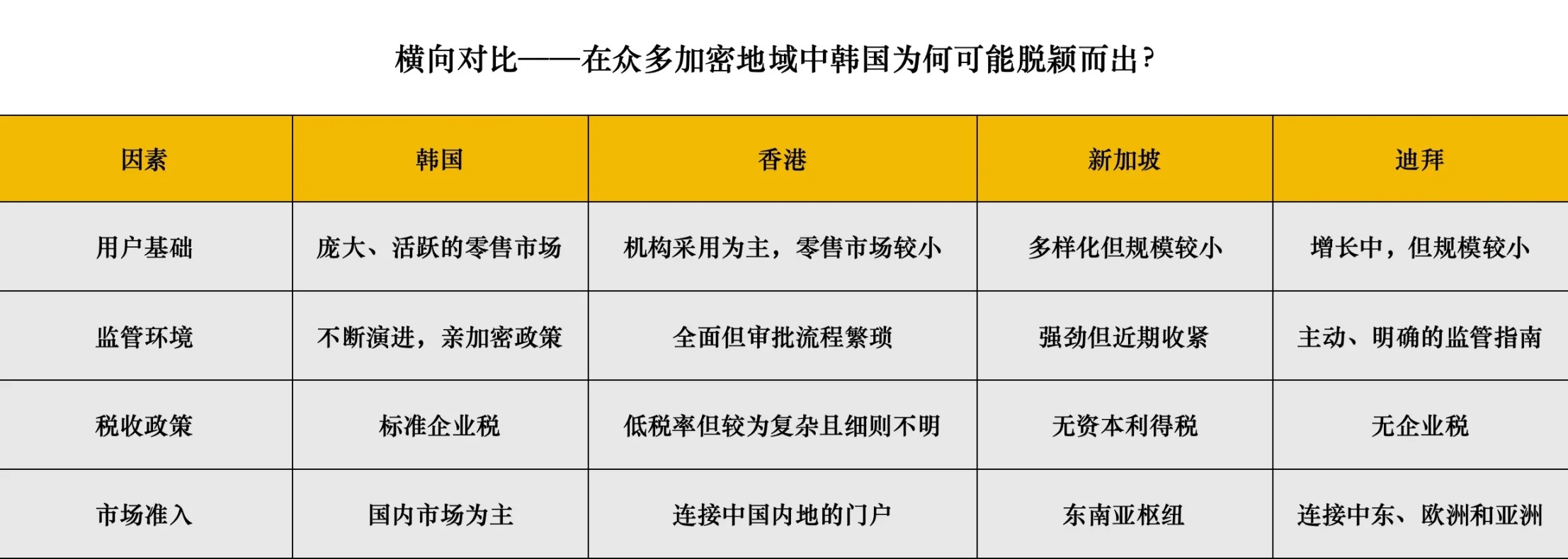
Native user adoption provides entrepreneurs with a strong market foundation, while institutional reforms create new development opportunities through policy support. Amid fierce global competition and geopolitical realignment, South Korea stands poised to emerge as a key global player in the crypto industry through this combined approach.
But this journey won’t be smooth. The tensions between technological innovation and central bank control, and between retail speculation and regulatory responsibility, mean that South Korea must continue searching for a new equilibrium between regulation and markets.
The next milestone isn't policy euphoria—it's institutional consensus.
Mixed Sentiments: Enthusiasm and Concern Coexist
Broad Anticipation of Stablecoin Institutional Benefits
South Korea ranks among the world leaders in digital asset adoption, with about one-third of its population—roughly 18 million people—invested in crypto. At times, the country’s total crypto trading volume has even exceeded the combined value of trades on Korea’s KOSPI and KOSDAQ stock markets. According to data from the Korean Financial Intelligence Unit (FIU), 78% of high-net-worth crypto holders are over 40 years old, indicating a clear shift in investment behavior among middle-aged and older investors.
For these users, stablecoin legalization means: lower transaction costs (fewer conversion and transfer steps); higher certainty in local currency transactions (avoiding FX volatility); and clearer tax reporting pathways.
For local fintech platforms like KakaoPay and Naver Pay, issuing stablecoins opens new avenues for product expansion and enhanced user retention. These tech giants are widely expected to be among the first to apply for compliant operating licenses.
Beware of Dual Misalignments: Policy Hype and Asset Bubbles
Amid widespread industry optimism, analysts urge caution.
A JPMorgan report notes that the sharp short-term rise in stocks like KakaoPay lacks fundamental backing—the actual institutional benefits of Lee’s policies have yet to materialize.
Some South Korean economists warn that stablecoin legalization must be accompanied by multi-dimensional safeguards, including mandatory reserve disclosures, cross-border audit mechanisms, and enforced KYC integration, to prevent them from becoming new vehicles for speculation.
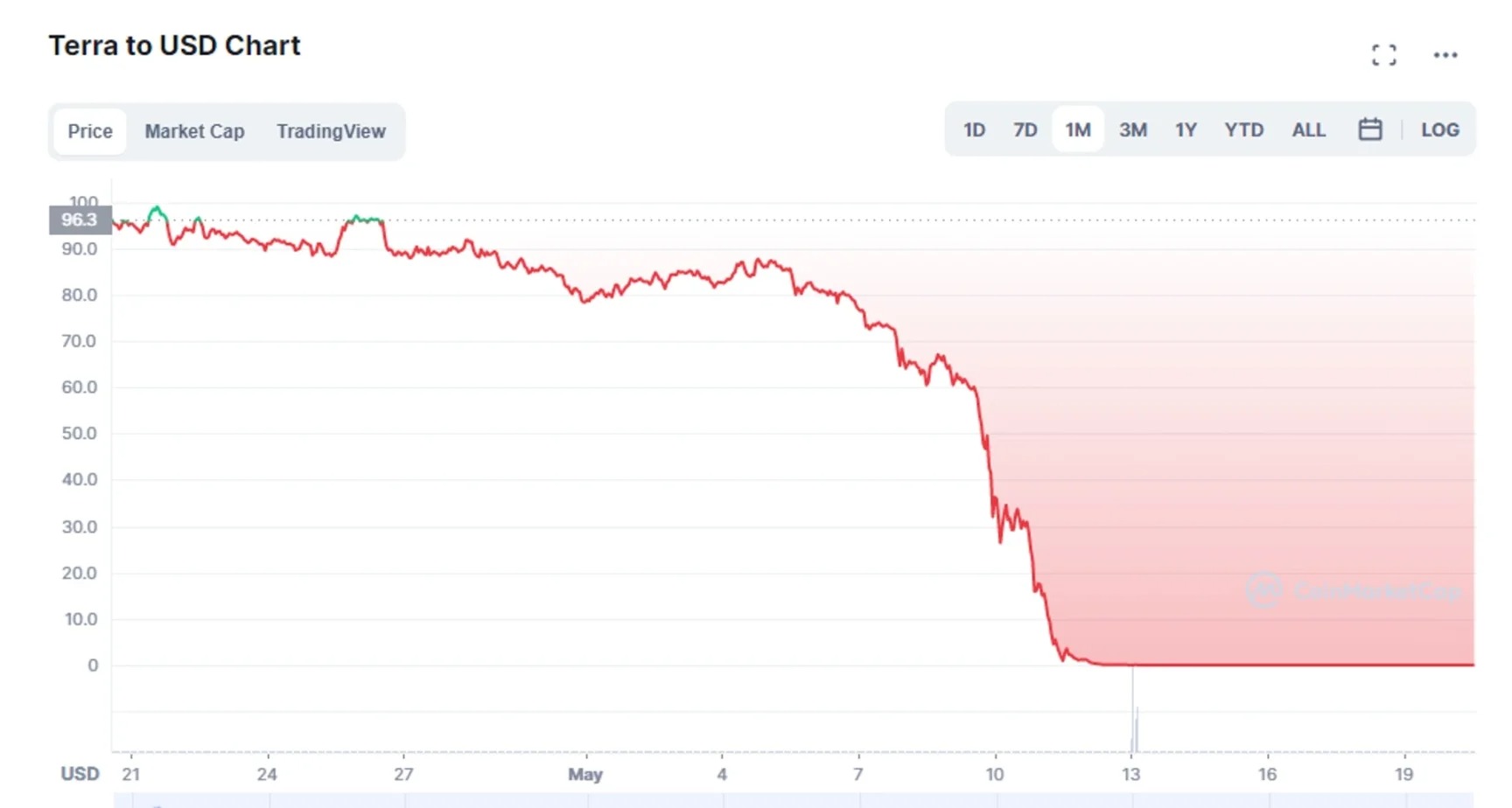
And there’s an unhealed wound beneath the surface: it has been less than three years since the collapse of Terra’s Luna.
Conclusion: Institutional Dividends Are Not Short-Term Gains, But Long-Term Competitiveness
The signal sent by South Korea’s stablecoin legalization is far from isolated. It reflects a deeper transformation—from digital assets moving from the periphery into mainstream finance, evolving from mere capital instruments into foundational financial infrastructure.
Compared to past eras of regulatory silence and gray-market growth, South Korea is now entering a new phase of “state-led regulatory dominance”—neither a Web3 libertarian utopia nor a heavy-handed crackdown, but rather a localized experiment in institutional compatibility.
In the next three years, the primary driver of crypto industry growth may no longer come from the U.S. or Hong Kong, but from whichever jurisdiction first achieves a “dynamic balance” between regulation and markets in areas such as local-currency stablecoins, ETF frameworks, and compliant pension investment mechanisms.
South Korea may well be leading this new frontier.
Join TechFlow official community to stay tuned
Telegram:https://t.me/TechFlowDaily
X (Twitter):https://x.com/TechFlowPost
X (Twitter) EN:https://x.com/BlockFlow_News
 Odaily