The market's next focus: Who is the "shadow Fed chair"?
TechFlow Selected TechFlow Selected
The market's next focus: Who is the "shadow Fed chair"?
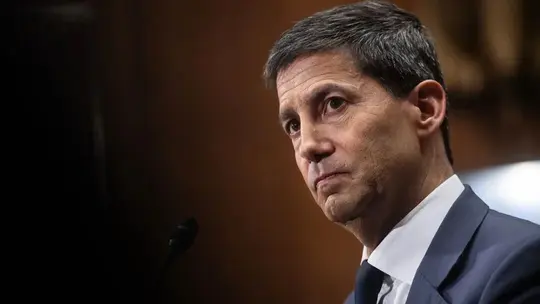
Three leading candidates emerge as the "shadow Fed chair": former Fed Governor Kevin Warsh, economic council director Kevin Hassett, and current governor Christopher Waller.
 Navigating Web3 tides with focused insights
By Long Yue, Wall Street Insights
Trump is preparing an early move, with a "shadow Fed chair" emerging.
According to Wind Trading Desk, Deutsche Bank's latest report indicates that U.S. President Trump, when asked about the next Federal Reserve chair, said related announcements could come "very soon." Although Chair Powell’s term runs until May 2026 and his board seat extends to 2028, Trump may leverage the vacancy of Fed Governor Adriana Kugler in January 2026 to position a successor earlier.
Deutsche Bank noted that Trump might support Treasury Secretary Bessent’s original concept of a "shadow Fed chair"—appointing the next chair well in advance. This strategy reflects the administration’s emphasis on influencing monetary policy discourse.
With expectations that the Trump administration’s “Big Beautiful Bill” will pass by mid-July and trade policies becoming clearer in the coming months, market attention will increasingly shift toward the identity of the next Fed chair.
Three Top Candidates Emerge, Policy Leanings Key
The Deutsche Bank report outlines three potential candidates frequently mentioned in recent U.S. media:
Kevin Warsh: Served as a Fed governor from 2006 to 2011; currently a Hoover Institution fellow. He is seen as the frontrunner in betting markets but has historically held hawkish views, criticizing the Fed’s quantitative easing and questioning last September’s 50-basis-point rate cut and the size of the Fed’s balance sheet.
Kevin Hassett: Currently Director of the National Economic Council under Trump, though his stance on monetary policy remains unclear.
Chris Waller: Current Fed governor who has recently expressed more dovish views, suggesting the Fed can ignore tariff-driven inflation and proceed with rate cuts.
Treasury Secretary Bessent has also unexpectedly entered the race. Deutsche Bank noted repeated inquiries from institutional clients asking whether Bessent could potentially take over the Fed.
Deutsche Bank Favors Waller as Most Likely Successor
The Deutsche Bank report argues that Trump, having called for a "100-basis-point rate cut to inject rocket fuel into the economy," would naturally lean toward a dovish candidate.
According to Deutsche Bank’s AI analysis, Waller has been the second-most dovish official since 2024, trailing only Chicago Fed President Goolsbee. Waller recently advocated publicly for prioritizing rate cuts while overlooking tariff-induced inflation—directly aligning with Trump’s demands.
However, the bank notes that dovishness alone isn’t sufficient. While all candidates considered by the administration may pledge rate cuts, actually implementing accommodative policy poses the real challenge.
The new Fed chair must persuade colleagues to adopt a different policy path. Since Fed decisions require majority votes from the FOMC, Waller, as a sitting governor, already has established alliances and thus a stronger foundation to drive policy shifts compared to external candidates.
In contrast, external candidates—especially those who have previously criticized the Fed (like Warsh) or supported economic policies that could raise concerns over Fed independence (such as Bessent or Hassett)—may face greater obstacles.
If Bessent were to become Fed chair, he would confront accusations of being both "referee and player"—assessing the outcomes of fiscal policies he himself implemented while simultaneously denying political interference in monetary decisions.
In comparison, Deutsche Bank believes incumbent governor Chris Waller stands the best chance.
The New Chair Will Face Independence Challenges
Deutsche Bank warns that regardless of who is chosen, markets are likely to test the next Fed chair’s independence and credibility in achieving inflation targets. This challenge could be even more severe if the nominee comes from within the current administration.
The context intensifies these risks: Trump has threatened to fire Powell and, despite strong economic resilience and rising inflation driven by tariffs, continues calling for aggressive rate cuts to give the U.S. economy "jet fuel."
With robust economic data coinciding with inflationary pressures from tariffs, market inflation expectations may rise prematurely. The incoming Fed chair will face a critical decision: whether to uphold the Fed’s hard-earned credibility in fighting inflation.
Join TechFlow official community to stay tuned
Telegram:https://t.me/TechFlowDaily
X (Twitter):https://x.com/TechFlowPost
X (Twitter) EN:https://x.com/BlockFlow_News