Wash’s Debut as Fed Chair: No Rate Cuts, No Rate Hikes—But Ready to “Say Less”?
TechFlow Selected TechFlow Selected
Wash’s Debut as Fed Chair: No Rate Cuts, No Rate Hikes—But Ready to “Say Less”?
The market almost unanimously expects the Federal Reserve to hold rates steady at its upcoming meetings—and may even remove the “dovish bias” language that hints at future rate cuts.
 Navigating Web3 tides with focused insights
By Bu Shuqing
Source: WallStreetCN
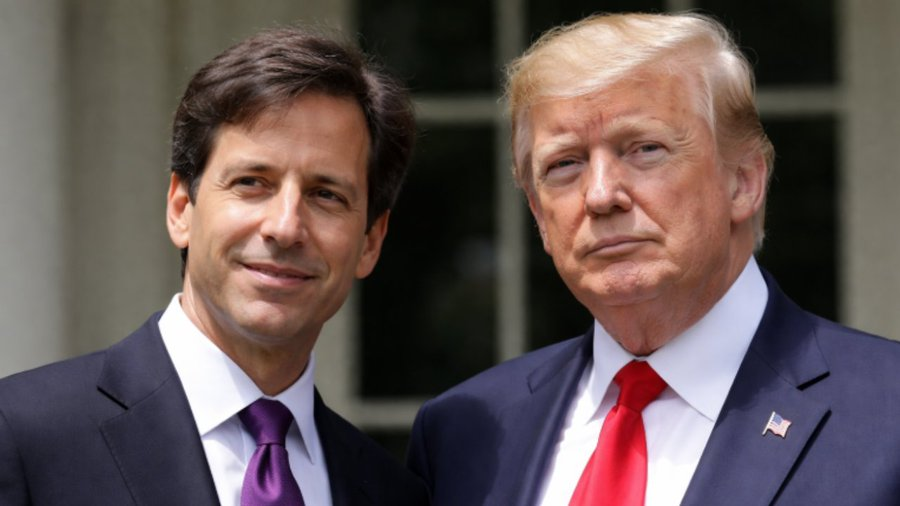
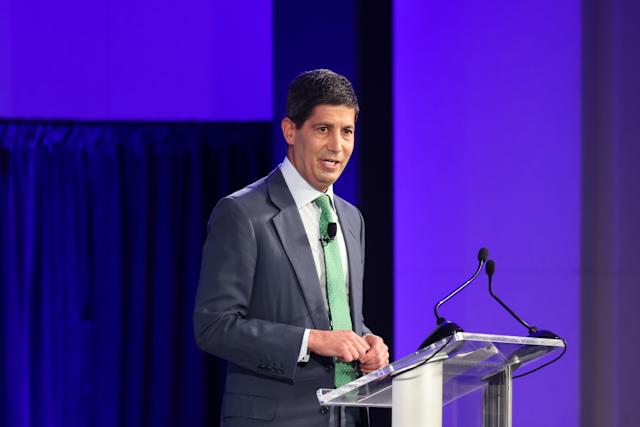
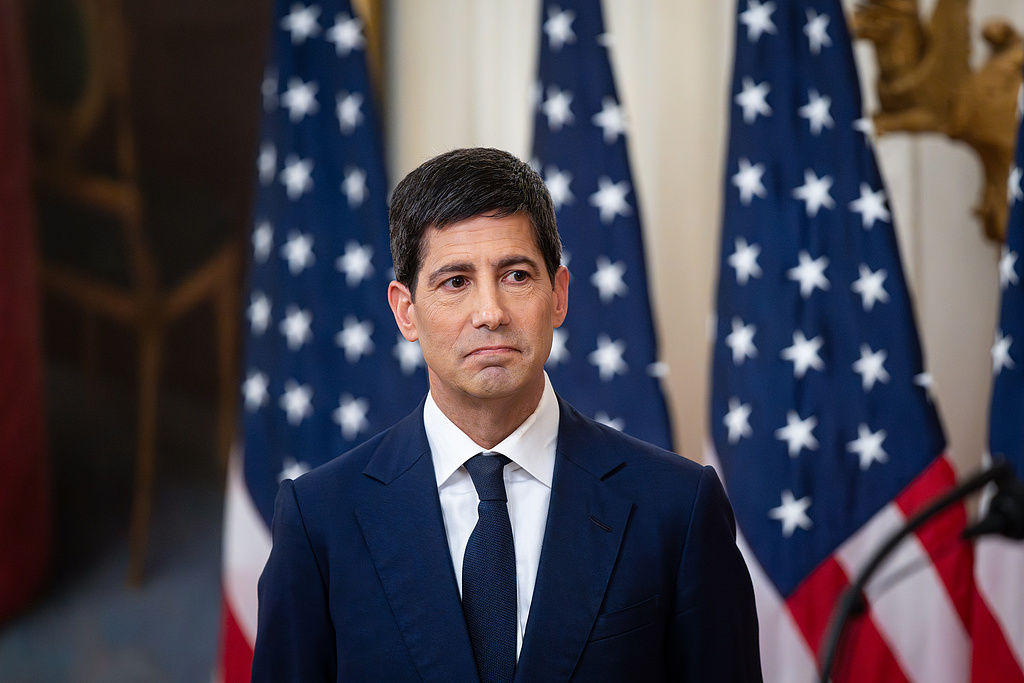
Kevin Warsh’s first Federal Open Market Committee (FOMC) meeting as Fed chair has drawn significant attention—but market expectations for early action remain extremely muted.
The Fed will announce its latest interest-rate decision early Thursday (Beijing time). According to a CNBC Fed survey, all 32 surveyed economists, fund managers, and strategists expect the Fed to hold rates steady at this meeting—and through all meetings in 2027.
Meanwhile, 88% of respondents anticipate the Fed will drop the phrase “bias toward easing” from its post-meeting statement this week—a phrase that previously signaled the next move would be a rate cut. This shift implies market bets on near-term rate cuts have officially exited the near-term horizon.
Persistently high inflation is the core reason for holding rates steady. Respondents pointed to Trump-era tariff policies and U.S.-Iran tensions as key drivers pushing inflation higher—effectively eliminating room for rate cuts. While Warsh himself is widely viewed as dovish, he inherits a markedly hawkish committee; several officials have publicly stated that rate hikes should remain an option if inflation remains above target.
Rate Outlook: No Rate Cuts Expected; Hikes Not the Base Case Either
Survey results show respondents broadly expect the federal funds rate to remain at its current level of 3.62% through 2027. Although elevated oil prices pose upside inflation risks, respondents do not believe they will trigger a rate hike.
Gregory Daco, Chief Economist at EY, said: “Although Warsh is generally seen as dovish, he will inherit a decidedly hawkish committee. Several policymakers have recently advocated retaining rate hikes as an option if inflation persists above target—and energy-driven inflation pressures will only reinforce this stance.”
Warsh himself has indicated rates could go lower, but faced with recent inflation rebound and stronger labor-market data, he has yet to signal whether he has revised his own outlook. After the survey closed, news emerged about a potential U.S.-Iran agreement—possibly giving Warsh earlier-than-expected scope to cut rates—but this remains highly uncertain.
John Ryding, Chief Economic Advisor at Brean Capital, takes a more hawkish view: “The FOMC should raise rates to curb rising inflation expectations and bring policy closer to neutral.” Guy LeBas, Chief Fixed-Income Strategist at Janney Montgomery Scott, added that short-term labor-market vulnerabilities have passed, and the Fed’s dual mandate is now clearly tilting toward inflation control.
Economic Resilience: Recession Risk Falls, Growth Forecasts Revised Upward
Despite tighter rate prospects, improving fundamentals provide Warsh with a relatively favorable handover environment.
Respondents raised their U.S. GDP growth forecast for 2026 to 2.2%, up 0.25 percentage points from the prior survey; the 2027 forecast stands at 2.3%. Both figures have largely recovered from earlier downgrades triggered by U.S.-Iran tensions. The probability of recession has fallen from 33% in April to 25%; unemployment forecasts for this year and next remain near the current 4.3% level.
Economist Hugh Johnson wrote: “Improving economic and employment conditions, coupled with modest equity gains, are hallmark features of this stage of the stock-market–economy–interest-rate cycle. Early warning signals of a bull-market-ending recession have yet to appear.”
Many respondents argue that a healthy labor market means the Fed should refocus squarely on its inflation target—a goal it has missed for most of the past six years.
Communication Reform: Market Supports ‘Less Talking,’ But Press Conferences Remain Uncertain
Beyond monetary policy, Warsh’s push to reform the Fed’s communication practices has garnered broad support among respondents.
The survey found 59% of respondents believe Fed officials speak too much, while only 38% consider current speech volume appropriate—aligning closely with Warsh’s advocacy for fewer public statements. Yet 59% expect Warsh to hold press conferences after every meeting—a stance at odds with his refusal during his April Senate confirmation hearing to commit to doing so.
On the “dot plot,” 53% of respondents favor scrapping the tool entirely. Proposed reforms—including releasing the dot plot several days after the meeting or linking individual dots to specific officials’ economic forecasts—were rejected by majorities.
Risk Landscape: AI Bubble and Inflation Tied as Top Threats
Inflation ranks as the top risk to growth in the survey, with the AI bubble a close second. Eighty-four percent of respondents view AI-related stock valuations as overextended—down 6 percentage points from December last year—with average overvaluation estimated at roughly 21%. Meanwhile, 69% see overall equity valuations as expensive—a share that marks the lowest level in nearly a year.
Drew Matus, Chief Market Strategist at MetLife Investment Management, warned: “The gap between AI’s reality and expectations poses risks to both equities and consumers reliant on wealth effects. The wealth effect itself may become the transmission channel for the next economic downturn.”
Respondents’ overall equity outlook remains cautious: they expect the S&P 500 to approach 8,000 only by 2027—a roughly 5.5% gain from current levels.
In contrast, concerns about credit-market risks have eased. Only 53% now view systemic credit risks as “rising”—down sharply from 75% in March—and just 3% see them as “sharply rising.”
John Donaldson, Director of Fixed Income at Haverford Trust Co., said: “Despite some bearish forecasts, we see no broad-based threat to credit markets. Any weakness appears confined to CCC- and CC-rated credits; credit spreads in the financial sector show no signs of stress.”
Join TechFlow official community to stay tuned
Telegram:https://t.me/TechFlowDaily
X (Twitter):https://x.com/TechFlowPost
X (Twitter) EN:https://x.com/BlockFlow_News