Understanding the Public Feud Between Musk and Trump
TechFlow Selected TechFlow Selected
Understanding the Public Feud Between Musk and Trump
Every person who follows and analyzes American politics will tell you the same prediction: Trump and Musk will eventually break up, and their split will be public and acrimonious.
 Navigating Web3 tides with focused insights
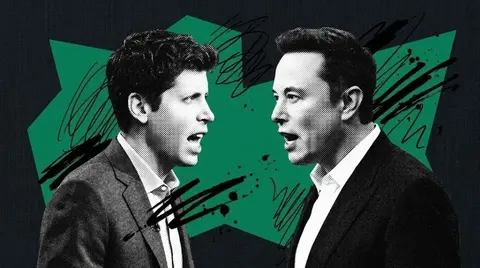
Anyone who follows or analyzes American politics would have predicted it: Trump and Musk were bound to break up, and publicly at that. Thus, the split between Trump and Musk is a highly predictable event—one widely anticipated. Yet this does not stop their social media brawl from becoming global breaking news and a topic of casual conversation.
The Background of Musk and Trump's Breakup
Musk was originally affiliated with the Republican Party. During Trump’s first term, their relationship was already strained (after Trump withdrew from the Paris Climate Agreement, Musk exited Trump’s business advisory council). They were never close. The reason they drew closer was fundamentally Musk’s complete loss of faith in the Democratic Party. After Trump’s first assassination attempt in July 2024, Musk dramatically joined Trump’s camp, donating $300 million for the election, mobilizing his entire X platform in support of Trump, and rallying a wave of tech-aligned conservatives into the Trump/MAGA fold. At the time, many viewed Silicon Valley’s end of its political “deal” with the Democrats and its realignment with MAGA as one of the most significant historical shifts since the turn of the century. Within the tech community, Musk helped transform Trump from a politically taboo figure into a trend worth proudly embracing. This shift paved the way for the alliance between the Trump administration and emerging sectors such as artificial intelligence and cryptocurrency.
Yet the political alignment between Musk and Trump has always been one of convenience—“the enemy of my enemy is my friend.” MAGA provided votes; Musk and the tech right provided funding and media influence. Together, they pushed Trump back into the White House and countless MAGA politicians into Congress. But this political coalition was never stable. Trump’s core base, MAGA, consists largely of lower- and middle-income white Americans who advocate populist economic policies and are deeply suspicious of big corporations and capital—be it Silicon Valley giants, Wall Street titans, Hollywood, or U.S. firms aggressively outsourcing overseas. The MAGA base believes large corporations and capital care only about their own profits, not “America First,” and certainly not the American people. As a result, Musk and the tech right have long been seen as opportunists who “joined the MAGA revolution at the last minute,” viewed with suspicion within the MAGA camp. Furthermore, Musk’s support for high-skilled immigration has angered the MAGA base, reinforcing perceptions that he has revealed his true colors. The separation between the tech right and MAGA was always just a matter of time.
Musk entered Trump’s camp with a clear political agenda: increase government efficiency, cut spending, reduce deficits, and prevent American bankruptcy. See the author’s earlier article, “Why Elon Musk Fully Supports Trump—An Interpretation Based on an Interview.” In that interview, Musk expressed his vision of forming a “Department of Government Efficiency” to serve in Trump’s administration and help streamline government operations.
Improving government efficiency, cutting spending, reducing deficits, and preventing national bankruptcy—this was the core political pact between Musk and Trump.
After Trump took office, Musk led the so-called “Department of Government Efficiency” (DOGE), vowing to slash $2 trillion in federal spending. After months of effort, however, the initiative collapsed into chaos, alienating numerous Trump aides and drawing fierce criticism from both the government bureaucracy and the media. Ultimately, it “saved” only around $100 billion—a figure widely disputed. In reality, DOGE became a tool for Trump to assert control over the federal bureaucracy (“the deep state”), while Musk became a political “tool” and sacrificial pawn. The project ended in failure, and Musk, having invested himself fully, faced political backlash that spilled over into his business empire.
Since joining the Trump administration, Musk has observed Trump closely. Over the past few months, through various events, he has been silently deducting points from Trump internally. From flawed policies (such as the tariff wars) to Trump and his family’s self-serving acts of crony capitalism, Musk despised it all. Yet for the sake of larger goals, Musk held back, tolerating these issues despite his growing dissatisfaction, offering only subtle criticisms publicly.
Then came Trump’s “One Big, Beautiful Bill”—the final straw that broke the relationship. This bill, combining tax cuts with increased spending, is projected to add $2.4 trillion to the U.S. budget deficit over the next decade. Economically, it amounts to self-sabotage. Bond markets have already reacted sharply. All of Musk’s DOGE efforts were rendered laughable. He publicly condemned the bill as a “disgusting atrocity” that would bankrupt America.
Trump’s response crossed Musk’s red line: he claimed Musk opposed the bill solely because electric vehicle subsidies were being eliminated. In fact, Musk had never mentioned EV subsidies to Trump from day one. He believed subsidies distort markets and that Tesla should not depend on them. Instead, he saw budget reduction as vital for the nation’s long-term health—and was willing to sacrifice commercial interests for that cause. Musk’s motivation was ideological, not self-interested. His political involvement harmed his own financial standing, while Trump’s actions repeatedly proved he operates politics as a profit machine. As the saying goes, “A gentleman may be killed but not humiliated.” Musk felt Trump’s accusation was a profound insult—reducing a principled stance to petty greed. He thought: after investing so much money, risking his personal reputation and business, he received not even basic gratitude or respect.
For Musk, the “One Big, Beautiful Bill” struck at fundamental principles and ideology, threatening America’s very survival and contradicting the original purpose of his alliance with Trump. Having quietly deducted points from Trump over months, Musk now saw him reach zero—or even negative points. Their political divergence became inevitable. By this point, their public feud had damaged trust and shaken the foundation of their relationship. Given both men’s strong personalities, reconciliation is extremely difficult—even if they superficially compromise or stage a truce (even a hug in the Oval Office)—such gestures cannot erase the accumulated resentment.
In this conflict, Musk was actually the first to attack. Trump remained defensive, showing restraint. He understands Musk’s role as a major donor and owner of a key social media platform, and recognizes Musk’s long-term influence on American politics. Even if Trump doesn’t need Musk personally, his allies, successors, and family do—or at least cannot afford to alienate him. Thus, regarding prior disputes, including Musk’s attacks on Trump’s advisors, Trump consistently signaled willingness to compromise, attempting to accommodate. Musk initially showed restraint too, limiting criticism to Trump’s inner circle. But now that line has been crossed—Musk has begun attacking Trump directly. Deep down, he simply isn’t afraid of Trump.
Many American observers familiar with both Trump and Musk accurately predicted that if they split, it would happen in the most explosive way possible, escalating uncontrollably, full of drama and “entertainment value,” and reshaping the broader U.S. political landscape. Now we can only wait and see.
Below is an analysis of what might come next.
Next Steps: Scenarios and Projections
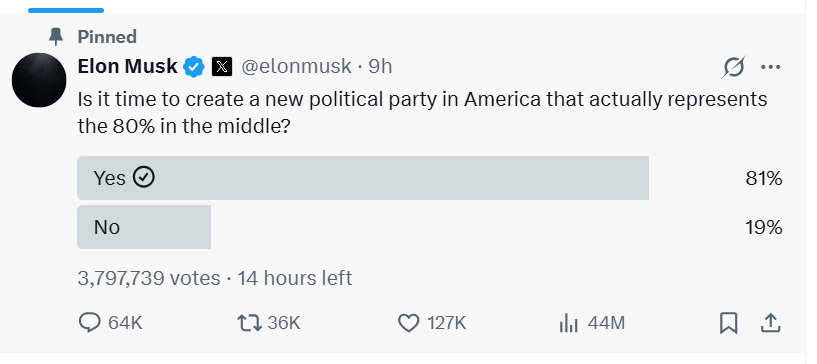
1. Musk: He has already launched a poll on X asking whether an “80% Party” representing the majority of Americans should be formed. Over 80% of respondents voted “yes.” Clearly, Musk is dissatisfied with both Republicans and Democrats and is exploring or even organizing new political forces—either by recruiting politicians from existing parties or forming a new party altogether. Given widespread disillusionment with establishment politics and anger over Trump’s corruption, creating a new party is not impossible. In the UK and Germany, new parties independent of traditional elites have emerged and gained political footholds.
2. Musk’s Business Empire: Two aspects are involved—political and commercial.
On the political front, if Musk switches sides and becomes a leader opposing Trump, he may regain support from his former liberal consumer base. However, given his past support for Trump, he carries a political “stain” and must “atone.” First, he must prove he is driven by vision and values, admitting he “misjudged” Trump and “boarded the wrong ship.” Next, he must demonstrate a complete turnaround—launching unprecedented attacks on Trump, funding anti-Trump movements, exposing more scandals as an “insider,” dismantling Trump’s image, and undermining his political base. Third, he must purge ideologically extreme elements from his platforms, such as white supremacy symbols (e.g., Nazi salutes). If he succeeds, he may win back consumers and rekindle American enthusiasm for EVs (currently at a low). In Europe, he must de-emphasize political involvement, stop supporting populist right-wing parties, and rebuild European trust. In short, Musk must politically reposition himself and realign with his traditional, mostly left-leaning consumer base. However, with Trump governing for the next three-plus years, direct confrontation will harm Musk’s business—he won’t get government contracts or favorable regulations.
Commercially, the challenges are greater. As an individual, Musk has limited time and energy. If he immerses himself in political warfare, he won’t have bandwidth to run his companies. What he should do now is step back from politics and refocus on business. Tesla’s stock dropped 14% yesterday; investors fear not only harsher regulation but also whether Musk can stay focused. Even if Musk redeems himself politically, Tesla cannot recover if he neglects operations—Tesla’s products and technology are already falling behind.
Trump: Trump views politics as reality TV (see the author’s article “Reality TV and the Essence of Trump Politics”). Conflict and drama are the essence of reality TV—so he doesn’t fear conflict; he sees opportunity in it. Trump is combative and intolerant of criticism, especially betrayal. Yet he has shown unusual leniency toward Musk, knowing Musk’s business acumen, vast influence, value as a GOP donor and media ally, and the fact that Musk is decades younger. Trump knows the future belongs to Musk—his successor and Republican allies will need Musk’s long-term support. So even Trump gives Musk some leeway. On a personal level, Trump likes Musk, seeing him as a childlike genius (“90% genius, 10% child”) and thus tolerates him. If Musk stops attacking, offers Trump a face-saving exit, reaffirms Trump’s greatness, expresses loyalty, and acknowledges Trump’s leadership, Trump might forgive him—he has forgiven others who attacked him (like JD Vance and Tucker Carlson)—as long as they kneel and pledge allegiance, they can still “pass,” at least superficially. But to truly regain Trump’s favor, Musk would have to grovel publicly, repent deeply, and metaphorically kiss the king’s boots—an act nearly impossible for someone like Musk. Expect Musk to maintain and intensify his attacks (posting daily on X), while Trump remains on defense. It’s unclear how hard Trump will strike back—he has many ways to hurt Musk: cancel government contracts, investigate drug use, exploit Musk’s China ties. But Trump may prefer staying on defense and letting allies fight for him. Either way, reconciliation seems highly unlikely.
4. Republican Politicians: Now all are in agony, forced to pick sides between Trump and Musk (even silence is a form of choosing—“not choosing” equals “choosing”). Every Republican must now consider their post-Trump positioning, which affects their political future. Trump represents the “present” (next 3.5 years); Musk represents the “future” (next several decades). Many privately align more with Musk’s policy views and values but have stayed silent due to Trump’s dominance. But with Musk leading the charge and public support growing, some politicians will quietly gravitate toward him. This could trigger a new political realignment—perhaps invisible now, but the seeds are planted.
5. MAGA Base: The MAGA base—lower- and middle-income white Americans—has always been skeptical of Musk. Ordinary people struggle to relate to a Silicon Valley billionaire. Their focus is anti-corporate, anti-capitalist populism. They suspect Musk joined the MAGA revolution opportunistically at the last moment. They distrust his business empire and technological visions (EVs, AI, humanoid robots, Mars colonization). They are wary of his globalist agenda (e.g., his ties to China). They lack intuitive understanding of fiscal conservatism. Musk is also a poor communicator. For now, the MAGA base will likely remain观望. With no natural affinity for Musk and inherent distrust of big capital, they easily believe Trump’s narrative: Musk turned against him over lost EV subsidies. Ultimately, the opinions of MAGA influencers will decide.
1) Stephen Bannon, a vocal anti-Musk figure, will double down despite sharing Musk’s fiscal conservatism on certain issues. He will amplify the message that Musk has always threatened the MAGA movement.
2) Tucker Carlson: Politically independent, aligned with the authentic MAGA base (“true MAGA”), and often subtly critical of Trump. He is expected to align with JD Vance. His stance on this issue will be a true bellwether.
3) Joe Rogan: Not strictly part of the MAGA base, but hugely influential among straight men. Independent-minded, he would likely support Musk if Musk exposes Trump’s political corruption.
4) Laura Loomer: A powerful MAGA influencer, but blindly loyal to Trump. She strongly supports Israel and opposes Islam, whereas Musk is not pro-Israel (and X is flooded with anti-Israel and antisemitic content). This alone makes her unable to back Musk. She may become a leading public voice against him.
But the most important figure here is JD Vance—the presumed Trump successor.
6. JD Vance: Widely seen as the strongest and most resilient bridge between MAGA and the tech right. He occupies a unique space: able to communicate with Trump, resonate psychologically with the MAGA base, champion cutting-edge technologies like AI, lead antitrust actions against big tech (e.g., breaking up Meta and Google), and sharply criticize elite universities. His position is exceptional. What he does next is crucial. He will almost certainly publicly back Trump and attempt to mediate the Trump-Musk conflict—both externally (downplaying tensions) and internally (facilitating dialogue)—to carve out his own role. Among all politicians, Vance has the most at stake: as Vice President and heir apparent, he must navigate relationships with Trump, the MAGA base, and major donor Musk. This presents an unprecedented political challenge. Vance’s stance will be a key indicator.
7. Democrats: They’ve waited a long time for this moment. Previously, despite tensions between Trump and Musk, their alliance held, so media expectations of a split diminished. Some even thought Musk might quietly exit Washington while maintaining a personal rapport with Trump. Thus, the public rupture slightly exceeds expectations. Now, some Democrats may consider whether to co-opt Musk. But this would require abandoning cultural left-wing agendas—wokeness, DEI—and instead emphasizing judicial reform, crime fighting, opposition to illegal immigration, and tolerating Musk’s white-centric views—a difficult trade-off. Still, many Democrats see an opening. The question is who moves first.
8. Social Media Competition: Musk owns X. Trump has been cultivating Truth Social, where he posts all major updates, rarely posting on X except symbolically. Going forward, he may abandon X entirely. But few actually use Truth Social—it’s widely seen as Trump’s personal megaphone, dependent on him. Once he leaves, the platform dies. The future of political discourse remains on X, which Musk fully controls. By tweaking algorithms or adjusting Grok, he can significantly shape public opinion.
9. Tech Right: The tech right’s alignment with Trump was largely driven by Musk (see “The Four Types of People in America’s ‘Tech Right’”), and Musk remains their opinion leader. Post-split, Musk will aggressively attack Trump within his circles. The tech right may not abandon the Republican Party, but may withdraw support from Trump personally, backing other candidates instead. Moreover, post-election, previously hostile Silicon Valley leaders (Zuckerberg, Bezos, Cook) briefly experienced a honeymoon with Trump, but tensions resurfaced due to trade wars and antitrust actions against big tech. Going forward, MAGA figures like Stephen Bannon will intensify attacks on big tech, emphasizing MAGA’s populist roots. Musk’s departure will severely weaken Silicon Valley’s political alliance with Trump and MAGA.
10. China: Musk has deep business ties with China and has frequently praised China publicly—its system, governance, infrastructure, tech firms, and innovation. Expect the Trump camp to intensify attacks on Musk’s China connections, turning them into a political liability. This shows how fragile and volatile capital-political alliances are in today’s America—any strategy relying on Musk to influence the Trump administration now faces total vulnerability.
The above constitutes a preliminary analysis of the Musk-Trump breakup—a vivid case study of how capital and politics interact in the United States.
Join TechFlow official community to stay tuned
Telegram:https://t.me/TechFlowDaily
X (Twitter):https://x.com/TechFlowPost
X (Twitter) EN:https://x.com/BlockFlow_News