Nexus Interview | Jens Groth on Building the Future of Global Verifiable Computing
TechFlow Selected TechFlow Selected
Nexus Interview | Jens Groth on Building the Future of Global Verifiable Computing
As an important pioneer in the field of zero-knowledge proofs, Professor Jens Groth proposed the widely used Groth16 system in 2016, and his research has laid a solid foundation for today's development of zk computing.
 Navigating Web3 tides with focused insights
Interviewee: Jens Groth, Chief Scientist at Nexus
Interview and article by: Alex, OpenBuild Content Team
As AI, big data, and Web3 rapidly converge, verifying the authenticity of large-scale computations has become a core technical challenge in the digital world. Nexus is advancing a cutting-edge initiative—building a globally coordinated verifiable computing infrastructure that integrates a zero-knowledge virtual machine (zkVM)[1] with a distributed prover network[2] to create a trusted "supercomputer."
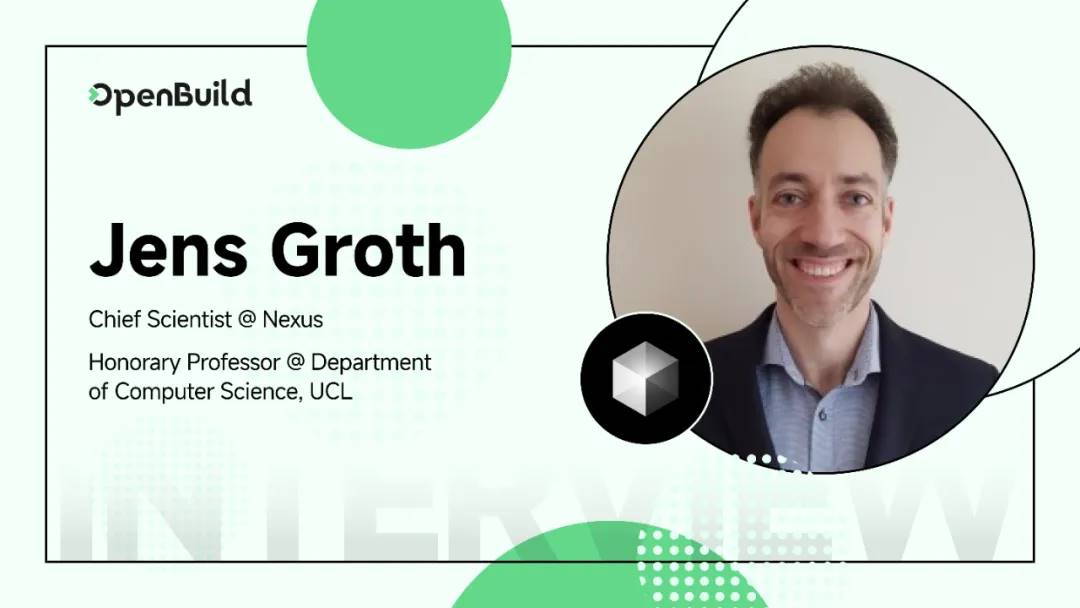
In this exclusive interview, OpenBuild speaks with Jens Groth, Professor and Chief Scientist at Nexus, a leading cryptographer, to explore key topics including the technical evolution of zkVMs, the design of distributed computing architectures, and pathways to trusted execution in AI applications. He also shares how Nexus achieves a balance between privacy, performance, and scalability—laying the foundational infrastructure for a verifiable digital civilization.
A pioneering figure in zero-knowledge proofs, Jens Groth introduced the widely adopted Groth16[4] system in 2016, a foundational contribution that underpins much of today’s zk computing advancements.
The Logic Behind Building a Verifiable World
OpenBuild: Can you summarize Nexus's vision and mission in one sentence?
Jens Groth: Nexus is building the foundational infrastructure for a "verifiable world."
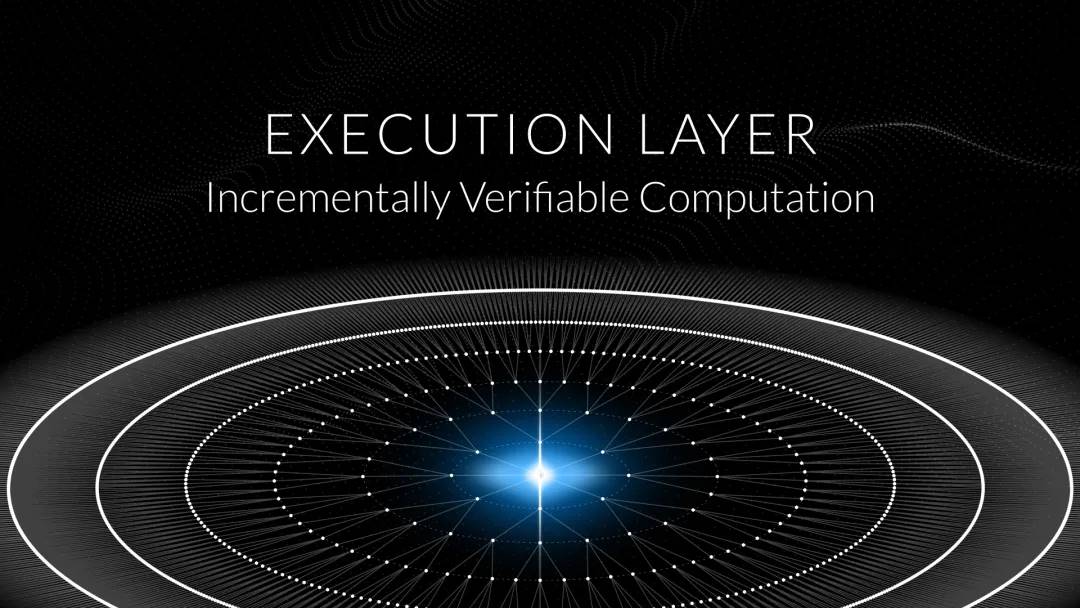
We believe that all important digital activities in the future—whether data generation, AI-driven decisions, or on-chain transactions—must be backed by verifiability. Nexus is creating the technological foundation to make this possible.
Technical Evolution of zkVM 3.0
OpenBuild: What are the key technical upgrades in zkVM 3.0 compared to previous versions?
Jens Groth: It’s a complete rewrite from the ground up—from architecture to execution performance.
Nexus zkVM 3.0[5] targets the RISC-V[6] instruction set, offering strong modularity and scalability, supported by formal specifications to ensure security and standardization.
We’ve also introduced a redesigned guest runtime, an efficient memory checking mechanism, and leverage StarkWare[7]'s Stwo prover[8] for backend proof generation. The result? Up to 1000x faster than versions 1.0 and 2.0, while being significantly more user-friendly.
A Distributed Compute Network Anyone Can Join
OpenBuild: How does Nexus’s distributed prover network work? Can ordinary users participate?
Jens Groth: Absolutely. We’ve lowered the barrier to entry so users can join the network with just a laptop or even a smartphone, contributing idle computing resources. Every connected device increases the network’s overall computational power.
Unlike traditional blockchain “miner models,” we unlock the potential of devices worldwide. Users who contribute compute receive incentive points called NEX Points[9] from Nexus.
Developer-Friendly Verifiable Computing Toolchain
OpenBuild: How does Nexus support developers building verifiable applications on zkVM?
Jens Groth: We provide a comprehensive SDK, CLI toolchain, and detailed documentation[10] to help developers easily build verifiable programs.
Our APIs include misuse-prevention mechanisms and are carefully balanced across performance, verifiability, and security—our goal is to make verifiable execution a standard part of everyday development.
Integration and Applications in AI
OpenBuild: How does Nexus serve AI use cases? What are some typical applications?
Jens Groth: Trustworthiness in AI[12] is becoming a critical challenge. Nexus’s verifiable computing capabilities apply to multiple scenarios:
• AI Agent Verification: For example, verifying that an AI completed a flight booking within authorized scope and budget.
• Secure Trading Assistants: Ensuring AI tools don’t generate hallucinated trades.
• Verifiable Media: Cameras could automatically sign images with geolocation and timestamp data to prevent deepfakes.
These are universal use cases. Nexus aims to become the foundational standard ensuring trust in such AI applications[13].
Design Philosophy: Privacy vs. Performance
OpenBuild: How does Nexus technically balance privacy protection with performance optimization?
Jens Groth: The core cost of verifiable computing lies in generating zk proofs, which remains relatively expensive today. Nexus significantly reduces latency by parallelizing computation across the prover network.
Running verifiable computation locally offers nearly free privacy, as zk proofs are compact and do not expose sensitive data. Distributed processing introduces potential privacy risks, so we’re actively researching ways to maintain both privacy and efficiency within a distributed architecture.
Roadmap and Future Plans
OpenBuild: What are Nexus’s priorities over the next 1–2 years?
Jens Groth: We plan to launch another testnet this year, preparing for the mainnet release. Additionally, we’ve just established the Verifiable AI Lab[14] to explore deeper integration between AI and verifiable computing.
In terms of market expansion, our ambition is bold: We want the entire digital world to become verifiable. We’re already collaborating with over 50 projects and remain committed to our product philosophy of "rapid delivery and continuous iteration."
Conclusion
This interview reveals that Nexus isn’t just building another “chain.” It’s redefining how trusted computation works in the digital world. Its zkVM and distributed prover network will form a new paradigm for trustworthy collaboration across AI, Web3, and even traditional internet systems.
References
[1]zkVM: https://nexus.xyz/zkvm
[2]prover network: https://blog.nexus.xyz/nexus-launches-worlds-first-open-prover-network/
[3]Jens Groth: http://www0.cs.ucl.ac.uk/staff/j.groth/
[4]Groth16: https://eprint.iacr.org/2016/260
[5]Nexus zkVM 3.0: https://blog.nexus.xyz/zkvm-3-0-and-beyond-toward-modular-distributed-zero-knowledge-proofs/
[6]RISC-V: https://riscv.org/
[7]StarkWare: https://starkware.co/
[8]Stwo prover: https://github.com/starkware-libs/stwo
[9]NEX Points: https://docs.nexus.xyz/layer-1/network-devnet/nex-points
[10]documentation: https://docs.nexus.xyz/home
[11]Verifiable Executio: https://blog.nexus.xyz/the-nexus-execution-layer-incrementally-verifiable-computation/
[12]AI’s trust problem: https://hbr.org/2024/05/ais-trust-problem
[13]Trust in AI applications: https://blog.nexus.xyz/nexus-zkmcp-verifiable-model-execution/
[14]Verifiable AI Lab: https://blog.nexus.xyz/nexus-verifiable-ai-lab/
Join TechFlow official community to stay tuned
Telegram:https://t.me/TechFlowDaily
X (Twitter):https://x.com/TechFlowPost
X (Twitter) EN:https://x.com/BlockFlow_News