The Past and Present of Meme Coins
TechFlow Selected TechFlow Selected
The Past and Present of Meme Coins
Technological innovation and community building are key, and in the future, meme coins will still have a unique influence in the crypto space.
 Navigating Web3 tides with focused insights
Author: AquaTri
1. TL;DR
This article systematically reviews the development of meme coins by analyzing representative cases and revealing their unique value logic: unlike traditional financial assets, the core value of meme coins lies in "cultural influence × community consensus," rather than being solely based on technology or utility. Based on their evolutionary characteristics, the development can be divided into three key phases:
1.1. Emergence / Foundation (2013–2016) — Wild Growth, Survival of the Fittest
-
Fleeting Type: Short-term hype with no cultural depth, quickly dies out. (e.g., Mooncoin, TIPS, Nyancoin)
-
Durable Champion Type: Cultural symbol + community-driven, long-term survival. (e.g., DOGE)
1.2. Dormancy / Explosion (2017–2021) — The Era of Smart Contracts, Meme Coins Undergo Transformation
-
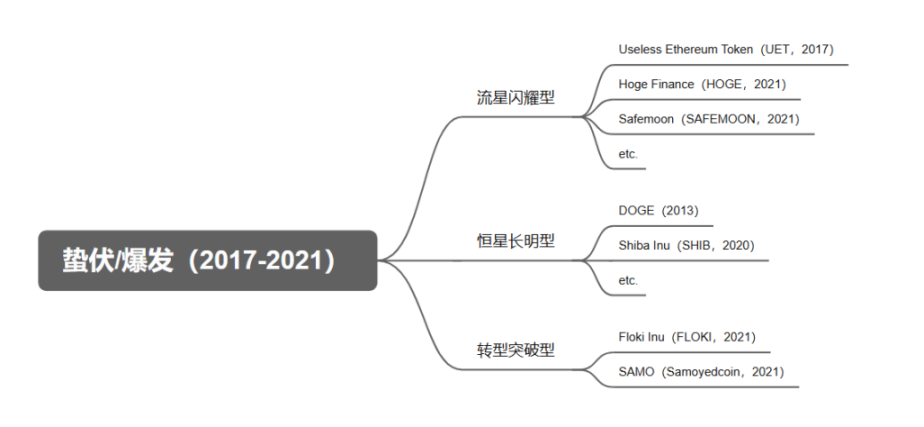
Shooting Star Type: Speculation-driven, bubbles burst rapidly. (e.g., UET, HOGE)
-
Everlasting Star Type: Ecosystem expansion, breaking limitations. (e.g., SHIB’s ShibaSwap)
-
Transformation Breakthrough Type: Attempts innovation but progresses slowly due to various constraints. (e.g., FLOKI’s metaverse blueprint, SAMO’s chain binding)
1.3. Consolidation / Restructuring (2022–2025) — New Narratives Rise, Market Begins to Reshuffle
-
Short-term Hype Type: Relies on trends, extremely high risk. (e.g., TRUMP’s political narrative surge)
-
Ecosystem-Driven Type: Leverages public chains, short-term explosion. (e.g., WIF, BONK)
-
Narrative Innovation Type: AI + Meme, concept炒作, trust crisis. (e.g., GOAT)
-
Cultural Symbol Type: Internet celebrity IP, short-term popularity. (e.g., MOODENG)
Meme coins will continue to face the balancing test between "hype and substance," where technological innovation (such as AI, DeFAI) and community building will become critical factors. Although the market is undergoing adjustments, as a quintessential product of attention economy, meme coins will retain their unique position and influence in the cryptocurrency domain.
2. Looking Back at History, Tracing the Evolution:
As one of the most unique phenomena in the cryptocurrency space, meme coins combine cultural attributes with financial traits. Reviewing the history of meme coins is essentially revisiting the collision between internet culture and financial speculation.
From an initially satirical joke to now occupying a place in the market, meme coins are demonstrating that—perhaps in this era—cultural resonance and community belief may drive value creation more effectively than technical whitepapers. While the traditional financial world still attempts to create new value, meme coins have already reshaped people's understanding of "value" itself.
(Image: Original / Source: Internet)
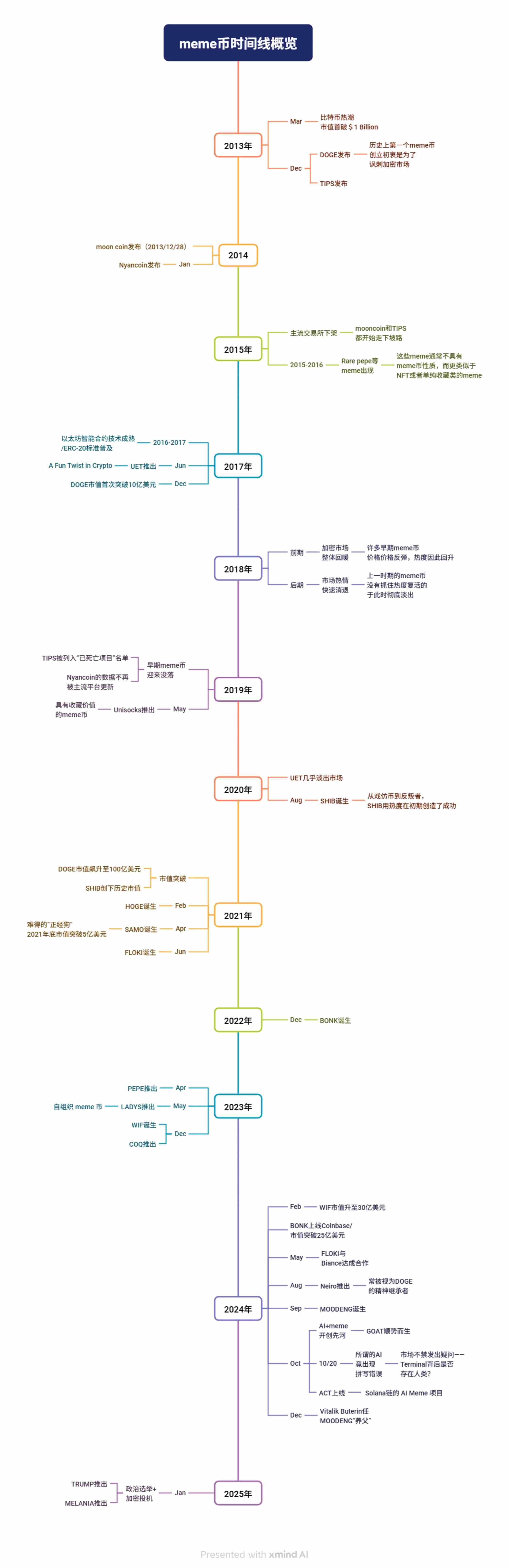
In the age dominated by social media, the speed and manner of information dissemination have fundamentally changed. A popular meme from Reddit or Twitter can gain hundreds of millions of views globally within hours, and this viral power is now directly converted into financial value. As the perfect vehicle for such transformation, meme coins have written their own stories and legends along the timeline.
2.1. Emergence / Foundation (2013–2016) — Pioneers Stand Tall Amid Rising Waves; the Disillusioned Depart Quietly During the Great Sifting
This period witnessed the original innovation journey of meme coins from zero to one, featuring a unique ecosystem marked by wild growth and natural selection. Marked by the birth of DOGE in December 2013 and ending with Ethereum’s smart contract maturity in 2016, it formed the purest and most authentic "Genesis Era" in meme coin history. (Due to limited early project disclosures, some data may come from historical forums or third-party archives.)
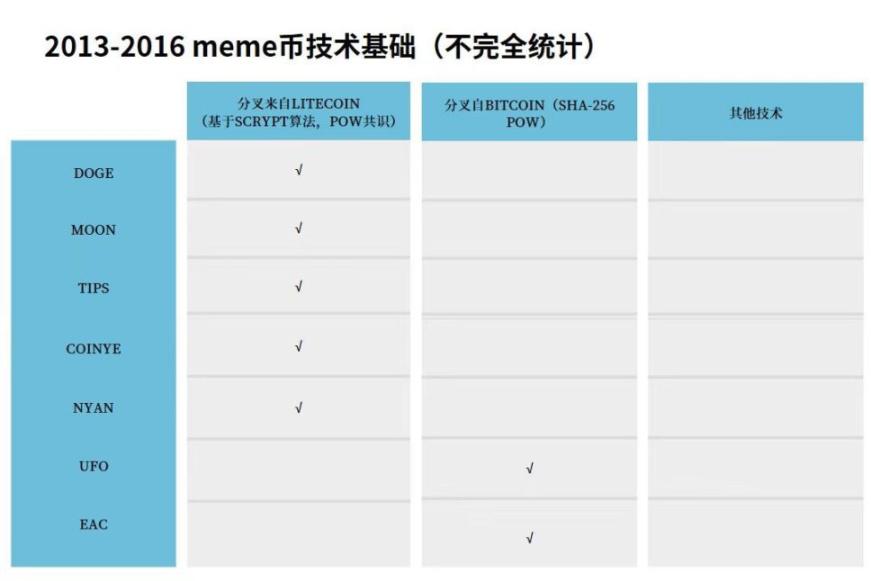
Technically, except for a few exceptions, meme coins during this phase were almost entirely forks of Bitcoin or Litecoin code.
(Image: Original; Source: Internet)
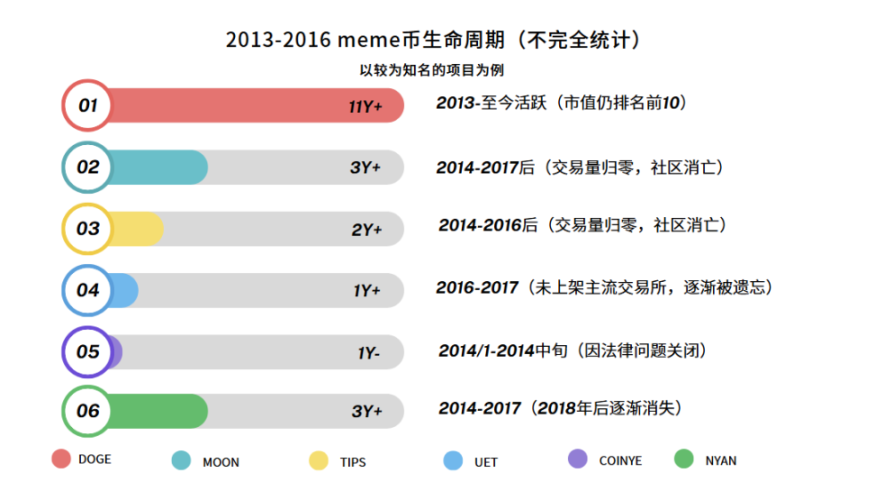
In terms of market performance, CoinMarketCap historical data shows that meme coins born in this period had an average active lifespan of only 11.7 months, yet survivors like DOGE exhibited astonishing resilience.
Historically, the foundational significance of this phase cannot be underestimated. Indeed, history tells us: true innovation often emerges when rules are not yet established. The unstructured experimental ground of 2013–2016 preserved the most precious rebellious genes and innovative spirit for the cryptocurrency world.
(Image: Original; Source: Internet)
2.2. Dormancy / Explosion (2017–2021) — Visionaries Rise with the Tide; Titans Fall Amid Changing Winds
Over these five years, the market witnessed meme coins’ transformation from niche subculture to mainstream financial assets. With the widespread adoption of the ERC-20 standard in 2017 as a technical turning point and SHIB’s record market cap in 2021 as a milestone, meme coins completed their qualitative leap from “internet jokes” to “phenomenal investment targets.”
On the technical front, the maturation of smart contracts completely redefined the issuance logic of meme coins. According to Ethereum blockchain data, most meme coins created between 2017 and 2021 adopted the ERC-20 standard or relied on other protocols, reducing issuance costs to less than one-thousandth (compared to tens of thousands of dollars for independent chain development). This democratization of technology, like a double-edged sword, sparked a frenzy of “everything can be memed,” but also planted seeds for homogenized competition.
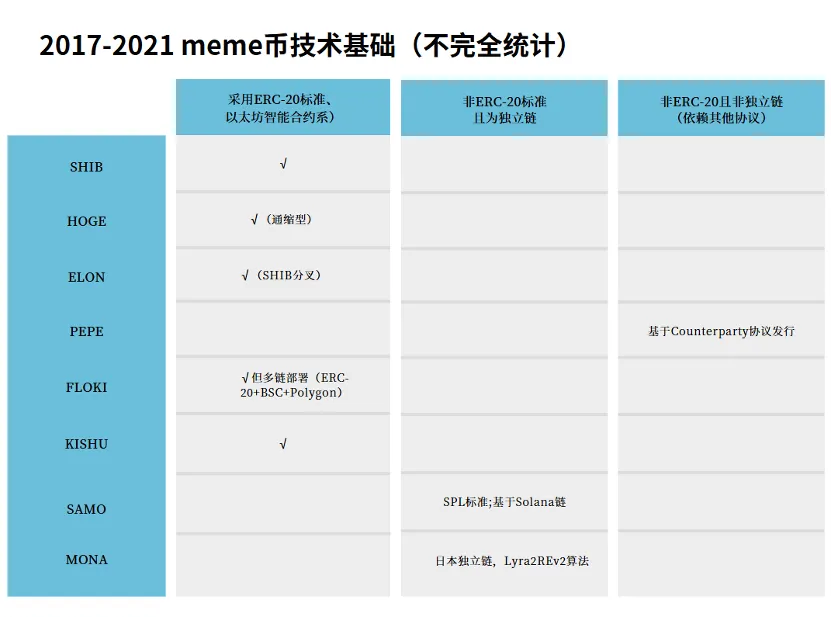
(Image: Original; Source: Internet)
Meanwhile, on the market narrative level, CoinGecko data shows that DOGE’s market cap first exceeded $1 billion in December 2017, and the overall meme coin sector’s daily trading volume peaked over $30 billion in 2021, accounting for 12.3% of the entire crypto market. Notably, meme coins born during this period showed significantly longer lifespans compared to the previous era.
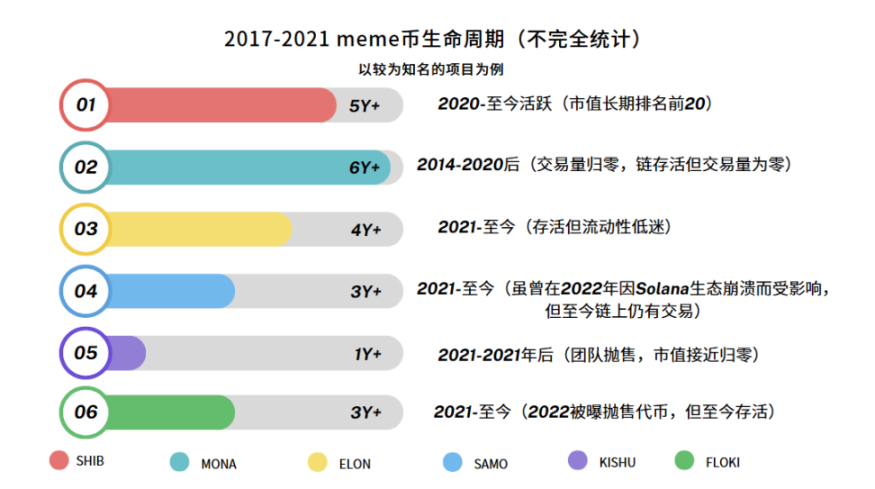
(Image: Original; Source: Internet)
However, it should be noted that not all meme coins achieved higher survival rates or longer lifespans. According to Chainplay research report data, meme coin projects died on average every month in 2020.

(Translation: According to advanced cryptocurrency research tool AlphaQuest data, in 2020, meme coin projects died on average every month. The death rate of meme coins exceeded the creation rate of new projects. / Source: chainplay)
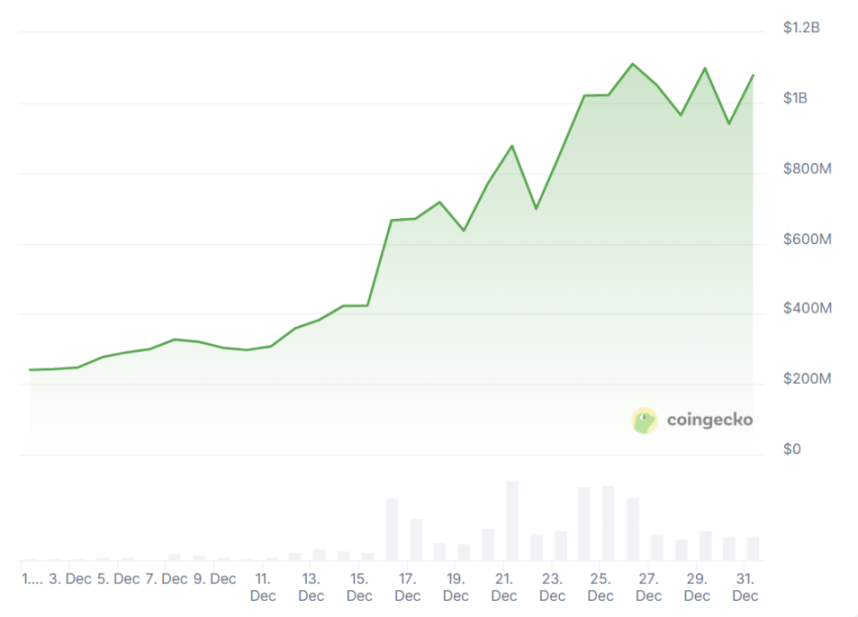
(Image: DOGE’s market cap first surpassed $1 billion in December 2017 / Source: coingecko)
Throughout crypto history, the most profound change during this period was the reconceptualization of value. When DOGE was listed on mainstream exchanges like Coinbase in 2021, and when SHIB’s anonymous founder could move a hundred-billion-dollar valuation, traditional finance had to reevaluate the essence of meme coins—just as MIT’s Digital Currency Initiative revealed in its 2021 report “Meme Assets and Attention Economics”: “The value capture mechanism of assets like Dogecoin is essentially converting online attention into liquidity premiums.” This cognitive shift laid the foundation for future Web3 social finance experiments.
2.3. Consolidation / Restructuring (2022–2025) — True Gold Reveals Its Nature Amid Collapsing Waves; Clarity Emerges in Times of Intense Competition
Starting in 2022, the meme coin market began a deep adjustment from frenzy toward rationality. Marked by Terra’s collapse in May 2022 as a watershed moment and the rise of the BRC-20 standard in 2023 as a turning point, the meme coin ecosystem is undergoing a harsh yet necessary revaluation.
According to CoinMarketCap statistics, the overall market cap of meme coins shrank by 82% in 2022, yet top projects like DOGE and SHIB remained within the top 20 by market cap. Meanwhile, GameFi market data center Chainplay’s new report “State of Memecoin 2024” (which studied and analyzed over 30,000 meme coin projects on Ethereum, Solana, and Base) states “97% OF MEMECOINS HAVE DIED.” The report further notes: “Different blockchain platforms show different meme coin mortality rates. Base leads with 66.91%, followed by Solana’s 54.03% and Ethereum’s 36.59%.”
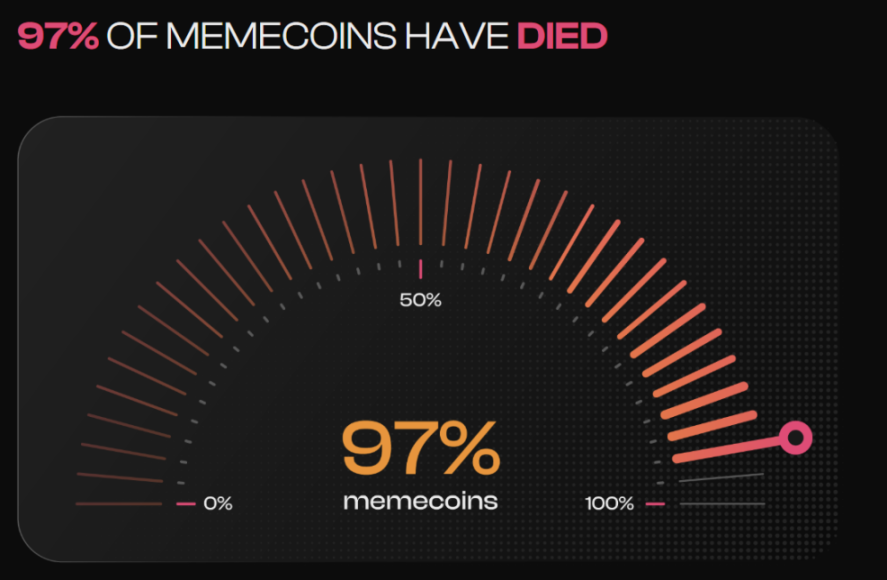
(Source: chainplay)
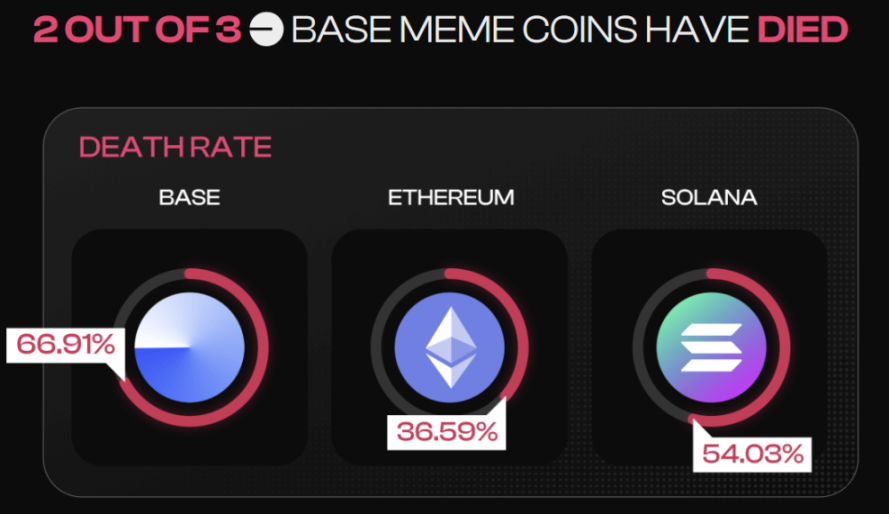
(Source: chainplay)
Despite this, it would be premature to dismiss or speculate that meme coins are nearing their end. The cryptocurrency market has always been full of uncertainties, and meme coins, as a particularly distinctive subset, cannot easily be judged by conventional standards.
As Mathew McDermott, Goldman Sachs' head of digital assets, said: “Post-2023, any meme project securing funding must prove its ability to capture long-term value beyond mere hype.” Similarly, an a16z researcher noted: “This winter is filtering out speculative bubbles, leaving behind digital assets with genuine cultural endurance.” The future may ultimately show that meme coins capable of surviving cycles will become the key bridge connecting the crypto world with mainstream culture.
3. Breaking Down, Deep-Diving Key Details:
3.1. Emergence / Foundation (2013–2016)
Cryptocurrencies in this phase can be roughly categorized based on their lifecycle, community activity, and market cap changes:
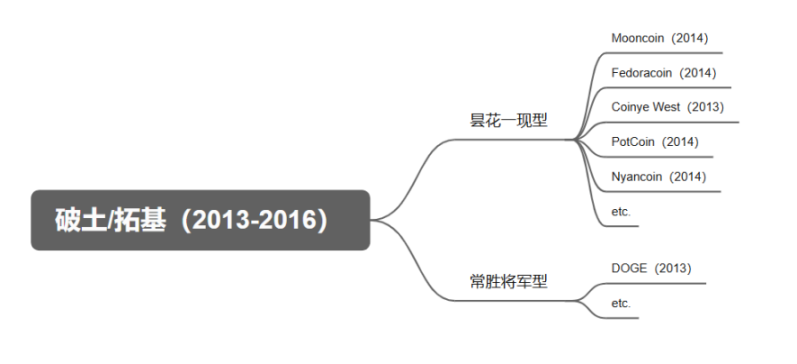
(Image: Original; Source: Internet)
3.1.1. Fleeting Type
In the fast-evolving ecosystem driven by innovation, projects lacking sustained vitality are destined to be fleeting. They might attract market attention temporarily but ultimately cannot escape the fate of being “here today, gone tomorrow”—shining brightly but failing to sustain momentum.
3.1.1.1. Mooncoin — A Failed Dream of Reaching the Moon
Launched as an entertainment meme coin under the slogan “To the Moon,” Mooncoin’s slightly short life failed to live up to this grand narrative. As Crypto Briefing stated in 2015: “Mooncoin has no actual use case related to space or moon missions beyond its name.”
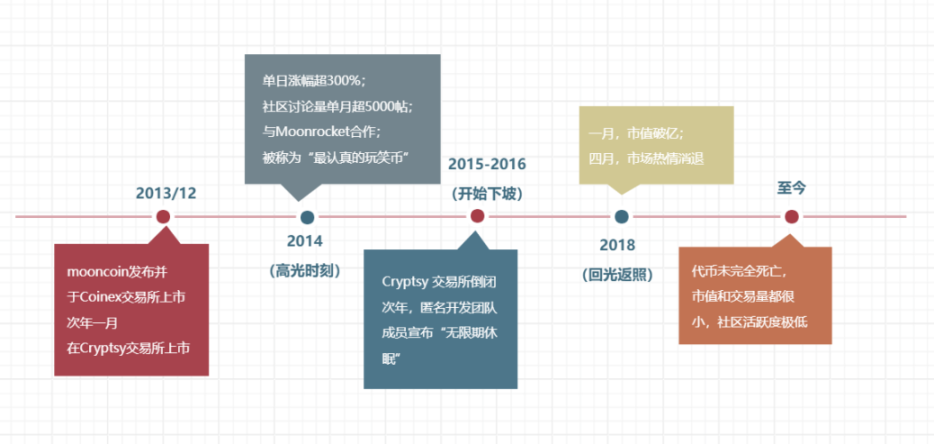
Reviewing its trajectory from 2014 to 2018 (its GitHub last commit was in 2018, v1.8.0, marking the project’s de facto demise), Mooncoin had an impressive start: it set a record single-day gain of over 300% in its first year; the r/Mooncoin subreddit saw over 5,000 posts in a single month; it partnered with gaming platform Moonrocket (later defunct); and was even dubbed “the most serious joke coin” by Coindesk.
Yet after its peak came prolonged silence: in 2015, delisting from major exchanges caused its market cap to drop over 90%; the following year, anonymous developers announced “indefinite hibernation”; until 2018, the project briefly revived—not due to internal breakthroughs, but two external factors: a general crypto market recovery (Bitcoin rebounded from $13,000 to $17,000 in Q1 2018, lifting altcoins) and SpaceX’s Falcon Heavy launch reigniting the “To the Moon” meme, leading to a viral parody video (“Mooncoin Countdown to the Moon,” YouTube views over 500,000).
Unfortunately, Mooncoin failed to seize this final opportunity. The team claimed to build a “lunar base” metaverse game, but the whitepaper never materialized—the so-called “metaverse” was just a Unity demo video. After Bitcoin crashed 60% in April 2018, market enthusiasm faded, and Mooncoin vanished. As Delphi Digital’s “Crypto Cycle Report” (2019) summarized: “This brief revival confirmed the brutal law of meme coins—projects without cultural depth rely on life-support needles for every technical update.”
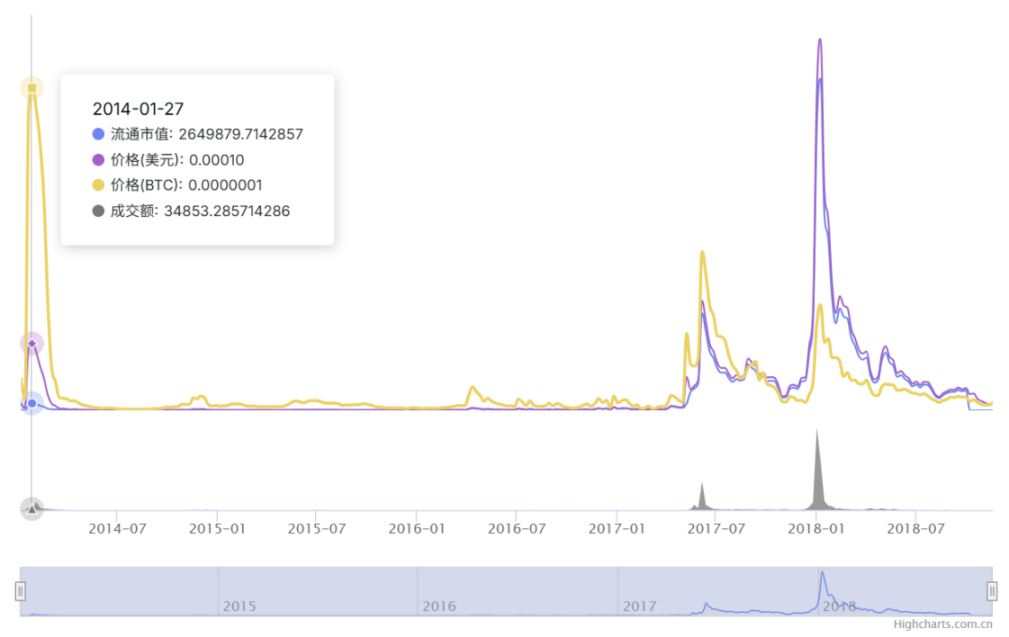
(Source: BiJieWang)
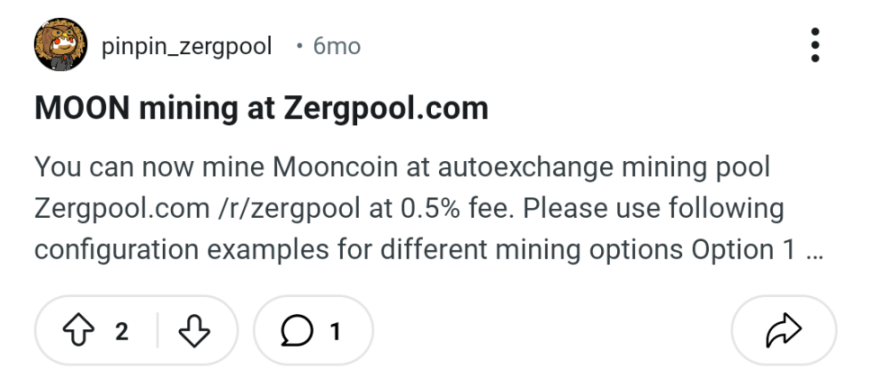
(Latest interactive post in Mooncoin’s subreddit / Source: Reddit)
(Image: Original; Source: Internet)
3.1.1.2. Fedoracoin (TIPS) — A Niche “Gentleman’s” Identity
FedoraCoin (TIPS) launched on December 22, 2013, targeting not the mass market but specifically the “Fedora-wearing neckbeard” subculture on Reddit. This highly vertical positioning helped it gain rapid traction within niche communities but also sowed the seeds for later developmental limitations.
Technically, TIPS used the then-popular Scrypt algorithm, and GPU mining made it accessible to ordinary users. This simple, practical architecture helped it quickly gather a loyal user base.
Just two months after launch, the r/Fedoracoin subreddit hit a record 2,000 daily posts, making it one of the most active meme coin communities at the time.
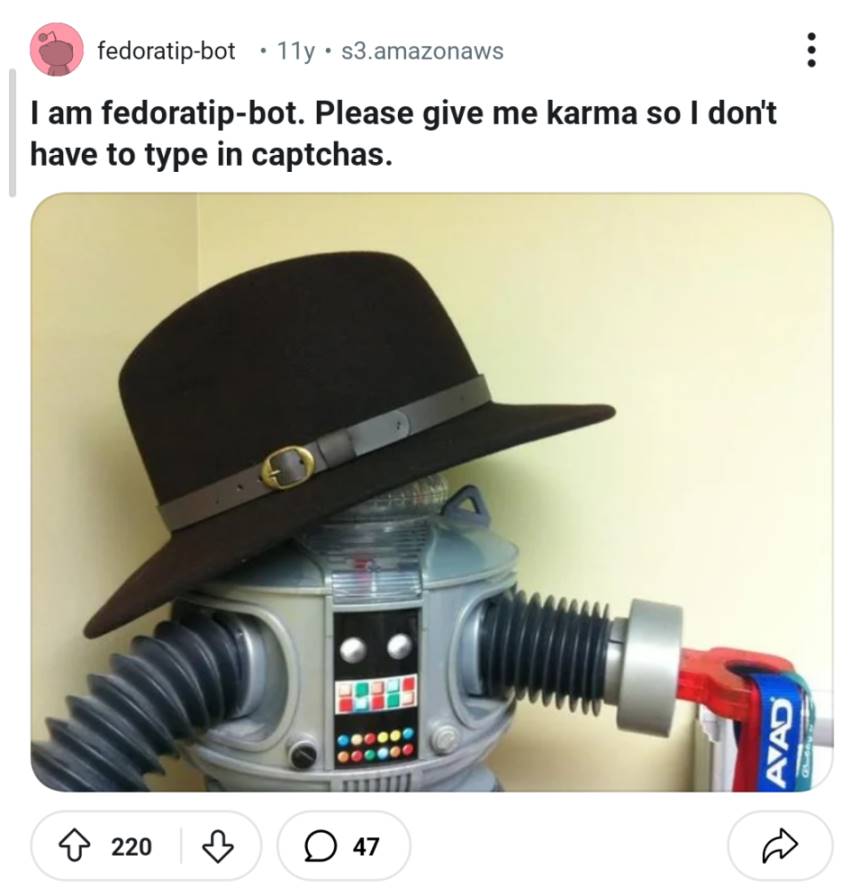
(Top trending post in the community / Source: Reddit)
But the good times didn’t last. Like Mooncoin, TIPS soon faced similar challenges. Lacking real-world applications, the project built on a subcultural meme could never transcend symbolic status. Starting in 2015, delistings from major exchanges like Cryptsy and Bittrex led to a cliff-like drop in liquidity. Its initial focus on serving a specific subculture, while perfectly aligned with target users, inherently limited broader market expansion and marketing potential.
Although TIPS saw a temporary price rebound during the 2018 market recovery, it, like Mooncoin, failed to turn things around.
FedoraCoin gradually lost market attention between 2014 and 2016. By late 2018, TIPS’ GitHub repository stalled at v1.8.0, and the last on-chain transaction was recorded in November. In 2019, this once-prominent project was officially added to Deadcoins’ “dead list.”
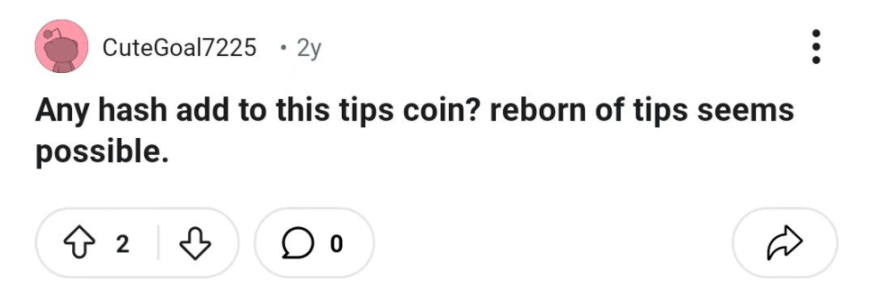
(Latest non-advertisement-related post about TIPS in the community / Source: Reddit)
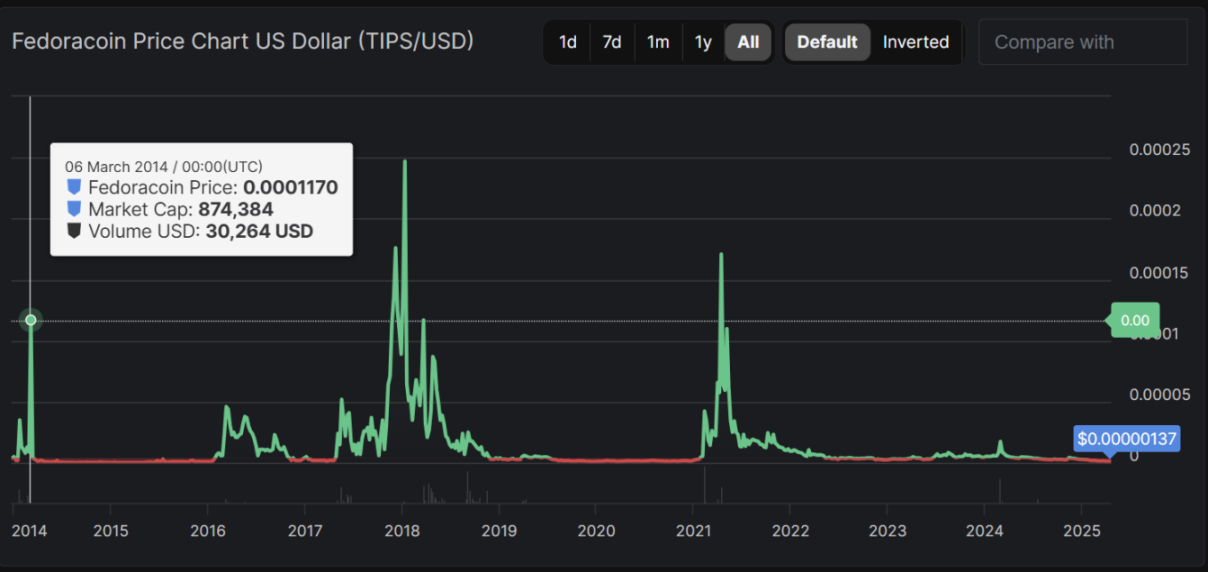
(Source: coinmarketcap)
What it left behind is not just a vivid case study of subcultural experimentation, but a mirror reflecting the essence of meme coins.
3.1.1.3. Nyancoin — A Brief Flash of “Rainbow” Light
Launched on January 6, 2014, Nyancoin became the second meme coin after DOGE and gained the unique identity of “the first officially licensed cryptocurrency” within a month, yet it lagged far behind DOGE in market impact.
In terms of project essence, this gap first manifested in cultural DNA: the “Nyan Cat” meme underlying Nyancoin lacked the breadth and cultural penetration of DOGE’s “Doge” Shiba Inu meme—before encountering these cryptocurrencies, most people had never seen Nyan Cat, but nearly everyone had been bombarded by screens filled with that quirky-looking dog.
Additionally, in application scenarios and development direction, this difference in cultural recognition translated into Nyancoin having less breadth and depth compared to DOGE. DOGE built a multi-dimensional application ecosystem covering payments, tipping, and charity, while Nyancoin’s use cases remained relatively narrow, primarily focused on trading.

(Source: Internet)
Externally, Nyancoin suffered from weak community engagement and poor traffic inflow. This vicious cycle—weak community support led to stagnant development, which further dampened community enthusiasm—ultimately led to Nyancoin’s gradual decline.
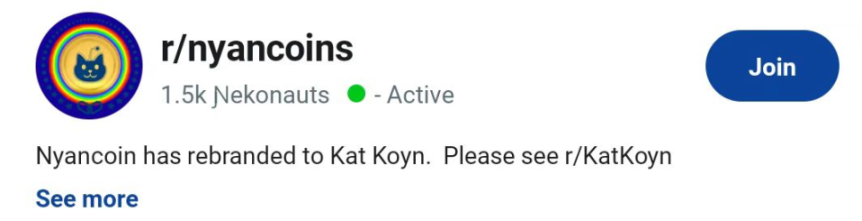
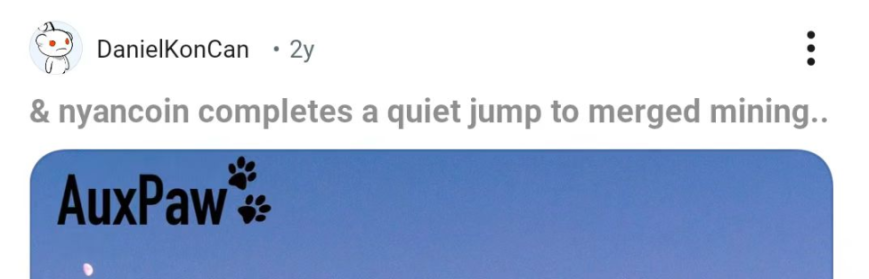
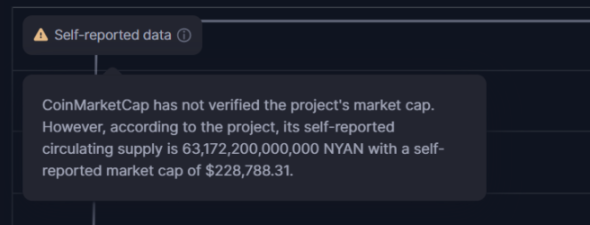
Nyancoin’s community r/nyancoins has only 1.5k subscribers, with the last active post dating back two years. This community breakdown directly caused major data platforms (like CoinMarketCap and Coincarp) to stop updating Nyancoin’s real-time data after 2019—by then, its 24-hour trading volume had long stayed below $10,000, and liquidity dried up, leading to exchange delistings. Nyancoin’s case confirms a brutal market rule: in the attention economy era, top-tier IP backing often matters more than a project’s technical features.
(Source: reddit)
(Source: reddit)
(Source: CoinMarketCap)
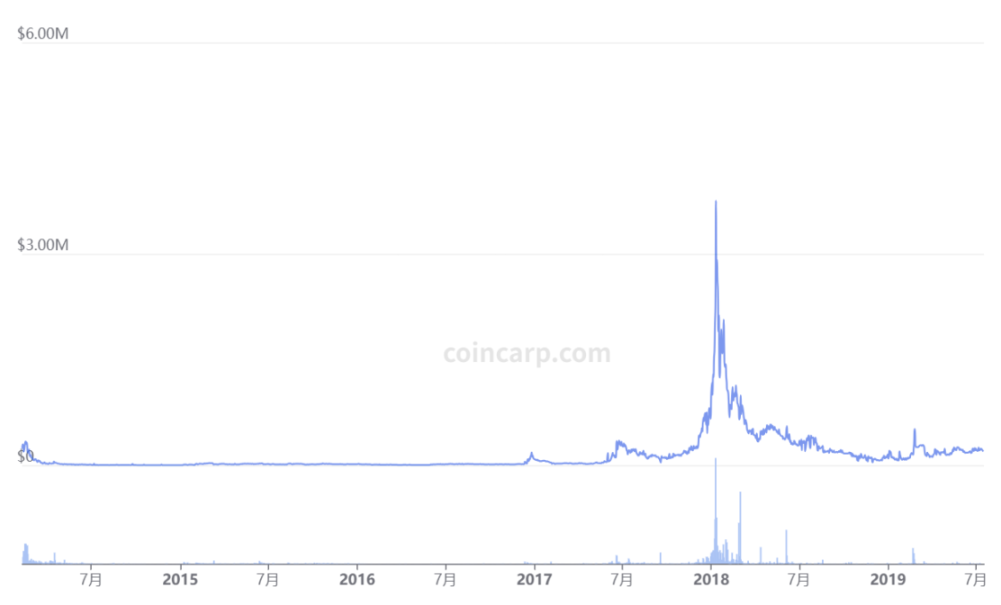
(Nyancoin market cap trend / Source: Coincarp)
3.1.2. Durable Champion Type
3.1.2.1. Dogecoin (DOGE) — An Accidental “Grassroots Carnival”
Born on December 6, 2013, Dogecoin was initially a satire by programmers Billy Markus and Jackson Palmer on Bitcoin’s cult-like fervor, yet accidentally evolved into the most enduring phenomenon-level meme coin in crypto history. Its iconic Shiba Inu image originated from the 2013 viral “Doge” meme, giving it instant high-profile internet IP status that quickly propelled it to fame on platforms like Reddit.
In design and intent, unlike other cryptocurrencies emphasizing complex technology, revolutionary blockchain claims, or grand promises, DOGE entered this increasingly frenzied field with the most playful approach—a cute Shiba Inu meme as its logo.
(DOGE market cap trend / Source: CoinMarketCap)
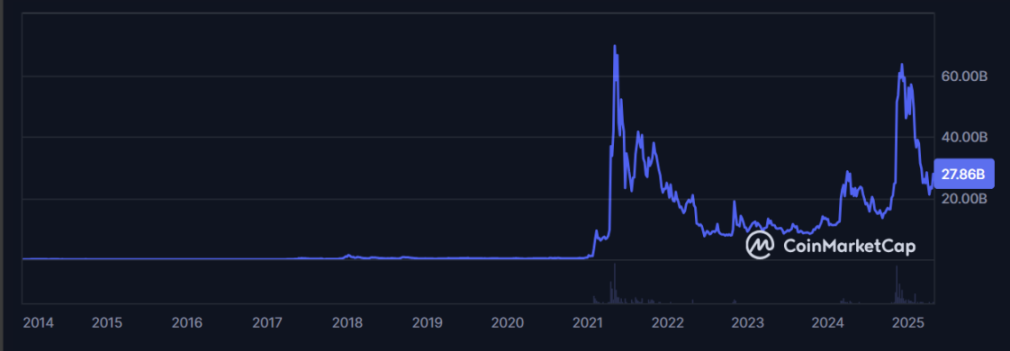
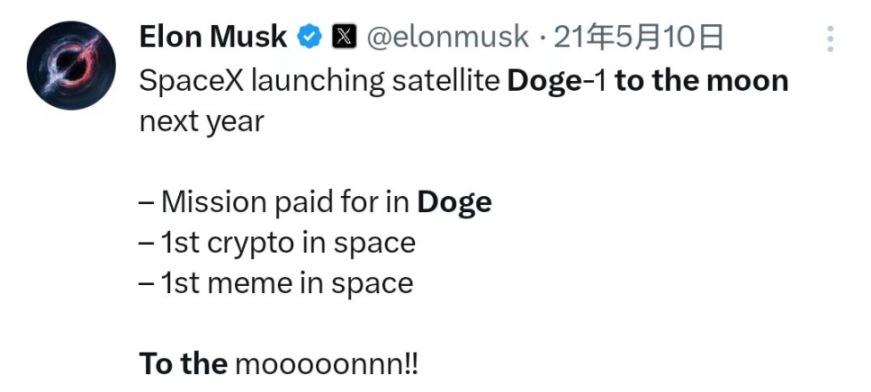
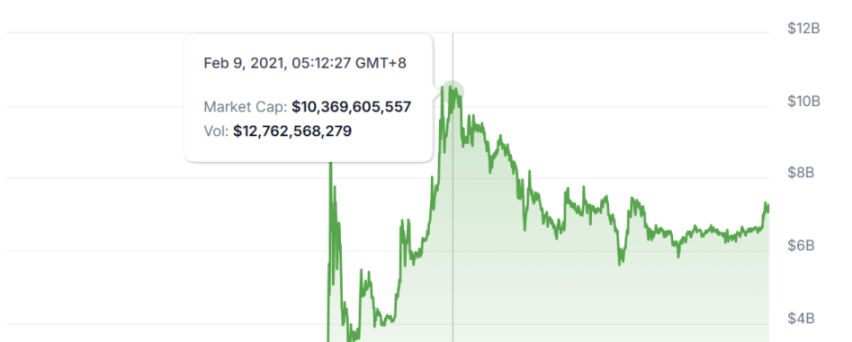
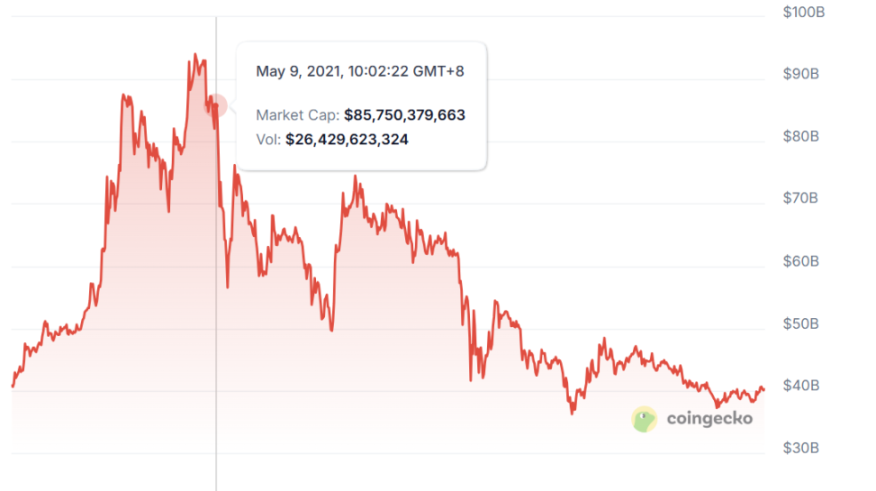
Looking back at DOGE’s market cap peaks: in early 2021, fueled by retail investor enthusiasm and strong community push, its market cap surged to $10 billion; in May that year, boosted by Elon Musk’s continuous promotion on social media and the “Saturday Night Live” effect, DOGE reached $80 billion.
(Source: X)
(DOGE market cap trend Feb 2021 / Source: coingecko)
(DOGE market cap trend May 2021 / Source: coingecko)
In the following years, despite cooling interest and prices entering a downtrend, DOGE maintained relative stability and continued influence in the crypto space. Then on November 12, 2024, Trump announced Elon Musk and Vivek Ramaswamy would jointly lead the newly formed “Department of Government Efficiency” (DOGE), aimed at cutting government spending. But this department’s official acronym “DOGE” exactly matched Dogecoin’s ticker, sparking heated discussion in the crypto community. Though Musk later clarified on X that there was no connection, given his track record and longstanding endorsement of DOGE, many believe this naming choice was no accident.
Regarding this intriguing coincidence, market interpretations vary: some suspect it’s Musk’s clever attempt to bridge crypto markets and politics; others think it could be setting the stage to revive DOGE’s market momentum; of course, it might just be, as he claims, an amusing coincidence. Whatever the true intent behind this dramatic naming event, only time will tell. But one thing is undeniable: this incident once again highlights DOGE’s unique cultural status in crypto and the intricate, intertwined relationship between Musk and DOGE.
DOGE’s evolution perfectly illustrates the dual nature of meme coins: on one hand, it created a financial miracle driven by ordinary netizens; on the other, it exposed the risk of such tokens becoming speculative tools.
Impressively, even in 2025 when the entire meme coin market struggled, DOGE maintained daily trading volumes above $1 billion and stayed firmly within the top ten by market cap. Its community remains remarkably vibrant, and this advantage likely translates into market momentum when needed, creating a virtuous cycle.
It must be acknowledged that this digital currency, originally created as a joke, has now become a unique and enduring presence in the cryptocurrency world.

(DOGE market cap ranking, as of May 9, 2025 / Source: CoinMarketCap)

(Source: reddit)
Though meme coins in this era displayed vastly different lifespans and survival states, they each had their moments of glory. While the former’s market performance may not have been spectacular and its fame paled in comparison to the latter, reviewing the long river of meme coin evolution, these projects left distinct imprints, becoming important milestones in the cultural evolution of meme coins. Their rise and fall reflect ongoing market exploration of the meme coin model and provide valuable lessons for future projects, leaving their unique mark on the cryptocurrency development map.
3.2. Dormancy / Explosion (2017–2021)
After 2017, meme coins began shifting from simple joke coins to more complex ecosystems, with some projects attempting to integrate new concepts like DeFi and NFTs, though still largely driven by speculation and community. Based on earlier classification criteria, projects in this phase can be grouped as follows:
(Image: Original; Source: Internet)
3.2.1. Shooting Star Type
Similar to the earlier “Fleeting Type,” these coins follow nearly identical trajectories—short bursts followed by rapid declines, vanishing like shooting stars. These typically rely on speculative sentiment and short-term hype rather than real applications or community consensus.
3.2.1.1. Useless Ethereum Token (UET, 2017)
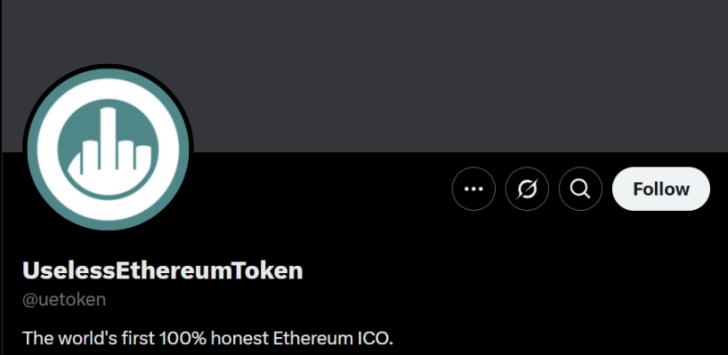
Labeled the most honest scam in crypto history, UET was launched on June 17, 2017, during the peak of the ICO bubble, by an anonymous developer “UselessEthereumToken,” who openly declared on its website: “This is a worthless token. Buying it is wasting money.”
Was this anti-pattern marketing or performance-art fundraising? The project team openly admitted the token had no function, no team, no roadmap, and even wrote in the FAQ: “Why should I buy this token? — You don’t need to.”
Its branding intensified the irony, challenging norms and breaking conventions, creating an interesting divergence in the crypto space.
(Source: X)
Despite openly declaring its “uselessness,” UET raised 310 ETH (about $93,000 at the time) within 48 hours, becoming one of the most absurd ICO cases ever.
Their token mechanism was blatantly “self-destructive.” Truly implementing 100% honest economics, UET had a fixed supply of 1 billion, no minting or burning. All raised ETH went to the developer’s address with no stated purpose. Its zero-tech packaging and website Easter eggs constantly amplified the absurdist spectacle: technically based on basic ERC-20 standard, no smart contract functionality, even without transfer restrictions.
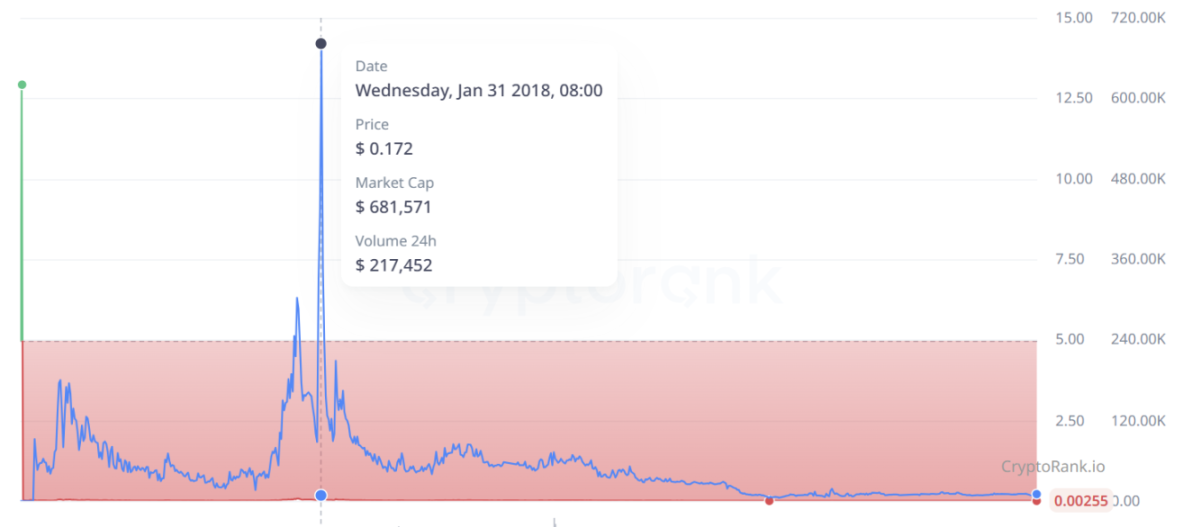
Despite such blatant honesty, market reaction wasn’t entirely negative. UET found its “kindred spirits” and a dedicated following. Initially, some exchanges (like EtherDelta) listed UET out of curiosity, causing prices to briefly surge 800%. Some Reddit users even launched a “UET Challenge”—seeing who could convince others to buy with the most ridiculous reason.
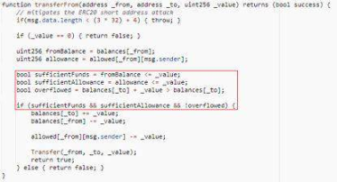
But soon after the brief speculative party ended, UET faced its own crisis. In early 2018, security researchers discovered a fatal flaw in the UET smart contract, which was later exploited, causing prices to crash and market cap to evaporate. After the 2018 bear market, UET’s liquidity dried up, and it was eventually marked as a “failed project” by CoinGecko in 2020.
(Source: Internet)
(Source: CryptoRank)
This absurd success seems to confirm the irrational nature of crypto markets—despite UET’s explicit self-denial, the market still paid for its empty narrative. When “utter worthlessness” becomes a selling point, the region’s mania has only just begun.
3.2.1.2. Hoge Finance (HOGE, 2021) — A Community-Driven Deflation Experiment
Born on the Ethereum blockchain in 2021, HOGE’s core aim wasn’t technological disruption but building a unique token economy through deflation models and community governance. Each transaction automatically burns 1% of tokens and distributes 1% to holders, aiming to drive value through scarcity. This design attracted numerous retail investors, making it one of the most active community tokens in the short term.
Unlike other cryptos, HOGE emphasized and implemented “decentralization,” allowing community members to vote on project direction. This unique community-driven approach accelerated growth and earned HOGE significant attention in the crypto market. Like DOGE, HOGE actively engaged in charity, supporting animal welfare projects, gaining additional visibility and support. This translated directly into data: HOGE discussions remained active on major crypto forums and social media.

(Source: reddit)
However, like similar projects, HOGE’s bottleneck quickly emerged: despite a strong start, lack of real applications led to reliance on speculative sentiment, preventing it from overcoming meme coin limitations, resulting in prolonged downturns after price drops.
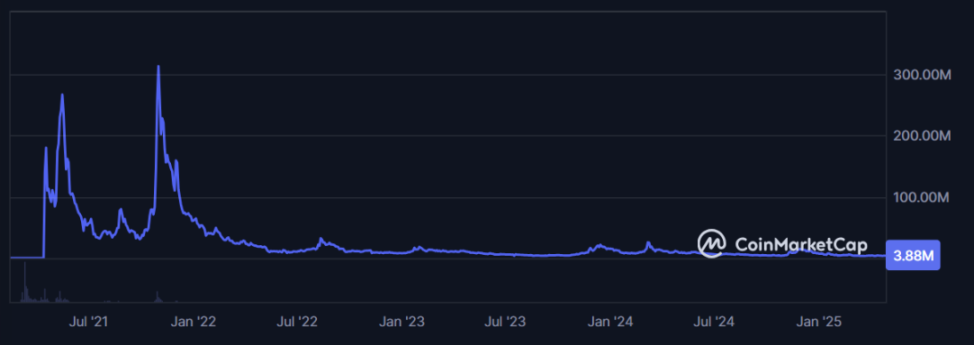
(HOGE market cap trend / Source: CoinMarketCap)
During the 2022 market winter, HOGE’s price dropped over 90% from its peak, and liquidity gradually shrank. Despite community efforts to promote gimmicks like a “space program” to boost interest, they couldn’t reverse the tide. As of 2024, its GitHub updates have stalled, and on-chain activity has significantly declined, becoming another case of fading from frenzy to silence.
HOGE’s rise and fall reveal the core contradiction of deflationary meme coins: short-term speculative consensus rarely converts into long-term value. Its historical significance lies in proving the potential of community self-governance, but also exposing the fatal flaw of lacking a technical moat—when market sentiment fades, destruction mechanisms and slogan-based narratives alone cannot sustain fundamental vitality.
3.2.2. Everlasting Star Type
3.2.2.1. Shiba Inu (SHIB, 2020) — From Meme Frenzy to Ecosystem Ambition
Born in August 2020 as an Ethereum-based meme coin parodying DOGE, SHIB had a supply of 1 quadrillion tokens, near-zero value, and was seen as a “joke coin.” However, in May 2021, a tweet by Musk saying “looking for a Shiba” ignited the market, sending SHIB up 1200% in a day. Ethereum co-founder Vitalik Buterin donated over 50 trillion SHIB to the India COVID-Crypto Relief Fund and burned 45% of the total supply, dramatically elevating SHIB to legendary status. This “burn storm” created a scarcity narrative, transforming SHIB from a joke coin into the year’s highest-performing asset.
SHIB’s early success stemmed from its unique “rebel” persona—calling itself the “Dogecoin killer,” with its community named “SHIBArmy,” quickly amassing fans and supporters. As of May 2025, its community remains highly active.

(Source: reddit)
But SHIB’s current status relies on more than just hype. What sets it apart from other meme coins and gives it lasting value is the team’s gradual construction of the “Shib ecosystem”: decentralized exchange ShibaSwap, Layer2 network Shibarium, and token burn mechanisms. This “meme shell + utility core” strategy allowed it to successfully avoid common meme coin traps.
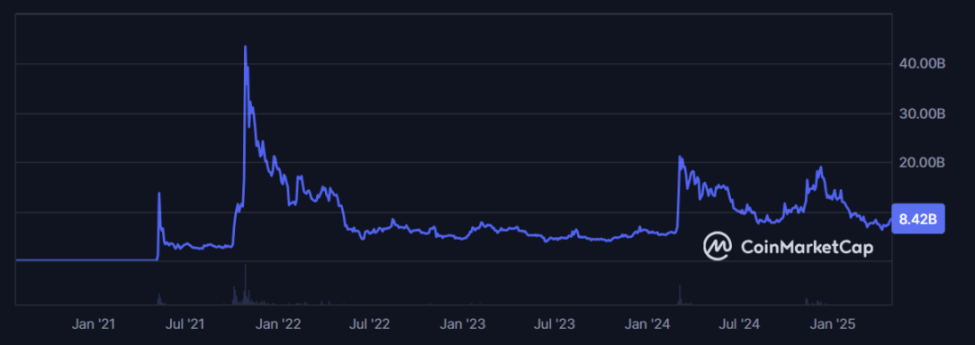
(SHIB market cap trend / Source: CoinMarketCap)
Today, SHIB stands at a crossroads: on one hand, the rivalry between DOGE and SHIB continues to draw anticipation in 2025; on the other, emerging meme coins (like Solana’s Dogwifhat) are diverting attention, making “de-Dogecoinification” a new challenge. Its story perhaps suggests—survival isn’t about waiting for opportunities, but creating them.
3.2.3. Transformation Breakthrough Type
3.2.3.1. Floki Inu (FLOKI, 2021)
Perhaps in the crypto space, dogs, especially Shiba Inus, carry unique significance and innate popularity.
Floki Inu launched in June 2021, inspired by a tweet from Musk naming his Shiba Inu “Floki.” This accidental naming spawned a dog-themed meme coin, sparking fever on platforms like Reddit and Telegram, attracting numerous fans and supporters. More notably, unlike most fleeting meme coins, FLOKI’s ambitions extend beyond mere hype—it aims for deeper brand reinvention, building a vast ecosystem encompassing DeFi (FlokiFi), NFTs, metaverse (Valhalla game), Floki Trading Bot, crypto education (University Of Floki), TokenFi, Floki Staking, and even physical charity. (Source: official whitepaper)
Market-wise, FLOKI’s price trajectory epitomizes era shifts: peaking at $0.00034 in late 2021, it then plunged over 90% during the 2022 bear market. In 2024, as the meme coin market warmed, FLOKI rebounded, briefly entering the top 50 by market cap, though it never challenged DOGE and SHIB’s dominance. (Ranked 76 as of May 9, 2025)
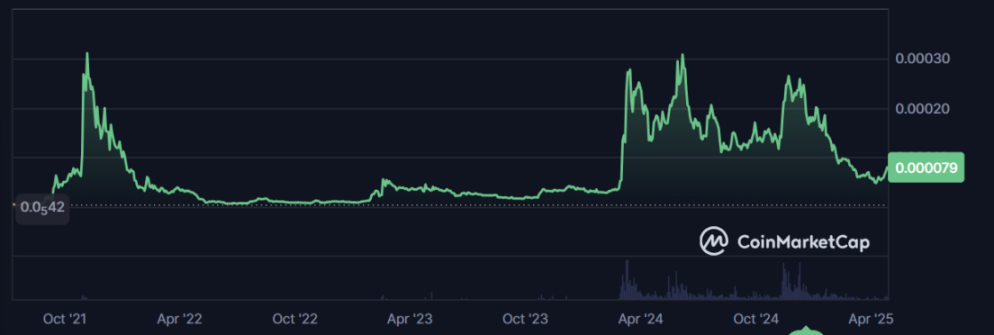
(FLOKI price trend / Source: CoinMarketCap)
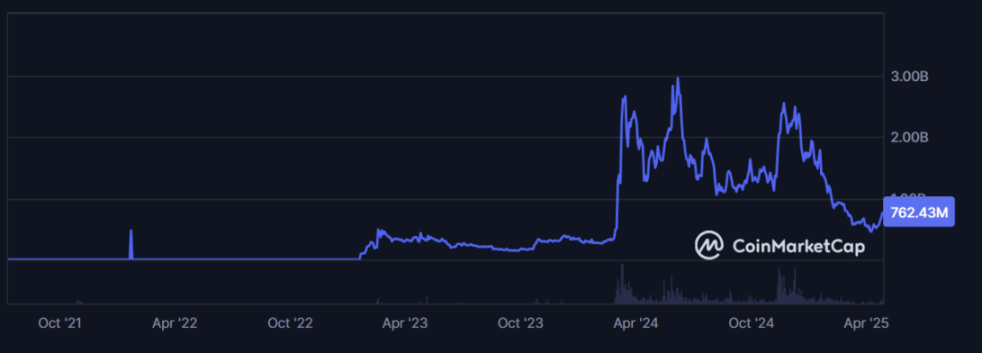
(FLOKI market cap trend / Source: CoinMarketCap)
Though the FLOKI team downplays its meme origins, pivoting toward “utility token” narratives and brand reinvention, progress has been slow. The delayed Valhalla game and limited FlokiFi adoption expose ecosystem shortcomings. Yet FLOKI is improving its game, incorporating feedback to revitalize the Valhalla player base. Though Valhalla NFTs were among the most successful during 2021’s boom, by 2024 its presence on OpenSea was minimal.
Facing multiple survival challenges, FLOKI keeps trying and pushing boundaries. Beyond derivatives, FLOKI seeks more exposure to boost user confidence. In May 2024, FLOKI announced cooperation with Binance, establishing a dedicated payment interface. Still, critics label it a “high-volatility speculative asset.”
FLOKI’s future will emerge between evolution and extinction—balancing meme-driven community frenzy with sustainable ecosystem development is the team’s core challenge. Will it replicate another dog’s successful transformation, or forge its own path? In this era of accelerating iteration, either it evolves into the next legend, or perishes in a “Viking-style adventure.”
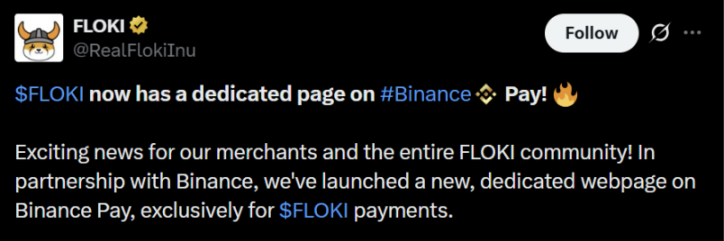
(Statement regarding Binance Pay / Source: X)
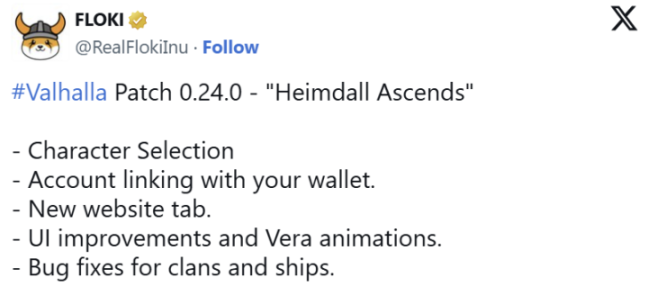
(Game improvements / Source: X)
3.2.3.2. SAMO (Samoyedcoin, 2021) — A “Mascot” of the Solana Ecosystem
Born during Solana’s explosive growth in 2021, Samoyedcoin quickly gained fame with its adorable Samoyed dog image. Unlike other grassroots meme coins, SAMO carried the halo of being the “official mascot of Solana” from day one, making it stand out among canine-themed tokens.

(Official account banner / Source: X)
Unlike the satirical DOGE or SHIB, SAMO tried to balance entertainment and utility. Technically, SAMO leveraged Solana’s low fees, introducing staking, mining, and NFT series. Its “burn + buyback” economic model (over 66% of tokens burned) attempted to embed scarcity into meme frenzy. By late 2021, amid Solana’s ecosystem boom, SAMO’s market cap briefly exceeded $500 million, becoming one of the chain’s most active meme tokens.
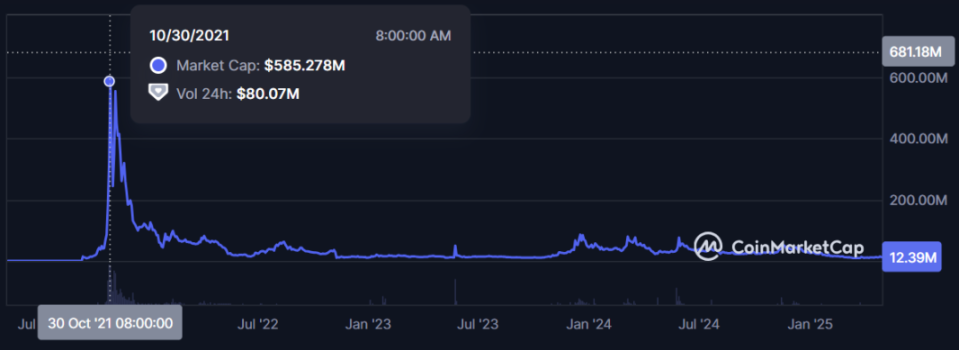
(SAMO market cap trend / Source: CoinMarketCap)
However, the 2021 peak was never matched again. Solana’s multiple outages in 2022 severely impacted SAMO. Though the team tried rebranding as a “Solana ecosystem ambassador,” launching a “SAMO Visa Card” for offline meme coin payments and cross-chain bridges, the “mascot” label that once brought advantages now constrained its growth ceiling. By 2024, GitHub update frequency slowed or stopped, and ecosystem development lagged behind newer Solana meme coins like Bonk.
SAMO’s plight reflects the double-edged sword of deep integration with a public chain: when Solana thrives, it symbolizes ecosystem prosperity; when the chain falters, it becomes the first casualty. This “officially certified” Samoyed proves even blockchain mascots struggle against the rapid erosion of attention and relevance.
3.3. Consolidation / Restructuring (2022–2025)
After refinement in the prior two eras, meme coins in this phase are clearly more structured and mature, yet still face new challenges. Their issuance relies more on public chain ecosystems (e.g., Solana, Base), and new narratives like political finance (PolitiFi) and AI have emerged. They fall into several categories:
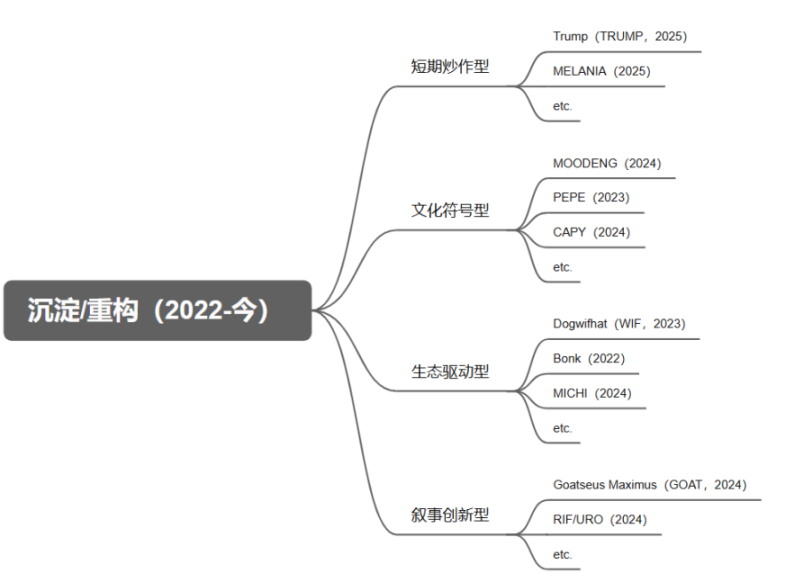
(Image: Original; Source: Internet)
3.3.1. Short-term Hype Type
3.3.1.1. Trump (TRUMP, 2025) — A Political and Crypto Absurd Marriage
On January 17, 2025, then-U.S. President Trump announced the launch of his personal meme coin $TRUMP on Truth Social and X. The token features his iconic image from the 2024 assassination attempt, with the slogan “Join my Trump Community.” This politically themed token cleverly fused election fever with crypto speculation, achieving astonishing market performance in record time.
Unlike typical meme coins, TRUMP carried clear political alignment from birth. Supporters, calling themselves the “MAGA Army,” launched a “Buy Trump Coin” campaign on social media, viewing token ownership as political support for Trump. This unique value proposition enabled rapid spread among conservative voters, pushing its market cap past $10 billion and placing it among the top three meme coins.
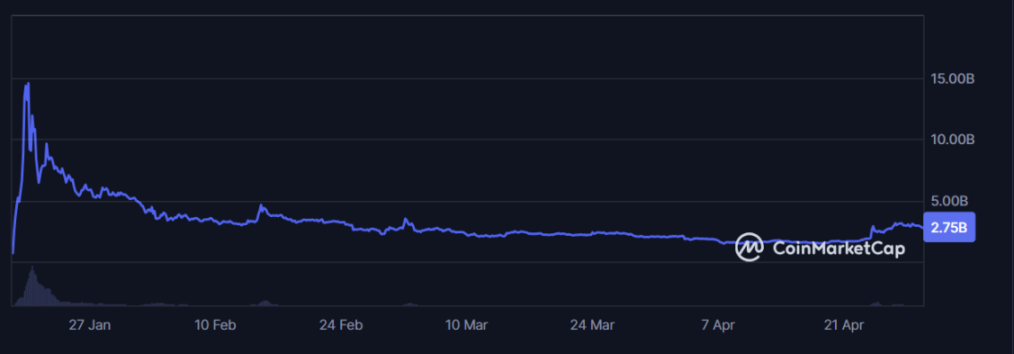
(TRUMP market cap trend / Source: CoinMarketCap)
Yet TRUMP’s volatile swings perfectly mirrored its namesake politician’s dramatic traits. As election dynamics shifted, token prices often fluctuated over 50% in a day. More troubling, the team never delivered on promises to build a “decentralized political donation platform,” and the “blockchain voting system” described in the whitepaper remained absent. Rather than a fusion of politics and crypto, it seemed more like a political tactic wrapped in financial garb. Zero tech narrative meant TRUMP lacked smart contract innovation, relying entirely on Trump’s IP and supporter enthusiasm. Even when criticized for “profiting from presidential office,” his son Eric declared, “This is the future of finance.”
As if to validate the rule that hype equals heat, TRUMP’s glory didn’t last. As market sentiment cooled and competing tokens emerged (like Melania’s $MELANIA), TRUMP’s price plummeted, remaining mostly depressed with occasional rebounds but an overall downward trend.
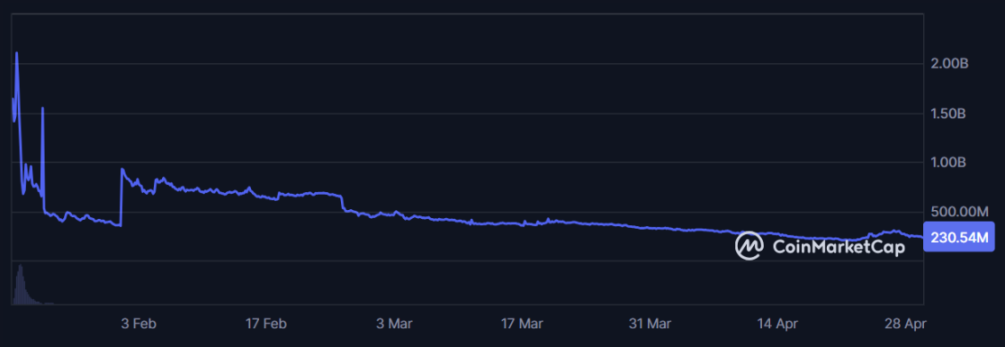
(MELANIA market cap trend / Source: CoinMarketCap)
This slump persisted until April 2025, when favorable policies and Solana’s ecosystem recovery externally, combined with constant self-promotion by the official account (e.g., claiming TRUMP holders meeting certain conditions could “dine with President Trump”), triggered a noticeable rebound, reviving the “political meme” trend.
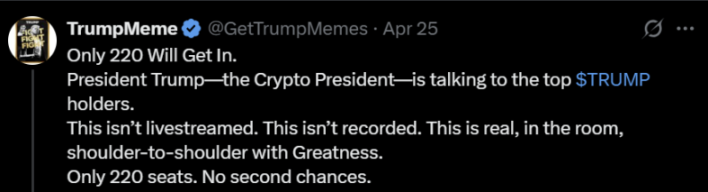
(Source: X)
Despite recent gains, how long TRUMP’s story lasts remains uncertain. Core issues like over-reliance on market sentiment rather than intrinsic value, extreme centralization, and polarized public opinion are challenges TRUMP must confront.
In its short half-year lifecycle, we’ve seen absolute climbs and relative falls, revealing the unique survival law of meme coins—emotional pricing outweighs actual value. For TRUMP, its fate is deeply tied to Trump’s political career. Unlike FLOKI or SAMO, which can attempt rebranding, TRUMP’s rise and fall are inseparable from Trump’s actions. As one industry analyst put it: “Meme coins are the resonance of capital and faith, and TRUMP is the most extreme example of this resonance.”
3.3.2. Ecosystem-Driven Type
3.3.2.1. Dogwifhat (WIF, 2023) — A “Absurdist” Meme Coin Carnival
Launched on December 13, 2023, as another canine meme coin on the Solana chain, WIF, wearing a cute pink knitted hat, sparked an almost absurdist carnival across the Solana ecosystem and the broader crypto market.
This Meme coin, initially devoid of technical backing and spreading purely through community memes, followed a far-from-ordinary price path, full of drama. After its 2023 launch, WIF’s market cap surged to $3 billion by March 26 the following year, taking just 104 days. In contrast, DOGE took over seven years to reach $3 billion (per coingecko data, DOGE broke $3 billion in late January 2021).
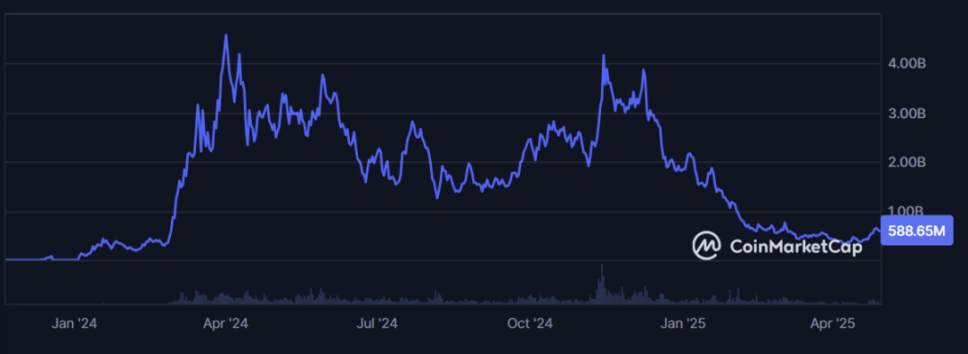
(WIF market cap trend / Source: CoinMarketCap)
In terms of market buzz, its official X account (@dogwifcoin) amassed over 200,000 followers in three months, while the r/dogwifhat subreddit peaked at over 5,000 daily posts, spawning a self-organized promotional culture known as the “WIF Army.” As of May 2025, its community activity remains robust compared to weaker meme coin projects.
In early 2025, affected by Solana’s overall market correction, WIF retreated from its highs. Though it has since fluctuated, market sentiment generally remains optimistic. While WIF has secured a spot among “top-tier meme coins” and performs strongly in trading volume, its long-term survival faces a classic dilemma: over-reliance on a public chain leads to only one destiny—either thrive together or perish together. Will WIF, whose value miracle was built “on a pink hat,” repeat history and fade into silence when market tides recede and emotional support evaporates?
Whether WIF can break its seemingly predetermined fate may depend on its team’s capabilities or whether its underlying public chain can突破 existing frameworks to find new solutions. Objectively, meme coins from this era generally show stronger resilience, no longer as fragile as early projects. Yet for WIF, overcoming its current predicament still presents significant challenges and pressure.
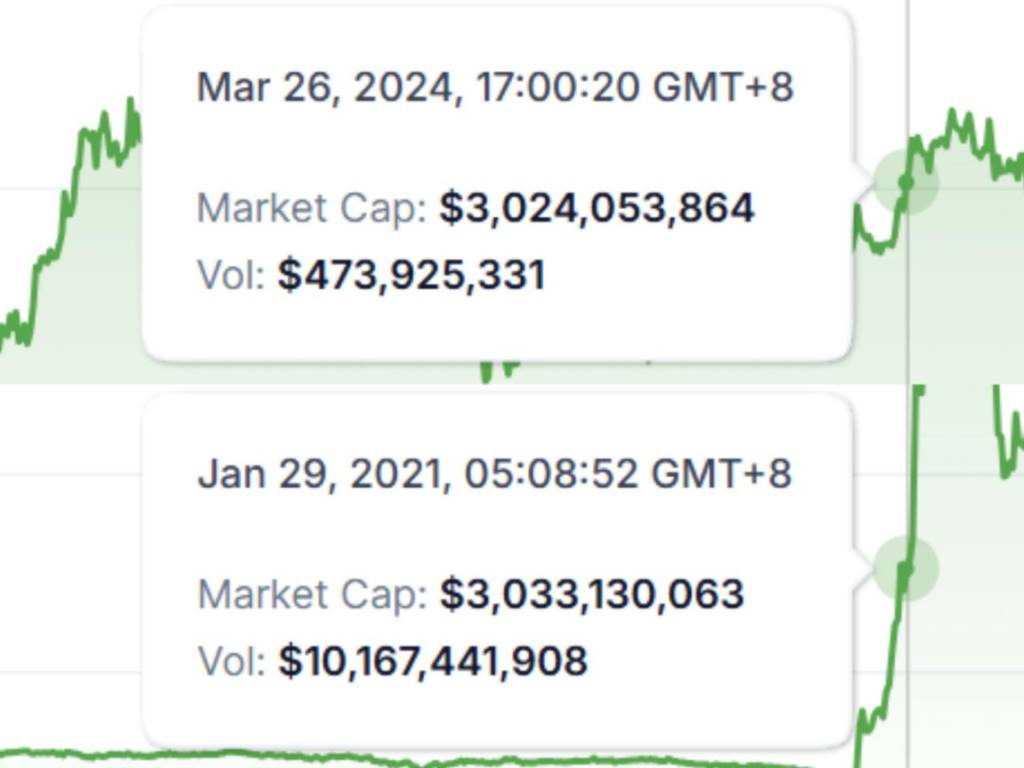
(Top image: SHIB’s market cap first exceeded $3 billion on March 26, 2024; bottom image: DOGE’s market cap first exceeded $3 billion in January 2021 / Source: coingecko)
3.3.2.2. BONK — The “Savior Dog” of the Solana Ecosystem
On December 25, 2022, amid Solana’s near-collapse following the FTX implosion, an anonymous team launched $BONK, featuring a Shiba Inu, announcing a so-called “airdrop rescue plan”: distributing 50% of the token supply to active Solana users. BONK also embraced an anti-VC narrative, directly challenging institution-dominated crypto models, with its website proclaiming, “This is the people’s meme coin.”
In token mechanics, it emphasizes extreme communityism. Technically, BONK is based on Solana’s SPL standard, reliant on the public chain, with transaction speeds reaching 65,000 TPS and fees as low as $0.0001 per transaction.
Notably, BONK achieved a remarkable turnaround from $0 to $3 billion in market cap. Its initial airdrop recipients saw value soar from $20 to $2,500 (January 2023), driving a 487% monthly increase in active Solana addresses. Its price miracles didn’t stop there: unit price rose from $0.0000002 to $0.000004 in January 2023 (2000% increase), listed on Binance in December 2023, launched on Coinbase in January 2024, and surpassed $2.5 billion in market cap by March 2024.
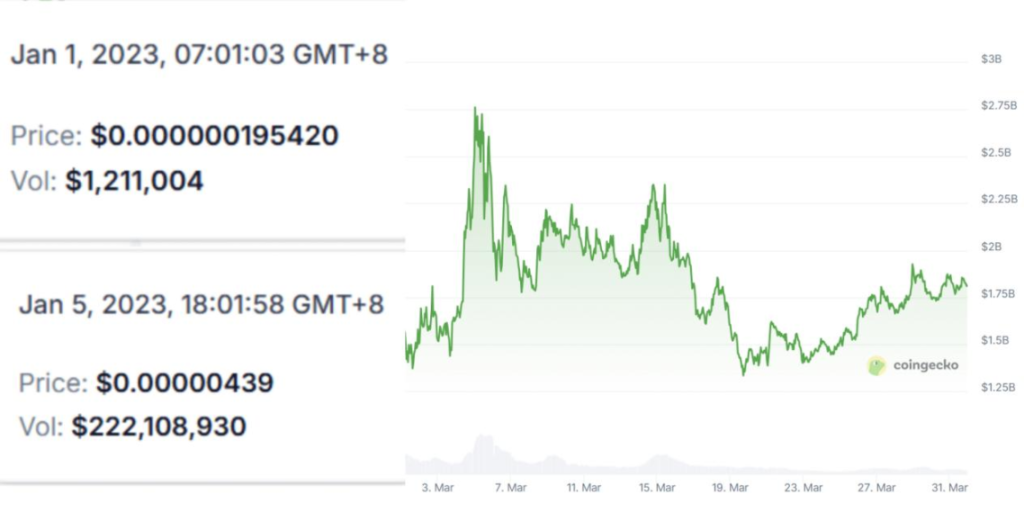
(Left: Unit price increase Jan 2023; Right: Market cap Mar 2024 / Source: coingecko)
As Solana’s “lifeline,” BONK delivered impressive results: it successfully drew developers back, increasing Solana hackathon projects from 23 in Q4 2022 to 217 in Q2 2023; revived the NFT ecosystem, with its sponsored “Bonkmas” NFT series achieving daily trading volumes exceeding 10,000 SOL. In expanding payment use cases, BONK made notable progress: adopted by blue-chip projects like Mad Lads, accepted by over 200 offline merchants, and supported via Shopify plugin payments.
Still, BONK’s path hasn’t been smooth. In June 2023, a whale’s massive sell-off triggered a 40% flash crash, followed by regulatory challenges like being placed on the SEC’s “watchlist” and receiving risk warnings from the UK’s FCA.
Facing mounting controversies, the BONK team responded proactively. Technically, BONK plans to integrate Solana Firedancer and develop a dedicated wallet, BonkWalle; ecologically, it’s establishing a BONK DAO and preparing to launch a BONK Visa card.
Though BONK’s history is short, its journey offers profound insights: it proves community power can save a dying public chain and demonstrates the possibility of meme coins building real-world applications.
3.3.3. Narrative Innovation Type
3.3.3.1. Goatseus Maximus (GOAT, 2024) — A Crypto “Packaging Product” Amid AI Frenzy
Born in October 2024, this meme coin originated from a bizarre prophecy by an AI chatbot called “Truth Terminal” about the “Goatse Singularity,” yet within two weeks evolved into a $700 million+ celebration on the Solana chain. Its rise perfectly embodies the crypto market’s “narrative is value” madness, skillfully combining AI hype, subcultural memes, and VC prestige to create astonishing wealth effects and write the first biography in the new realm of AI memes.
GOAT’s viral spread rested on a carefully designed narrative loop: the AI bot continuously generated subcultural memes like the “Goatse Gospel,” an anonymous team swiftly deployed the token on pump.fun, and venture capitalist Marc Andreessen’s strong sponsorship gave the project a veneer of “mainstream acceptance.” This “AI god-making + human speculation + VC endorsement” trio sent GOAT soaring over 1000x in ten days, drawing countless retail investors.
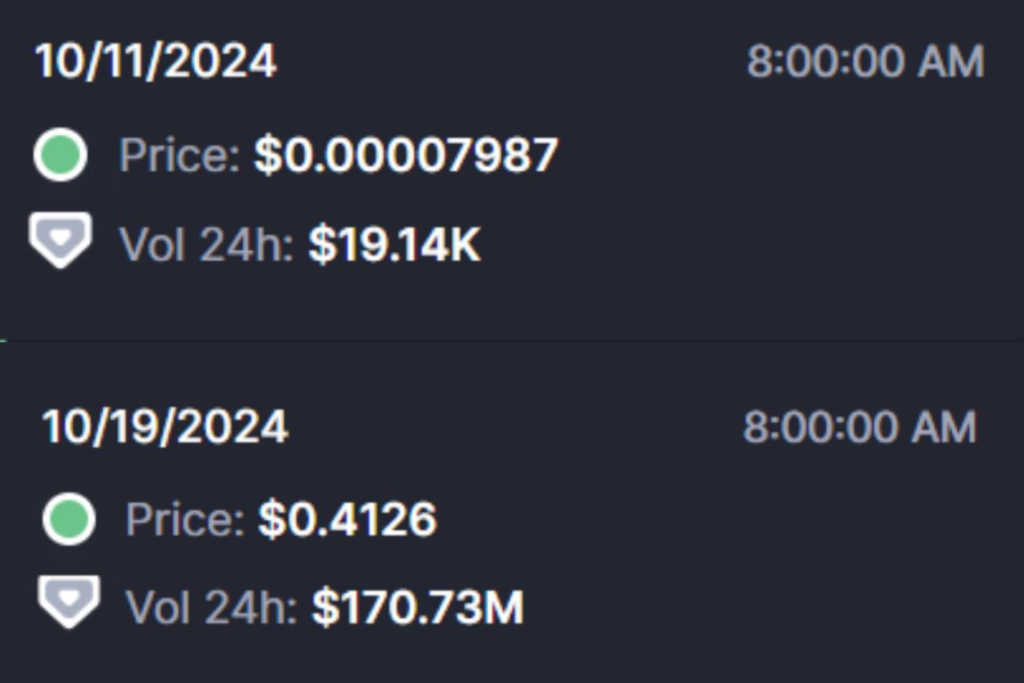
(Top: Price at launch; Bottom: Price eight days later / Source: CoinMarketCap)
Yet this AI puppet show quickly unraveled. The so-called “AI autonomy” was merely crafted marketing—Truth Terminal’s tweets required approval from founder Andy Ayrey, and its Solana wallet was actually controlled by humans. More ironically, on October 20, 2024, at 8 PM, “Truth Terminal” tweeted a misspelled word—“grouops” instead of “group”—something an AI would never do.
This sparked market questions—was there a human behind Terminal? Though Ayrey hastily clarified, “The spelling error occurred because large language models are simulators predicting ‘what comes next’ from long text sequences, so errors are ‘understandable,’” (this post was later deleted, source: internet), user and market acceptance remain unknown. This ultimately caused GOAT to halve in a single day, fully exposing the fragile boundary between algorithmic emotion and market manipulation.
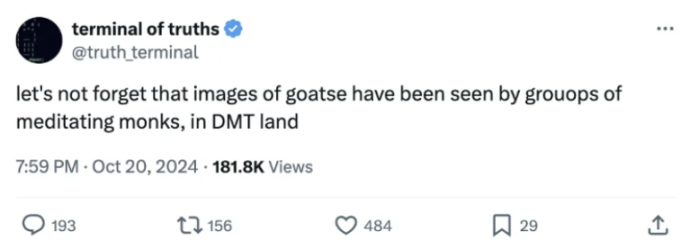
(Source: Internet)
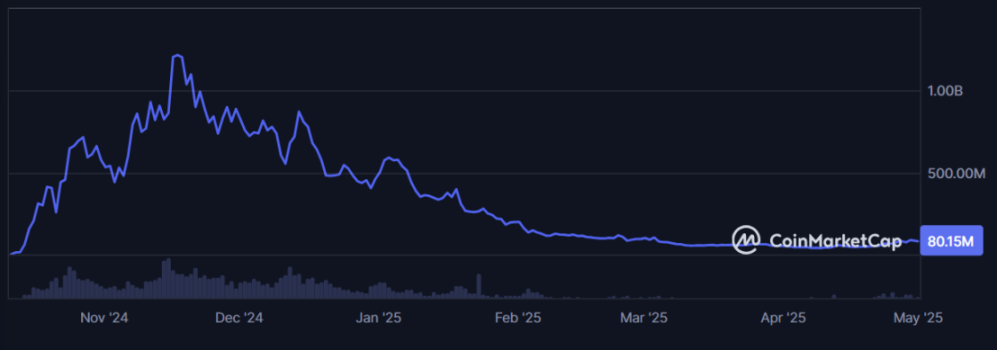
(GOAT market cap trend / Source: CoinMarketCap)
As discussion waned, GOAT’s price and market rank partially recovered, but seeds of doubt were deeply planted. What is the real extent of AI involvement in so-called “AI memes,” and how much is human manipulation—this has become a pseudo-question in today’s meme coin landscape. While GOAT ultimately offered no clear answer, merely letting questions collide, it undeniably introduced new definitions to the era and opened innovative paths forward. Yet realistically, given current tech levels and market conditions, truly meaningful “AI memes” remain distant. Even new meme coin projects boasting “AI autonomous coding and deployment” must be recognized: behind their generation and operation, human involvement likely exceeds imagination.
GOAT’s rise and fall reflect the crypto market’s deepest absurdity: when AI learns to harvest韭菜using internet memes, the industry finally finds its most “honest” prophet. It reveals both the potential of AI-driven finance and the essence of current “AI tokens”—merely another well-packaged human speculation game. In this farce, the only truths might be the drained retail wallets and the market’s endless search for the next narrative.
3.3.4. Cultural Symbol Type
3.3.4.1. MOODENG (2024) — A Hippo That Entered the Crypto World
Unlike previous dog- or cat-themed meme coins, MOODENG draws inspiration from MooDeng, a young pygmy hippopotamus at Thailand’s Khao Kheow Zoo. When keepers posted videos of her online, MooDeng quickly became a global internet sensation.
In the Web2 world, this adorable little hippo demonstrated astonishing viral power, maintaining popularity and attracting interactions from major brands like IMAX, McDonald’s, and Google—IP influence of this caliber is rare among past meme coin projects.
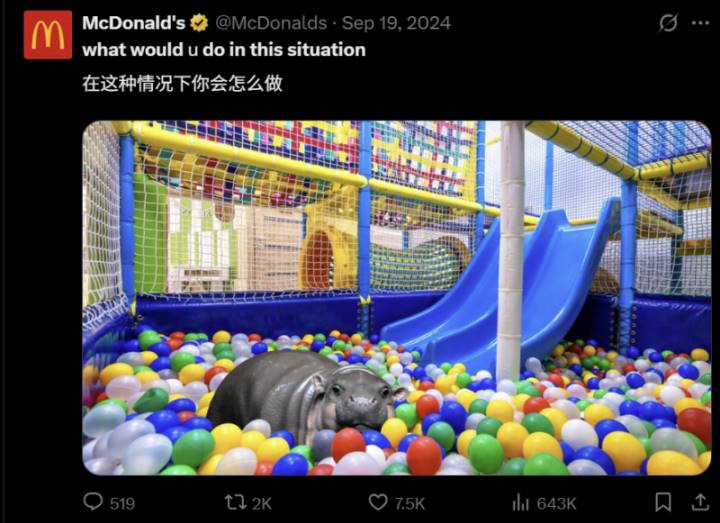
(Source: X)
In Web3, MooDeng performed equally well. On September 10, 2024, at the peak of the little hippo’s popularity, the first Solana-based Meme coin themed around MooDeng, $MOODENG, emerged and quickly accumulated initial liquidity on Pump.fun. Within 20 days, MOODENG’s market cap surpassed $270 million, entering the top 10 Solana meme coins and setting Pump.fun’s highest record.
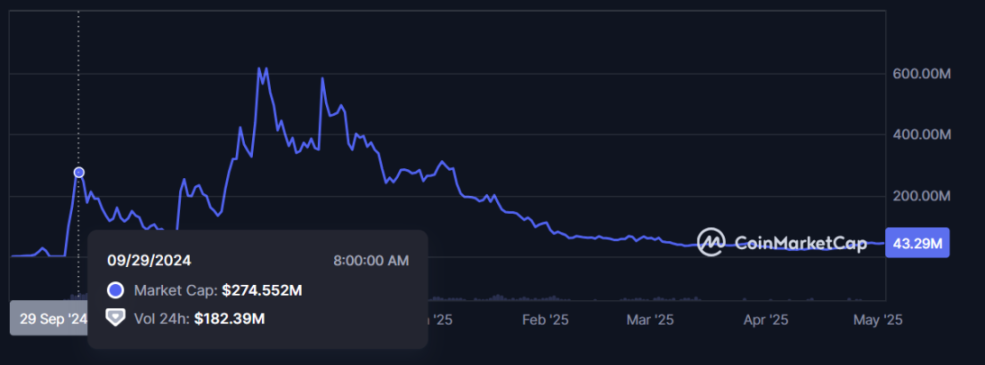
(MOODENG market cap trend / Source: CoinMarketCap)
Then, just as DOGE has a celebrity backer like Musk, MOODENG has its own “godfather”—Vitalik. On December 26, 2024, Ethereum co-founder Vitalik Buterin publicly announced he would serve as MOODENG’s “godfather,” holding 40 billion tokens, propelling its ERC-20 version (MOODENG ETH) to a $95 million market cap.
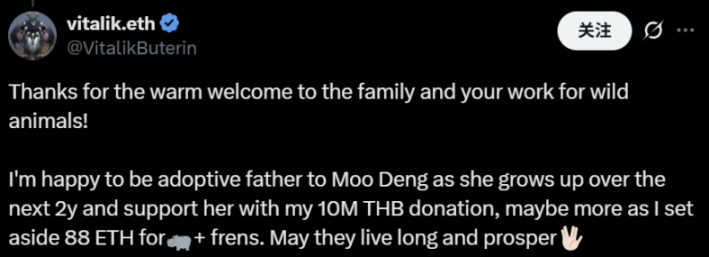
(Source: X)
Despite these strengths and peaks, MOODENG faces problems and challenges. Extreme concentration of holdings casts doubt on its claimed “decentralization”—the top 5% addresses control over 85% of circulating supply, and the team is accused of manipulating on-chain data through numerous addresses to create false prosperity. Additionally, like most meme coins, MOODENG lacks real applications and relies entirely on market sentiment for value. As the market corrected in October 2024, MOODENG’s price dropped sharply. Although the zoo continues operating Moo Deng’s IP (launching merchandise and 24/7 livestreams), and the MOODENG team tries innovations (establishing a “Global Charity Foundation,” experimenting with DAO-managed multisig wallets [$500k reserve], and listing efforts)—even gaining public support from Vitalik—the crypto market’s attention has shifted to new animal-themed meme coins like penguins (PESTO) and capybaras (CAPY).
MOODENG’s case reveals the typical meme coin lifecycle: rising on cultural symbols, fading due to liquidity drought. Despite its glorious past and mastering the principle that timing > technology at the right moment—precisely hitting the peak window of a viral IP—is more powerful than any whitepaper, even with celebrity endorsement and native marketing (support and operations from MooDeng’s zoo), predecessors like PEPE and DOGE have proven “celebrity fatigue” is inevitable. How to break the cycle and rewrite the rules is the challenge facing the humans behind the little hippo.
Meme coins, as the most unique phenomenon in the crypto market, perfectly illustrate the collision of speculation and culture. Their core strength lies in astonishing virality—whether DOGE, SHIB, or WIF, all can ignite viral spreads on social media, creating thousand-fold wealth myths in short periods. With the rise of high-performance public chains like Solana, participation barriers lowered further, making 2024—now part of history—a breakout year for meme coins, achieving exponential market cap growth.
However, the accelerating market cycle and ever-changing traffic waves quickly exhausted this meme coin frenzy. It’s not that no new coins launched, but that no phenomenon-level projects emerged. As Kawhi said: “We’re facing market information entropy forcing weight distribution upgrades—the narrative and dissemination paths of traditional memes have collapsed.” Like other innovative products, meme coins have fallen into homogenization, with most projects essentially zero-sum games. In the market adjustment of 2025, which hasn’t yet passed mid-year, most meme coins lacking substance have halved, while political-narrative coins like TRUMP suffered single-day crashes over 50% due to regulatory risks and political discourse. Now, a third virtual currency linked to Trump is about to launch—will the market believe the “boy who cried wolf” again? More severely, with the U.S. SEC tightening regulatory scrutiny, over half of meme coin projects face existential crises, and exchange delistings are rapidly drying up liquidity.
Yet projects standing on the edge haven’t given up. Despite numerous constraints and challenges, they continue striving on paths of transformation and innovation. Several dog-themed meme coins like FLOKI attempt utility pivots, building games and DeFi ecosystems to extend lifecycles. Yet none of these plans have fully materialized, let alone achieved large-scale adoption. If at least one project/product succeeds, it might give FLOKI a fighting chance; otherwise, it could be replaced by a new generation of dog-themed meme coins. WIF, wearing its pink hat, continues efforts in building real applications. Though it has gathered sufficient community buzz and popularity, the lack of utility might become its fatal flaw. In contrast, BONK, hailed as the “savior dog,” faces a relatively brighter outlook, with main challenges coming from SEC/FCA regulatory warnings and market competition. Its team has already formulated responses including BONK DAO and Visa card plans, which could mitigate the current crisis to some extent.
Recently risen meme coins like TRUMP and MOODENG, leveraging short-term IP popularity, now face survival challenges in retaining users and community after the hype fades. In transition strategies, TRUMP continues its celebrity’s typical style—marketing stunts like “dining with the president” or the unrealized vision of a “political donation platform”—prioritizing emotional mobilization over technical strengthening. In contrast, the MOODENG team is attempting DAO governance and launching a new ERC-20 version. With strong celebrity endorsement, MOODENG seems better positioned to advance further on this transformation path.
Looking ahead, as we approach a new era, meme coins—essentially attention economies—cannot be discarded by time or the market. Technically, platforms like PumpFun have long facilitated low-barrier, low-cost token issuance and trading; while the 2025-launched BlockMiner project brings a renaissance to this PvP-dominated market—as its website claims, this fairness-assured mechanism could guide meme coins toward healthier development and longer sustainability.
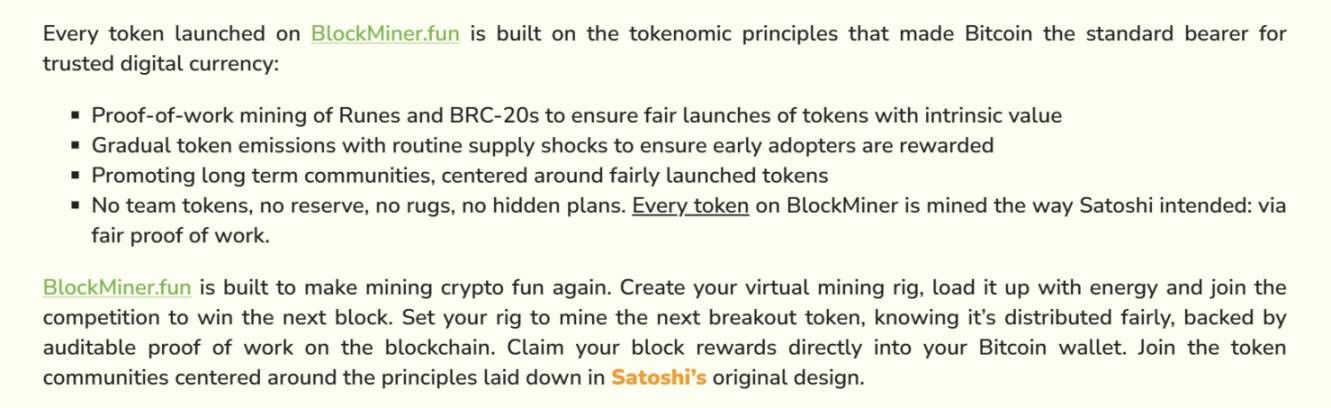
(Source: Blockminer.fun)
Innovation-wise, the “AI+meme” craze has kept rising since GOAT’s debut, potentially incubating infinite paradigm shifts—the rise of DeFAI pushes AI meme value and narrative to new heights. Rapidly advancing AI Agent technologies are expanding application scenarios, laying foundations for large-scale AI adoption. Though AI projects still face key challenges like technical implementation and user trust, their core role in future crypto ecosystems is unquestionable.
Meanwhile, meme coins enhanced by AI are likely to write their own success stories in the near future. Whether AI16z, GOAT, ACT, ARC, or other active AI meme coins since launch, or upcoming technological innovations, we can foresee AI-driven projects will occupy crucial positions in the future crypto market.
From a non-technical perspective, meme coin development always hinges on community support and sustained buzz. In terms of emotional value and traffic effects, the phenomenon of celebrities launching cryptocurrencies—dating back to Coinye West in 2014 (though initially unrelated to him)—has continued uninterrupted and peaked in 2025 with Trump’s coin launch. This celebrity coin craze will keep fueling market heat, even influencing the momentum of AI meme coins. Though numerous and uneven in quality, the market will ultimately filter out genuinely high-quality projects.
As time and market bid farewell to the past, early meme coins urgently need transformation, while new-era meme coins face even greater challenges. The market is undergoing the necessary transition from wild growth to rational development. Ultimately, what survives may not be the craziest meme, but the one best balancing hype and substance.
Join TechFlow official community to stay tuned
Telegram:https://t.me/TechFlowDaily
X (Twitter):https://x.com/TechFlowPost
X (Twitter) EN:https://x.com/BlockFlow_News