








Huma Finance Launches on Jupiter for Presale: The "Nuclear Moment" of PayFi Revolution and Solana Ecosystem
TechFlow Selected TechFlow Selected
Huma Finance Launches on Jupiter for Presale: The "Nuclear Moment" of PayFi Revolution and Solana Ecosystem
Huma Finance's Jupiter presale is essentially an experiment on the future form of DeFi.
 Navigating Web3 tides with focused insights
Author: Lawrence
Introduction: When PayFi Meets Solana, the Prelude to a Value Reformation
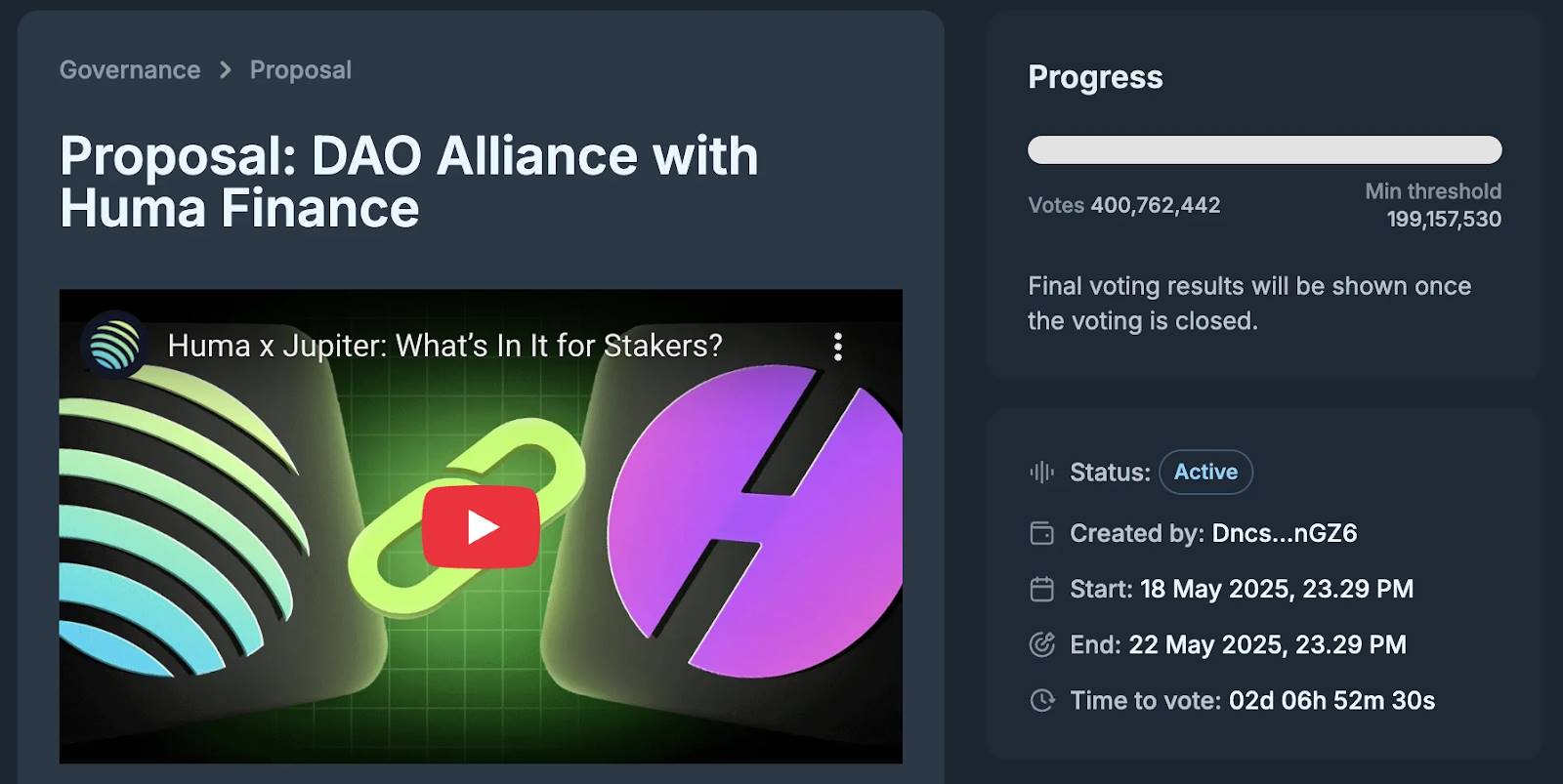
In May 2025, the Launchpad battlefield within the Solana ecosystem is ablaze. Amidst the fierce competition between Pump.Fun and Raydium over meme tokens and liquidity mining, Jupiter has broken the deadlock with a strategic partnership—Huma Finance, the world's first PayFi protocol, announced an IDO launch on its new TGE (Token Generation Event) platform.
This collaboration goes beyond mere competition for token issuance traffic; it is widely seen as a milestone in the deep integration of PayFi (Payment Finance) and DeFi. With a cumulative transaction volume of $4.3 billion, stable annualized yields of 14%, and a narrative built on "real-world assets + blockchain," Huma Finance injects a long-missing value anchor into the Solana ecosystem. Meanwhile, Jupiter leverages its community momentum of 400,000 monthly active users, aiming to elevate this presale into a faith-driven battle for "Web3 financial infrastructure."
1. Huma Finance: The Game-Changer in PayFi and Its Data Surge
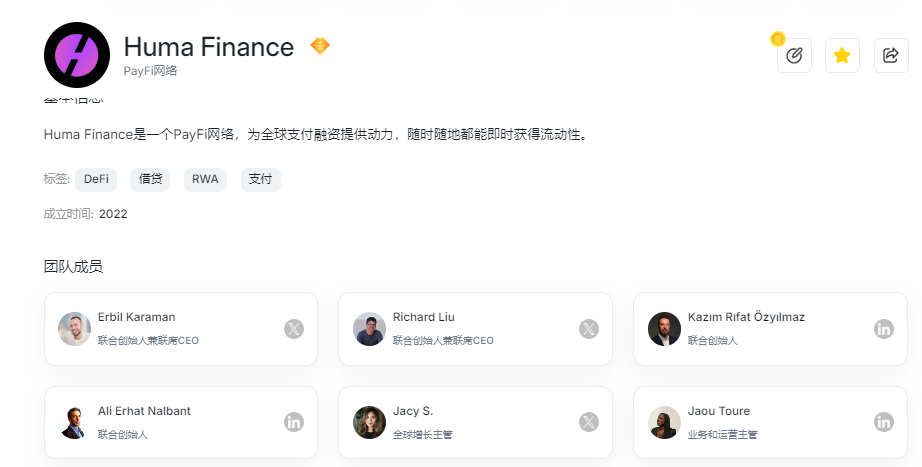
Founded in 2023, Huma Finance positions itself as a blockchain solution provider for cross-border payments and capital turnover. Its core logic involves using stablecoins and smart contracts to move traditional financial scenarios—such as trade finance, credit card clearing, and international remittances—onto the blockchain, enabling real-time settlement and yield distribution. According to the latest data, Huma has achieved a total transaction volume of $4.3 billion, generated $4.09 million in platform revenue, surpassed $104 million in active liquid assets, and attracted nearly 49,000 depositors—an increase of ninefold from the previous month. These figures are nothing short of "dominant" within the Solana ecosystem—its transaction volume accounts for over 40% of Solana DeFi’s total TVL, even surpassing established protocols like Jupiter and Raydium.
Compared to DeFi protocols reliant on speculative liquidity, Huma’s revenue sources are grounded in real-world use cases. Its 10%-20% annualized returns stem from interest rate arbitrage and working capital needs in cross-border trade—for instance, small and medium enterprises obtaining on-chain credit by pledging accounts receivable. This model gives Huma a first-mover advantage in Messari’s reported "$30 trillion PayFi market," attracting two rounds of funding totaling $46.3 million from institutions such as Distributed Global and Circle Ventures.
2. Tokenomics: Pragmatic Design and Circulation Dynamics
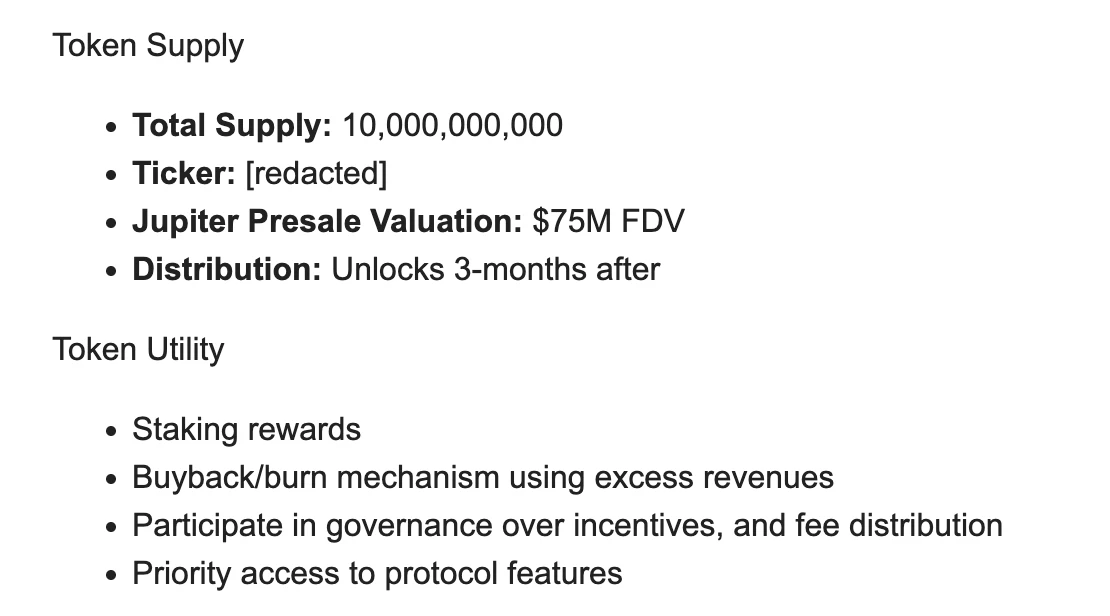
The Huma token (HUMA) has a total supply of 10 billion, with an initial circulation rate of 17.33%. Its economic model emphasizes a dual mechanism of "yield sharing + deflation":
-
Token Utility: Holders can earn staking rewards (a portion of the 14% annual yield), participate in governance voting, and benefit from buyback and burn mechanisms funded by protocol surplus revenue. The team stresses that Huma’s profit streams are stable, having reached $9 million in a single month in April 2024—providing fundamental support for the token’s value.
-
Allocation Structure: 5% allocated for initial airdrops (to early depositors), 31% for ecosystem incentives, 20.6% to early investors, and 19.3% to the team and advisors. Notably, the presale constitutes only 1% (100 million tokens) of the total supply and comes with a 3-month lock-up period. This "low circulation + high lock-up" design offers early participants discounted access while attempting to mitigate immediate sell pressure upon listing.
Compared to its previous round valuation of $171 million FDV, this presale is valued at $75 million—a discount exceeding 56%. This strategy clearly aims to attract retail participation from Jupiter’s community, but the minimal 1% supply allocation has sparked controversy—numerous community proposals have called for increasing the presale share to balance institutional and retail entry costs.
3. Jupiter’s Ambition: From Traffic Wars to Ecosystem Alliance
As a major gateway to the Solana ecosystem, Jupiter now boasts over 400,000 monthly active users. However, its Launchpad business has long been overshadowed by Pump.Fun (which exceeds 500,000 daily active addresses). This collaboration with Huma marks Jupiter’s strategic shift from a "transaction aggregator" to an "ecosystem incubator":
-
Strategic Synergy: The mutual investment of $250,000 in assets between Jupiter and Huma (based on a $75 million FDV) is not just a financial move—it's a declaration of ecosystem alignment. Huma’s payment clearing capabilities can enhance Jupiter’s stablecoin liquidity, while Jupiter’s user base accelerates Huma’s adoption.
-
Community Governance: The presale is exclusively open to JUP stakers, with no minimum threshold but allocation based on staking amounts. This design incentivizes JUP locking while delegating token distribution to the community, differentiating itself from Pump.Fun’s "open lottery" approach.
Additionally, both parties plan to co-establish a DAO alliance, expanding influence through memes and joint campaigns. Jupiter co-founder meow revealed in a detailed post that his decade-long personal relationship with Huma founder Erbil Karaman laid the foundation for trust—from their early days meeting on Quora, to promoting Bitcoin internally at Facebook, and jointly orchestrating the JUP token burn event—their bond transcends commercial interests, serving as an "emotional bridge" for ecosystem synergy.
4. PayFi’s Opportunities and Challenges: Balancing Idealism Against Real-World Barriers
Despite Huma’s imaginative PayFi narrative, significant challenges remain:
-
Red-Ocean Competition: Established payment protocols like Ripple and Stellar have already ventured into on-chain solutions, while Solana-based projects such as Parcl and Kamino are also exploring real-world asset integration. Huma must leverage its technical openness (support for multi-chain asset integration) and Solana’s high-performance advantages to build sustainable moats.
-
Regulatory Risks: Cross-border payments involve KYC and anti-money laundering frameworks. Huma’s "partially centralized" architecture—such as its credit assessment module—could become a regulatory focal point. While the team claims zero defaults in 2024, they must continuously demonstrate robust risk management.
-
Liquidity Dynamics: Although the 3-month lock-up reduces immediate sell pressure, it may dampen short-term speculation. If systemic risks arise during this period—such as recurring Solana network congestion—the price impact upon token unlocking could be severe.
5. Presale Strategy and Community Sentiment: A Tug-of-War Between Rationality and FOMO
For retail investors, participating in the Huma presale requires weighing three key factors:
-
Cost Assessment: Based on a $75 million FDV, the initial HUMA price is approximately $0.0075. Compared to the previous round’s $171 million valuation, this implies a potential upside of about 128%, though adjusted for the 3-month lock-up opportunity cost (assuming a 15% annual return elsewhere, roughly 3.75%).
-
Governance Rights: HUMA holders gain influence over critical decisions such as fee distribution—strategically valuable for long-term investors. If Huma continues attracting genuine commercial demand, governance premium will gradually emerge.
-
Ecosystem Benefits: As Jupiter’s first Launchpad project, HUMA may receive additional incentives like ecosystem airdrops and liquidity mining programs. Historical data shows that JUP stakers previously earned over 3x returns from projects like JTO and WEN.
Within community discussions, supporters view Huma’s combination of "real yield + low valuation" as a rare gem in a bear market. Critics, however, question whether the lock-up mechanism stifles liquidity and argue that the PayFi sector still requires time for validation. X user @DeFiGuru commented: “This is the moment Solana DeFi transitions from casino to bank—but banks need centuries of trust, while crypto markets offer only three months of patience.”
Conclusion: Solana’s Coming of Age
The Huma Finance presale on Jupiter is fundamentally an experiment on the future of DeFi. If successful, PayFi will prove that blockchain can generate real value without relying on Ponzi-like models. If it fails, it signals that the "onboarding real-world assets" narrative remains premature. For Solana, this battle is more than a Launchpad traffic contest—it marks the ecosystem’s rite of passage from "high-speed expansion" to "value consolidation."
As Jupiter founder meow put it: “We need capital flows on-chain to create jobs, not just paper wealth.” Regardless of the outcome, the alliance between Huma and Jupiter has already written a compelling opening chapter for the crypto world in 2025.
Join TechFlow official community to stay tuned
Telegram:https://t.me/TechFlowDaily
X (Twitter):https://x.com/TechFlowPost
X (Twitter) EN:https://x.com/BlockFlow_News






