Metis Hyperion: Sparking Hope for Ethereum's AI Narrative?
TechFlow Selected TechFlow Selected
Metis Hyperion: Sparking Hope for Ethereum's AI Narrative?
Hyperion launches, Metis is no longer just an L2, but transforms into a "multi-chain infrastructure + AI-dedicated chain" platform.
 Navigating Web3 tides with focused insights
Author: YBB Capital Researcher Ac-Core
1. Metis Hyperion Overview
Metis is an Ethereum L2 ecosystem based on Optimistic Rollup. It initially launched the Andromeda mainnet, whose biggest distinction from other L2 networks lies in its decentralized sequencer, which assigns transaction sequencing rights to community participants. In March 2025, Metis announced a dual-chain strategy: building upon the existing general-purpose chain Andromeda, it introduced the high-performance Hyperion chain. The former is positioned as a secure and reliable general L2, while the latter focuses on high-frequency, high-throughput, and AI-driven application scenarios. Built atop the Metis SDK, Hyperion's core is the new MetisVM virtual machine (EVM-compatible with support for AI-optimized instructions), aiming to optimize scalability and decentralization while significantly enhancing transaction efficiency.
According to official Metis documentation, Hyperion aims to build a "high-performance, AI-native" L2 network capable of near-millisecond transaction confirmation and ultra-high throughput, enabling AI-native applications such as on-chain LLM inference and decentralized AI agents. Overall, through its dual-chain architecture, Metis provides complementary support for different application scenarios—Andromeda emphasizing security and decentralization, and Hyperion focusing on high performance and AI applications.
Overall, Metis' development path can be summarized in two points: First, continuously improving core L2 infrastructure—for example, the May 2025 Andromeda upgrade introduced real-time data availability migration and fraud proof mechanisms, making it the industry’s first “truly decentralized” Layer 2. Second, moving toward modularity and multi-chain interoperability by lowering development barriers via the Metis SDK and promoting a multi-chain ecosystem. The launch of Hyperion has reshaped the value proposition of the METIS token: transforming Metis from just an L2 into a platform of “multi-chain infrastructure + AI-dedicated chains.”
2. On-Chain LLM? What Is Metis’ Implementation Logic?
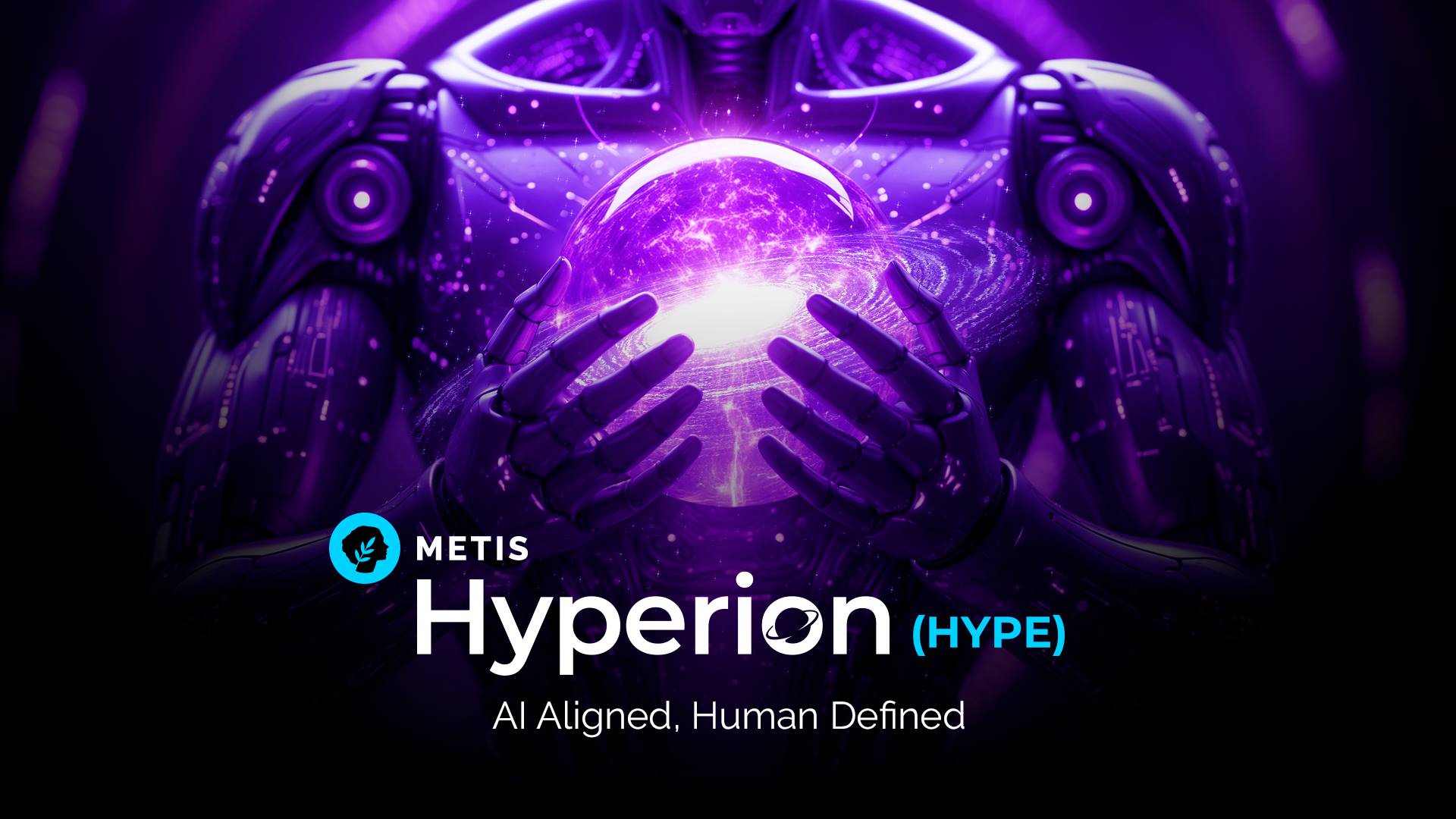
Image source: Metis
2.1 AI Ecosystem Closed Loop: Three Key Components – SDK, Hyperion, LazAI
As an Optimistic Rollup, Hyperion inherits the security models of both Metis and the Optimism stack, with updates primarily focused on parallel computing, data availability, and degree of decentralization—specifically optimized for AI and high-frequency use cases. Specifically, Metis advances ecosystem development through three core systems: Metis SDK, Hyperion, and LazAI.
● Parallel Execution Engine: Traditional blockchains typically execute transactions sequentially. Hyperion introduces parallel execution technologies like Block-STM, allowing independent transactions within a block to run simultaneously. Using optimistic concurrency control and dynamic DAG scheduling algorithms, independent transactions in the same block can be executed concurrently, greatly increasing throughput;
● Decentralized Sequencer: Transaction sequencing on Hyperion is shared among a multi-node network rather than controlled by a single node or a small group of operators. The mechanism combines leader rotation and encrypted mempool with proposer-builder separation (PBS) to prevent front-running and centralized interference;
● Data Availability: Hyperion plans to fully leverage Ethereum’s new features and external DA services to ensure data availability. With the advancement of Ethereum’s EIP-4844, Hyperion (and Andromeda) will directly publish transaction data to L1 via blob transactions, inheriting Ethereum’s security while reducing costs. According to official statements, Metis is also preparing to integrate EigenDA;
● Fraud Proof Mechanism: Hyperion continues using the optimistic model but upgrades its fraud proofs. Metis had earlier committed to introducing full fraud proof mechanisms and data availability solutions; its ReGenesis roadmap proposed “implementing the latest fault proof system from OP Stack.” In other words, Hyperion will adopt an interactive error-correcting mechanism: after a sequencer publishes a new block, “watchers” in the network have a challenge window (e.g., 7 days) to submit disputes proving the block invalid. If successful, malicious blocks are rolled back and responsible parties penalized.
In terms of AI-native infrastructure: The Metis SDK enables users to build their own L2 or L3 blockchains, already integrating an upgraded EVM (called MetisVM) with parallel processing capabilities and a decentralized sequencing mechanism. Hyperion is a high-performance, AI-dedicated Layer 2 built using this SDK, combining Optimistic Rollup, parallel execution, and distributed sequencing to achieve near real-time transaction confirmation and on-chain AI inference. According to official claims, MetisVM improves transaction efficiency by approximately 30% through dynamic opcode optimization and parallel execution. Meanwhile, MetisDB uses memory-mapped Merkle trees and concurrency control to enable nanosecond-level state access, nearly eliminating storage bottlenecks. These technologies together allow Hyperion to run AI inference tasks such as large language models (LLM) directly on-chain, laying a strong foundation for AI contracts.
In AI narrative project incubation: Metis is actively fostering AI-related projects, such as the LazAI protocol. This is an open network focused on “trusted AI data assets,” aiming to solve issues of opaque and inconsistent data used in AI. Leveraging blockchain’s verifiable computation and standardization mechanisms, LazAI builds an open, transparent data marketplace ensuring AI models use high-quality data and supporting cross-chain usage. Based on this protocol, Metis also launched the Alith framework—an AI agent development toolkit tailored specifically for blockchains. Developers can use the Alith SDK to quickly write and deploy AI agents on Metis. The team provided a practical example: users can issue natural language commands through a Telegram chatbot to perform DeFi operations like lending, without needing to write smart contracts themselves. This design drastically lowers the barrier for ordinary users to access AI applications and simplifies development workflows.
2.2 Compared to Other L2s, Where Does Hyperion Give Metis an Edge?
Hyperion remains based on Optimistic Rollup. Through forward-looking technological and strategic planning, Metis has established differentiated competitiveness: Hyperion’s technology meets the performance demands of AI applications; the dual-chain and SDK model balances general-purpose and specialized needs; and decentralized sequencing enhances ecosystem trust. Key differentiators from other L2s lie in Hyperion’s architecture, dual-chain strategy, Metis SDK, and decentralized sequencer:
High-Performance Execution Layer: Metis Hyperion is a high-performance Layer 2 designed for AI. Officially, it achieves near-real-time settlement and Web2-level response speeds via Optimistic Rollup, parallel execution, and distributed sequencing. Hyperion introduces MetisVM—a virtual machine customized for high-frequency trading and AI tasks, featuring dynamic opcode optimization, parallel execution, and caching mechanisms that significantly boost smart contract execution efficiency. Additionally, Hyperion includes on-chain inference support for AI reasoning, with dedicated precompiled contracts and execution engine optimizations;
Dual-Chain Strategy (Andromeda + Hyperion): Metis retains the original Andromeda chain as a general-purpose L2, continuing to provide stable infrastructure for applications like DeFi, while launching Hyperion exclusively for AI use cases. This “dual-network” architecture resolves the trade-off between generality and specialization—avoiding stalemates in homogenized competition with other L2s while creating dedicated space for AI applications;
Metis SDK and Developer Ecosystem: The Metis SDK is a modular toolkit for developers, integrating templates, building tools, and standard interfaces, enabling rapid construction of custom execution layers or applications. The SDK allows developers to quickly deploy Layer 2/Layer 3 chains using mature modules and facilitates smooth migration or interaction between Andromeda and Hyperion, significantly boosting ecosystem development efficiency and interoperability;
Decentralized Sequencer: In 2024, Metis successfully launched the industry’s first fully decentralized sequencer, placing transaction sequencing under community nodes and staking mechanisms. This system uses rotating consensus nodes and token-based incentives to achieve fault tolerance and censorship resistance, completely eliminating single points of failure.
3. If Ethereum Focuses on L1, How Will Metis Respond?

Image source: investx.fr
3.1 If the Main Chain Doesn’t Distribute Benefits, Metis Builds Its Own Sugar Factory
Suppose Ethereum shifts focus to advancing its own L1 development (such as base-layer consensus or sharding upgrades) rather than directly expanding L2s—how can L2 platforms like Metis maintain and grow influence? According to Metis’ All-in-AI strategic roadmap, its current approach centers on modularization and multi-chain expansion.
First, Metis’ dual-chain architecture and MetisSDK empower the creation of multiple specialized chains. The introduction of Hyperion marks Metis’ transformation from a “single L2” to a “modular multi-chain infrastructure.” With MetisSDK, any team can rapidly build customized blockchains like assembling Lego—configuring components such as parallel execution consensus, EVM-compatible layers, AI-optimized VMs, and on-chain storage. This means Metis not only operates two chains but can also support more “industry-specific chains”—such as AI computing chains, DePIN infrastructure chains, and gaming chains—each serving distinct application needs.
Second, Metis emphasizes cross-chain interoperability and collaborative ecosystems. The official roadmap and community communications repeatedly mention introducing cross-chain bridging and data/computation aggregation mechanisms. It’s clear that Metis plans to integrate Chainlink CCIP, enabling free flow of assets and smart contracts between Metis and other public chains. Hyperion’s architecture emphasizes a “shared bridge + cross-chain interconnectivity” model and proposes “decentralized data and computation aggregation,” linking AI applications with various data networks and computing resources.
The community is not just users but direct participants and beneficiaries of the network. By opening up sequencer roles, anyone can become a block proposer through staking and earn sequencing rewards. Meanwhile, Metis is planning to introduce incentive mechanisms for AI node operators, encouraging more developers to deploy inference services and provide on-chain AI capabilities.
3.2 Metis All-in-AI Strategy: How AI Drives Ecosystem Growth
Directly addressing the issue: current on-chain AI services—like fetching results via oracles—face obvious centralization risks and performance bottlenecks. To address these, Hyperion and LazAI have partnered to introduce Alith, an AI agent framework. Developers can use the Alith SDK to write “AI agents” and deploy them as contract modules on Hyperion. These agents handle functions like model selection, inference logic, and fault recovery, and can be directly called by other on-chain contracts—enabling chatbots, prediction tools, or DAO assistants. Through precompiled contracts and similar mechanisms, Hyperion integrates AI inference into on-chain execution. Inference results are then anchored on-chain via logs, reproducible operations, or trusted execution environments, making them verifiable and trustworthy. This preserves blockchain transparency while meeting AI computational needs, truly advancing “AI on-chain.”
Additionally, Hyperion’s parallel processing and low latency are especially suitable for AI tasks. As long as requests don’t conflict, they can run simultaneously, achieving much higher efficiency than traditional L2 sequential execution. MetisVM is also specifically optimized for AI—for instance, using Rust/WASM for better performance and supporting multiple input types like text and images—allowing AI models to run directly on-chain. This entire design aims to fulfill Metis’ claim of being the “first Layer 2 protocol capable of natively running large language models on-chain.”
4. ETH Hyperion vs. Solana AI
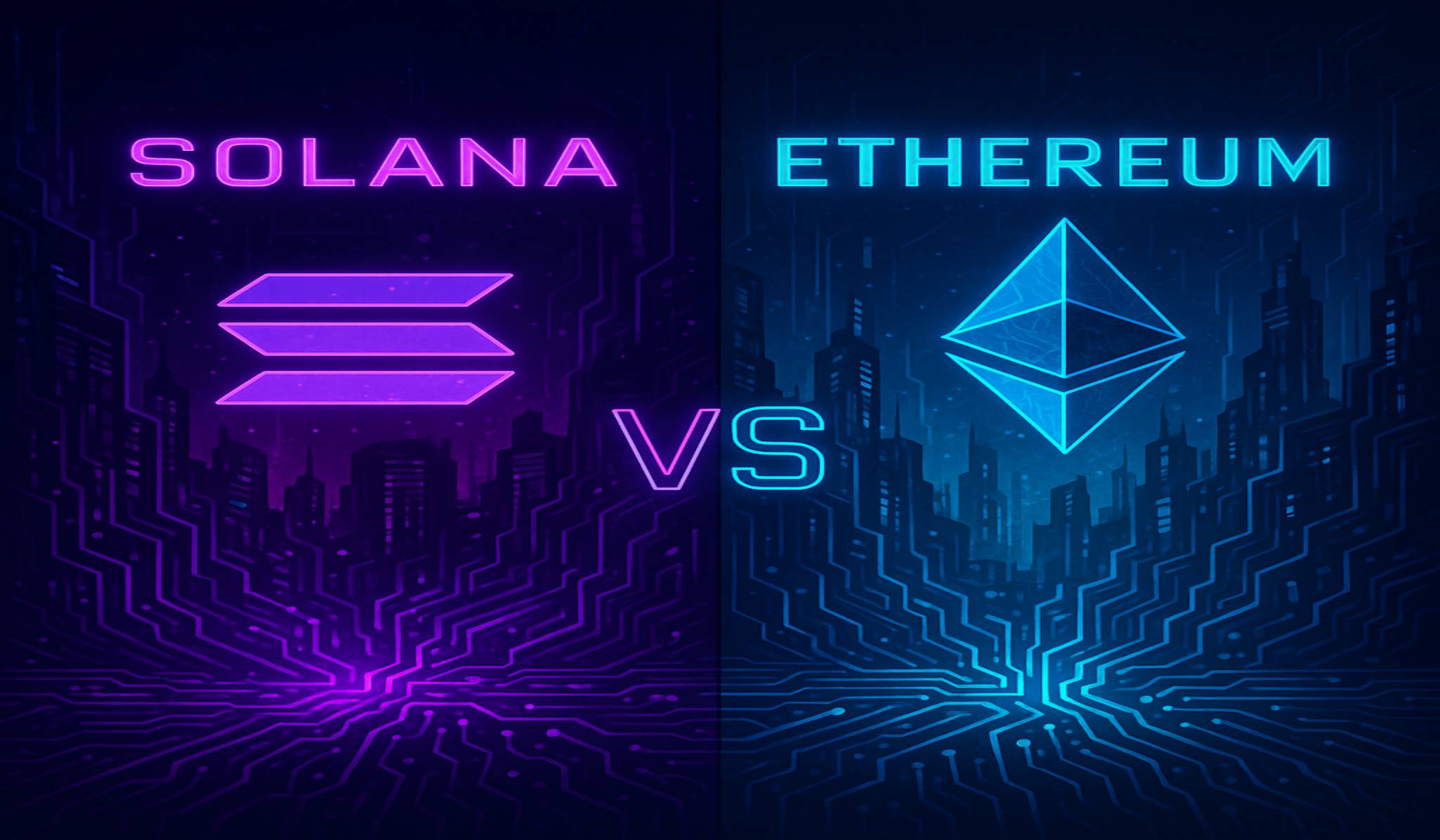
Image source: self-made
4.1 The AI Competition Arena
The market enthusiasm for Crypto+AI has clearly found great success on Solana. The Solana community is also promoting open protocols like Model Context Protocol (MCP), aiming to let off-chain AI models query on-chain data via standardized interfaces. QuickNode demonstrated how to set up a Solana MCP server, enabling “canonical” AIs like Claude to directly access Solana blockchain information via RPC. However, most AI solutions on Solana run AI models off-chain and call the results on-chain.
As pointed out in “Solana and Base: Which Ecosystem Is Better Suited for AI Agents?”: “Currently, all models—including agents—run off-chain; input data, training, and output information are not on-chain; neither EVM chains nor Solana/BASE support integration of AI with smart contracts.” Thus, solutions like Solana+MCP do not truly put AI models “on-chain,” but merely allow AI models to securely access on-chain data.
What makes Hyperion interesting is its attempt to execute AI inference itself on-chain—a capability Solana has not achieved. If Hyperion becomes the first Layer-2 protocol supporting native on-chain execution of LLMs, it would mean Hyperion not only provides data interfaces but also delivers on-chain compute power, allowing AI models to run within MetisVM with every computational step completed inside the blockchain execution environment. This design is far more thoroughly decentralized than Solana’s approach: AI inference results on Hyperion are on-chain verifiable and traceable, inherently resistant to tampering and censorship; whereas Solana’s MPC mostly relies on trusting external models and only secures the data pathway.
Of course, Solana holds inherent advantages in high-concurrency processing and mature GPU chip support architectures at the base performance level. Hyperion’s strength lies in compatibility and synergy with the Ethereum ecosystem: EVM compatibility, the MetisSDK ecosystem, and METIS token liquidity.
Overall, Hyperion and Solana are not direct substitutes but offer alternative paths into blockchain+AI: Solana relies on network performance and traditional LLM interfaces (MCP); Metis leverages its smart contract platform foundation to deliver native on-chain inference capabilities.
4.2 Is Hyperion the Master Key to Ethereum’s AI Future?
To state a direct judgment: Hyperion is not currently a master key. Most so-called “AI+chain” projects remain conceptual, with very few proven as productive applications. Issues around model ownership and trust remain unresolved: how to trace the origin of off-chain trained models, and how to prove the correctness of their execution results on-chain? These are fundamental infrastructure questions yet to be answered.
Hyperion’s system design addresses some of these pain points by providing protocol-level support for AI inference, solving part of the compute challenge: parallel execution and MetisVM optimizations grant on-chain computing power far beyond traditional L2s. However, this does not mean Hyperion solves all problems at once.
Nonetheless, it’s certain that Hyperion brings new possibilities to Web3 AI and gives the Ethereum camp a stake in the AI narrative. It primarily addresses challenges in computing architecture and trust foundations: abundant parallelizable compute, verifiable on-chain execution processes, modular toolchains, and native support for AI-specific needs. These efforts create potential for future practical blockchain+AI applications—such as autonomous on-chain agents and high-frequency data analysis—and add substantive depth to the AI narrative in crypto.
References:
Join TechFlow official community to stay tuned
Telegram:https://t.me/TechFlowDaily
X (Twitter):https://x.com/TechFlowPost
X (Twitter) EN:https://x.com/BlockFlow_News
 @YBBCapital