








Taking the Sui chain as an example, exploring new paths for public chains to break through the paradox of compliance and development
TechFlow Selected TechFlow Selected
Taking the Sui chain as an example, exploring new paths for public chains to break through the paradox of compliance and development
Sui's implementation has demonstrated that compliance is not only a necessary condition for public chains to handle external pressures, but also a key bridge driving the deep integration of blockchain technology with the real world.
 Navigating Web3 tides with focused insights
By: Crypto Miao
A public blockchain is a decentralized, distributed ledger technology that allows anyone to participate in transaction validation and network maintenance. Compliance is key for public blockchains to be widely adopted in regulated industries such as finance, requiring adherence to legal and regulatory standards such as KYC (Know Your Customer) and AML (Anti-Money Laundering). Compliance not only enhances trust from users and regulators but also effectively reduces risks of illegal activities such as money laundering and fraud. Globally, public blockchains must also comply with regulations like the EU's General Data Protection Regulation (GDPR) to ensure legality and sustainable development.
Global Public Blockchain Regulatory Policies and Trends
As a core application of blockchain technology, the regulatory environment for public blockchains is rapidly evolving. From initial widespread skepticism to cautious acceptance today, the international community’s attitude toward public blockchains has gradually shifted. The decentralization, transparency, and immutability of public blockchains are seen as revolutionary, yet they also bring challenges such as market volatility, financial crime, and regulatory complexity. Regulators worldwide are striving to establish frameworks that balance innovation with risk control.
Regulatory Trends: Governments are increasingly tightening regulation of public blockchains and crypto assets. For example, the European Union passed the Markets in Crypto-Assets Regulation (MiCA) in 2023, establishing the world’s first comprehensive legal framework for crypto assets.
Policy Divergence: Regulatory strategies vary significantly across countries. China has fully banned cryptocurrency trading and mining, while the United States and the EU are gradually introducing legislation to regulate the space. The EU applies bank-like oversight to stablecoins and cryptocurrencies to protect financial stability and consumer rights, whereas the U.S. leans toward supporting stablecoins to maintain the dollar’s global dominance.
Innovation vs. Risk: Despite stricter regulations, many countries still recognize the potential of public blockchains in areas such as finance, supply chains, and healthcare. For instance, Singapore and Japan maintain strict oversight while creating room for blockchain innovation.
The Paradox of Compliance and Development
The Web3 industry stands out due to its decentralization and anonymity, but this also exposes it to complex compliance requirements across jurisdictions. While these rules aim to ensure lawful operations, they often restrict freedom of development and global expansion. Compliance increases operational costs and may introduce legal risks, potentially leading to lawsuits, heavy fines, or even imprisonment for project founders or core team members.
1. Rising Operational Costs
Compliance forces blockchain projects to invest heavily in legal consulting, audits, and regulatory reporting to meet diverse national laws. These high costs directly strain project finances, posing a significant burden—especially for startups.
Binance: In 2023, Binance was fined $4.3 billion by the U.S. Department of Justice over money laundering and violations of the Bank Secrecy Act. This massive penalty weakened its financial standing and could lead to market share loss.
2. Increased Legal Risks
The complexity of compliance and inconsistency across jurisdictions make it difficult for projects to anticipate and manage legal risks. Breaching regulatory boundaries can result in lawsuits, fines, or business suspension, severely impacting development.
Ripple: Engaged in a legal battle with the U.S. Securities and Exchange Commission (SEC) over whether XRP qualifies as a security. In 2023, a court partially ruled in Ripple’s favor but imposed a $125 million fine. During the litigation, Ripple consumed vast resources, and the performance of XRP and its ecosystem suffered clear setbacks.
3. Restricted Market Access
Compliance requirements may ban projects from operating in certain regions, limiting global expansion. If a token is deemed an unregistered security, exchanges may delist it, harming user base and market share.
-
Solana: In 2022, Solana faced a class-action lawsuit alleging SOL was an unregistered security, hindering its promotion in some markets.
-
Polygon: In 2023, the SEC listed MATIC as an unregistered security in its lawsuit against Binance, leading to its delisting from platforms like Robinhood, directly affecting market share and user growth.
4. Innovation Constraints
Compliance may limit exploration in technological innovation and business models. To avoid regulatory risks, projects may have to adjust direction or abandon cutting-edge initiatives, weakening competitiveness and long-term potential.
Cardano: In 2023, the SEC classified ADA as a security in lawsuits against Kraken and Binance. This label may restrict Cardano’s applications in certain markets, forcing it to adopt more conservative strategies in ecosystem development and slowing its innovation pace.
5. Risks to Core Team Members
Compliance issues can extend beyond the project to affect founders or core members, exposing them to lawsuits, fines, or imprisonment. This undermines project stability and may damage the industry’s reputation.
CZ (Changpeng Zhao), Founder of Binance: In 2023, CZ pleaded guilty to compliance violations, stepped down as CEO of Binance, and was sentenced to four months in prison. This event directly impacted Binance’s operations and may weaken its leadership position in the industry.
6. Other Notable Cases
Tether
/USDT: Tether settled with the U.S. Commodity Futures Trading Commission (CFTC) over misleading reserve claims, paying a $40 million fine, and continues to face possible federal investigations. These incidents threaten its market credibility and business expansion.
Compliance requirements impose multifaceted constraints on blockchain projects, especially during critical phases of entering new markets and increasing market share. At such times, compliance can become a "tightening headband" for blockchain projects. Therefore, project teams must prioritize compliance challenges while pursuing innovation and expansion, crafting strategies that balance growth and compliance.
Sui Blockchain: Regulatory Status and Market Position
Sui, a public blockchain launched in May 2023, has quickly gained prominence in the blockchain space thanks to its unique technical architecture and user-friendly design.
Compared to many other public blockchain projects, Sui has demonstrated remarkable stability over nearly two years since launch, particularly in regulatory compliance and network security. To date, Sui has not faced any lawsuits or accusations related to regulatory or security incidents. This track record highlights the rigor of its development team in both technology and compliance, earning trust and positive reputation in the competitive blockchain market.
Meanwhile, Sui’s recent performance further demonstrates its market potential. With rapid ecosystem growth and rising community engagement, Sui’s market capitalization has surged past $11 billion, securing a top 11 position in the global cryptocurrency market cap rankings. This valuation reflects strong market recognition of Sui’s technological innovation and application prospects, marking its significant standing among public blockchains.
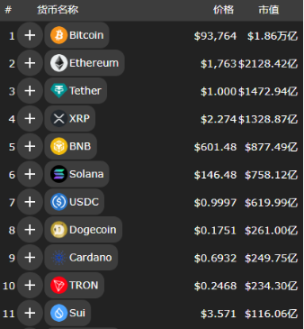
Figure 1: Crypto Market Cap Rankings
Among the top ten cryptocurrencies by market cap, USDT and USDC are stablecoins, and DOGE is a meme coin, each occupying a unique niche. Excluding these three, Sui ranks 8th among public blockchains. This achievement is particularly notable because the youngest project in the top ten prior to Sui was Solana, which launched in March 2020—five years ago. Sui, having launched only in May 2023, reached the global top 11 in market cap within just two years. This is an astonishing feat, highlighting Sui’s exceptional speed and potential in the blockchain landscape.
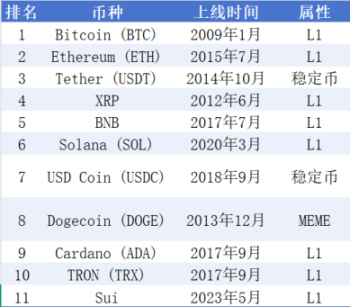
Figure 2: Launch Dates and Attributes of Cryptocurrencies
How then has Sui managed to grow rapidly and secure a solid foothold in the fiercely competitive Web3 landscape while maintaining compliance?
Characteristics of the Sui Blockchain
Sui is an emerging Layer-1 blockchain platform developed by Mysten Labs, designed to deliver fast, secure, and scalable solutions for Web3 applications. It uses the Move programming language, emphasizing high transaction speed and low latency, prioritizing rapid and secure transaction execution—ideal for real-time applications like gaming and finance. Sui offers a familiar user experience, such as logging in via web credentials (zkLogin), and supports large-scale applications through elastic network capacity that scales with demand.
Move’s modular design allows developers to organize code into reusable modules and supports formal verification, ensuring smart contracts behave as intended. Compared to the widely used EVM languages, Move offers more advanced and modern advantages suited to current blockchain development needs.
1. Security: Resource Model and Vulnerability Prevention
Sui has significant security advantages, primarily due to its resource model. In Move, every data object has explicit ownership, preventing accidental or malicious duplication or destruction of resources.
2. Performance and Scalability: Parallel Execution and High TPS
Another key advantage of Move is its performance and scalability. Move supports parallel transaction execution, unlike EVM’s sequential processing, which can cause congestion and higher fees under high load.
3. Developer Experience: Modularity and Learning Curve
Move’s modular design gives it an edge in developer experience. Move programs are organized into modules that share resources and functionality, making upgrades and composition easier.
Recently, Ethereum (ETH) co-founder Vitalik Buterin proposed replacing the Ethereum Virtual Machine with RISC-V. RISC-V shares many similarities with the Move language, most notably modularity and scalability. Both are designed with modularity and extensibility in mind, supporting custom instruction extensions to adapt to various use cases and enabling broader deployment across blockchain applications. This further underscores the technical superiority of the Move language.
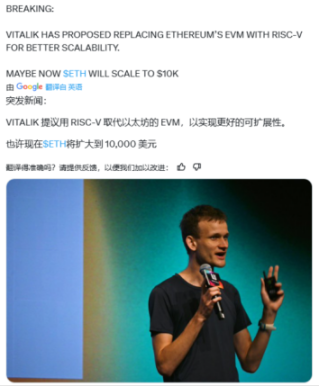
Figure 3: Vitalik proposes replacing EVM with RISC-V
Sui Blockchain’s Operational Strategy
1. Community Incentives
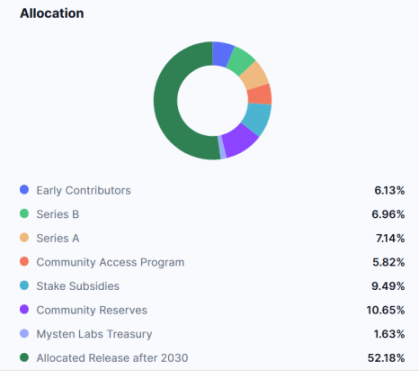
Figure 4: Sui Token Allocation
From Figure 4, we see that three allocations support Sui’s ecosystem and community development:
-
Community Access Program: 5.82%
-
Stake Subsidies: 9.49%
-
Community Reserves: 10.65%
These community-focused allocations total 26% of the token supply—representing 54.37% of the publicly announced release plan (47.82% by 2030)—and exceed half of all circulating tokens.
The 5.82% Community Access Program incentivizes early projects and users, addressing high customer acquisition costs and encouraging participation in DeFi activities such as lending and borrowing, especially when liquidity pools are small.
The 10.65% Community Reserves focus on long-term ecosystem development, funding Move-based DApp development, supporting community governance, and reserving funds for future expansion.
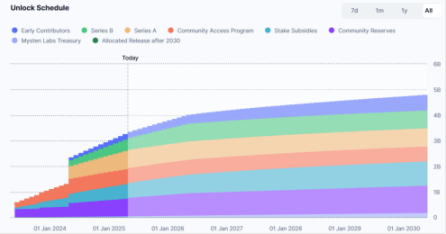
Figure 5: Sui Token Unlock Schedule
Figure 5 shows the Sui token unlock schedule and proportions. Except for a large unlock in May 2024, tokens are gradually released according to their allocation, with unlocking rates decreasing over time.
At launch, when projects and users are few, only a small amount of tokens are released. As adoption grows, demand increases, and supply gradually rises to match, maintaining balance between supply and demand and stabilizing token price.
2. Building Key Projects
For critical infrastructure or long-term, high-investment projects, Mysten Labs directly operates and develops them.
Examples include:
-
Sui Name Service (SNS): Provides human-readable names, simplifying wallet address management.
-
SuiPlay0x1: Next-generation handheld gaming device supporting Web2 + Web3 games.
-
Walrus: Decentralized storage protocol.
-
Seal: Decentralized secret management service protecting sensitive data via on-chain access policies.
-
Deep Book: Centralized limit order book (CLOB) with parallel execution and low fees, offering high throughput and low-latency trading.
Mysten Labs’ official projects enhance the ecosystem: Deep Book provides liquidity and fast trade matching; Sui Name Service improves user interaction and facilitates Web2 company integration; Walrus and Seal enable secure data storage and encryption for builders.
SuiPlay0x1, a hardware-intensive project requiring game compatibility across platforms and support for both Web2 and Web3 games, involves high upfront investment and slow returns. Without a mature ecosystem and Web2 game studio partnerships, it would be difficult for smaller Web3 game studios to develop such a device. Hence, Mysten Labs led its development from the outset.
3. Offline Events
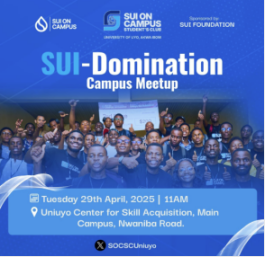
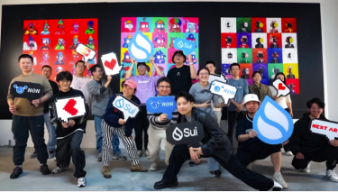
Sui hosts offline events to promote its blockchain technology, bridge the gap between Web2 and Web3, attract developers, investors, and partners, strengthen community cohesion, and boost brand visibility. Leveraging Sui’s high performance and scalability to solve traditional pain points, these events emphasize education, collaboration, and innovation.
Event formats include global conferences, industry summits, community meetups, technical workshops, and hackathons. Topics cover Sui’s technical progress, Move language education, ecosystem showcases, industry trends, and hands-on developer training, helping participants understand Sui, learn development, and build connections. Events span North America, Asia, and Europe, collectively advancing Sui’s ecosystem.

Compliance Solutions
Sui Blockchain implements multiple measures to meet regulatory requirements, including AML and other legal standards. However, as a decentralized blockchain, Sui does not directly enforce AML or KYC but provides tools and infrastructure for projects built on the platform to meet compliance standards.
1. Compliance and Legal Requirements
According to Sui’s Terms of Service, users must comply with all applicable laws when using the platform, including AML, anti-terrorism financing, and sanctions regulations. The terms explicitly prohibit illegal activities such as money laundering, terrorist financing, or OFAC sanction violations. Users are responsible for tax compliance, including record-keeping and reporting transactions to tax authorities. Sui may report user activity as required by law to ensure transparency.
2. Partner Support
Sui’s decentralized nature makes direct AML/KYC enforcement challenging, similar to traditional financial institutions. However, through transparent transaction records and partner tools, it enables projects to meet regulatory demands. For example, Sui collaborates with Ant Digital, leveraging its ZAN platform to provide KYC and AML tools for compliant tokenization of real-world assets (RWA). As an RPC node operator on Sui, ZAN integrates with Sui’s infrastructure, enabling seamless communication and enhancing scalability and security.
Additionally, Sui’s Terms of Service allow freezing funds or restricting usage to meet legal obligations, ensuring overall compliance. (For instance, if Bybit’s $1.46 billion theft occurred on Sui, the stolen funds could potentially be frozen under the terms.)
3. Project-Level Compliance
Sui itself does not enforce KYC or AML, as it is a decentralized blockchain network. Research shows that Sui DeFi tools typically require only connecting a Sui wallet, without KYC, bank cards, or email registration. However, when fiat on/off ramps are involved—such as selling SUI tokens via exchanges—multi-tier KYC verification may be triggered. This indicates that compliance is primarily implemented by projects or third parties, with Sui providing supportive tools rather than direct enforcement.
Specific Compliance Measures
Sui enhances compliance and isolates compliance risks through on-chain infrastructure support, compliance partners, and project-level reviews.
1. Infrastructure Support
Sui leverages innovative technologies to improve compliance. For example, Walrus, Seal, and zkLogin significantly enhance compliance with the EU’s General Data Protection Regulation (GDPR). GDPR is a key EU data protection law safeguarding personal data privacy, requiring strict rules on data collection, processing, and storage—including data minimization, purpose limitation, storage limitation, integrity, confidentiality, and ensuring data subject rights (e.g., access, correction, deletion).
Walrus: Enables data deletion, fulfilling the “Right to be Forgotten”
Walrus is a decentralized storage protocol designed for large binary files (blobs), allowing sensitive personal data to be stored on separate sub-chains for quick deletion, satisfying GDPR’s “Right to be Forgotten” (Article 17 GDPR).
Seal: Secure Management of Sensitive Data
Seal provides secure storage and access control for sensitive data, ensuring protection during storage and processing in line with GDPR’s data security and privacy requirements.
zkLogin: Privacy-Preserving Authentication, Supporting Data Minimization
zkLogin is a native Sui feature enabling users to log into dApps using familiar Web2 credentials (e.g., Google, Facebook) without managing private keys or seed phrases. By keeping credentials private and using zero-knowledge proofs, it supports GDPR’s data minimization principle (Article 5 GDPR). It reduces the volume of personal data stored on-chain while preserving user privacy. Additionally, zkLogin eliminates the complexity of traditional private key management, lowering data breach risks.
2. Third-Party Collaboration
Through its community-driven Sui Guardian program, Sui partners with third parties like Chainalysis to enhance compliance. Sui Guardian tracks scams and phishing sites, while Chainalysis’ analytical tools monitor and analyze on-chain transactions to identify addresses or patterns linked to known illegal activities. By analyzing transaction patterns, Chainalysis can detect potential phishing victims, helping exchanges and users take preventive actions. This helps Sui comply with global AML and KYC regulations such as the EU’s 5th Anti-Money Laundering Directive (5AMLD) and the U.S. Bank Secrecy Act (BSA).
3. Self-Regulation by Project Teams
Sui provides tools to help developers self-regulate and ensure compliance, including geographic restrictions. For example, Sui partnered with Netki to launch DeFi Sentinel, a compliance oracle offering automated tools for real-time KYC/AML, wallet screening, and transaction monitoring. These tools help dApps verify user locations, ensuring only users in compliant regions can access services.
For example, the Doubleup gambling project is accessible only to users in jurisdictions where gambling is legally permitted.
4. Risk Isolation
In the blockchain ecosystem, public blockchains typically serve as foundational layers, while application development is carried out by project teams—including DeFi, DApps, and DePIN. Users interact via smart contracts written by project teams, with stakeholders primarily being the project teams and users (contract participants). Most legal disputes and judicial precedents involve project teams and their users. Unless the blockchain has a major flaw directly causing user losses, the blockchain itself is rarely named as a defendant.
For example, Sui recently announced a partnership with xMoney and xPortal to launch a digital Mastercard supporting SUI tokens in Europe. Sui acts as the technology platform, focusing on infrastructure and asset ecosystem development, while payment services are handled by licensed entity xMoney and user experience managed by xPortal.
Analysis of Sui’s Compliance Path
From Sui’s practice, we see that compliance was treated as a core strategic direction from the outset and integrated into the blockchain’s top-level design.
Public blockchain development must take a holistic approach, aligning bottom-layer logic with future trends. Rather than planning from a single-project perspective, public blockchain initiatives should anticipate diverse application scenarios and long-term developments, preparing accordingly.
Governing a blockchain is like governing a nation—only with robust infrastructure, leadership in high-investment projects, and well-balanced incentives can a vibrant and resilient ecosystem attract more developers and users.
Conclusion
As a rising star in the public blockchain space, Sui has successfully found a balanced path between compliance and growth through its unique technical architecture and thoughtful operational strategy.
By embedding compliance into its foundational design, Sui meets global regulatory standards while building a dynamic and stable ecosystem through community incentives, key project development, and offline engagement. Its concrete measures—from partnering with third parties to provide KYC/AML tools to adopting innovative technologies for GDPR compliance—demonstrate foresight and execution in tackling regulatory challenges.
Sui’s journey proves that compliance is not only a necessary response to external pressure but also a crucial bridge enabling deeper integration between blockchain technology and the real world. Compliance serves not just regulators, but users—and ultimately, everyone in society.
While the Web3 world champions “code is law,” excessive adherence to jungle-law principles risks rejection by global regulators and mainstream society, confining Web3 to the virtual realm. Only through compliance can Web3 truly bridge the virtual and real worlds, delivering safer, more convenient services to global users and unlocking its revolutionary potential.
Thinking about how to connect Web3 with the real world is both the starting point and end goal of compliance.
Join TechFlow official community to stay tuned
Telegram:https://t.me/TechFlowDaily
X (Twitter):https://x.com/TechFlowPost
X (Twitter) EN:https://x.com/BlockFlow_News






