








The Final Chapter and Reboot of NFTs
TechFlow Selected TechFlow Selected
The Final Chapter and Reboot of NFTs
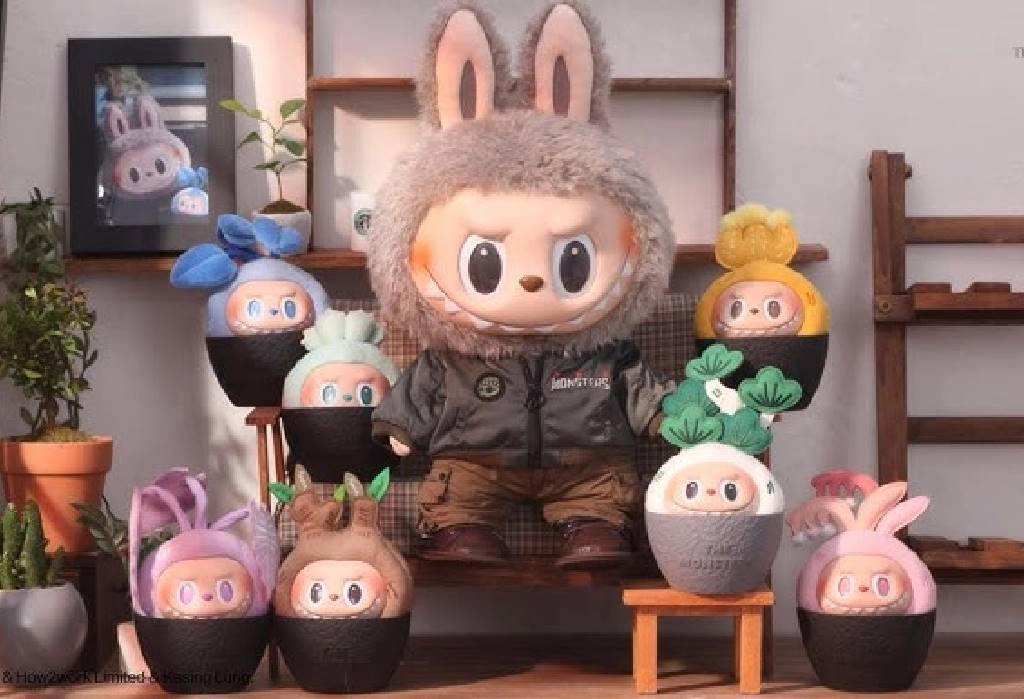
There must be a Labubu hidden beneath the ruins.
 Navigating Web3 tides with focused insights
Author: YBB Capital Researcher Zeke
1. The Demise of NFTs
The final cry of NFTs ended with Pudgy Penguins' token launch; Doodles' recent token issuance barely made a ripple on Solana. Yuga Labs continues its downsizing, now even abandoning its most iconic IP—Cryptopunks. Bitcoin-based NFTs, once part of the last revival wave in the NFT space, have nearly dropped to zero. These narratives that once drove frenzy have clearly faded into obscurity and are now largely ignored.

The original vision behind 10k PFPs was beautiful: a community of just the right size helping a bottom-up IP project go global—completely different from traditional IP projects that relied on massive upfront investments in content. For example, Disney's Marvel Universe, Star Wars, and various animated characters typically require years of development and endless funding before becoming deeply embedded in culture and turning into gold mines.
NFTs were entirely different—the barrier to entry was extremely low, and creating an IP or assetizing it could happen at lightning speed. Creators only needed to pay gas fees to list their artwork for sale on OpenSea, bypassing galleries, toy companies, film studios, or professional teams. An IP and a new artist could emerge overnight.
Three or four years ago, we saw some grassroots IPs gain popularity within top entertainment circles in North America, Europe, Japan, and South Korea. Even unknown artists could achieve rags-to-riches success through NFTs. As a Z-generation individual who grew up watching anime, being able to participate via crypto in IP investment and incubation—something previously inaccessible to ordinary people—felt like a dream come true.
But after BAYC’s “endless spin-offs” and Azuki’s disastrous Elemental series release, the ambiguous status of NFTs began to clarify. They weren't really equity or investments but rather expensive luxury goods bundled with membership perks. Project teams expected us to keep buying new sub-series to fund their costly roadmaps aimed at building IP value. The seeds of conflict were sown here: teams knew content creation was expensive, but without content, IPs would die. Yet these sub-series released every few months kept draining resources from original holders, exhausting the entire community. The wait for meaningful content feedback might take many more years—or never come at all. Cracks widened; those beautiful fantasies shattered along with floor prices, leaving behind nothing but endless disputes.
2. Pop Mart: The Powerhouse MCN of IP
If we view NFTs as Gen-Z's luxury collectibles, their rise and fall become clearer. In today’s fast-paced world, lacking content isn’t necessarily bad—after all, strong visuals alone can quickly attract buyers. Azuki’s art style, for instance, resonates well with Asian aesthetics, allowing this grassroots NFT series to become the third major blue-chip following BAYC under shared consensus. Real-world collectibles like Bearbrick (the stacking bear), B.Duck, and Molly also achieved temporary fame without narrative backing, relying solely on distinctive designs.
However, trends are fleeting. Without substantive content as core value, such IPs risk obsolescence at any moment. Due to crypto culture and the extremely low success rate of NFT projects, teams often resort to continuously launching derivative series around a single IP. But reality hits hard—before they even develop a rudimentary core, the trend has already passed.
Certainly, there is another type of PFP project with substantial content support: Japanese-style NFTs. In the past, I’ve seen at least four or five projects backed by famous Japanese manga IPs aiming big in the NFT market. However, they failed to consider two critical issues: first, their fanbase is almost entirely incompatible with the NFT ecosystem; second, existing anime merchandise is already so abundant that fans see no reason to pay hundreds of times more for a simple digital image. Most importantly, third, these images offer zero future utility. Even if you buy a Gundam NFT, you merely gain access to the "SIDE-G" corner of the Gundam metaverse. You won’t benefit from万达's profits derived from models, games, or animations. Your community plays no role in IP incubation and may even be considered outsiders among the broader Gundam fandom. GameFi faces a very similar pain point here.
Thus, PFP projects became a flawed premise—only Pudgy Penguins continued pushing forward with practical efforts. So, is there another path for these little pictures? I believe PoP MART may offer an alternative answer.
This small booth originally located in Beijing’s OMALL shopping center rose to prominence by distributing Sonny Angel. That single line contributed nearly 30% of PoP MART’s sales at the time. Jealous copyright holders revoked exclusive distribution rights one year later—but ironically, this move catalyzed the birth of an IP empire.
Wang Ning (founder of PoP MART) adopted a simple strategy: build proprietary IPs—ones no one else could take away. In 2016, PoP MART partnered with Hong Kong designer Kenny Wong to launch its first original collectible series—Molly. The pouty little girl instantly went viral across China, driven by the dopamine rush and excitement of blind-box mechanics. PoP MART began its first phase of rocket-like growth. By 2019, Molly alone generated annual sales of 456 million RMB, becoming the company’s primary revenue source.
This hybrid model—combining Japanese gashapon concepts with high-end collaborations—became common during later NFT booms. Artists design base elements, which project teams then combine into series for sale and operation. NFT launches are typically structured as blind boxes, with rare combinations teased to boost buyer desire.
The difference lies only in distribution format. While tens of thousands of NFT projects and most blue-chips ultimately failed, PoP MART is now experiencing a resurgence. Why?
I once attributed failure to difficulties in real-world implementation and high purchase barriers. The former seems less relevant now, while the latter isn’t quite accurate either—NFTs had their “free mint” era where projects like Goblintown and MIMIC SHHANS became golden dogs. Creators earned huge profits just from trading royalties. Some NFTs in the inscription era pushed decentralization even further. Yet none of this stopped NFTs from declining. Joining or forming an IP community was easy—it was sustainability that proved difficult.
Hence, I think our model was flawed. After its initial surge, Molly didn’t make PoP MART invincible—its stock price fell just like NFTs did, from 2021 to 2024. But PoP MART bounced back—not because of one hit IP, but due to a wall filled with IPs. Today, PoP MART owns 12 in-house IPs including Molly, DIMOO, BOBO&COCO, YUKI, and Hirono; holds 25 exclusive IPs such as THE MONSTERS (including Labubu), PUCKY, and SATYR RORY; and collaborates on over 50 non-exclusive IPs including Harry Potter, Disney, and League of Legends.
Tastes change constantly; IPs have limited lifespans. But what if you have hundreds of options? Today, Labubu is exploding in popularity across Europe, the U.S., and Southeast Asia, with its plush toys holding value comparable to “plastic Maotai.” Yuga Labs’ ideal state was eventually realized—not in Web3, but in Web2. And perhaps that wasn’t accidental.
We need to rethink what an IP business truly is, what an NFT roadmap should look like, and how PoP MART achieved such heights without narrative content.
3. Pudgy Penguins
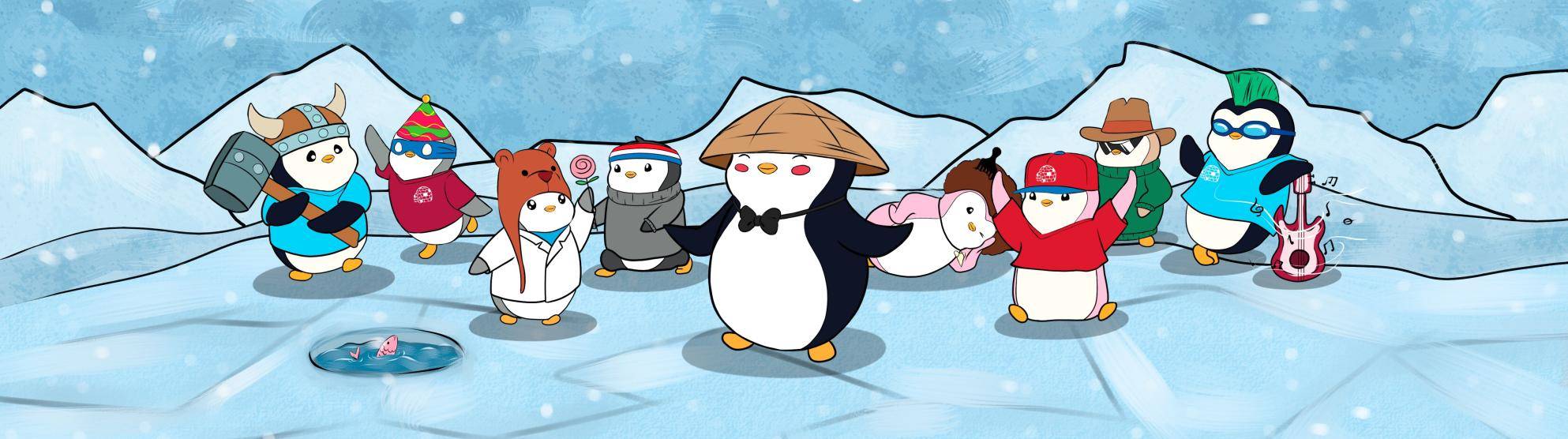
Last year, I attended a Pudgy Penguins event in Hong Kong. This NFT project always treats its community with warmth.
Pudgy Penguins succeeded because of pragmatism—nothing more, nothing less. There’s no technical distinction between NFTs themselves. No matter how clever the mint process, it still results in a JPG. The real challenge lies in IP execution—an endeavor hundreds of times harder than making a 10K PFP. Yuga Labs wanted to build a Metaverse; Azuki aimed to produce anime. Sure, those ideas sound cool—but billion-dollar initiatives like these inevitably turn to the community to fund them.
This hyper-compressed world is too restless—everyone wants instant results. Holders want quick riches; project teams want overnight success. Few blue-chip projects are willing to humble themselves—and the more impatient they become, the harder they fall. Even Pudgy Penguins’ original team was once such a reckless grassroots group. After their reputation suffered, they sold the brand cheaply.
That’s when Pudgy Penguins finally met its true owner: Luca Netz, a professional with extensive experience in physical marketing. He brought the penguins back to where they belong. Luca Netz is genuinely building a brand—he runs a company for NFT holders. From marketing campaigns to plush toys and future games, every step Pudgy Penguins takes is solid. The company profits, and so do the holders. There’s nothing extraordinary about it—they’re simply doing what they’re supposed to do. Therefore, it proves that bottom-up IPs can exist in Web3—it’s just that too many project teams refuse to lower their stance.
That’s why I hate the term “disproven,” as if certain things should never have existed. Electric cars once seemed ridiculous; Siri on my phone used to be dumb. Yet today, green license plates fill our cities, and AI needs no further explanation.
Many so-called “disproven” sectors will eventually be revisited by Web3—it just lacks the right project teams.
4. The Path Forward
The path to success is both simple and difficult. The next stage of PFPs must break free from inherent crypto logic frameworks. Becoming the next Web3 Disney requires long-term accumulation. Whether NFT scarcity has actually hindered mass adoption—a topic I’ve discussed in previous articles—remains debatable. If we define them as consumer collectibles, the 10K limit might be too restrictive. If instead we treat them as a uniquely Web3 asset and fundraising mechanism, then IPs must eventually translate into tangible consumer products to fulfill promises to the community—not endless strange sub-series.
Given the unique culture of crypto and the nature of NFTs, clinging to a single IP until exhaustion is understandable yet limiting. How can we innovate further on these PFPs? How can a project evolve into an IP factory? Perhaps this demands embracing new philosophies, integrating more technology and novel mechanisms.
5. Is Token Launch the Final Stop?
What exactly is the purpose of launching a token for an NFT project? To this day, I still don’t understand. It often feels like exploitation—top-down extraction that dilutes the value of OG NFTs. I can only interpret it as the project seeking a convenient liquidity exit.
From APE to DOOD, they’re all essentially variations of vaporware tokens. Their utilities usually involve staking to earn trading fees, purchasing items in a metaverse, or governance rights. Ideally, this creates a perfect cycle among holders → stakers → developers. In practice, however, it often spirals into a death loop involving falling NFT prices, declining play-to-earn yields, and collapsing token values.
For OG NFT holders, tokens may divert some dividends and privileges. But since most receive large airdrops at TGE, few complain. Long-term, though, this remains dilution—as seen in cases like Azuki Anime, where allocations feel like outright robbery.
Short-term hype matters, but long-term survival matters more. Don’t let token launches become the final destination.
Conclusion
In this fast-paced, dopamine-driven era, we’ve witnessed the rise of many new Web2 IPs. NFTs should have thrived here, given their irreplaceable characteristics. Four years ago, I viewed them as “Cyber Maotai”; reality turned them into “Cyber Tulips.” Few are willing to rebuild from the ruins. Still, I believe beneath the rubble lies the next Labubu.
Join TechFlow official community to stay tuned
Telegram:https://t.me/TechFlowDaily
X (Twitter):https://x.com/TechFlowPost
X (Twitter) EN:https://x.com/BlockFlow_News
 @YBBCapital


