Chinese auto industry begins "mass-producing Bosch"
TechFlow Selected TechFlow Selected
Chinese auto industry begins "mass-producing Bosch"
Intelligent providers and automakers jointly define the next-generation vehicles.
 Navigating Web3 tides with focused insights
Author: Zhou Yongliang
The 2025 Shanghai Auto Show lacked the usual "buzz."
Looking back at last year's Beijing Auto Show, it felt more like a stage show. At that time, the most eye-catching figures were Lei Jun and Zhou Hongyi. Not only did they visit rival booths, becoming focal points pursued by media and the public alike, but they also inspired traditionally reserved and low-key executives from automakers to step out and appear alongside peers.
For a while, "executive photo-ops" became a hot topic on social media.
But this year, the tide of traffic has receded, and auto shows are returning to technology and products. What stood out most at this year’s Shanghai Auto Show was how an increasing number of previously behind-the-scenes component suppliers are now deeply integrated with automakers—almost taking the lead. We saw Huawei Intelligent, CATL, Horizon Robotics, Momenta, and Pony.ai appearing as independent exhibitors, becoming new centers of attention.
Why are more and more suppliers showing up in passenger vehicle exhibition halls? What changes are happening in the industry?
Suppliers Step from Behind the Scenes to the Forefront
In a sense, auto shows are not only battlegrounds for manufacturers launching new products but also snapshots of the automotive industry's development.
After walking through this year’s Shanghai Auto Show—easily clocking 20,000 steps on WeChat—I formed a few impressions: one being the much-talked-about "intensified competition" of recent years. In just the first two days of the Shanghai Auto Show, there were 193 press conferences covering new strategies, models, and technologies. Automakers went head-to-head in design, hardware configuration, and smart experiences—the kind of fierce rivalry described as "gods fighting."
Another clearly visible shift is suppliers stepping into the spotlight—they're transforming from introverts to extroverts. The most direct data point: the number of supply chain exhibitors inside the passenger vehicle展馆 at the 2025 Shanghai Auto Show jumped from 12 in 2023 to 23 in 2025, nearly doubling. The standalone automotive tech and supply chain exhibition area expanded from 30,000 square meters in 2023 to 100,000 square meters—a threefold increase.
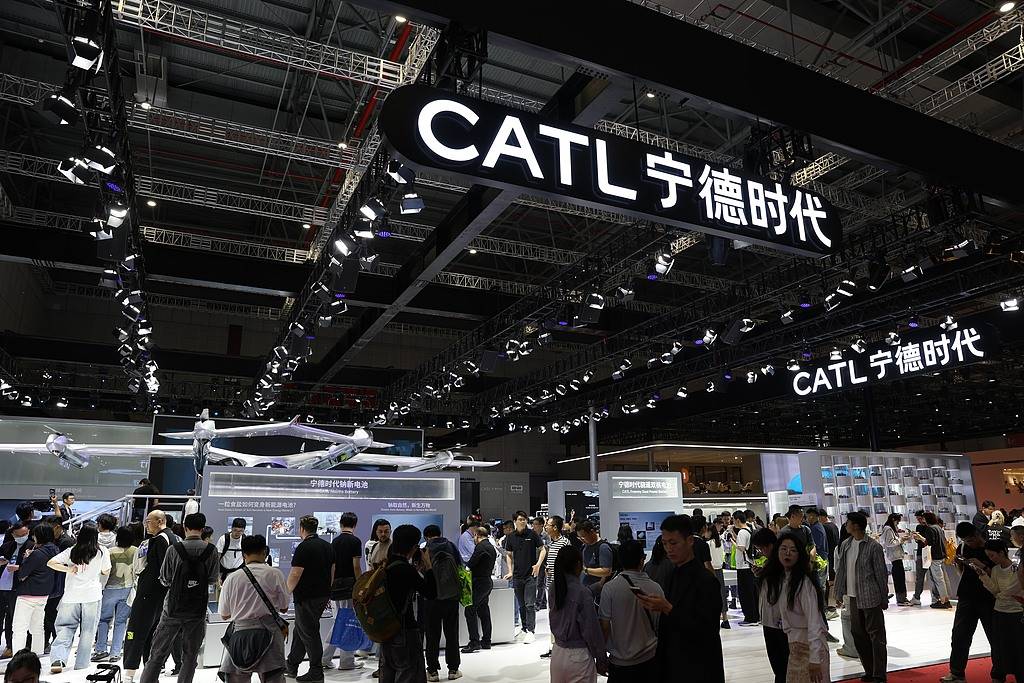
CATL's booth at the Shanghai Auto Show featured three core battery technologies|Image source: Visual China
Huawei had two zones at the show: Hall 5.2 hosted Harmony Intelligent Mobility, featuring new vehicles such as the Zorachang S800, AITO M8, and the 2025 AITO M9. In Hall 6.1, Huawei presented its charging systems, electric drive units, and Qiankun intelligent solutions, setting up a large dedicated booth. CATL’s booth sat right next to Xiaomi, showcasing its second-generation Shenxing ultra-fast charging battery with 12C peak charging and 800 km pure-electric range, sodium batteries capable of operating in -40°C extreme cold, and the flexible Xiaoyao dual-core battery with interchangeable cells.
Horizon Robotics' booth at the Shanghai Auto Show featured its L2 urban pilot assistance system|Image source: Visual China
Meanwhile, Horizon Robotics set up near Audi, unveiling its L2 urban pilot assistance system—Horizon HSD—the first domestically developed, software-hardware-integrated, mass-producible urban driving assistance system in China. Momenta, beyond its driver assistance offerings, displayed its MSD (Momenta Self-Driving) system targeting L4 autonomous driving, which has completed over 500,000 kilometers of shadow mode validation across five Chinese cities.
Beyond standalone booths, suppliers are no longer content with silent support roles; they are increasingly appearing at new car launches and taking the stage.
During the Shanghai Auto Show, Yu Chengdong, Huawei’s常务 director and chairman of Consumer BG, shared two embraces with Jia Jianxu, president of SAIC Motor, jointly promoting their jointly developed brand “Shangjie.” When AUDI unveiled its first model, the E5 Sportback, Cao Xudong, CEO of Momenta, was invited on stage to speak. During the show, Momenta also announced deep strategic partnerships with six major brands: Buick, FAW Toyota, Honda China, Cadillac, SAIC Audi, and Zhiji.
Behind all this lies the formation of an automotive "Wintel"—the alignment between Chinese intelligent technology providers and Chinese automakers.
Since the 1980s, Microsoft and Intel formed the famous Wintel alliance. Whenever Microsoft released more powerful software, demand for Intel’s integrated chips rose. Likewise, when Intel delivered higher-performance chips, Microsoft could offer better user experiences.
Today, the automotive industry is following a similar path. Yu Kai, founder and CEO of Horizon Robotics, said, “We want to be Wintel, but we won’t build complete devices.” Horizon aims to become the Microsoft and Intel of the robotics era, with intelligent vehicles as the first step. This means gradually establishing itself as a consumer-facing brand, a key focus for Horizon in 2025.
CATL is similarly pushing transformation toward the consumer end. CATL hopes to use its To C presence to boost its To B business. In 2024, CATL rolled out extensive consumer advertising campaigns in airports and high-speed rail stations across several cities, using the slogan “When choosing an EV, trust CATL,” aiming to strengthen consumer recognition.
Who Will Define the Next Generation of Cars?
The move of these leading suppliers from backstage to center stage reflects not just a change in physical space but a profound transformation within the automotive industry.
This is evident in the rising status and growing influence of suppliers. It’s worth revisiting the traditional internal combustion engine vehicle supply chain, a rigid pyramid structure where OEMs were unquestionably the "chain leaders." Through tiered subcontracting via Tier 1, Tier 2, and even lower-tier suppliers, a vast and fixed supply chain was established.
However, as the automotive industry rapidly shifts toward electrification and intelligence, new players such as battery, chip, and autonomous driving suppliers are reshaping the chain into a networked structure. Tier 1 suppliers, once the most influential in the chain, are facing the greatest disruption. Previously overlooked chip and battery suppliers are now bypassing Tier 1s entirely, collaborating directly with OEMs.
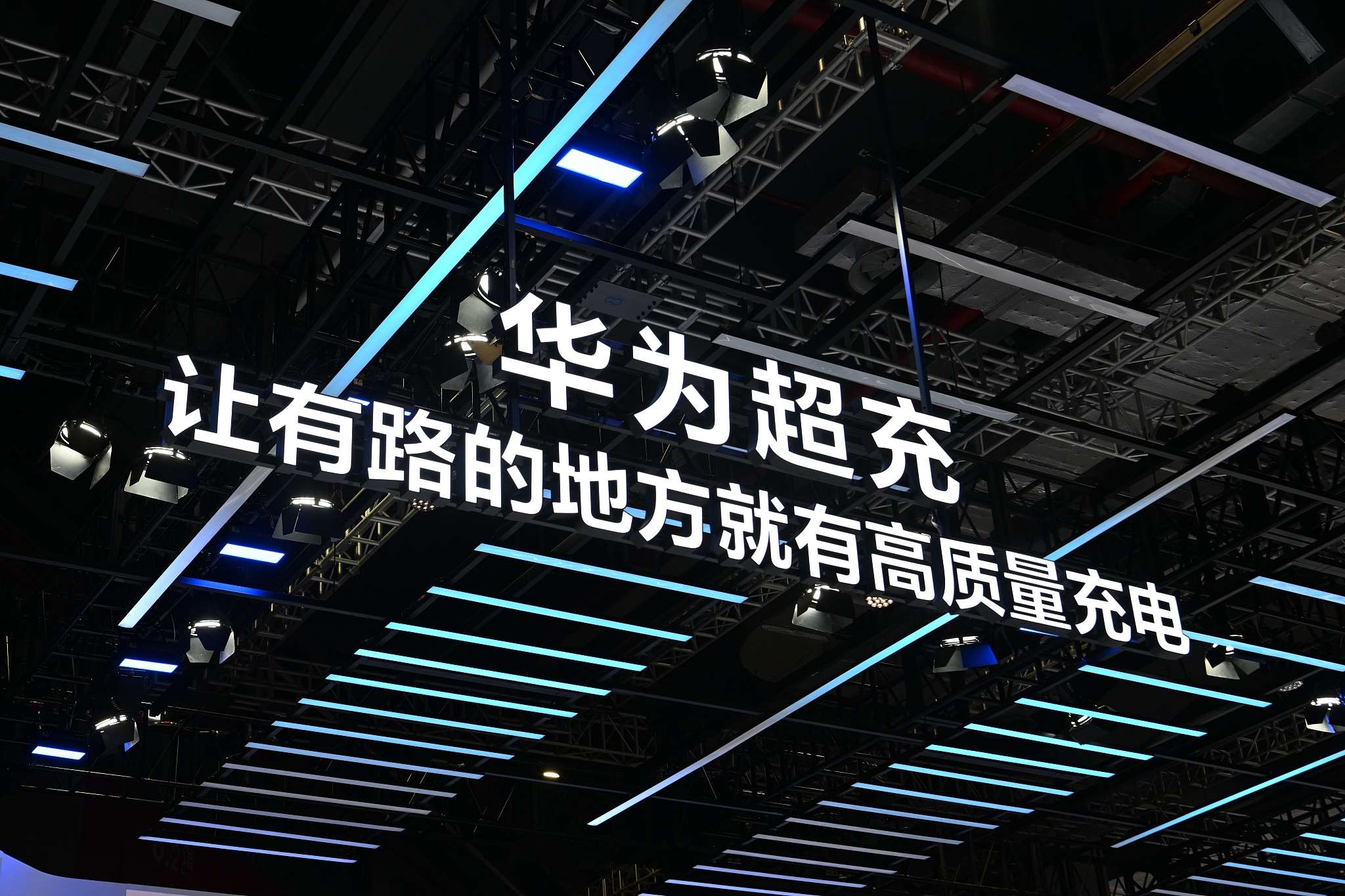
Huawei ultra-fast charging: up to 1 km per second|Image source: Visual China
Thus, the suppliers now stepping forward are no longer offering conventional "components," but rather core technologies, platforms, or complete solutions. For example, CATL’s batteries directly determine an EV’s range and performance; Huawei, Horizon Robotics, and Momenta’s driver assistance solutions directly impact a vehicle’s level of intelligence.
Moreover, they share common traits: high technical barriers and significant impacts on product performance and user experience. As such, they are no longer mere accessories to automakers but essential partners.
On another front, the long-discussed concept of "software-defined vehicles" is becoming reality. Many of the suppliers now in the spotlight are software and chip companies—such as Huawei, Horizon Robotics, and Momenta. As intelligence accelerates, feature updates and enhanced experiences increasingly rely on software and computing power, mirroring the path taken by smartphones.
Simultaneously, the role of the Chinese market is evolving. Initially seen as the world’s largest potential market, it evolved into the biggest, most profitable, and most efficient market. Now, it has become the "gym" where global automakers strengthen their overall competitiveness—a testing ground requiring rapid iteration and resilient supply chains. Going forward, the speed at which multinational automakers integrate China into their global R&D systems will be key to their competitiveness over the next decade or two.
Currently, nearly all joint-venture automakers emphasize “in China, for China,” while overseas suppliers like Bosch, ZF, and Aptiv are accelerating localization.
For instance, Aptiv unveiled several fully localized intelligent automotive solutions at the show. Its cross-domain integration solution, based on local Chinese chips, deeply integrates intelligent cockpit systems, L2+ ADAS, automated parking, and body control systems, effectively reducing costs and simplifying design and validation processes.
Overall, the shift of suppliers—especially intelligent solution providers—from behind the scenes to the forefront is an inevitable result of the industry’s turn toward intelligence. The core value of OEMs, once unquestioned “chain leaders,” is now tilting toward those suppliers mastering key electrification and intelligence technologies. Therefore, future automotive competition extends far beyond one-dimensional brand battles—it’s a multidimensional, comprehensive contest involving mastery of core supply chains and strategic choices within the technological ecosystem. Whoever secures a pivotal position in the new value chain will hold the key to the future.
Join TechFlow official community to stay tuned
Telegram:https://t.me/TechFlowDaily
X (Twitter):https://x.com/TechFlowPost
X (Twitter) EN:https://x.com/BlockFlow_News
 极客公园
极客公园