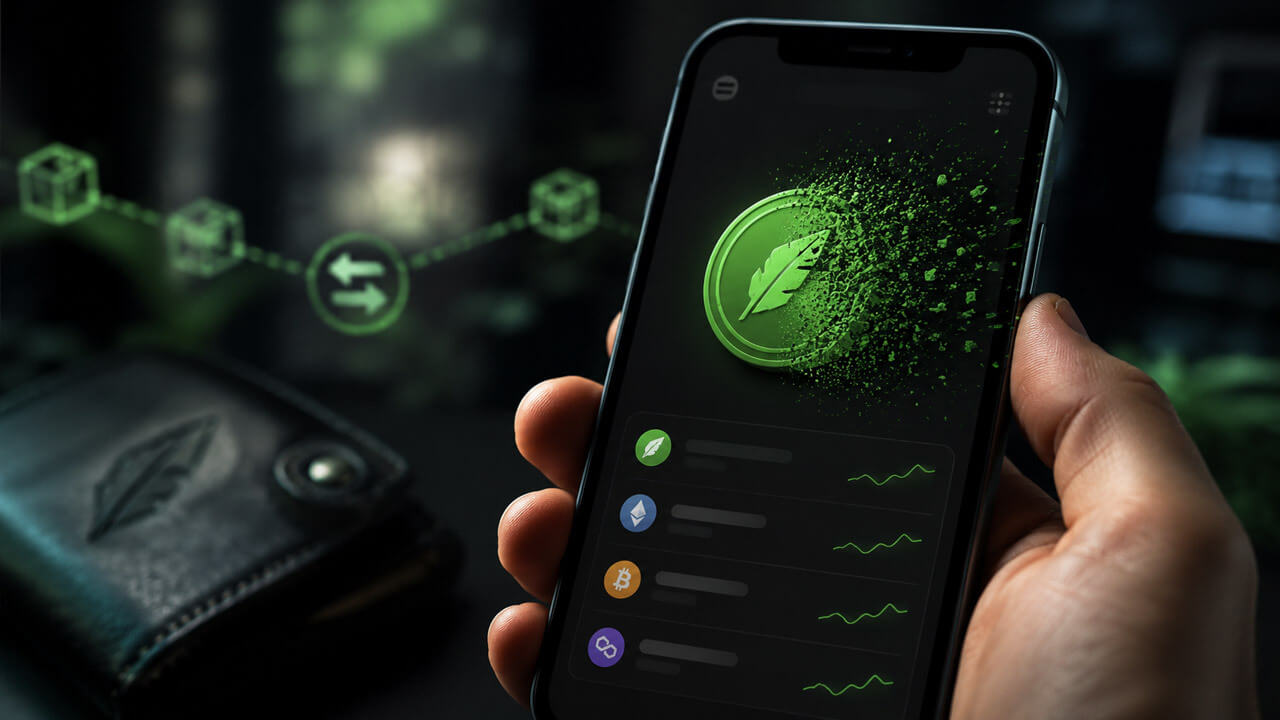
Robinhood Chain Shockingly Sees "Vanishing Token" Scam: Tokens Disappear After Purchase, Funds Evaporate Despite Secure Private Keys
TechFlow Selected TechFlow Selected
Robinhood Chain Shockingly Sees "Vanishing Token" Scam: Tokens Disappear After Purchase, Funds Evaporate Despite Secure Private Keys
When warning systems are outpaced by scam contracts, retail investors become guinea pigs.
 Navigating Web3 tides with focused insights
Author: CryptoSlate
Compiled by: TechFlow
TechFlow Editor's Note: A new type of scam emerged just two weeks after the launch of Robinhood Chain: after users bought tokens, the tokens disappeared directly from their wallets. The money spent could not be recovered, but private keys and other assets remained intact. This exposes the fatal risk of "buy first, audit later" on permissionless chains—when warning systems cannot outpace scam contracts, retail investors become the test subjects.
Cross-chain trading protocol Relay claims that buyers on Robinhood Chain (a permissionless Ethereum Layer 2 launched by Robinhood) suffered fund losses after purchasing tokens, with these tokens disappearing directly from wallets after purchase.
Relay highlighted this issue and stated that the funds could not be recovered, but did not promote these tokens or explain why they disappeared from the wallets.
Reportedly, these incidents did not involve stolen wallets or private keys. Relay stated that private keys and other balances except for the tokens involved were unaffected. Relay is blocking the problematic tokens in question, verifying assets it deems safe, and reminding users that anyone can list tokens.
Relay attributed the losses to specific, potentially problematic token purchases on Robinhood Chain. However, it did not specify whether the transactions were conducted via Robinhood Wallet, nor did it imply that brokerage accounts and other Robinhood products were affected.
Relay announced:
We have noticed reports that tokens disappear from wallets after being purchased on Robinhood Chain. There is an increase in scam tokens specifically designed to self-remove after purchase. If you bought one of these, unfortunately, the money you spent is gone. We are blocking these tokens and verifying safe tokens.
Relay did not publish the affected contract addresses or transaction records, so the reported losses cannot be independently verified.
Robinhood Launches Wall Street Layer 2, Market First Pumps a $150 Million Cat Coin
Robinhood launched its permissionless public mainnet on July 1. The company stated it serves nearly 28 million customers in 38 countries, although this figure reflects its company-wide coverage, not the number of on-chain users or affected buyers.
This warning was issued during the first surge of speculative trading on Robinhood Chain. Decentralized exchange trading volume neared a $400 million peak on July 7, and Pump.fun added trading support for Robinhood Chain tokens on July 8.
Robinhood's Expanding Crypto Bets Meet Faster-Developing Prediction Market Boom
Who Blocks Tokens Before Trading?
The open token creation mechanism allows developers to deploy contracts without Robinhood's approval. Third-party tokens and liquidity can form around Robinhood's brand without app listing. Relay's warning shifts the issue from which assets attract attention to what buyers saw before signing.
Relay operates an independent cross-chain bridge and swap interface supporting Robinhood Chain. Robinhood Wallet's own support page states that its in-app swaps are routed via 0x API and LI.FI, while the interface used by affected buyers remains undetermined.
0x states it supports tokens by default unless blocked for compliance reasons, and custom ERC-20 tokens can be traded once there is liquidity in the market sourced from the API. Relay stated it screens transactions based on sanctions and risk databases and maintains an internal blocklist.
Its warning stated it is blocking affected tokens and verifying others, but did not specify whether buyers saw the warning before signing or only after completing the purchase.
Singapore Adds Hyperliquid to Warning List Due to Protections Not Provided
Robinhood's general scam guide covers malicious smart contracts, pump-and-dump schemes, and rug pulls, and tells users to check transaction details before signing. The page does not explain whether token screening is performed before in-wallet swaps, nor does it address tokens whose balances disappear after purchase.
The next test is the speed at which warnings and blocklists propagate across trading interfaces, and whether tokens removed from Relay remain available elsewhere. Relay's post did not disclose contract addresses, the number of buyers, total losses, or technical reasons. Users need to understand the asset status before irreversible purchases, when warnings can still change the outcome.
Join TechFlow official community to stay tuned
Telegram:https://t.me/TechFlowDaily
X (Twitter):https://x.com/TechFlowPost
X (Twitter) EN:https://x.com/BlockFlow_News
 @CryptoSlate