








To Stay or Not to Stay: Chiang Mai's Web3 Digital Nomads
TechFlow Selected TechFlow Selected
To Stay or Not to Stay: Chiang Mai's Web3 Digital Nomads
One is a scholar of deep dive theory, the other a practitioner of ability swapping—they are each BUIDLing a digital future, together embodying optionality as the most precious free asset.
 Navigating Web3 tides with focused insights
By angelilu, Foresight News
Chiang Mai, the ancient city nestled among lush green mountains, was once a paradise only for backpackers and leisure travelers. But after successive waves of in-depth exploration by digital nomads, this Thai northern town—long ranked as a top destination for digital nomads—has quietly begun attracting Web3 practitioners. Silent transformations are unfolding: Web3 events occur with increasing frequency, food delivery apps allow USDT top-ups, and currency exchange booths on the street may even offer cryptocurrency exchanges... This small northern Thai city has clearly become one of the gathering spots for Web3 professionals from East Asia.

However, since 2025, amid safety concerns following the kidnapping of Chinese nationals in Thailand, the Myanmar-Thailand earthquake, and a decline in large-scale Web3 events in Thailand, some in the industry have claimed that "Web3 in Chiang Mai is dead!" Is this really the case? What has become of Chiang Mai’s Web3 ecosystem? Does it still hold sustained appeal for Web3 communities? What stories lie beneath its surface? And can Chiang Mai’s experience be replicated elsewhere?
To answer these questions, I had in-depth conversations with two Web3 practitioners based in Chiang Mai, learning their stories—and the story of Chiang Mai itself. Therefore, this article does not focus on prominent figures in the Web3 space, nor does it recount the journeys of founders who raised millions or trace technological breakthroughs that reshaped the industry. Instead, we turn our attention to ordinary practitioners—regular people using Web3 principles to reshape their lives. Perhaps their stories are closer to reality, more universally relatable, and ultimately more inspiring.

Doing My PhD in Chiang Mai: BUIDLing Web3 My Way
When I met my first interviewee, Jason, Chiang Mai’s hot season had already begun—the sun scorching the streets. Yet stepping into the library at Chiang Mai University, I was immediately hit by strong air conditioning. When we finally met, I noticed he was wearing long sleeves and pants, seemingly insulated in a different season from the outside world. “The AC here is too strong—I’ve gotten used to it,” he chuckled. “Besides, long clothes also protect against sunburn.”
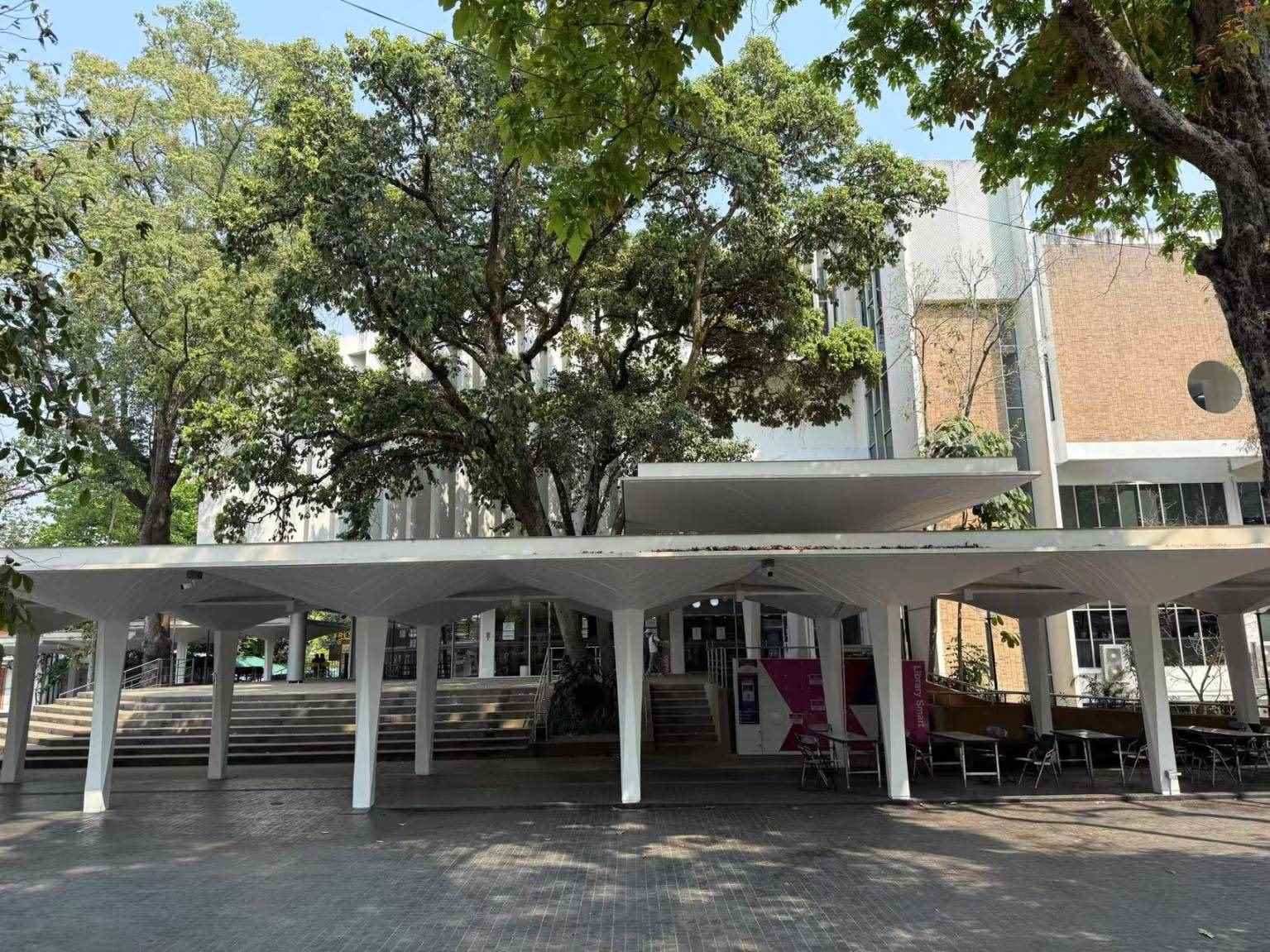
The reason we met here was simple: this is his base. He spends every day here, and the Chiang Mai University Library is an excellent workspace for local digital nomads. Open to the public and highly cost-effective, you can stay all day for just 20 THB (less than 5 RMB), or get an annual pass for 200 THB (about 43 RMB). The environment is also beautiful—lush tropical plants outside the windows, while inside lies a calm, future-focused tech sanctuary.
Years ago, he was an engineer at a major Chinese tech company. Now, he’s pursuing a PhD in blockchain technology at Chiang Mai University and actively involved in several Web3 developer communities like PlanckerDAO. He said he’s currently focused on his thesis, researching topics related to AA accounts.
Chiang Mai University is about to start summer break, but he chose not to go home, opting instead to continue working on his thesis. I asked if he felt stressed. “Of course there’s pressure,” he softly laughed, “but sometimes when I get into research, I completely lose track of time—one moment it’s morning, the next I realize it’s already three or four in the afternoon, and my stomach reminds me I haven’t eaten lunch.” In a way, he truly enjoys it.
“A full-English PhD program costs over 200,000 THB per year, but thankfully, living expenses here are almost negligible,” he said. Most of his meals come from the university cafeteria. His most extravagant choice? Occasionally ordering a steak for over 200 THB. He even recommended I try DQ ice cream—just 12 THB per scoop, less than 3 RMB. Many prices here are far lower compared to China.
In this laid-back tourist city, Jason’s daily routine is surprisingly simple: commuting only between the library and his rented apartment. He jokingly calls himself a “voluntary academic prisoner,” though the “cell” has an amazing view. He loves the university environment, which allows him to calmly explore Web3 in his own way.
When discussing crypto market performance, Jason shook his head, clearly composed. “I rarely trade these days.” But then his expression softened. “From a technical research standpoint, I still believe Ethereum is the core innovation community in blockchain—no other comes close.” He added, “Despite all its challenges, Ethereum remains the primary driver of technological innovation in this space.” This ability to separate market volatility from technological value is precisely what distinguishes researchers from speculators.
As our conversation delved deeper into his research focus, Jason grew increasingly focused, his words becoming precise and profound. He wasn’t merely discussing technical specs—he was exploring fundamental issues of social distribution mechanisms, even drawing parallels to fungal network collaboration models, pondering the deeper connections between money and life’s purpose. “Modern society defines ‘value’ too narrowly—everything reduced to money. But human creativity, willingness to cooperate, and intrinsic motivation are far more complex. We need more diverse ‘ledgers’ to record and reward all forms of contribution. These seemingly unrelated fields actually point directly to the core rationale behind Web3’s existence.”
“I firmly believe Web3 represents the future humanity wants,” he said calmly yet confidently. “Maybe my individual impact is limited, but moving forward even a small step is worthwhile.” He doesn’t stop at theoretical exploration—he actively turns ideas into practice through hackathons. “When theories get too grand, it’s easy to get lost in concepts. My approach is to break down a massive idea into smaller parts, test them one by one, revise, retest, until a closed loop forms.”
“Recently, I’ve been testing a ‘Play to B to Earn’ game mechanism,” his eyes lit up with the excitement of an experimenter. “I already have preliminary results.” He finds immense happiness in researching the topics he cares about most. “For me, this isn’t just work—it’s a core part of life.” He paused. “In an environment like Chiang Mai University, free from excessive social distractions, thinking becomes purer.”
When talking about organizing blockchain events in Chiang Mai, Jason noted he occasionally joins activities hosted by others, but observes that events centered around coin trading tend to attract more participants. Communication with local Thais remains limited—they don’t seem eager to spend time on such events. He sighed lightly, “It took me a full year to get approval for establishing a blockchain association under the college.”
Trading Skills for Shelter: Web3 Gave Me the Freedom to Explore Life
Qiuqiu arrived on a motorcycle taxi. We met at a shared office space. When I first saw her, I was stunned—she came barefoot. While most indoor spaces in Chiang Mai require removing shoes, showing up without any footwear at all is rare. Even during the ten-minute walk outdoors to a nearby restaurant, she remained barefoot. To her, it wasn’t unusual—just a small thing, natural and carefree.
This meeting was pure serendipity. I was drawn to her digital nomad lifestyle posts on Xiaohongshu and reached out, only to realize we were already friends. So we ended up sitting together at a co-working space on the edge of the old town.
She’s been in Chiang Mai for about a year now, using it as a base to travel to various Web3 events. What intrigued me most was her saying that since entering the Web3 industry, she’s never paid rent herself! That made me even more curious about her journey.
Her Web3 journey began in 2022 during the “Summer of Wamao” in Dali. At the time, she was stuck in a cubicle at a traditional company in Shenzhen, living a 9-to-6 life, knowing deep down this wasn’t what she wanted. She was in a phase of deep exploration. “Honestly, I didn’t know what I wanted back then—considered自媒体, big data, Web3, even applied for a New Zealand working holiday visa to wander abroad and find direction,” she said. “I even took leave to attend the ‘Summer of Wamao’ in Dali because I didn’t even know what Web3 was.”
The event in Dali left a deep impression on her—she saw a new mode of collaboration: people improvising project discussions on the grass, strangers forming teams and building prototypes within hours, no rigid corporate hierarchy, yet brimming with creativity—something resembling the kind of work or life she desired.
She quit her job decisively. Web3 became her final choice. But entering the field brought new challenges. “The scene was so attractive, but the question was—how do I survive in this circle?”
Qiuqiu doesn’t romanticize her past. “I was broke,” she laughed. “At one point, I washed dishes in a bar to save money, ears perked up listening to others talk about projects, hoping to catch an opportunity.” When first getting into Web3, she faced common hurdles. “I didn’t understand many terms. Tried farming airdrops for months—realized it wasn’t for me. Didn’t know what role I could play in Web3.”
The turning point came when she joined one DAO after another—permissionless organizations open to anyone. She made a simple decision: ask when unsure, help when able. “I joined many community groups, volunteered whenever someone needed help—at first, everything was free.” Qiuqiu adjusted her posture. “In Dali, I helped organize a hackathon and got free accommodation in return. From then on, I realized this model is common in Web3—even available across different cities.” One event after another, from organizing co-living spaces to coordinating hackathons, she gradually built connections and experience, eventually landing a full-time role in developer relations, allowing her to steadily continue her Web3 exploration.
She sees it as PoW—people earn their “rewards” based on contributions, a form of compensation not measured solely in money.
In her Web3 journey, she never limits herself—organizing events, writing articles, managing communities, connecting developers—she goes wherever she’s needed. Sometimes she helps for free, but later might receive unexpected returns elsewhere.
Chiang Mai became her base purely by chance. While exploring content creation, she once helped a friend for free. Later, she saw a video featuring a sustainable ecological project in Chiang Mai and was instantly drawn in—people could work on farms in exchange for learning skills like English or meditation. When she arrived in Chiang Mai, she felt no discomfort or fear of being abroad—instead, it felt like home. So much to explore, so much freedom—exactly the kind of life she had dreamed of when trapped in that cubicle.
“Plus, Chiang Mai kept hosting long-term hackathons—events like muChiangMai, Pop-Up City, Shanhaiwu—so I naturally joined in,” she said. “Look at this city: low cost of living, eternal summer—perfect for long-term co-living events. Though hosting one-day large-scale summits is tough—few people would come to Chiang Mai just for that. Bangkok might be better suited.”
On communities, Qiuqiu feels both love and frustration. “Love because communities gave me belonging and countless opportunities,” her eyes sparkled. “The most magical thing about Web3 is that one person can be a community. By continuously connecting people and creating value, you yourself become a node, a micro-community.”
“Frustration comes from wanting things to improve faster. DAOs and decentralized communities sometimes lack efficiency in collaboration, but that taught me something: interacting with communities is an art—finding a win-win balance. Real community building requires lasting passion and action.”
Today, Qiuqiu runs a digital nomad space, acting as a “connector” in Chiang Mai’s Web3 scene. “Honestly, most Web3 people here are short-term visitors, constantly coming and going,” she observed. “But everyone leaves something behind and takes something away.”
In Web3, she traded her abilities for the most precious thing—freedom of choice.
Summary
This brief exploration in Chiang Mai gave me deep insight into their stories. Whether scholar-like Jason or hands-on Qiuqiu, their starting points and methods differ, yet both found their rhythm and place in this slow-paced city. Balancing freedom and uncertainty is the shared theme of their narratives. The digital nomad lifestyle granted them immeasurable freedom, but most importantly, they gained the most valuable asset of all—“the right to choose.” They can decide their next steps based on inner calling rather than external pressure—not passively accepting, but actively creating.
At the same time, I’ve gained a clearer understanding of Chiang Mai’s Web3 ecosystem. It’s not that Chiang Mai lacks “charm” to retain Web3 people—in fact, its greatest appeal is precisely that it “gives you the freedom to choose!” Overall, Chiang Mai remains an excellent option for digital nomads in terms of living conditions: low cost of living (a specialty coffee for under 15 RMB), stable and fast internet, perpetual summer warmth, plus Thailand’s relatively relaxed long-term visa policies for foreigners—all forming solid infrastructural advantages. And when you step into the shared workspaces hidden in the ancient city’s alleys, you discover a deeper allure—an intangible atmosphere blending openness and freedom, perfectly aligned with Web3 values.
While some long-term residents have gradually chosen to leave, new Web3 practitioners continue to flow in. This turnover reflects the essence of digital nomad culture: a lifestyle of free movement, migrating according to seasons and personal plans. Notably, this “migration wave” affects the entire digital nomad community, not just Web3 professionals—it signifies natural turnover within the digital nomad ecosystem, not a decline of the Web3 industry itself.
Join TechFlow official community to stay tuned
Telegram:https://t.me/TechFlowDaily
X (Twitter):https://x.com/TechFlowPost
X (Twitter) EN:https://x.com/BlockFlow_News
 Foresight News


