The viral AI toys, the entire industry awaits a "success story"
TechFlow Selected TechFlow Selected
The viral AI toys, the entire industry awaits a "success story"
The toy sector might not be the "shortcut" for AI entrepreneurs to achieve product implementation.
 Navigating Web3 tides with focused insights
Author: Su Zihua
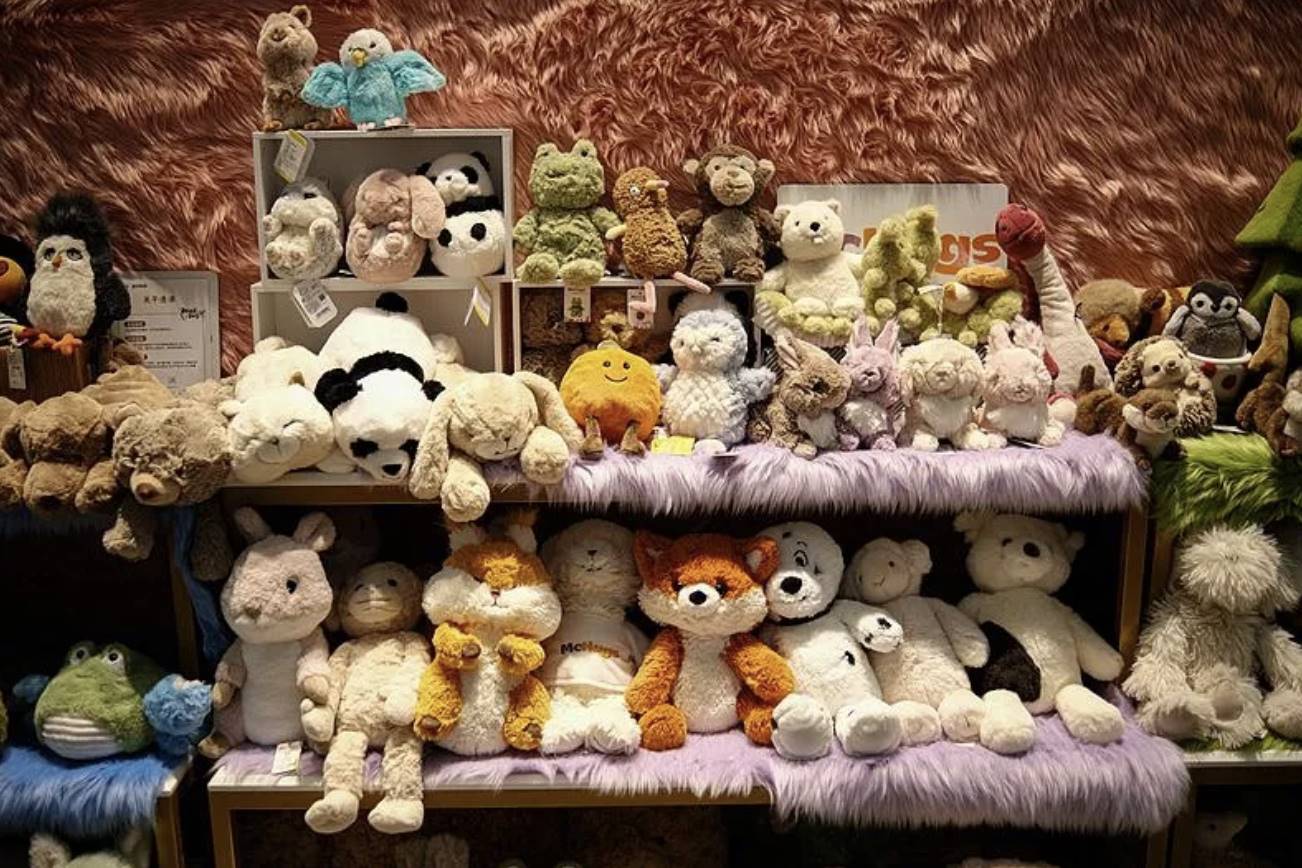
The AI toy startup boom has delivered its first report card.
Over the past year, an increasing number of young people have viewed starting up in "AI toys" as a viable path forward.
At an AI-themed salon in Zhongguancun, one employee who had just left an internet company's operations role said:
"I don't want to work for others anymore. I want to build an AI toy and sell it overseas. Riding this wave, it should have great potential."
On social media platforms like Douyin, Xiaohongshu, and WeChat Channels, almost any post about "AI toys" will feature comments from young people with similar aspirations.
Likewise, attending various tech expos at home and abroad, you'll find that whether showcasing technical solutions or finished products, booths related to "AI toys" consistently attract the largest crowds, often packed wall-to-wall.
Creating an emotionally intelligent, sentient AI companion robot straight out of science fiction seems within reach as a business opportunity.

People expect emotional companionship from AI toys | Image source: The Guardian
Yet, beneath the excitement lies an awkward reality.
Over the past year, entrepreneurs backed by major companies such as Meituan, Baidu, Alibaba, ByteDance, Microsoft, and Anker Innovation—alongside frontline venture capital—have flocked into the space aiming to create "emotional, soulful" AI toys. But after a year, few teams have actually launched market-ready products.
A voice technology company executive who has worked with several of these internet-industry entrepreneurs lamented the pressure they face: "The pace of progress in speech models hasn't met expectations, resulting in subpar product performance and delayed launches. Many startups have taken investor money, and now nearly a year has passed. If they can't deliver a product soon, it’ll be hard to answer to their backers."
And even for those that have released products, feedback has been lukewarm. Most AI plush toys launched by listed toy companies or internet-background founders retail around 400–500 RMB,主打 features like chat conversations and storytelling.
From user reviews, issues such as complex interaction, robotic-sounding AI dialogue, frequent disconnections, and slow responses are glaring, making it difficult to patiently engage with the device.
Multiple AI toy solution providers speculate to Geek Park that return rates for currently sold AI plush toys in the 400–500 RMB range may exceed 30%.
On the other hand, a surge of AI toy technology solution providers is also blocking the path for ambitious "AI entrepreneurs." A Huaqiangbei-based tech supplier told Geek Park: "Right after Lunar New Year, we suddenly had dozens of new toy manufacturer clients. One Bluetooth-enabled toy saw its sales rebound to peak levels after adding AI conversation functionality."
The "emotionally engaging, soulful" products once promised by internet elites are already being realized—not by them, but by Huaqiangbei players—and sold at finished prices of just over 100 RMB, squeezing profit margins to near zero.
Huaqiangbei offers grassroots makers a fast track to wealth, while simultaneously dashing the entrepreneurial dreams of internet professionals.
The First Wave of AI Toys Are Essentially Selling 'Voice Boxes'
In fact, when we deconstruct the first batch of well-known AI toys on the market, their essence is basically: plush toy + voice box.
For example, Auldey Entertainment’s “AI Pleasant Goat,” Originculture’s “AI Magic Star,” and BubblePal, founded by a former Tmall Genie partner—all attach necklace-shaped devices to plush toys. These pendants contain Wi-Fi modules enabling connectivity and allow users to chat with large AI models.
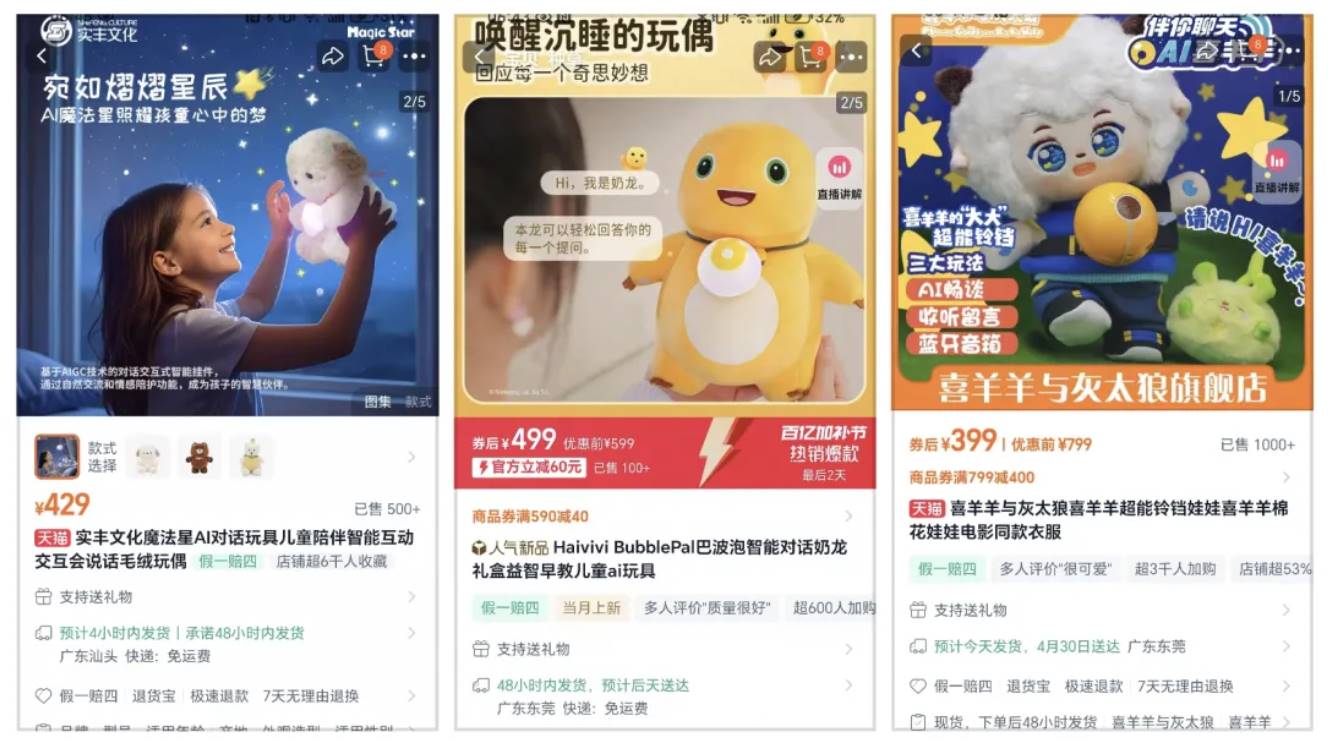
Representative AI toys currently available on the market | Image source: Internet
FoloToy’s Magicbox smart dialogue module is essentially a compact circuit board kit powered by a large AI model, small enough to fit inside any toy, where users can customize its character.
Their core features—chatting, storytelling, music playback—are no different from a Bluetooth speaker connected to a large model.
This is what constitutes the first generation of AI toys available in the market today.
One tech solution provider observed that many original toy factories from Chenghai have approached them for collaboration: "They probably sense this is a new trend. They just want to invest a little and try it out, not necessarily build a full R&D team."
He summarized that mid-to-low-end toy manufacturers mostly treat AI as a marketing gimmick, not expecting high premiums or margins, but rather hoping to leverage the AI hype to increase shipments and clear inventory. As such, prices hover around 100 RMB. Even if users find the voice chat function underwhelming, the low cost makes returns unlikely.
"Honestly, no one really knows how much added value chat functionality brings to a toy," he said. "In the actual toy industry, a plain plush toy typically sells for around 100 RMB. Adding an AI box likely won’t justify a significant price hike. If prices go too high, return rates will spike."
Current AI toy buyers are willing to pay a premium largely because of the voice chat feature. Thus, the quality of voice interaction essentially determines a product's success or failure.
However, the quality of voice chat is often beyond the control of AI toy entrepreneurs themselves.
Technically speaking, most current AI toys rely on third-party speech recognition or synthesis solutions from providers like Doubao, Baidu, and Agora, which are then linked to large models.
The large model defines the assistant’s intelligence, while speech recognition and synthesis determine conversational experience—such as response speed, human-likeness, intelligent interruption handling, and emotional understanding.
None of these critical factors affecting conversational performance are fully controllable by AI toy manufacturers.
Additionally, rabbit, the founder of AI hardware brand rabbit, during a retrospective on AI entrepreneurship over the past year on Geek Park’s podcast *Start Connecting*, highlighted one key word: loss of control. He noted that the biggest difference in AI-era startups is that developers have lost control over final outcomes.
"AI models are black boxes with unpredictable behavior. When developers use multi-agent systems and delegate reasoning, planning, and execution to AI, all they can do is observe results and optimize backward. The game has changed."
Indeed, AI toy entrepreneurs whose sole selling point is a large model do not truly control their product’s core appeal—and cannot fully manage their own development timelines.
Toys Are Not a Shortcut for AI Entrepreneurs
Things aren’t progressing as internet professionals expected.
Over the past year, both the internet industry and top-tier investment firms have widely seen toys as the fastest route for AI adoption. Cloud providers like Volcano Engine, Alibaba Cloud, and Baidu Cloud have hosted private events across regions themed around "AI hardware" and "AI toys," consistently promoting the narrative:
"AI toys have solid foundations for application and promotion, poised to become one of the fastest-growing AI endpoints."
"AI technology is reshaping the toy industry at an explosive pace."
"The AI toy market surges toward 60 billion."
"In the short term, AI toys represent a relatively ideal scenario for AI deployment."
"AI hardware could become the traffic gateway of the AI era."
Looking back now, many of the initial business assumptions held by entrepreneurs about AI toys have been shattered.
The vision once held by internet professionals—that AI toys could generate recurring revenue through model usage fees or subscriptions—has been overturned. Especially after DeepSeek went open-source, the cost and accessibility barriers for top-tier large models have rapidly declined. Companies like Tuya Smart and XiaoZhi AI have even made AI assistant calls completely free. While large models remain appealing, business models centered solely on their capabilities have collapsed.
As access to large models becomes easier, hardware technical barriers are also dropping quickly.
DeepSeek’s open-source release and high performance catalyzed the emergence of numerous AI toy integration solution providers around early 2025, offering complete AI toy tech packages—including chips, large model integration, and real-time audio-video capabilities—drastically lowering the barrier to entry for AI toy startups.
Industry insiders reveal that low-end voice boxes can be built for just几十 yuan, with costs still falling: "Previously, only high-end solutions existed in the industry. But competition has intensified over recent months, and everyone is cutting costs."
"Light Language AI," an AI toy tech provider focused on Wi-Fi modules, encapsulates chips into ready-to-use modules with integrated antennas and anti-interference circuits, reducing development time from six months (traditional hardware) to just one month. According to its executive, chipmakers are opening up底层 capabilities to lower technical barriers, accelerating industry bubble formation. He predicts, "Hundreds of new competitors might emerge this year."
The development threshold for AI hardware has dropped so low it's approaching "elementary school level." Lower difficulty has led to a proliferation of AI hardware forms.
For instance, the free open-source AI hardware project "XiaoZhi AI" enables users to buy microphones, speakers, and circuit boards separately and DIY-build unique voice-chatting toys, or use AI chat to control smart home devices—showcasing immense creativity. Geek Park learned that in the past two months alone, devices connected to XiaoZhi AI increased by 100,000 units, doubling monthly.
A new consensus is forming: AI toy startups relying solely on hardware integration and large model capabilities will soon lose any competitive edge. Toys must first be fun; "tech specs" come second. AI toys are not arenas for showcasing AI technical prowess.
The AI toy market remains in an early stage of product definition. Building on conversational capabilities offered by large models, carving out a long-term future in "emotional technology" may be more promising.
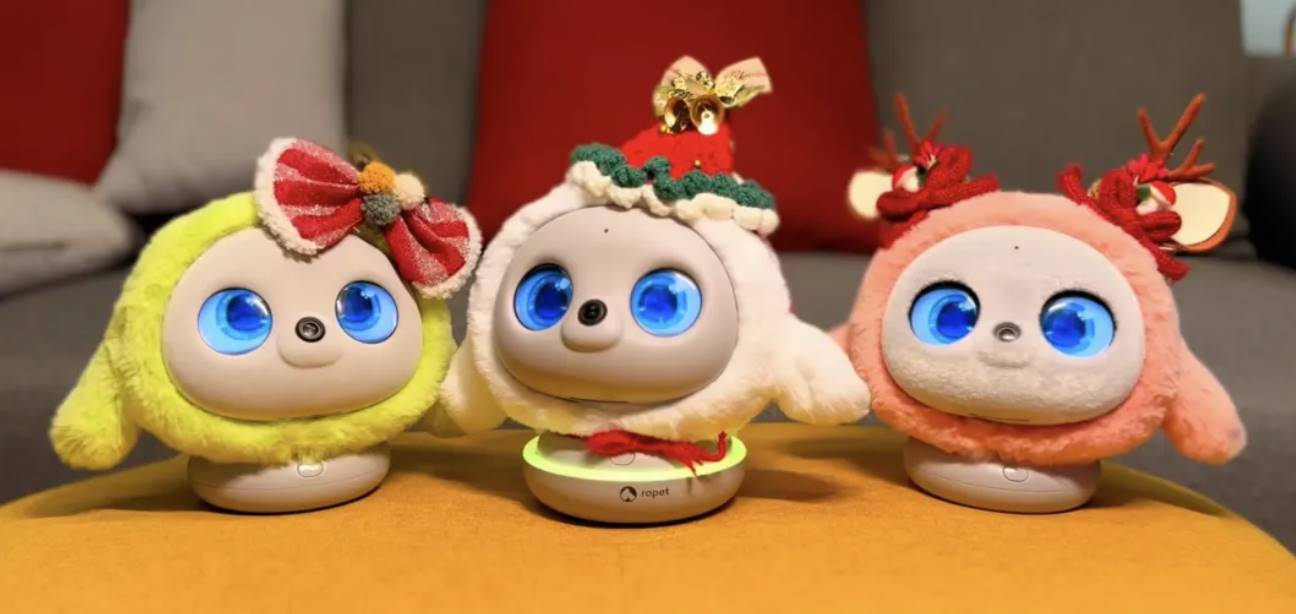
AI plush toy Ropet | Image source: Kickstarter
For example, the recently launched AI plush Fuzozo focuses on its proprietary multimodal emotion model (MEM), outsourcing improvements in large models and voice capabilities to partners, while strengthening its own strengths in companionship, gameplay, and emotional interaction—a path closer to the true essence of toys. Similarly, Ropet, an AI plush toy that raised $200,000 on Kickstarter, follows the same approach.
A veteran CEO of a smart hardware company with over 20 years of experience recently launched an AI toy line: "My team members are passionate and eager to work on this." Yet, he admitted he isn’t optimistic about AI toys.
"It might sell decently in the short term, but long-term challenges are huge."
He believes sustained success depends on continuously building cultural content around IPs, innovating gameplay, and establishing strong brand moats. "That’s extremely challenging. Chinese companies excel at speed and low cost. Brand-building and channel development remain weak."
Still, he quickly added, "But we should support the enthusiasm of our younger team members."
We await the arrival of the next generation of AI toys.
Join TechFlow official community to stay tuned
Telegram:https://t.me/TechFlowDaily
X (Twitter):https://x.com/TechFlowPost
X (Twitter) EN:https://x.com/BlockFlow_News
 极客公园
极客公园