Exclusive Interview with CZ: Health and Family Are the Most Important, 99% of Memes Will Ultimately Fail
TechFlow Selected TechFlow Selected
Exclusive Interview with CZ: Health and Family Are the Most Important, 99% of Memes Will Ultimately Fail
I realized I would never become a Memecoin trader.
 Navigating Web3 tides with focused insights
Compiled & Translated: TechFlow
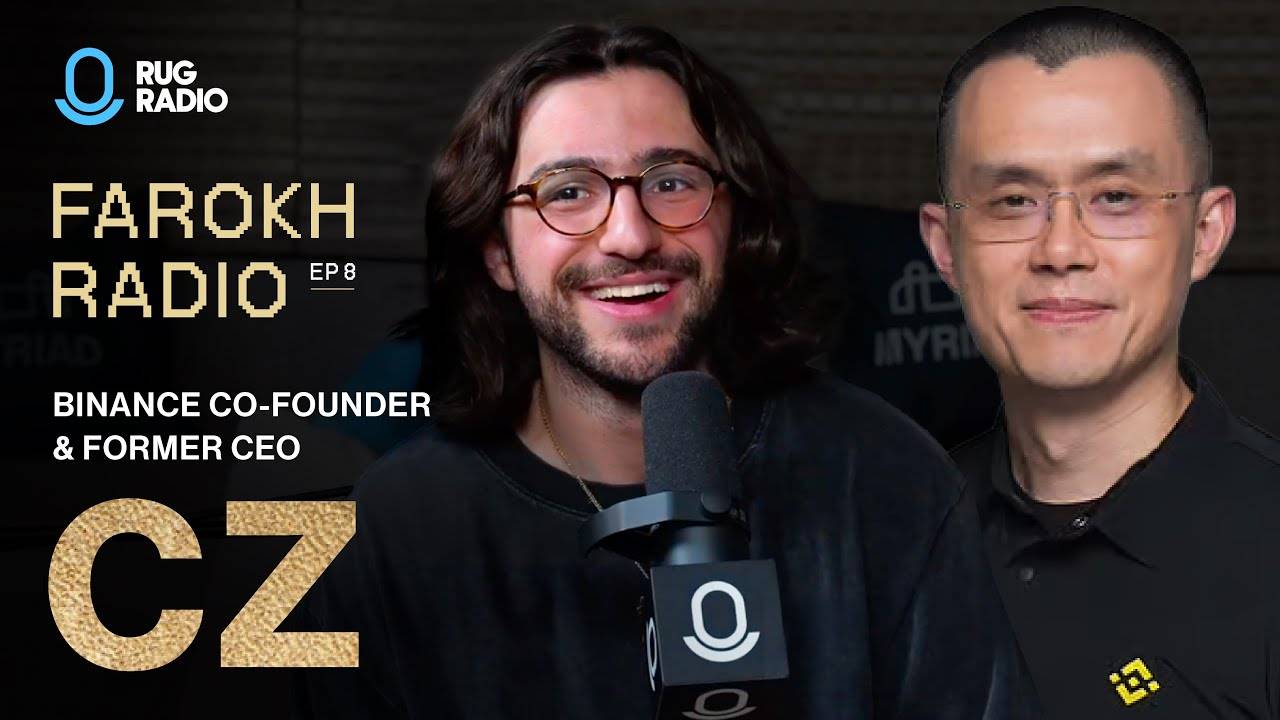
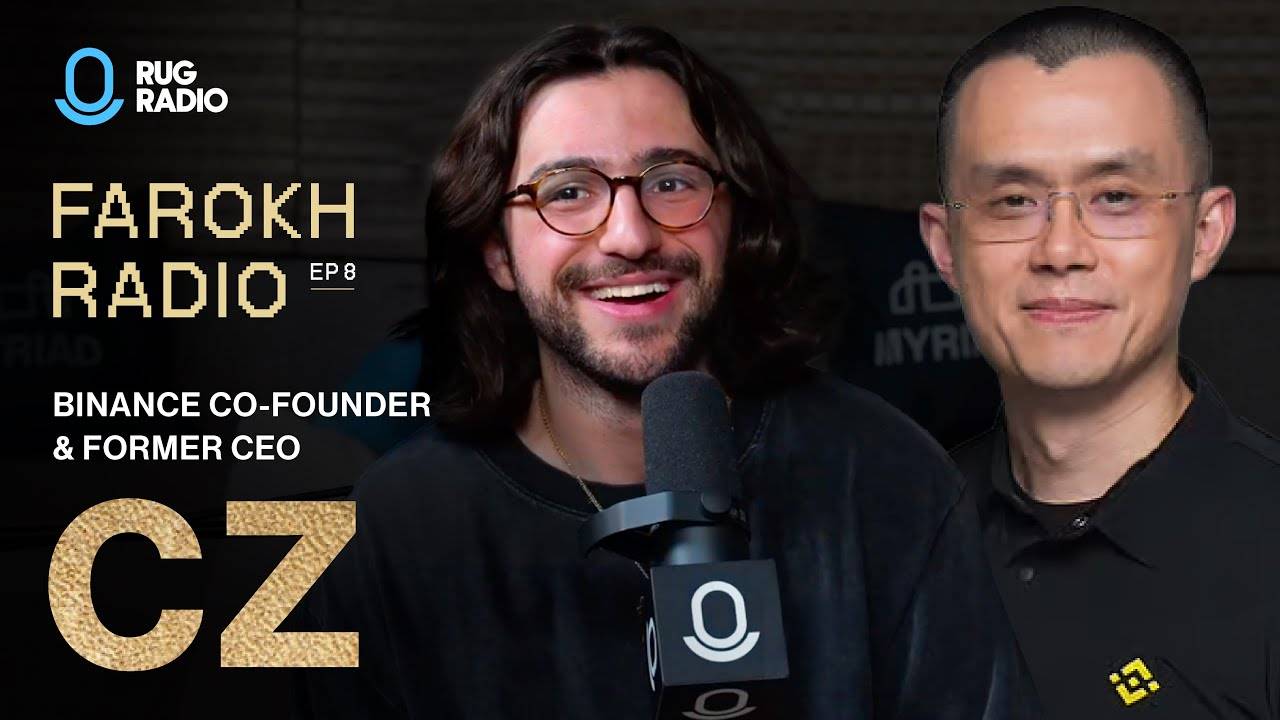
Guest: Changpeng Zhao, Founder of Binance
Host: Farokh
Podcast Source: FAROKH RADIO
Original Title: CZ talks Life inside Prison, Trump Presidency, and state of Crypto!
Release Date: May 6, 2025
Key Takeaways
In this exclusive interview, Farokh engages in a deep conversation with Changpeng Zhao (CZ), the founder and former CEO of Binance. They discuss CZ’s incarceration experience and the lessons he learned from it, his views on a potential second Trump presidency, and his overall perspective on the current state of the cryptocurrency industry.
Highlights Summary
-
Bitcoin’s peak price in this cycle could be between $500,000 and $1 million. By year-end, the total crypto market cap will likely reach around $5 trillion.
-
Governments will increasingly buy Bitcoin. I hope retail investors get in before governments do.
-
I realized I’ll never become a Memecoin trader. I’m not really a crypto trader either. I prefer being a platform builder—creating tools for others to use rather than trading myself.
-
Artificial Intelligence (AI) is extremely important. I’m particularly interested in science. Other real-world applications like RWA (Real World Assets) are also promising, and ETFs are a very interesting direction.
-
One obvious issue in the industry right now is the overheating of "Memecoins." Too much capital is flowing into them. In the short term, 99.999% of Memecoins will ultimately fail.
-
I believe traditional media needs to change, or it will be left behind. Some reporting isn’t about investigating real issues but pushing personal agendas targeting specific individuals. This damages company reputations instead of generating profit.
-
I’ve realized health is most important, followed by family, then work and everything else. In prison, you don’t truly miss food. You might occasionally miss a comfortable bed, but what I missed most was my family.
-
Previously, I wasn't sensitive to geopolitical issues, but now I realize political agendas can directly affect individuals—even land someone in trouble. So I’m being more cautious now.
-
In the future, decentralized exchanges (DEXs) will surpass centralized exchanges (CEXs). We aim to invest heavily in these areas.
-
Exchanges exist not just for speculators—though they provide liquidity—but more importantly, to create a healthy ecosystem for long-term builders.
-
I work at least six days a week, sometimes even six and a half. Even on weekends, I schedule meetings. Even when not working, my mind is always occupied with work-related thoughts.
Farokh: Hello everyone, I'm Farokh, welcome to Rock Radio. Today's guest is the legendary CZ, founder of Binance. Thank you so much for taking the time to join us. Do you enjoy living here? I know you're close with the royal family. What's it like living in the desert?
CZ: I live here, so I genuinely love it. I could have chosen anywhere in the world, but I picked this place. I think this country is fantastic. Dubai is vibrant, but now traffic is getting congested, the population is growing fast. Abu Dhabi is quieter and more low-key, yet still very powerful. I believe this is one of the best-governed countries in the world.
Farokh: We have many topics to cover today—your views on crypto, Trump’s presidency, Abu Dhabi’s government policies. I originally wanted to talk about crypto legislation, but that sounds too boring, so let’s skip it. We may touch on your prison experience, compare CEXs and DEXs, even discuss Meme Coins. If time allows, we’ll talk about Binance too. And of course, we’ll end with a prediction game—you were very accurate this year, so let’s see how you do next.
I Won’t Be a Memecoin Trader
Farokh: What did you learn from participating in the BNB Memecoin?
CZ:
I found it quite interesting. Last year, while I was busy with other matters in the U.S., I completely missed the Memecoin craze. When I returned to the space, everyone was talking about Memecoins, but in reality, many projects lacked real utility.
The process was fun but not easy. At first, I thought all you needed was a picture and a post. But then I discovered there were rules and etiquette within the community. For instance, people kept asking for my pet’s name and wanted me to share a photo. I never expected a single photo would spark such PvP drama.
At first, I treated it as a fun experiment, so I decided to tease it—announce it 24 hours ahead to build hype. But when I launched it, over a thousand “Broccolis” popped up, sparking debates among communities.
Through this, I felt the strong culture and community spirit around Memecoins. I also realized how tough it is to be a core trader—they’re glued to group chats daily, constantly watching which new coins might blow up. After going through all this, I realized I’ll never become a Memecoin trader. In fact, I’m not really a crypto trader at all. I’d rather be a platform builder—creating tools for people to use, rather than trading myself. Still, we pay attention to community demand. If the community is excited about Memecoins, we’ll support it.
Then I thought, “Alright, let’s explore the BNB Chain and its ecosystem.” I started engaging more because people wanted me to spend more time on it—my involvement does bring extra attention. I also hope to help the BNBChain ecosystem. While I can’t directly manage decentralized exchange (DEX) operations, I face no restrictions regarding the decentralized BNB ecosystem. So I’ll focus my efforts where I can contribute, pushing the ecosystem forward.
Bullish on AI and DeSci
Farokh: What part of the industry interests you the most?
CZ:
Beneath the surface-level noise, many significant developments are quietly unfolding.
First, Artificial Intelligence (AI) is a critically important field. The synergy between AI and blockchain holds immense potential. Blockchain can directly leverage AI capabilities, while AI can unlock new functionalities on blockchains.
Second, I’m especially interested in science. Long-term, scientific impact will be profound. Scientific research has always faced funding challenges due to its long development cycles. It’s unattractive to investors seeking quick returns. Yet, I believe science—particularly biotech—will become crucial in the future.
Using crypto and smart contracts, we can fund scientific projects and release funds in stages based on progress. This model could empower millions of small research labs globally. Combined with big data and AI, I believe we’ll achieve breakthroughs in drug discovery and human biology. These advances aren’t just possible—they’re already beginning to happen.
Additionally, there are practical real-world applications like RWA (Real World Assets). Major traditional firms are exploring this—BlackRock, for example, is experimenting with blockchain-based asset trading.
Also, ETFs are a very interesting direction. They bring institutional capital from traditional finance into crypto. In the U.S., institutions dominate inflows, while other regions differ slightly. We’re already seeing this trend—recent Bitcoin price surges are closely tied to Bitcoin ETFs. So yes, many exciting things are happening in the industry.
Does Institutionalization Threaten Crypto’s Spirit?
Farokh: Are you concerned that crypto has grown so large it’s entering politics? Now we even have ETFs. From a price standpoint, institutionalization seems positive—our assets are rising. Altcoins haven’t performed as well, but at least Bitcoin is climbing. Do you think this institutional embrace threatens the decentralization ethos of the Bitcoin white paper?
CZ:
It certainly has some impact. Everything has two sides—nothing is purely good or bad. We need balance.
As early Bitcoin supporters and believers in decentralization, we’d prefer governments delay buying Bitcoin. Many hope retail investors and ordinary users can acquire some Bitcoin before governments start massive purchases. Opinions vary. On the flip side, government Bitcoin purchases boost prices and strengthen confidence in Bitcoin. So it’s a mixed bag.
Ultimately, in a decentralized world, we can’t control others’ actions or government decisions. The U.S. shift is a perfect example—just 100 days ago, the U.S. government seemed indifferent to crypto, but now they appear to recognize buying Bitcoin is the right move. This is great news for the industry, though I still hope retail investors beat governments to the punch.
Farokh: So they still have time, right?
CZ:
Yes, we keep discussing crypto and pushing its growth—they definitely have time. If someone chooses not to buy, that’s their decision.
Farokh: I heard you’re advising certain Pakistani government departments, and Bilawal Bhutto-Zardari is your friend. Also, Abu Dhabi’s sovereign wealth fund recently invested in Binance. Based on current trends, government Bitcoin purchases will only increase. This has triggered a domino effect in the U.S.—I believe it’s a turning point that could influence other nations.
99.99% of Memecoins Will Ultimately Fail
Farokh: In past cycles, you’ve shown sharp insight into industry corruption—your instincts have been consistently accurate. So now, what problems or hidden “bombs” do you see in the industry? What should we watch out for?
CZ:
One glaring issue right now is the overheating of “Memecoins”—too much capital is flooding into them. In the short term, 99.999% of Memecoins will ultimately fail. CoinMarketCap currently tracks about 13 million tokens—imagine how few of those have any future. It’s a high-risk area. Fortunately, most meme coin investors understand this—failures are so common they’ve accepted it. But this phenomenon also reduces attention toward genuinely useful projects.
Past four years, especially under the previous administration, building compliant crypto projects was extremely difficult. The SEC frequently sued projects, claiming their tokens were securities, etc. Luckily, many such lawsuits have recently been dismissed. So I believe more developers will return to the industry. While the industry was forced into an unhealthy path, I’m now more optimistic—it’s moving in the right direction.
Farokh: The SEC has indeed been intimidating—for instance, they could send you to prison. As founders, we’re always nervous about tokenization. Even NFTs were labeled securities in cases like Google Labs—projects like CyberKong were targeted, though charges were later dropped. Now, I feel more confident taking risks as a founder. I sense I can take on more risk. After all, we need to maintain a spirit of exploration and adventure, especially in frontier fields like AI.
CZ:
Absolutely. Many talented American entrepreneurs have already left the U.S.—this harms both the U.S. economy and its leadership in crypto and AI. But I didn’t expect an election to trigger such a major policy shift—it shows the power of democracy from another angle.
Traditional Media Needs to Change
Farokh: Recently, articles criticizing crypto from outlets like The Wall Street Journal and Bloomberg sparked widespread discussion. What’s your take?
On the way here, I saw your tweet mentioning The Wall Street Journal, quoting Elon Musk about fake news. Trump often discusses this too. While these reports may not be outright false, they clearly carry negative bias. That’s partly why I created Rug Radio. Later, we merged with Decrypt Media—I’ve always believed Decrypt produces some of the highest-quality crypto journalism. Our goal is to positively showcase the potential of crypto and emerging tech. Of course, we don’t ignore negative news, but we don’t need to focus solely on it. Mainstream outlets like The Wall Street Journal seem to frame us negatively whenever possible. Recently, they personally attacked you—claiming you “snitched” on other crypto founders in prison to reduce your sentence. How do you respond?
CZ:
Indeed, traditional media often picks a target and attacks relentlessly—whether Elon Musk, Trump, me, or others. Around these figures, they publish numerous negatively biased articles.
Luckily, this tactic is less effective now. While governments claim to support free speech, they indirectly influence media content through funding. This strategy used to work, but now it backfires.
For example, certain parties losing elections shows declining trust in traditional media. Now, social media gives everyone a voice. Through videos, livestreams, we can interact directly with the public, showing our true selves—not letting articles define us. While negative reports remain annoying, we now have platforms to express authentic views. My social media following may exceed most politicians’, and Elon’s dwarfs everyone’s. With social media’s rise, authentic voices matter more—so we’re less worried, though it’s still unpleasant.
Farokh: It’s truly frustrating because these reports shape external perceptions. Insiders understand the truth, but outsiders tend to share Bloomberg or WSJ articles rather than specialized crypto media like Decrypt.
CZ:
I spoke with a Bloomberg executive who mentioned they’re even considering eliminating their investigative journalism division. These reports often don’t investigate real issues but push personal agendas against specific individuals. This approach brings no profit and damages corporate reputation. Bloomberg is fundamentally a tech company, not a media company. They make money selling terminals—the media side is actually a burden.
I also heard that over 30% of Bloomberg’s news is now AI-generated—mostly briefs like market movements, not investigative pieces. Because these are more objective and data-driven, they gain more traction. Meanwhile, highly opinionated reports harm the brand. So, I believe the media industry must change—or it will be left behind.
Farokh: We’re trying to change too. For example, through resources like Crypmedia and Rug Radio, we’re developing prediction markets to capture real-time market sentiment. As Polymarket showed during the Trump election, there’s often a clear gap between media narratives and actual investment behavior.
Hard Times and Changes in Prison
Farokh: Did your prison experience profoundly affect your lifestyle and work approach?
CZ:
Absolutely. Such experiences force you to rethink life priorities. First, I realized health is most important, followed by family, then work and everything else.
In prison, you realize you don’t truly miss food—though you might occasionally miss a comfortable bed—but what I missed most was my family. You don’t miss money or even work much, although stepping down as Binance CEO was bittersweet.
I’ve always been a builder, so I can’t stop. Luckily, I’m not young, but not too old either—still energetic enough to do meaningful things. Now I focus on helping funds, advising other founders, learning from them. I’m also building an education platform. Still busy, but I believe you can make a positive impact from anywhere.
This experience also made me more cautious. Before, I wasn’t sensitive to geopolitics, but now I realize political agendas can directly affect individuals—even land you in trouble. So I’m being more careful.
After release, I took time to readjust. For the first few months, I stayed quiet on social media and avoided events. Only after adjustment did I gradually return to normal.
Farokh: Did you make friends in prison?
CZ:
I’ve kept in touch with several friends. You can meet good people anywhere. Some received excessive punishment—maybe they made mistakes, but the penalties were too harsh. I still stay in contact with some friends inside. Their situation is tough—few lawyers can help, especially since outside legal fees are sky-high. Accessing information is hard too—no internet in prison, communication via a primitive system, unable to send images or links.
Farokh: Could you even know Bitcoin’s price in prison?
CZ:
No idea at all. But people would message me asking how I was doing, casually checking on Bitcoin and BNB prices. There were TVs, mostly showing sitcoms and sports. I don’t watch sports or TV. But a few inmates were into crypto, so they set up a finance channel. I caught news in prison—like the assassination attempt on the president, and Trump facing 34 criminal charges.
One charge was bringing classified documents into the bathroom—I thought that was absurd. If my employee did that, I might give them a bonus—shows they’re working hard. Looking back, though stressful then, it now seems kind of funny.
Just five days before I entered prison, Elizabeth Warren publicly declared war on crypto. If I hadn’t been so stressed, I might have found it amusing. But now, reflecting, it does seem ridiculous.
Farokh: Can you share some difficult moments in prison—like living conditions, sharing a cell with a murderer, and psychological shifts when facing fear?
CZ:
Prison life was truly brutal. Though I can laugh about it now, it wasn’t at the time. This isn’t something to joke about—far from fun. I wouldn’t wish this on anyone. Despite thinking I had high stress tolerance and a calm personality, it was still extremely tough. I went through strip searches, being locked in cells, and my first night sharing a cell with a double murderer.
In prison, staff don’t care who you are—you’re just another inmate. I got no special treatment. Someone told me I might be monitored—that could be the only difference. But other inmates and guards didn’t know my identity—they just did their jobs.
My cellmate was serving 30 years for double murder. Due to good behavior, after 12 years he was transferred to a low-security facility—the lowest level available. Inmates usually group by race. I shared a cell with a Native American—we got along fine. Still, walking in that first day, fear hit hard. Entering required checks—photos, questions, body searches. Then I was led to the unit. Stepping in, I saw a three-story building with two rows of cells facing each other, 240 inmates yelling, many covered in tattoos, looking fierce. My first thought: this place isn’t fun.
A guard said my cell was on the fifth floor. I walked over to open it—locked. A big guy told me only guards could open doors. Everyone stared at me, the new inmate—intense pressure.
Ironically, despite looking scary, the inmates were actually polite and friendly. I never had conflicts with inmates or guards. But the mental strain was toughest. I constantly feared they’d fabricate reasons to keep me months longer, add charges. This happened to many inmates—like the “Hotel California”—you can check in, but never leave.
If someone clearly told me “you’ll stay four months,” I’d say “fine, I can endure it.” But the uncertainty in prison caused extreme anxiety. Even after transferring to a halfway house, during my final month, immigration arrested me for an expired visa. Although we applied for renewal, it was denied—forcing me to stay in the U.S.
After a few days in detention, my lawyer successfully overturned the hold—but they didn’t return me to the halfway house. I detail these experiences in my book.
About SBF (Sam Bankman-Fried)
Farokh: What are your thoughts on SBF now? He’s still serving time. After your own prison experience, do you feel more understanding or sympathy toward him?
CZ:
I won’t comment much on fairness. I wouldn’t wish prison on anyone—it’s absolutely not an easy experience. But I also believe fraud, lying, and deception must be stopped. Such behaviors shouldn’t exist. However, U.S. sentences are indeed long, though there’s parole—good behavior reduces 10 days per 30 served—so most serve about two-thirds. Still, I sympathize with everyone in prison—because the experience is truly brutal.
In prison, I met many serving 10-year sentences—life essentially defined. They no longer consider self-reform. Most know they made mistakes, but excessive punishment robs them of redemption chances. They just go through the motions. Without real rehabilitation, imprisonment loses meaning.
And such over-punishment wastes taxpayer money. I don’t know the most effective rehabilitation method, but if we want real change, people should learn from mistakes and restart. So I won’t judge sentence length or fairness.
As long as we keep pushing the industry forward, that’s what matters most. But undeniably, SBF’s case dealt a huge blow to the entire crypto industry, casting a dark shadow over our field.
Trump and $TRUMP
Farokh: You’ve mentioned Donald Trump several times. Clearly, you witnessed his rise while in prison—did that make you more optimistic about your own sentence? After all, you previously expressed concerns about long sentences.
CZ:
Yes. He was convicted on 34 counts, ruled guilty by judge and jury—I found that unbelievable. Then he announced a presidential run—I thought, maybe this is good. Then he openly supported crypto—and clearly meant it, not just lip service.
So I believe this sends a positive signal to crypto and offers hope to others facing unfair charges. Following this news in prison, I felt lucky—our industry had a supportive U.S. president, and he’s clearly intelligent.
Farokh: I know many crypto founders lobby for support—donating for access. I remember at a digital summit, I got White House credentials to report on crypto. I saw many CEX founders there. So, did you have similar access?
CZ:
No. As a foreign company and citizen, we legally cannot donate to political campaigns. I’m extremely cautious—never touching election-related matters.
I remain Binance’s largest shareholder. Neither the company nor I participate in election activities. I avoid these sensitive areas carefully. After release, we haven’t launched new U.S. initiatives. Binance U.S. operates normally, but nothing beyond that. Past reports claiming I tried to trade Binance U.S. equity for a pardon are entirely false. I never discussed Binance U.S. equity with anyone—ownership unchanged. These reports are pure fiction.
Farokh: What’s the status of your presidential pardon application?
CZ:
We hope to spread the truth through proper channels—contact professionals like Ryan to ensure accuracy. If I receive a pardon, I believe it’ll be a positive signal for the industry. For now, we wait.
Farokh: Arthur already received a pardon. I hope you succeed too. I believe it’s entirely possible—I know you’re eligible.
CZ:
Yes, I trust my team will support me—I’m deeply grateful. After all, we’re all working for the industry’s progress.
Farokh: Are you clear on the legal process for applying?
CZ:
Yes, I’ve assigned lawyers to handle it. Actually, we decided to formally apply after Bloomberg’s report came out. I thought—since it’s public, might as well proceed. Arthur’s application was quickly approved. We submitted ours about two weeks ago—now we wait.
Farokh: How do you evaluate President Trump’s current performance? Do you think the U.S.-China trade war could end?
CZ:
I think President Trump is doing well—he understands business deeply. Though many worry about tariffs, I see it more as negotiation tactics, not traditional geopolitical games. In business negotiations, you start high, then compromise step by step to find a balanced deal. This approach causes short-term pain for industries and economies, but in a way, it’s refreshing. President Trump excels at making deals—I believe he’ll eventually reach agreements.
Farokh: Do you think the U.S.-China trade war could end sooner?
CZ:
Possibly. Chinese negotiators are very smart—they know their goals and strategies. But China might dislike Trump’s negotiation style. Asian cultures value “face” highly—publicly aggressive demands may cause offense.
This reflects cultural differences. In the U.S., especially under President Trump, he often livestreams meetings via social media—rare among global leaders. This transparency is unique.
Still, I believe both sides have excellent advisors who deeply understand cultural gaps. So I’m confident about negotiations. At least now they’re talking directly, unlike before when ties were nearly severed. Previously it was soft power competition—now direct dialogue begins. This makes me optimistic about the future.
Farokh: What’s your view on TRUMP Coin?
CZ:
I don’t know much—it’s hard to get consistent info. Some say it’s closely tied to Trump, others say it’s unrelated. I haven’t researched it deeply.
Farokh: But it does have some connection, right? Like planning a dinner on May 22 for top 20 holders.
CZ:
There’s some link, but I’m not among the top 25 TRUMP Coin holders.
Farokh: Is media coverage why you’re avoiding it?
CZ:
I try to avoid association. Media attention and potential negative coverage make participation unwise. So I chose not to buy TRUMP Coin—don’t want any ties to it.
Farokh: Do you think UAE leadership is adopting Trump’s approach? How do you assess their foresight?
CZ:
UAE leadership is highly forward-thinking. They’re smart, visionary, strategic, and flexible in problem-solving. Early in blockchain’s rise, they recognized oil isn’t sustainable—diversification was essential. In diversifying, their investments in blockchain and AI stand out. These are future-defining technologies—UAE leadership understands this deeply.
Also, UAE-U.S. relations are strong. I don’t know details, but I’ve heard of collaborations in AI and blockchain. This international cooperation further shows UAE’s openness and foresight.
I believe leadership matters greatly. Good leaders enable national success. Regardless of system—democracy, monarchy—many get trapped by systems, but what matters is the leader. In any system, even democracies, poor leaders exist. Where there’s vision and strong leadership, business thrives. They actively seek tax-free policies, reasonable regulations. I see this here—and in the U.S.
Comparing DEX and CEX
Farokh: Has the competitive landscape between centralized (CEX) and decentralized exchanges (DEX) changed?
CZ:
Yes, it has. Many see CEX and DEX as opposites, but that’s inaccurate. Both are tools for users to access blockchain. Without blockchain, CEX couldn’t exist. They’re different paths into the decentralized world. For average users, logging in with email and password is far easier than managing complex private keys.
CEX and DEX are simply different routes to the same destination. As solution providers, our job is offering diverse options—not relying on just one model. CEX isn’t the end—it’s a bridge to blockchain access.
We invest across CEX, DEX, perpetual contracts, and blockchain development. I believe DEX and perpetual markets have huge potential—still early, much to explore and improve.
But fully transparent trading may not suit all scenarios. For example, you might see a whale placing a $300M short order—but big institutions don’t want trades publicized. Their trading differs from retail.
Indeed, traditionally, decentralized liquidity pools are often much larger than what we call order books. So I see vast growth potential, but I truly believe the future is decentralized. I’ve said many times, in the future, DEXs will surpass CEXs—we aim to invest heavily in these areas.
Farokh: Have you started investing?
CZ:
We’ve invested in multiple DEX and perpetual contract projects. But I don’t manage them directly—we usually hold minor stakes.
Farokh: Recently, many think listing on a CEX signals a token’s peak. Now it feels like—once listed on CEX, it loses DEX momentum. I sense this perception is shifting.
CZ:
Perceptions are changing, but this mainly reflects short-term speculators. They see CEX listing as a final exit chance. But for real builders, listing is just the beginning—not the end.
Exchanges exist not just for speculators—though they provide liquidity—but more importantly, to create a healthy ecosystem for long-term builders.
Crypto Exchange Execs Group Chat Incident
Farokh: Do you still communicate with other exchange executives? The New York Times reported you and SBF had arguments in an execs group chat—we later learned what followed. Can you share details? Do you still chat often?
CZ:
I chat occasionally, not frequently. First, we’re all busy; second, exchanges compete. The group had about 10 exchange founders—it existed. Actually, it was created during Luna’s collapse. They planned to launch Luna 2—a person from FTX joined, previously worked at Bitfinex and OKX, knew the industry well.
The chat’s purpose was coordinating Luna and Luna 2 naming. If each exchange used different names, users would get confused. Say one calls it Luna 2, another calls it Luna—but same token—users wouldn’t know. So we created the chat to standardize naming—named “Exchange Coordination.”
Someone created it, invited members. Later, regulators and DOJ questioned me extensively about this chat. They suspected market manipulation, but it was just temporary peer collaboration. In special cases—say, an exchange suffers a hack—we coordinate in the chat, track fund flows, see if we can freeze addresses. Exchanges cooperate then.
But the chat was mainly for founders—we didn’t personally track blockchain transactions—that’s other teams’ jobs. During FTX’s collapse, rumors claimed they tried to depeg USDT. Paolo (Tether founder) messaged in the chat demanding they stop—I supported it, pledged help to protect the industry. That message drew attention, but no real issue.
I only recently met Paolo in person—before, only online. He’s a great guy. We in the industry know each other—once, tainted funds flowed through Binance, requiring USDT freezing. I contacted Paolo—he responded instantly, arranged his team. Where cooperation’s needed, we work well together.
Tether and us don’t compete directly. We usually meet at industry conferences—this was my first time meeting Paolo and others face-to-face. Though we’ve worked in the industry 11 years, prior interactions were mostly online.
Any Plan to Return?
Farokh: This reminds me of my friends—we worked in crypto for a year and a half without meeting, only connecting later. I admire Paolo’s work at Tether—they’ve achieved much in the U.S. recently. So, if given the chance, would you return to lead Binance?
CZ:
Unlikely. I see that chapter as closed. Being “forced into retirement” was actually fortunate. Had I retired voluntarily, people might think “he couldn’t cut it anymore.”
Farokh: I heard you’re a workaholic?
CZ:
True. I work at least six days a week, sometimes six and a half. Even weekends include meetings. Even off-duty, my mind stays on work. That’s just my mindset. I do try extracurriculars—recently learning kitesurfing—I can jump, but landing technique needs work. By most standards, yes, I’m a workaholic. So I don’t think I’ll return as Binance CEO. Past year and a half, the company operated excellently without my direct input. I remain a shareholder—so I benefit. Binance has a strong team—we aim to keep nurturing it, but I don’t plan to retake the helm.
Farokh: That sounds interesting. Would you consider launching or joining other crypto projects? If so, what kind?
CZ:
I’d prefer being a mentor, coach, or supporter—like a sideline coach cheering new entrepreneurs. I won’t lead a new project. I still work hard, but compared to running Binance, my pace is lighter. To shoulder that intense responsibility and pressure again—I don’t need to prove anything more. As an entrepreneur, I’ve achieved enough. I’m content with my current state.
Rapid Fire:
Farokh: Finally, a quick game—five rapid-fire questions. I mentioned earlier we built Myriad Markets, a prediction market platform—fun, gamified. I’ll ask a few questions—you just give a number or prediction.
What’s your estimate for total crypto market cap by year-end?
CZ:
About $5 trillion.
Farokh: What’s your prediction for Bitcoin’s peak price this cycle?
CZ:
I’d guess between $500,000 and $1 million.
Farokh: Do you think Trump will surpass Doge in this cycle?
CZ:
Hard to say—depends on many factors.
Farokh: Will Fartcoin hit $10? It’s currently $1.20.
CZ:
That seems unlikely.
Farokh: Last question—will you get another dog?
CZ:
Not in the near term. Dogs require a lot of energy.
Join TechFlow official community to stay tuned
Telegram:https://t.me/TechFlowDaily
X (Twitter):https://x.com/TechFlowPost
X (Twitter) EN:https://x.com/BlockFlow_News
 深潮TechFlow